


Analysis of Processing Costs for Gold Ore Containing Arsenic, Sulfur, and Carbon
Analysis of Processing Costs for Gold Ore Containing Arsenic, Sulfur, and Carbon: Where Does the Money Go? Complete Mineral Processing Solutions and Equipment Prices
The processing costs of arsenic-, sulfur-, and carbon-bearing gold ore are a hurdle that many mining investors cannot avoid. When these three elements—arsenic, sulfur, and carbon—are present in the ore, the range of available processing routes narrows, equipment configuration becomes more complex, and environmental compliance pressures increase—all of which ultimately translate into higher investment and operating costs.This analysis of processing costs for arsenic/sulfur/carbon-bearing gold ore does not provide a vague total price figure. Instead, it breaks down costs by process stage, explains the logic behind each solution, and details the factors influencing equipment prices—all to help you make informed decisions when budgeting and selecting equipment.
Core Logic: Cost variations for gold ores containing arsenic, sulfur, and carbon do not primarily depend on fluctuations in steel prices for equipment, but rather on three factors—the accuracy of ore property assessments, the appropriateness of the pre-treatment route, and the smooth integration of processes and equipment.Below, we\'ll break down the costs step by step in the order they occur, starting with the classification of ore types.
I. Classifying Ore Types: The Crossroads of Process Route Selection
Even among gold ores containing arsenic, sulfur, and carbon, different elemental ratios shift the focus of process route selection. This is the aspect of cost analysis for such ores that is most often glossed over but should be clarified first. Without clear classification, all subsequent cost estimates will be based on flawed premises.
High-arsenic, low-sulfur type: Arsenic treatment is the primary challenge. Pretreatment processes should prioritize the immobilization or recovery of arsenic, while sulfur is not a primary variable. Equipment configuration should focus on arsenic slag treatment and environmental compliance.
High-sulfur, low-arsenic type: Sulfur oxidation or roasting is the primary focus, while arsenic interference is relatively minor. Comparing roasting and pressurized oxidation routes offers greater value, and cost estimates should focus on systematic sulfur treatment and by-product utilization.
Carbon-Interference Type: The “gold-stealing” effect of carbon is the core challenge. In addition to pre-treatment, carbon-shielding measures must be implemented during the leaching stage, and there is significant room for adjustment in reagent regimes and process sequences. The cost risks for this type of ore often lie not in the equipment, but in the process details.
Mixed Complex Type: All three elements are prominent simultaneously; a single pre-treatment route is often insufficient, requiring a combination of processes. Projects of this type offer the greatest cost flexibility and are most dependent on the depth of preliminary testing.
Assessment Method: First, examine the occurrence states of arsenic, sulfur, and carbon; second, consider the grain size of the ore; and finally, evaluate the elemental ratios. By combining these three factors, the general direction of the processing route can be determined. Once the classification is clear, subsequent test design and cost breakdown can be effectively targeted.
II. Testing and Diagnosis Phase: The Starting Point for Cost Analysis and the First Line of Defense for Cost Savings
Where the money is spent in this phase: Collection of representative ore samples, process mineralogy analysis, and mineral processing tests. While the costs themselves account for a relatively small portion of the total project budget, they determine the direction of all subsequent phases.
Why it must be done first: The challenge with gold ores containing arsenic, sulfur, and carbon lies in the distinct complications posed by each of these elements. Arsenic affects concentrate quality and environmental disposal; sulfur influences the choice between roasting or oxidation routes; and carbon causes “gold stripping,” interfering with leaching.Whether arsenic exists as arsenopyrite or in an oxidized state, whether sulfur is present as pyrite or magnetite, and whether carbon is organic or graphitic—these differing forms can lead to entirely different processing routes. Skipping or simplifying these tests and jumping straight to inquiring about equipment prices is like building a house on an unstable foundation.
Cost Risk: A common mistake is treating a single composite sample as representative of the entire ore body. Arsenic, sulfur, and carbon content, as well as grain size distribution, may vary significantly across different sections of the ore body. While zone-specific sampling may incur slightly higher testing costs, it can prevent costly rework resulting from selecting the wrong processing route.
In a nutshell: The first step in conducting a thorough cost analysis for processing gold ores containing arsenic, sulfur, and carbon is not to compare equipment quotes, but to evaluate the rigor of the testing plan.
III. Crushing and Grinding Stage: The Largest Source of Energy Consumption; Incorrect Particle Size Sets Up a Chain of Problems
Where the money goes in this stage: Crushing and screening equipment, grinding equipment, steel ball and liner consumption, and electricity consumption. Crushing and grinding often account for a significant portion of a processing plant\'s energy consumption.
Key Decision Point: Grinding fineness. Arsenic-, sulfur-, and carbon-bearing gold ores often contain fine-grained inclusions, but the notion that “the finer the grind, the better” is a misconception.Insufficient fineness results in inadequate liberation of target minerals, preventing recovery rates from rising; excessive fineness increases secondary slime, disrupting both flotation and leaching processes, while simultaneously driving up electricity consumption and wear-part consumption. The optimal fineness should be determined by back-calculating from liberation tests, rather than simply replicating the experience of similar mines.
Cost Impact: Adjusting the grinding fineness by one grade results in sustained, month-to-month changes in electricity consumption and steel ball consumption. If cost-saving efforts in this area are misdirected, operating costs will bear a long-term burden.
IV. Pre-treatment and Cell Wall Breakage: The Component with the Greatest Cost Elasticity in the Entire Mineral Processing Scheme
The primary reason gold ores containing arsenic, sulfur, or carbon are difficult to process is that the gold is encapsulated by sulfides or arsenic minerals, or that carbon-rich materials have pre-adsorbed the gold. The purpose of pre-treatment is to break down these encapsulating layers and remove the shielding effect. There are three common routes, with significant differences in their capital and operating cost structures; it is not possible to simply label one as more expensive or cheaper than the others.
Roasting and Oxidation Route: Suitable for ores with high sulfur and arsenic content where gold is primarily in an encapsulated state. This approach requires a large capital investment, with the bulk of costs stemming from the roasting system, flue gas treatment, and arsenic tailings disposal.Environmental compliance requirements are stringent; arsenic slag is classified as hazardous waste, and disposal costs must be factored into the full life-cycle cost analysis in advance. The advantages include high throughput and relatively stable performance indicators.
Pressurized Oxidation Process: Suitable for ores containing encapsulated sulfides with minimal carbon interference. The capital investment is typically higher than that of the roasting process, but there are no flue gas issues, and environmental pressures are relatively manageable.Oxygen and steam consumption account for a significant portion of operating costs, and this process places high demands on the operational team and maintenance capabilities; for smaller-scale projects, the cost-effectiveness must be carefully evaluated.
Biological Oxidation Process: Investment and operating costs are relatively moderate, but the oxidation cycle is long, and the process is sensitive to ore particle size and ambient temperature. Projects in northern regions must consider thermal insulation, while those in southern regions require temperature control; these hidden costs are often not reflected in equipment quotations but are unavoidable in operational budgets.
Selection Principles: There is no universally optimal process; only processes that match the properties of the ore are suitable. The competitiveness of a complete mineral processing solution does not lie in stacking the most expensive processes, but rather in the logical coherence among the three stages: pre-treatment, separation, and recovery.
V. Flotation and Leaching Separation Stages: The Reagent Regimen Determines the Lower Bound of Operating Costs
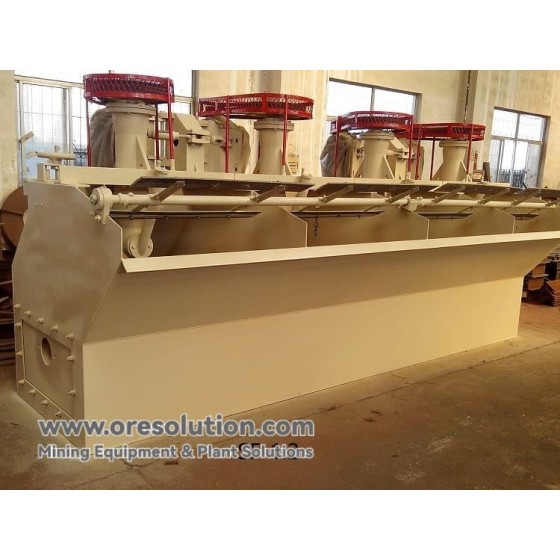
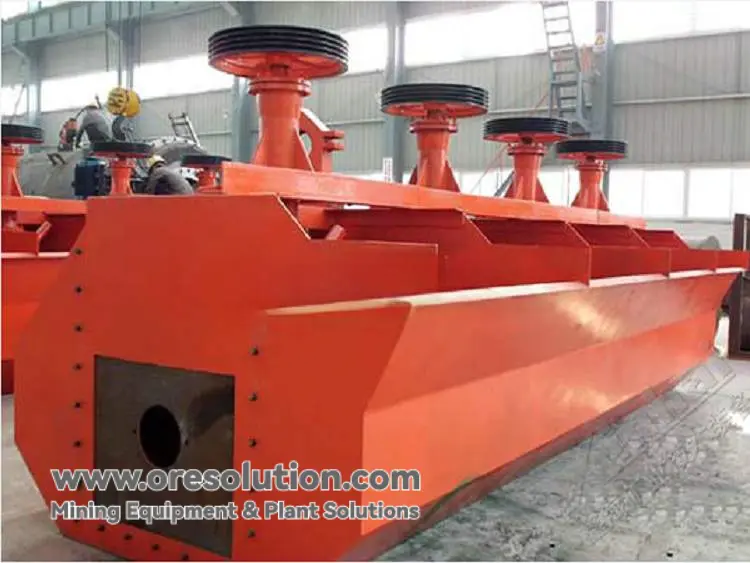
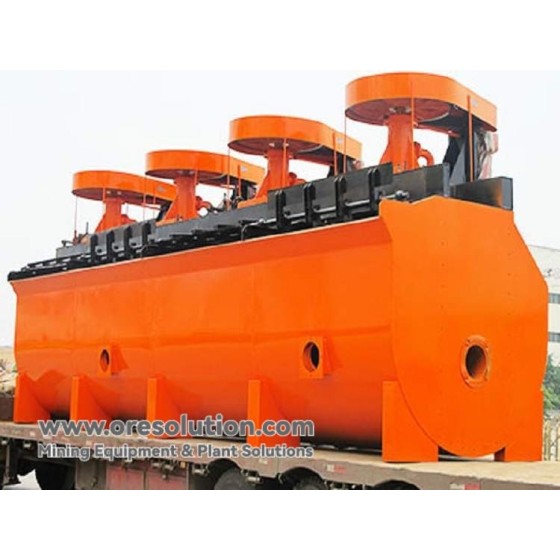
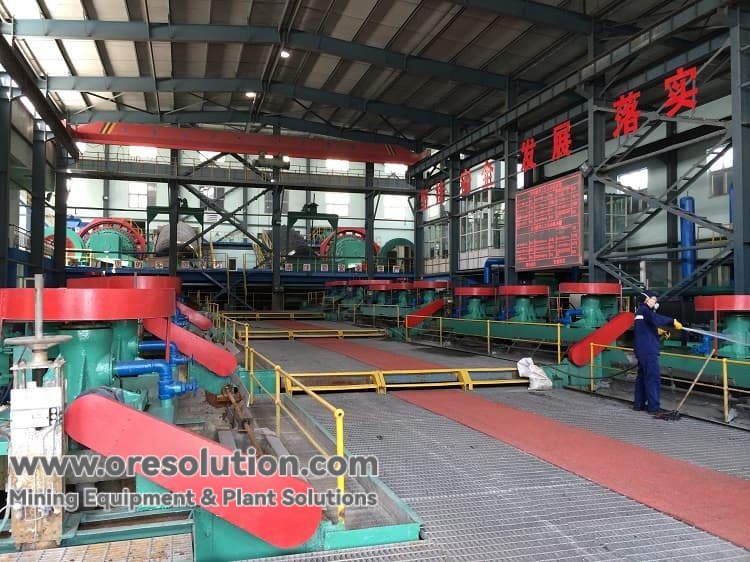
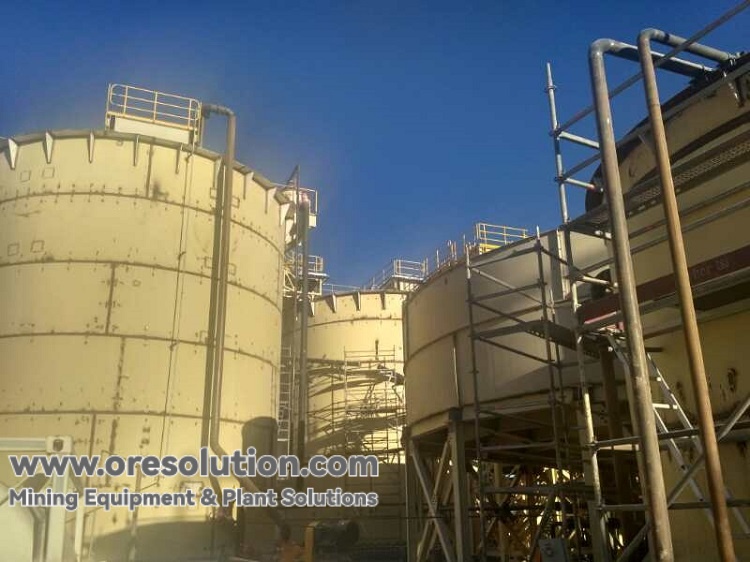
Where costs are incurred in this stage: flotation equipment, leaching tanks, thickening equipment, and reagent consumption.The challenge in flotation of gold ores containing arsenic, sulfur, or carbon lies in the need to suppress arsenic and sulfur minerals, shield carbon-bearing material, and maximize the flotation of gold. While conventional reagent combinations can handle ores of moderate difficulty, selectivity and concentrate quality become bottlenecks when dealing with polymetallic ores or severe carbon interference.
Cost Assessment Method: Comparative tests should include at least two sets of data—one for standard reagent combinations and another for tailored formulations—and compare three metrics: concentrate grade, recovery rate, and specific reagent consumption.Focusing solely on recovery rates is insufficient; differences in specific reagent consumption will result in sustained cost variations over the long term. It is also essential to clarify the stability of reagent supply—some proprietary reagents have a single source, leaving limited room for price negotiation later on, which is an aspect often overlooked in cost analysis.
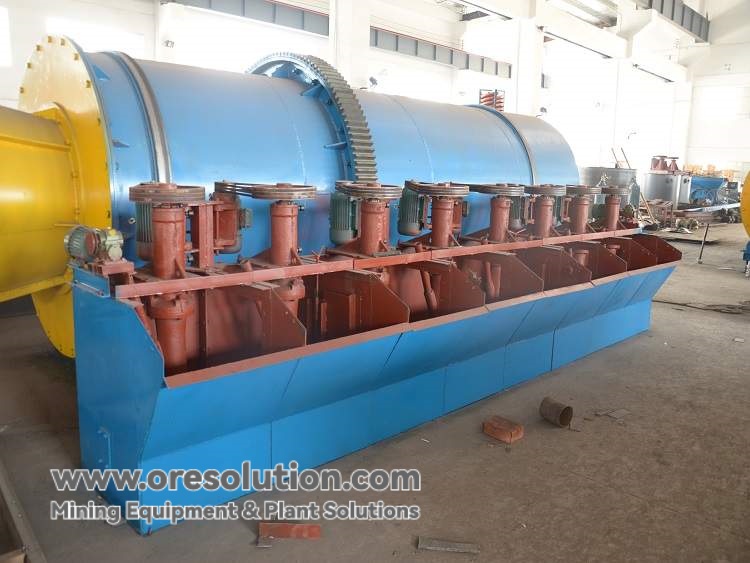
Equipment Configuration Approach: For the roughing and scavenging stages, the primary focus is on throughput and operational stability, which standard equipment can adequately handle; the concentration stage demands high enrichment ratios and concentrate quality, where the premium paid for proprietary core equipment is more likely to demonstrate its value.Equipping the entire line uniformly with the most expensive equipment, or equipping it solely with standard equipment, is not the optimal solution.
VI. Equipment Prices and Total Investment: Factors Affecting the Total Price Are More Important Than the Total Price Itself
The price of a complete set of equipment for gold ores containing arsenic, sulfur, or carbon has no reference value without considering ore parameters and the processing route. However, the key variables affecting price are clear:
The choice of pre-treatment route is the most significant variable. For projects involving roasting or pressurized oxidation, the total equipment investment is on a completely different scale compared to conventional flotation or leaching projects. The level of equipment configuration is the second variable; a real price difference exists between proprietary and standard equipment, and where it is deployed determines whether this premium is justified.The level of automation is the third variable. Arsenic-, sulfur-, and carbon-bearing gold ores require strict parameter control; investments in automation will pay off during the operational phase in the form of enhanced stability and reduced labor costs. Production capacity determines the extent to which unit investment costs can be spread out; if the scale is too small, unit costs will be high, while an excessively large scale places higher demands on resource reserves and financial capacity.
Practical Advice: Before discussing the complete mineral processing solution and equipment pricing, first request that the supplier provide a detailed equipment list broken down into “standard sections + proprietary sections,” clearly indicating where non-standard equipment is used and the rationale for any price premiums. The total equipment price is negotiable, but the configuration logic must be clear first.The reasonableness of a complete mineral processing solution and equipment pricing has never hinged on unit prices alone, but rather on how well the configuration matches the ore characteristics.
VII. Construction Schedule and Commissioning Period: Time Costs That Cannot Be Ignored in ROI Calculations
When calculating return on investment, clients often focus solely on the total equipment cost while overlooking the construction schedule. Variations in the construction schedule for gold ore projects containing arsenic, sulfur, or carbon primarily stem from three phases: the testing phase, the equipment manufacturing phase, and the on-site installation and commissioning phase.
The testing phase depends on the complexity of the ore and the comprehensiveness of the sampling; multiple rounds of testing are common for complex ores.The equipment manufacturing cycle is significantly longer for projects incorporating pretreatment processes; the manufacturing and delivery schedules for roasting or pressurized oxidation systems do not align with those of standard equipment. The installation and commissioning cycle is influenced by on-site conditions, construction organization, and the complexity of commissioning; integrated commissioning for arsenic-, sulfur-, and carbon-bearing gold ore projects typically requires a longer period to stabilize parameters.
Cost Implications: With each extension of the project timeline, the costs associated with capital tied up, management, and missed market opportunities all accumulate. Only by incorporating time costs into the cost analysis of processing arsenic-, sulfur-, and carbon-bearing gold ores can a complete calculation of return on investment be achieved.
VIII. Three Costs That Are Easily Underestimated
Design Interface Costs. When testing, design, equipment, and commissioning are handled by different teams, issues with drawing coordination and the delineation of responsibilities are likely to arise. The costs and time losses resulting from rework and design revisions often exceed the service fees initially saved. Having a single team coordinate the core design phases can reduce these hidden expenses.
Environmental Disposal Costs. The disposal of arsenic-containing slag, cyanide-containing wastewater, and tailings should be incorporated into the operating cost model as early as the feasibility study stage. Retrofitting environmental protection facilities after production begins will amplify both costs and losses due to production downtime.
Siltation and Fine-Grain Loss. Ore containing arsenic, sulfur, or carbon is often associated with siltation. If desilting and fine-grain separation processes are omitted in the early stages, the long-term losses resulting from recovery rate fluctuations after production begins may exceed the purchase price of a single piece of equipment.
IX. Cost Control Checklist
· Are ore types clearly classified (high-arsenic, low-sulfur / high-sulfur, low-arsenic / carbon-based interference / complex mixtures)?
· Have ore samples been collected by section, and have the occurrence states of arsenic, sulfur, and carbon been clearly analyzed?
· Have at least two pretreatment routes been compared based on ore type?
· Has the grinding fineness been determined by back-calculating from liberation degree tests?
· Have environmental disposal costs been included in the operating cost estimates?
· Have conventional and blended reagent formulations been compared, and have specific consumption rates and supply stability been evaluated?
· Does the equipment list distinguish between standard and proprietary sections, and are the premium pricing levels reasonable?
· Have construction duration and commissioning timelines been factored into the return on investment calculations?
· Are the responsibilities for interfaces between design, equipment, and commissioning clearly defined?
· Are there plans for follow-up assessments regarding tailings reprocessing and solid waste recycling?
Conclusion
The value of analyzing the processing costs for arsenic-, sulfur-, and carbon-bearing gold ores lies not in providing a single, uniform quote, but in clearly explaining the logic behind cost generation: ore type determines the processing route; the route determines equipment configuration; and equipment configuration and construction schedule jointly determine the return on investment.The reasonableness of the entire mineral processing solution and equipment pricing must ultimately be validated based on the ore itself. This decision-making framework, established around the cost analysis of arsenic-, sulfur-, and carbon-bearing gold ore processing, can serve as a reference for project budgeting and comparing alternative solutions.
If you need further clarification on the processing route and investment breakdown based on the specific properties of your ore, please submit ore sample information or project requirements, and we will provide tailored proposal recommendations.