


CIL (Carbon-in-Leach) Process for High-Carbon Gold Ore
CIL (Carbon-in-Leach) Process for High-Carbon Gold Ore—High-Efficiency Gold Recovery Solutions—Professional Mineral Processing Technical Guidance. Content organized by specific segments of the gold mining industry: How to determine the CIL process route for rock gold ore; how to evaluate the pretreatment of difficult-to-process carbon-bearing ore; whether the CIL process is suitable for placer gold ore and tailings reprocessing; and what to examine during pilot testing, process diagnostics, and on-site implementation.This article covers keyword variations such as carbon-in-leach (CIL) gold extraction processes, carbon-bearing gold ore beneficiation tests, and CIL process diagnostics, and is intended as a reference for beneficiation test personnel and mining technical managers.
I. CIL Process for Rock Gold Ore
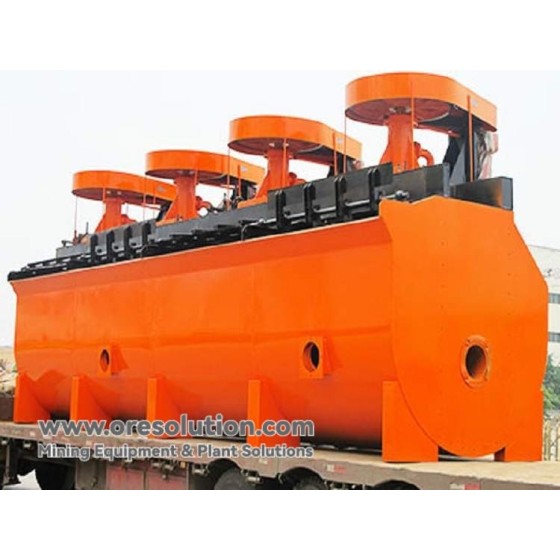
Rock gold ores are the primary application for the carbon-in-leach (CIL) gold extraction process. In quartz vein, altered rock, and sulfide-type rock gold ores, gold typically exists in free or encapsulated forms. The process route must be determined based on grain size distribution and associated minerals:Coarse-grained free gold can be pre-concentrated via gravity separation; fine-grained oxidized ores are suitable for whole-ore cyanidation (CIL); and gold enclosed in sulfide ores should be concentrated via flotation before leaching.
High-carbon gold ores constitute a special category within rock gold ores. Active carbonaceous materials in the ore (such as amorphous carbon and organic carbon) compete with activated carbon for the adsorption of gold cyanide complexes during the cyanide leaching process—a phenomenon known in the industry as “carbon-induced gold loss.”Such ores are often associated with sulfides and clay minerals and exhibit a high degree of clay content, making a single-stage cyanidation process generally unsuitable.The key consideration in process selection is to first identify the ore\'s “characteristics” before designing the CIL process route; the necessity of pre-treatment and the combination of integrated processes must be determined through testing and cannot simply be copied from similar mine processes.
II. Pretreatment of Carbon-Bearing, Difficult-to-Process Gold Ore
Gold ores containing arsenic, carbon, and copper—the “triple-challenge” ores—are the area where carbon-in-leach (CIL) gold extraction processes are most likely to encounter difficulties. When carbon-based materials sequester gold, sulfides encapsulate it, and arsenic minerals interfere simultaneously, it is difficult for conventional cyanidation processes to achieve the expected recovery rates.
The evaluation of pretreatment routes must address several questions: What type of carbonaceous material is present? What is its approximate concentration range? Does the gold exist in a free or bound state? What are the types of sulfides and their degree of oxidation? This information determines whether flotation-based decarbonization, roasting, bio-oxidation, or other pretreatment methods should be adopted.The necessity of a pretreatment process must be verified through testing; blindly applying conventional processes is one of the most common reasons why test results fall short of expectations. Without resolving the issues of gold entrapment and encapsulation, any adjustments made to the subsequent adsorption stage will only address the symptoms rather than the root cause.
III. Placer Gold and Tailings Re-processing Segment
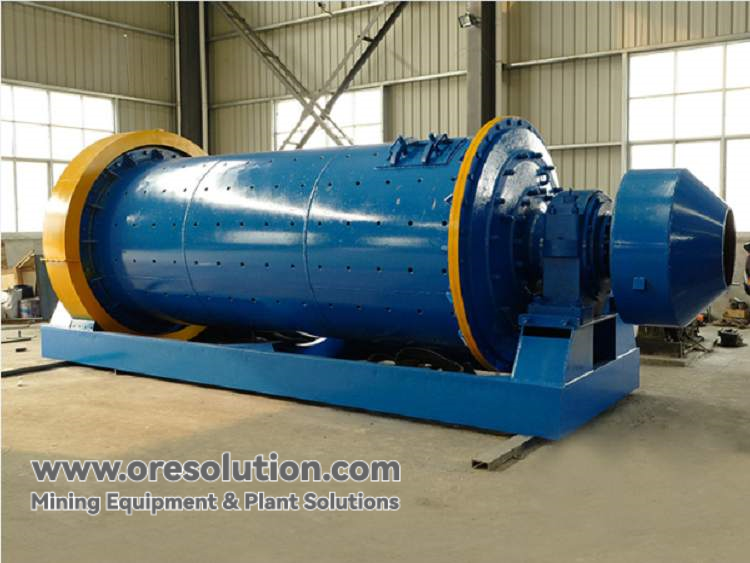
Gold in placer deposits is already liberated as free particles, so crushing and grinding are unnecessary; gravity separation is the primary method, and carbon-in-leach (CIL) is generally not the first choice. When fine-grained gold is abundant, centrifuges are used for recovery; when the mud content is high, ore washing and desliming are intensified. Process decisions are relatively straightforward.
Tailings reprocessing is another sector worthy of attention. Tailings from old tailings dams and currently operating processing plants have low grades of valuable metals but large total volumes. Whether cyanidation or carbon-in-leach (CIL) processes are suitable depends on the state of the residual gold and an economic feasibility assessment.A technical and economic assessment must be conducted prior to tailings reprocessing, taking into account the impact of the degree of oxidation and silt content in old tailings on separation performance. The key is to perform a comprehensive cost-benefit analysis: the process route should be determined by balancing residual grade, reprocessing costs, and environmental requirements.
IV. Test Diagnosis Section: Troubleshooting Common Anomalies in CIL
In beneficiation tests for carbon-bearing gold ores, several types of anomalies recur frequently; these should be investigated separately for the leaching and adsorption stages.
If the recovery rate is lower than expected, the leaching stage should focus on grinding fineness and leaching time. If gold minerals fail to liberate, cyanide cannot come into contact with the gold, and the leaching rate will naturally remain low; if the grinding is too coarse or the time is insufficient, the “gold-snatching” window by carbonaceous material becomes longer.In the adsorption stage, focus on the particle size, concentration, activity, and addition method of the activated carbon; if the carbon dosage is too low, the gold in the leachate will be lost with the tailings before it can be adsorbed.
If reagent consumption is abnormally high, first examine the ore itself: the oxidation of sulfides produces acids, increasing alkali consumption; carbonaceous materials adsorb reagents, increasing cyanide consumption.Next, check the pH of the pulp; when the pH is too low, the hydrolysis loss of cyanide accelerates, creating a vicious cycle. If the sequence and proportions of reagent addition are inappropriate, the actual effective concentration may be far lower than the nominal dosage.
Unstable test results can be attributed to three main variables: fluctuations in pulp concentration, uncontrolled temperature, and inconsistent operations. Feed rate and make-up water must be metered; since cyanide leaching is temperature-sensitive, conducting parallel samples for critical tests and refining operating procedures down to each step are fundamental measures for improving reproducibility.
Ore sampling and mineralogical analysis are prerequisites for diagnosis. Sampling should not be limited to selecting only rich ore pieces; subsampling must be performed using the quartering method or a grid box subsampler;Ore samples containing sulfides and carbonaceous materials will slowly oxidize and weather when exposed to air. In one gold mine, recovery rates remained consistently low; after investigation, it was discovered that the ore samples had been stored in the laboratory for too long and had oxidized. Only after fresh ore samples were collected did the indicators return to the normal range.
V. On-Site Challenges: Why Do Indicators Decline After Scale-Up?
Laboratory results appearing favorable while on-site results decline is a common challenge in the mineral processing industry. This is particularly evident in CIL processes for high-carbon gold ores, as the competitive adsorption of carbonaceous matter is highly sensitive to process conditions.
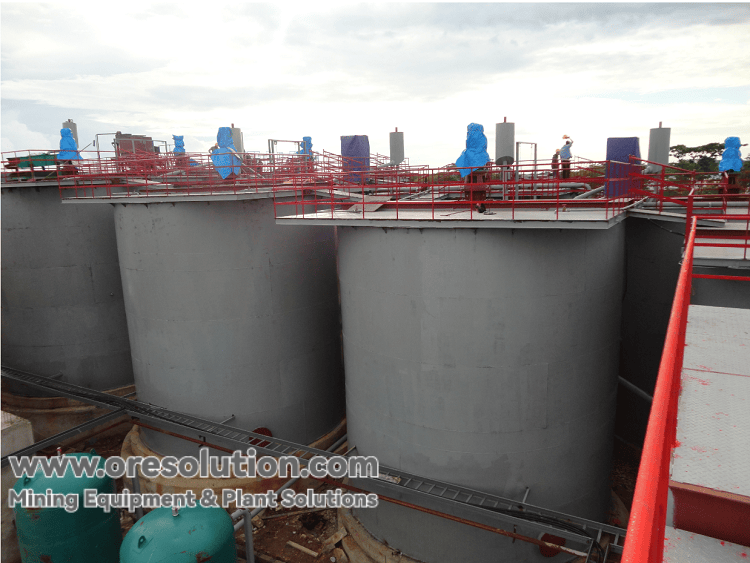
Equipment differences are the primary factor to investigate. The agitation intensity and aeration methods of laboratory agitation tanks differ significantly from those of on-site leaching tanks; variations in mass transfer conditions for the slurry lead to changes in leaching rates and adsorption efficiency. The method of activated carbon addition also differs: in the laboratory, it is typically added in a single batch, whereas on-site it is added continuously or in stages, resulting in completely different distributions of carbon residence time.
Differences in process configuration are equally critical. Laboratory tests are typically single-tank batch experiments, whereas field operations involve continuous, series-connected multi-tank systems, resulting in different patterns of short-circuiting and backmixing.In high-carbon ore, carbonaceous material accumulates from tank to tank in a series process, resulting in continuous competitive adsorption—a phenomenon not reflected in single-tank tests. Troubleshooting approaches include multi-stage series simulation tests, comparing pulp concentrations with carbon loading methods, and conducting pilot-scale validation using on-site ore samples.
| Phenomenon | Possible Causes | Troubleshooting Methods |
|---|---|---|
| Recovery rate significantly lower than expected | Insufficient grinding fineness, gold entrapment by carbonaceous material, insufficient activated carbon dosage | Screen and analyze gold grades by particle size, measure gold concentration in leachate, and test activated carbon adsorption capacity |
| Excessively high reagent consumption | Reagent consumption due to sulfide oxidation, reagent adsorption by carbonaceous material, and low pH | Measure the pH of the pulp in each section, analyze sulfide content, and measure metal ion concentrations in the leachate |
| Poor test repeatability | Fluctuations in pulp concentration, uncontrolled temperature, inconsistent operations | Standardize feed and water addition, maintain constant temperature, and introduce parallel samples |
| Deterioration of performance metrics after scale-up | Differences in agitation and mass transfer, variations in carbon addition methods, and recirculation in the series process | Multi-stage series simulation, pilot-scale validation, and comparison of residence times |
VI. Cost and Environmental Protection Section
In the carbon-in-leach (CIL) process for high-carbon gold ores, cost pressures are concentrated in two areas: reagent consumption and tailings treatment. High consumption of cyanide and alkali directly drives up operating costs; the environmental treatment of cyanide-containing wastewater and tailings is a practical challenge that mines must address.
The approach to cost control should not simply focus on reducing the unit price of chemicals, but rather on optimizing process parameters: identifying the inflection point for grinding fineness to avoid over-grinding; determining carbon dosage based on ore properties to avoid indiscriminate carbon addition; and maintaining stable pH control to minimize cyanide hydrolysis losses.Regarding environmental protection, solutions such as dry tailings disposal, tailings re-processing, and resource recovery can transform environmental investment into opportunities for secondary resource recovery. The key criterion is to calculate the overall cost-benefit analysis, rather than focusing solely on initial investment.
VII. Troubleshooting Sequence and Common Pitfalls
If issues arise during testing, it is recommended to proceed in the following order: confirm the representativeness of the ore sample → mineralogical analysis → grinding fineness and slurry concentration → leaching stage parameters (pH, cyanide concentration, time) → adsorption stage parameters (carbon dosage, carbon activity, addition method) → reagent formulation → equipment and scale-up validation.Reversing this order can lead to wasted time on secondary factors.
Two common pitfalls are worth noting. First, adding more carbon in response to low recovery rates may lower the gold concentration in the adsorption stage, but it fails to resolve the issue of carbon-borne gold carryover in the leaching stage. As a result, the overall recovery rate remains unsatisfactory, while carbon wear and carryover losses actually increase.Second, skipping mineralogical analysis and adjusting parameters directly—without a basis in ore properties—results in a very low success rate. CIL process diagnostics must follow a logical sequence; they cannot be based on guesswork.
VIII. About Our Consulting Services
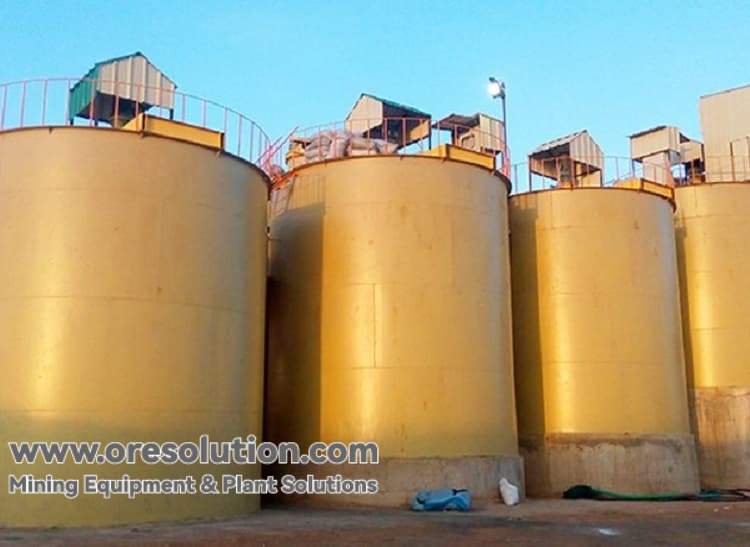
OreSolution provides EPC turnkey services ranging from mineral processing testing, process design, and equipment manufacturing to installation, commissioning, and personnel training, covering metal ores, non-metal ores, precious metal ores, alluvial deposits, and the comprehensive utilization of tailings and solid waste.For rock gold ores, we are proficient in gravity separation, flotation, cyanidation (CIL/CIP), and combined processes; for difficult-to-process gold ores containing arsenic, carbon, or copper, we determine pretreatment routes through testing and provide corresponding environmental treatment solutions for tailings.We manufacture our own core equipment, ensuring that process design and equipment hardware are seamlessly integrated to minimize the risk of discrepancies between pilot testing and actual engineering implementation.
If there are concerns regarding recovery rates, reagent consumption, or result reproducibility in CIL carbon-in-leach testing for high-carbon gold ores, we can compile ore sample information and test records to conduct a preliminary diagnosis before finalizing the test plan.CIL Carbon-in-Leach Process for High-Carbon Gold Ore—High-Efficiency Gold Extraction Process Solutions—Professional mineral processing technical guidance, starting with ore sample analysis, systematically examining each step by industry segment to pinpoint issues at specific stages, and then advancing process optimization and engineering implementation.