

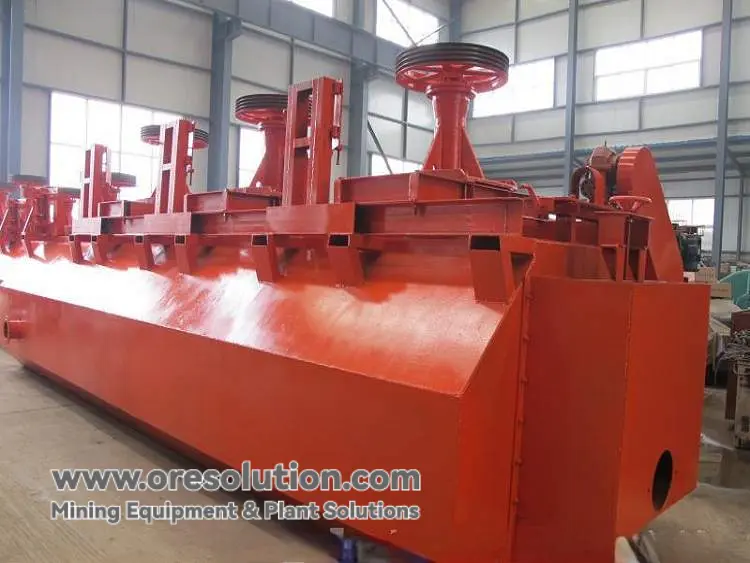
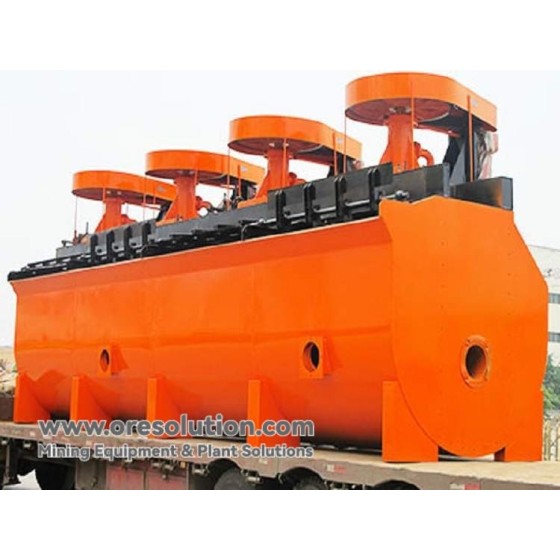
Complete Solution for a CIL Cyanide Mineral Processing Production Line
Key Conclusions
-
How to Build a Gold Processing Plant? The first step in a complete CIL (cyanide leaching) production line solution is not to select equipment, but to determine the process flow based on ore test data.
-
CIL (carbon-in-leach) is suitable for oxidized or semi-oxidized gold ores with high clay content, low coarse-grain gold content, and uncomplicated associated sulfides; it is particularly well-suited for low-grade resources.
-
A complete production line consists of six stages: crushing, grinding, thickening, leaching and adsorption, desorption and electrolysis, and tailings treatment. If the capacity of any single stage is mismatched, the overall recovery rate will be affected.
-
Whether a low-grade ore deposit can be profitable depends on the balance among pre-concentration, grinding fineness, and reagent costs—not merely on the pursuit of leaching efficiency alone.
I. Before Building a Plant, Answer These Four Questions
Many mine owners, upon acquiring a resource, immediately ask, “What size equipment should we install? How much should we invest?” This sequence of thinking is questionable.
The essence of plant construction lies in the answers to four preliminary questions: What are the properties of the ore? How many metric tons are planned for processing? What are the investment constraints? How will tailings and environmental compliance be managed? Without clarity on these four points, any plan lacks a foundation for implementation.
The nature of the ore determines the process route. In quartz vein-type, altered rock-type, and sulfide-type gold deposits, the form in which gold is present varies significantly, and the grinding fineness and leaching time change accordingly. For ore with high clay content, decisions regarding whether to perform pre-concentration and the appropriate size of the thickener are derived from these factors.
The scale of construction determines the level of investment. Different daily processing capacities do not result in a linear increase in the number of equipment units, tanks, or personnel. Setting the scale too small makes future expansion difficult, while setting it too large increases financial pressure.
Investment constraints and environmental requirements, in turn, determine the selection of tailings treatment and cyanide removal processes. Calculating these costs thoroughly during the design phase is far more economical than making corrective adjustments after production begins.
II. The Core Logic of the CIL Process
The essence of CIL is the simultaneous occurrence of leaching and adsorption. After the slurry enters the leaching tank, sodium cyanide dissolves the gold to form gold-cyanide complexes, while activated carbon, present in the tank, adsorbs these complexes into its pores.
This logic resolves a challenge that traditional processes struggle to overcome: the concentration of gold-cyanide complexes generated during leaching is consistently maintained at a low level, resulting in a large concentration gradient, strong leaching driving force, and a significantly reduced leaching time.In a complete CIL cyanide beneficiation production line design, the number of tanks and the residence time are specifically determined based on this logic.
This characteristic is particularly critical for low-grade ores. The lower the grade, the slower the leaching kinetics; simultaneous leaching and adsorption allows for the timely removal of dissolved gold, preventing solution gold concentration from reaching saturation and inhibiting further dissolution.
It is important to note that CIL places high demands on activated carbon strength. Since the slurry and carbon are agitated for extended periods in the tanks, carbon wear rates are high, and fine carbon entering the tailings results in direct gold loss. When selecting carbon, both the iodine value and abrasion resistance must be considered; price alone should not be the sole deciding factor.
III. Process Flow of the Complete Production Line
3.1 Crushing and Screening
A three-stage, closed-circuit configuration is standard: jaw crushers for primary crushing, cone crushers for secondary crushing, and short-head cone crushers or high-pressure roller mills for tertiary crushing. The final particle size is controlled within an appropriate range to reduce the load on the grinding process.
For ore with high clay content, it is recommended to add a washing step after primary crushing; otherwise, the clay will clog screens and hoppers, leading to unstable mill feed. This detail should be determined during the design phase, as retrofitting it later is more difficult.
3.2 Grinding and Classification
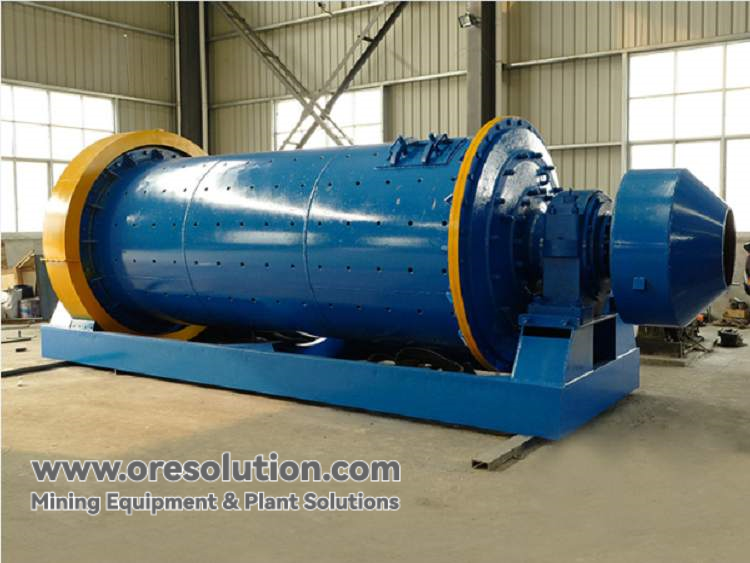
Grinding fineness is the most critical parameter in CIL. Oxidized ores are generally ground to a fineness where 75–85% of the particles are -200 mesh; ores containing gold encapsulated in sulfides require a finer grind. For every increase in fineness, power consumption during grinding rises significantly.
Classification equipment should use a closed-circuit system with hydrocyclones and ball mills to maintain a stable overflow particle size. The grinding section accounts for the largest portion of the plant\'s total power consumption; therefore, when selecting equipment, one should not reduce the power margin of the ball mills.
3.3 Thickening and Pre-leaching
The concentration of the grinding overflow is typically low and must be concentrated before leaching; a high-efficiency thickener with flocculant addition is standard equipment.
A pre-leaching tank is installed after thickening, where lime is added to adjust the pH to the alkaline range. The purpose is to inhibit cyanide hydrolysis and neutralize acidic gangue. The pre-leaching time and specific lime consumption depend on the ore\'s alkalinity and must be determined through testing; empirical values should not be applied indiscriminately.
3.4 Leaching and Adsorption
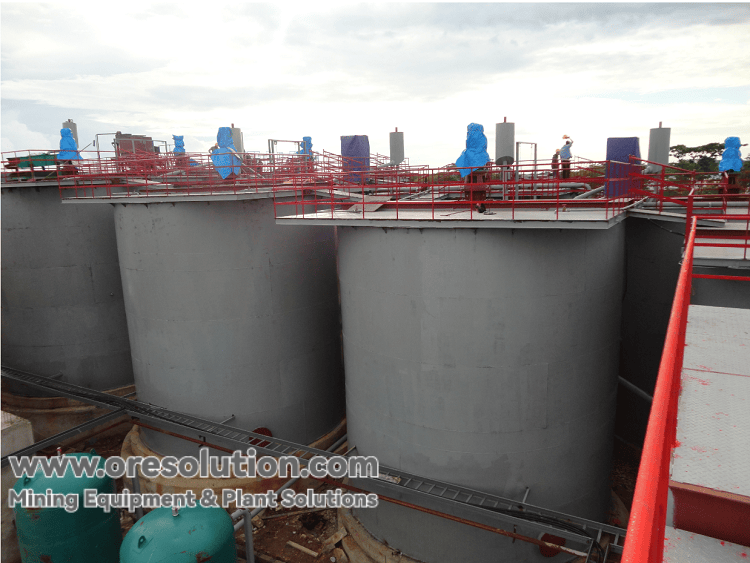
This is the core section. Typically, 6–8 leaching tanks are configured in series, with the front section consisting of leaching tanks and the rear section comprising leaching-adsorption tanks with activated carbon. The equipment commonly employs high-efficiency dual-impeller carbon-in-leach (CIL) tanks equipped with carbon retention screens to facilitate both aeration and carbon retention.
Key parameters include sodium cyanide concentration, slurry concentration, pH, carbon concentration, and total residence time; specific values must be provided by test reports. Aeration within the tanks is essential, as gold dissolution is an oxygen-consuming process; leaching efficiency drops directly in the absence of oxygen.
3.5 Desorption, Electrolysis, and Carbon Regeneration
Gold-loaded carbon is withdrawn from the final adsorption tank, first washed to remove slime, and then fed into the desorption column. After high-temperature, high-pressure desorption, electrolysis yields gold slime, which is smelted into alloy gold ingots.
The depleted carbon after desorption is regenerated in a rotary kiln; once its activity is restored, it is returned to the adsorption tank. The recycling of carbon is a key factor in controlling operating costs; regeneration temperature and duration must be determined based on the type of carbon.
3.6 Cyanide Removal from Tailings and Discharge
CIL tailings leachate contains cyanide and must be treated. Common methods for cyanide removal include the alkaline chlorination method or the hydrogen peroxide method; the leachate may only be discharged after treatment ensures compliance with regulatory standards. Return water from the tailings pond should be recycled as much as possible to reduce fresh water consumption.
Environmental requirements should be aligned with local standards during the planning phase. The selection of cyanide removal reagents must be determined comprehensively based on the cyanide concentration in the tailings solution, local reagent availability, and operating costs. Reagents for the alkali-chlorination method are readily available but generate a large amount of sludge, whereas the hydrogen peroxide method produces less sludge but involves higher reagent costs.
IV. Comparison of Methods: CIL, CIP, and Heap Leaching
| Comparison Criteria | CIL (Carbon-in-Leach) | CIP (Carbon-in-Pulp) | Heap Leaching |
|---|---|---|---|
| Suitable Grade | More suitable for low- to medium-grade oxidized ores | More commonly used for relatively high-grade ores | Low-grade, large-scale operations |
| Leaching and adsorption | Conducted simultaneously, with a shorter duration | Conducted separately, with a relatively long total duration | Long cycle, highly susceptible to weather conditions |
| Adaptability to mud-bearing ore | Good | Fair | Poor |
| Recovery rate | Depends on the ore | Depends on the ore | Highly variable |
| Investment per metric ton | Moderate | Moderate to high | Relatively low |
| Time to full production | Short | Short | Long |
Absolute values are not provided in the table because results for similar processes vary significantly under different ore conditions. For low-grade oxidized ores with high clay content and low coarse-grain gold content, CIL demonstrates relatively stable overall adaptability. Heap leaching requires low investment, but recovery rates and time to reach full production capacity are significantly affected by climate and ore permeability.The specific process route must be based on ore test data.
V. Equipment Configuration Approach
| Process Section | Main Equipment | Selection Criteria |
|---|---|---|
| Crushing | Jaw Crusher + Cone Crusher | Determined based on processing capacity and feed size, with a margin of safety |
| Grinding | Ball Mill with Classifier | Power is calculated based on the test fineness, not estimated empirically |
| Thickening | High-efficiency thickener | Select the area based on sludge content and recirculation requirements |
| Leaching and Adsorption | Twin-impeller carbon leaching tanks and carbon separation screens | Determine the number of tanks based on retention time; allow for a margin of safety |
| Desorption | Desorption and electrolysis equipment | Matched to the daily output of gold-loaded carbon |
| Cyanide Removal | Reaction tanks for the alkali-chlorine method or hydrogen peroxide method | Determined based on environmental emission standards |
This table is intended only as a conceptual guide for configuration; specific models and quantities must be determined through process calculations. Insufficient capacity in either the crushing or grinding stages will limit the output of the entire line; it is advisable to allow for a margin of excess capacity in the number of leaching tanks, as residence time is fundamental to ensuring recovery rates.Capacity matching between equipment also determines the speed at which full production capacity is achieved; if the front end has excess capacity while the back end is insufficient, actual output will still fall short of the design value. In a complete CIL cyanide ore beneficiation production line solution, the equipment list serves only as the framework—capacity matching is what gives it substance.
VI. The Correct Approach to Economic Analysis
Economic analysis should not provide fixed figures. Even for the same processing scale, unit costs per metric ton vary significantly depending on ore properties, local electricity and reagent prices, and environmental requirements.
The reasonable approach is to calculate costs item by item: power consumption for grinding is calculated based on test-determined fineness and ore hardness; specific consumption rates for sodium cyanide and lime are derived from test reports; labor and tailings disposal costs are factored in according to local market rates; and depreciation and taxes are then amortized to determine the project\'s break-even grade.
The profit potential for low-grade ore often stems from several detailed optimizations: identifying the critical point for grinding fineness, adjusting the pre-soaking alkalinity, and optimizing carbon concentration and carbon recovery protocols. The combined effect of these optimizations must be supported by test and commissioning data; it is not advisable to commit to specific improvement margins in advance.
When evaluating such proposals, one should first examine whether the cost estimates are itemized and supported by specific data, rather than focusing solely on the total figure.
VII. Common Technical Issues
What should be done about high clay content, excessive foam in the tank, and carbon loss?
Adding pre-washing to the feed and adding flocculants to the thickener are fundamental measures. Excessive foam in the tank can be addressed by adjusting the aeration rate or implementing additional defoaming measures. In cases of severe activated carbon loss, inspect the mesh size of the carbon retention screen and use a combination of screening methods for fine carbon recovery. Adjustment measures should be incorporated during the design phase.
Troubleshooting Steps for Excessively High Sodium Cyanide Consumption
First, check the pH; insufficient alkalinity leads to significant cyanide hydrolysis losses. Next, check the ore\'s copper, iron, and sulfide content, as these are cyanide-consuming substances. Finally, check dissolved oxygen; leaching slows under oxygen-deficient conditions, which can lead to excessive chemical dosing during operation. Investigate these three factors one by one.
Pre-treatment Requirements for Difficult-to-Process Gold Ores Containing Arsenic, Carbon, and Copper
Conventional cyanidation processes should not be directly applied to these “triple-challenge” ores. A pretreatment route must first be determined through pilot testing; roasting, bio-oxidation, or pressurized oxidation each have specific application conditions. Without adequate pretreatment, it is difficult to improve cyanide leaching recovery.
Insulation and Heating Conditions for CIL Operations in Northern Regions During Winter
Operation is possible, but leaching tanks must be insulated or heated to maintain the slurry temperature above a certain threshold to ensure proper leaching kinetics. Heating costs should be factored into the cost per metric ton in advance and must be considered during the planning phase.
Key Points for Controlling Tailings Pond Recirculated Water
The accumulation of cyanide and salts in recirculated water can affect leaching performance. Cyanide concentration and pH in the recirculated water must be monitored regularly; if necessary, partial cyanide removal should be performed before returning the water to the process. A balance must be struck between the recirculation rate and treatment costs; one should not blindly pursue a high recirculation rate.
VIII. About Us
We provide comprehensive design services for gold CIL production lines, covering ore processability tests, process flow determination, equipment selection, and on-site commissioning. Our designs do not rely on standardized drawings; instead, grinding fineness, leaching time, and carbon concentration are all calculated and determined based on specific ore data.
For ores containing arsenic, carbon, or copper—which are difficult to process using conventional cyanidation—we also offer proprietary reagents and pretreatment process packages. On the equipment side, we can provide a complete suite ranging from crushing and grinding to twin-impeller carbon-in-leach tanks, desorption electrolysis, and gold smelters, ensuring seamless integration of process and hardware within a single system.
The key to building a gold processing plant lies in gradually eliminating uncertainties through data. The more robust the complete CIL cyanide leaching production line solution is, the fewer unexpected issues will arise after commissioning.
If you hold gold ore resources and need to evaluate potential process routes or construction scales, please submit your ore property data and grade distribution to us. We will first conduct preliminary technical and economic calculations before discussing the specifics of the proposal. For further information, please submit your relevant requirements.