


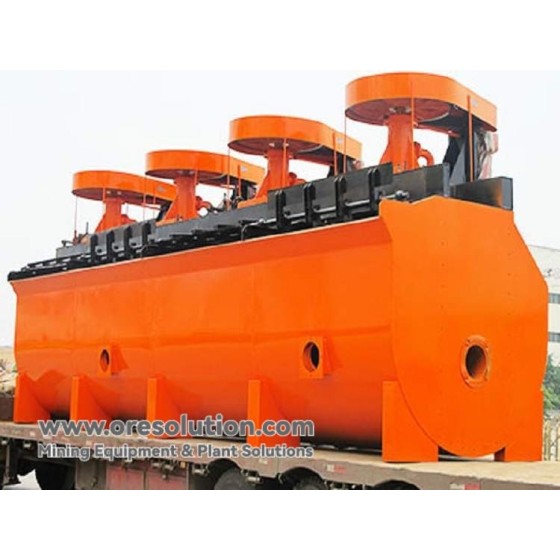
EPC Turnkey Solution for a Complete CIP/CIL Production Line at a Primary Gold Mine Carbon-in-Leach Plant
-
The EPC turnkey solution for a complete CIP/CIL production line at a native gold ore carbon-in-leach plant is an engineering delivery model in which crushing, grinding, leaching, adsorption, desorption, electrolysis, tailings treatment, and utility and automation systems are bundled into a single contract, with the contractor assuming full responsibility for the entire line.
-
It primarily addresses three key issues: unstable performance indicators, coordination disputes at interfaces, and a lack of ownership for achieving full production capacity. This solution is suitable for medium-sized rock gold ore projects with limited technical expertise.
Phased construction is most prone to bottlenecks at the interfaces between equipment and civil engineering, as well as between civil engineering and electrical systems—and even a single day of production downtime results in losses. This is precisely why the EPC turnkey solution for a complete CIP/CIL production line at a primary gold ore carbon-in-leach plant is so frequently recommended.A primary gold ore processing plant in Southwest Guizhou suffered from this issue in the past; after switching to a complete turnkey solution, the process from groundbreaking to feed-in became much smoother.
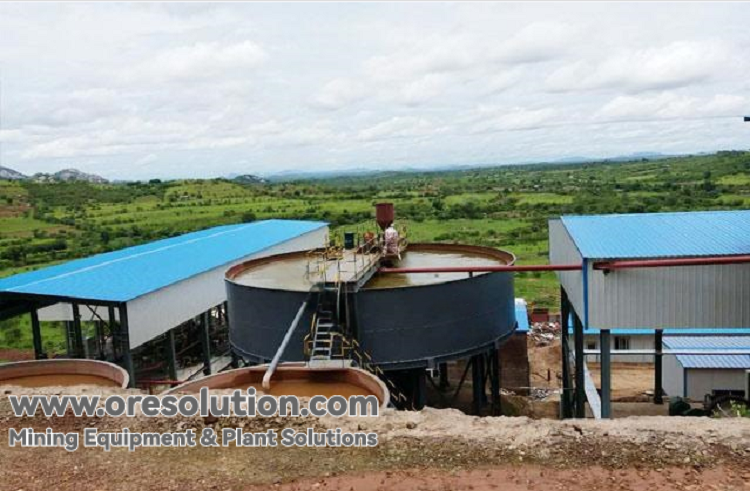
What Is It?
This is a project delivery model centered on the carbon-in-leach (CIL) process, in which a single contractor assumes full responsibility for the entire rock gold ore processing production line.
In terms of the process, the rock gold ore is crushed and ground before entering the leaching tank, where gold is adsorbed by activated carbon during cyanide leaching. It then undergoes desorption, electrolysis, and smelting to produce refined gold—a process known as CIP (Carbon-in-Pulp) or CIL (Carbon-in-Leach).In terms of delivery, mineral processing testing, process design, equipment manufacturing, civil construction, installation and commissioning, training, and production capacity assessment are all bundled and assigned to a single contractor, with the owner dealing with only one point of contact.
This approach is applicable to quartz vein-type, altered rock-type, and sulfide-type rock gold deposits. Whether to use gravity separation, flotation, cyanidation, or a combined process depends on the grain size of the gold and the associated minerals.
What It Addresses
It primarily addresses three issues: unstable performance indicators, finger-pointing between interfaces, and a lack of accountability for achieving full production capacity.
In terms of performance metrics, gold-bearing ores are often accompanied by sulfide minerals, arsenic, and carbonaceous matter, making them difficult to leach. When projects are constructed in phases, testing, design, and equipment selection are handled by different entities; if the recommended fineness and equipment configuration do not align, leaching rates will remain low. The turnkey solution integrates these three elements, consolidating responsibility under a single entity.
Regarding interfaces, a single carbon-in-leach (CIL) line involves seven or eight specialized disciplines. When construction is divided into phases, each phase waits for the others to meet conditions, and delays of several months are common. Under the turnkey model, these interface issues are resolved internally by the contractor.
Regarding achieving full production capacity, phased construction often results in a “no one takes responsibility” situation where the equipment and processes are functioning properly, yet performance metrics still fall short. The integrated solution incorporates performance metrics for achieving full production capacity into the contract, specifying target ranges for recovery rates, processing capacity, and reagent consumption per unit. Projects with limited technical expertise benefit most from this approach.
Structure
The entire plant consists of five modules: crushing and grinding, leaching and adsorption, desorption and electrolysis, tailings treatment, and utilities and automation.
[Solution Flowchart]
Raw Ore Bin — Crushing and Screening — Fine Ore Bin — Ball Milling and Classification — Pre-leaching Tank — Leaching and Adsorption Tank Group (CIP/CIL in series, dual-impeller carbon-in-leach tanks)
The leaching and adsorption tank group consists of two streams: the slurry stream—post-leaching slurry → tailings thickener → filter press for dry discharge or treatment to meet regulatory standards; and the gold-loaded carbon stream—gold-loaded carbon → desorption column → electrolytic cell → smelting → bulk gold.
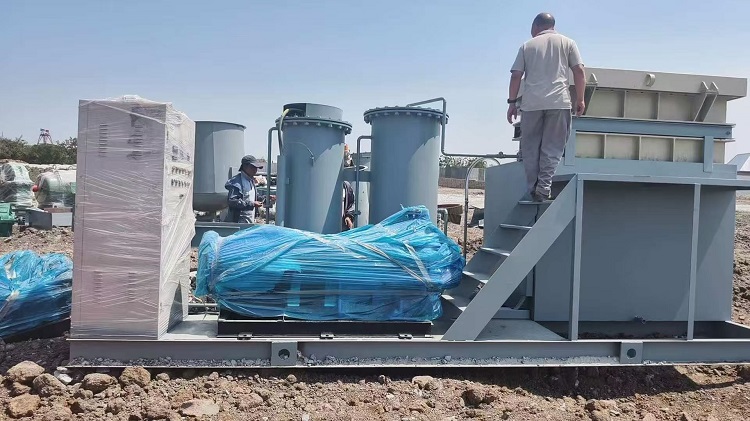
The crushing and grinding stage determines the upper limit of leaching efficiency. For ores with fine grain size distribution, a high grinding fineness is required; the selection of grinding mills and the efficiency of classification determine whether gold can be effectively leached in subsequent stages. Common configurations include two-stage or three-stage closed-circuit crushing followed by a single-stage closed-circuit ball milling.
The leaching and adsorption section is the core of the process. In CIP (Continuous In-Circuit Processing), carbon is added to a separate adsorption tank after leaching; in CIL (Continuous In-Leach), carbon is added simultaneously within the leaching tank. The latter method is more common for primary or carbon-bearing ores. The number of tanks, carbon concentration, and the design of the bottom carbon screen and carbon recovery system directly affect the adsorption rate and carbon loss.
The desorption and electrolysis stage is where gold is recovered. If the desorption temperature, pressure, alkalinity, and flow rate are not properly adjusted, gold on the gold-bearing carbon will not be completely stripped, resulting in high levels of residual gold in the spent carbon and an unbalanced system.
The tailings section must undergo cyanide removal treatment before discharge or reuse; thickening followed by pressure filtration and dry discharge is a common configuration. Water recovery rates and impurity accumulation must be considered during the design phase.
The utility and automation sections are often underestimated. Power supply and distribution capacity, instrument selection, and control point specifications must be detailed in the contract; otherwise, the commissioning phase is most likely to cause project delays.
In traditional phased construction, where testing, design, equipment, and construction are managed separately, every failure at an interface results in lost production time; only an EPC turnkey solution for the entire CIP/CIL production line integrates these links into a single, cohesive process, allowing for accurate cost accounting.
What Are the Advantages?
A single point of responsibility, controllable project timelines, and measurable performance metrics are its practical advantages over segmented construction.
For ore with such high arsenic and carbon content that it requires pretreatment, the contractor can only complete the carbon-in-leach section after pretreatment; the preceding stages must first be determined through pilot testing.
First, there is a single entity responsible. If problems arise, there is only one party to hold accountable—no passing the buck—which is of the greatest value to small and medium-sized mines lacking an engineering management team.
Second, the construction schedule is typically shorter. Since coordination at the interfaces occurs internally within the contractor\'s organization, design, procurement, and construction can proceed partially in parallel; for projects of the same scale, this generally saves some time compared to fully segmented bidding.
Third, performance metrics are specified in the contract. Target ranges for recovery rates, processing capacity, chemical consumption per unit, and tailings grade can all be agreed upon, with penalty clauses in place for failure to meet them. However, the width of these ranges depends on trial data.
Fourth, the technical approach and operations and maintenance are unified. The design and equipment selection follow the approach recommended by the pilot test; training, spare parts lists, and operating procedures are all delivered together.
The limitations should also be clearly stated: the total contract value is typically higher than the total equipment cost, as it includes design, management, and a risk premium; the owner has somewhat less control over intermediate processes and must rely on contract terms and milestone acceptance to ensure compliance.
Suitable Scenarios
This approach is best suited for medium-sized projects involving primary gold ore from rock deposits where the owner has limited technical capabilities; caution is advised for hard-to-leach ores, ultra-large-scale projects, and mines operating at the grade threshold.
This approach excels at establishing a mature process quickly and reliably; however, its advantages are diminished when ore properties are so unique that repeated testing is required.
Suitable scenarios: Ore types include quartz vein, altered rock, or sulfide; testing has confirmed that conventional cyanide leaching is feasible; daily processing capacity is moderate; the owner lacks a complete technical team for mineral processing, electromechanical systems, and civil engineering; and the project has specific schedule requirements.
Situations requiring caution: Ore with high carbon content, significant arsenic-sulfur association, or highly oxidized, hard-to-leach ore that cannot be addressed by a conventional carbon-in-leach (CIL) line and requires preliminary pretreatment testing; for very large-scale projects, phased bidding may be more cost-effective; and for mines operating at the cut-off grade, it is difficult to amortize fixed costs.
[Table of Applicable Ore Types]
| Ore Type | Suitability | Description |
|---|---|---|
| Quartz Vein-Type Gold Deposits | Suitable for | Conventional gravity separation, flotation, or carbon-in-leach (CIL) processes are well-established |
| Alteration-type gold deposits | Fairly suitable | Requires testing to confirm grain size distribution and leaching time |
| Sulfide-type gold deposits | Fairly suitable | Flotation or a combination of flotation and leaching, depending on the sulfide content |
| Carbonaceous gold deposits | Caution | Carbonaceous material can leach gold; pretreatment or process adjustments are required |
| High-arsenic, high-sulfur ores that are difficult to leach | Not suitable for standalone use | Requires pretreatment such as roasting, biooxidation, or pressurized oxidation |
| Copper-bearing, difficult-to-process gold ores | Use with caution | Copper consumes cyanide; pilot testing is required to determine the optimal reagent regimen |
How to Implement
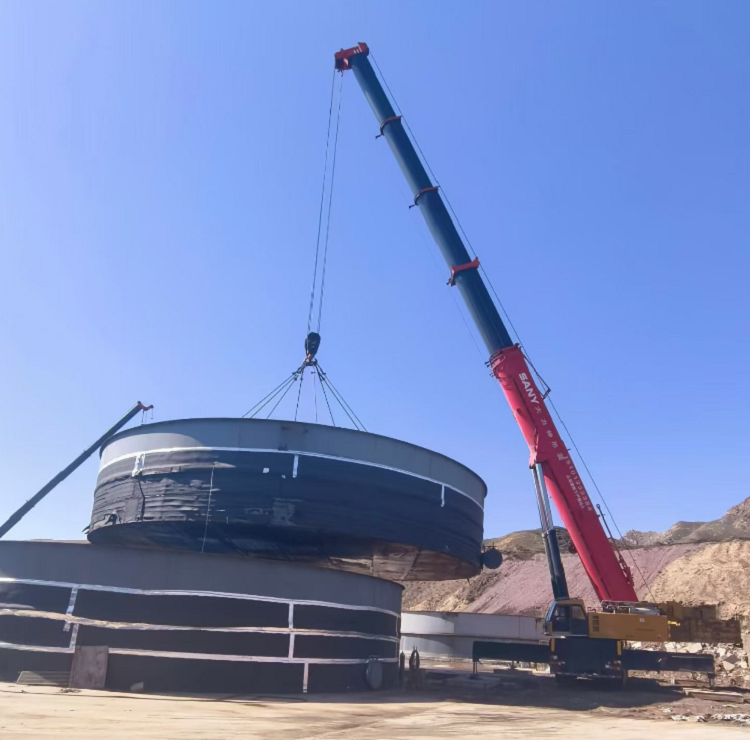
A five-step process—pilot testing and process optimization, design, manufacturing and construction, commissioning and ramp-up to full production, and handover of operations and maintenance.
A turnkey project does not mean “hand over and walk away”; the client\'s level of involvement at key milestones directly determines how well the line will perform.
Step 1: Mineral processing trials and process determination. Take representative ore samples to conduct leaching, carbon adsorption, and sedimentation tests to determine grinding fineness, leaching time, reagent dosage ranges, and carbon type selection. The test report serves as design input and must be included as an annex to the contract—do not skip this step.
Step 2: Conceptual Design and Equipment Selection. This includes process flow diagrams, equipment lists, site layout plans, and power supply, distribution, and automation control plans. The owner should focus on reviewing three key aspects: whether the grinding fineness matches the selected mill type; whether the number of series-connected leaching tanks and the residence time are sufficient; and whether the tailings cyanide removal and water recirculation systems operate in a closed-loop configuration.
Step 3: Equipment Manufacturing and Civil Construction. The contractor advances these tasks in parallel internally, while the owner conducts acceptance inspections according to milestones, paying close attention to the handover timelines for equipment foundation drawings and electrical specifications.
Step 4: Installation, Commissioning, and Full-Capacity Assessment. This phase proceeds in three stages: individual unit testing, integrated system testing, and feed-through commissioning. After feed-through begins, the process first stabilizes throughput, then adjusts leaching efficiency, and finally minimizes specific chemical consumption. The full-capacity assessment period involves continuous operation for a specified duration, with acceptance conducted item by item against contractual targets.
Step 5: Training and handover of operations and maintenance. Operating procedures, spare parts lists, drawings of wear-prone components, and automated control logic descriptions are all provided during the handover, with the owner\'s operating and maintenance personnel participating throughout the commissioning process. For medium-sized projects, the timeframe from contract execution to feed-in commissioning typically ranges from several months to just over a year.
Consulting and Collaboration
If you are advancing a carbon-in-pile (CIP) project for a rock gold deposit and wish to determine whether a turnkey EPC solution for a complete CIP/CIL production line is suitable for your mine, we recommend taking three steps first: Conduct mineral processing tests using representative ore samples to obtain baseline data on grinding fineness and leaching rates;Define the processing capacity, investment range, and target time to reach full production; Establish performance metrics before finalizing the contract.
Only after these three elements are in place should you discuss the proposal and quotation, as this will minimize disputes over interfaces and performance metrics. For projects involving ore with unique properties, it is more prudent to conduct tests before determining the process route than to sign a contract first and conduct tests later.Whether a turnkey EPC solution for a complete CIP/CIL production line at a primary gold ore carbon-in-leach plant is right for you ultimately depends on the results of the mineral processing tests and the actual conditions of the project.