


From Crushing to Magnetic Separation—A Case Study of a Turnkey Production Line for Low-Iron Quartz Sand
I. The “iron” in a low-iron quartz sand production line does not come from a single source
Before discussing how to configure equipment for a low-iron quartz sand production line, we must first answer one question: Where does the iron come from?
The iron in quartz sand generally exists in three forms. First, it is attached to the surfaces of free iron mineral particles, such as hematite and magnetite; second, it is entrained in iron-bearing silicate gangue minerals like feldspar and mica; and third, it exists as isomorphous iron within the quartz crystal lattice.The first two categories can be removed through physical methods such as scrubbing, magnetic separation, and flotation, while physical beneficiation is largely ineffective against the third category, which can only be addressed through chemical purification methods such as acid leaching.
This means that the starting point for designing a low-iron quartz sand production line is the analysis of the ore sample, not the equipment list.When iron is primarily present as surface-adhered iron and iron-bearing gangue, physical beneficiation can be effective; however, when lattice iron constitutes a high proportion, achieving extremely low iron levels is difficult no matter how long the processing flow is. This assessment directly determines how many stages a low-iron quartz sand production line should have and what equipment should be included.
The ore in this case study consists primarily of surface-adhered iron and iron-bearing gangue, with a low content of lattice iron—this is the prerequisite for consistently achieving low-iron specifications. With a different ore, the same equipment may not produce the same results. The versatility of a low-iron quartz sand production line is always based on the specific ore sample.
II. Three Bottlenecks in the Original Production Line
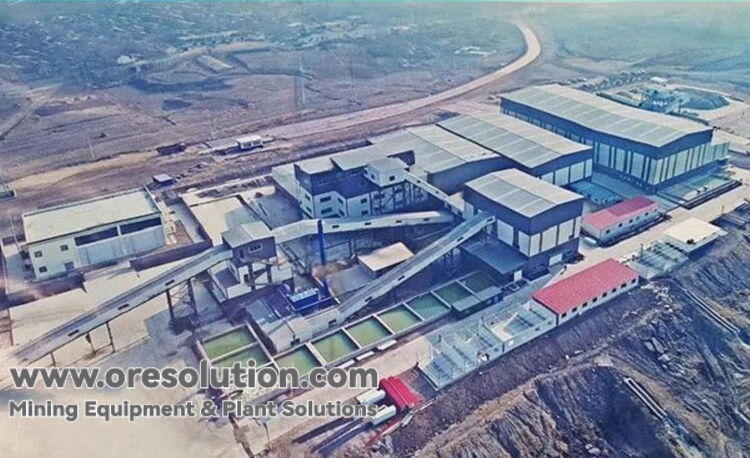
The project is located in East China. The original production line consisted of a jaw crusher, a ball mill, and a simple magnetic separator. The iron content in the product fluctuated significantly; while it was acceptable for ordinary glass sand, it was difficult to consistently meet the standards for photovoltaic sand. Prior to the retrofit, the issues with this low-iron quartz sand production line were concentrated in three key stages.
First, over-grinding in the grinding section. The proportion of fine particles in the ball mill discharge was too high, and the fine slurry interfered with the magnetic separation process, making it impossible to completely remove the iron even with a strong magnetic field.
Second, there was a lack of desliming. Iron-containing fine slime circulated within the system, becoming finer with each grinding cycle—and the finer it became, the harder it was to separate—creating a vicious cycle.
Third, the magnetic separation process consisted of a single stage with a single machine; there was no sweep separation, nor was there any control over the washing water. As a result, magnetic materials and associated minerals were both carried into the concentrate.
The problem does not lie with the magnetic separator itself, but rather in the failure to create the necessary conditions for magnetic separation in the upstream process. In low-iron quartz sand production lines, the effectiveness of the grinding and desliming processes often determines success or failure more than the magnetic separation process itself.
III. Process Design for Low-Iron Quartz Sand Production Lines Based on Pilot Testing
OreSolution\'s approach is to conduct mineral processing tests first and then determine the process flow. For this project, the tests compared three processing routes: single-stage strong magnetic separation; strong magnetic separation with scrubbing; and strong magnetic separation with scrubbing and desliming followed by flotation.
The results were clear: the iron content in the concentrate from the single-stage strong magnetic separation was too high; adding washing and desliming improved the indicators; and incorporating reverse flotation to remove iron-bearing gangue further reduced the iron content. Acid leaching was designated as a contingency stage and would be activated based on the grade specified in the order.
The final process flow for the low-iron quartz sand production line is as follows:
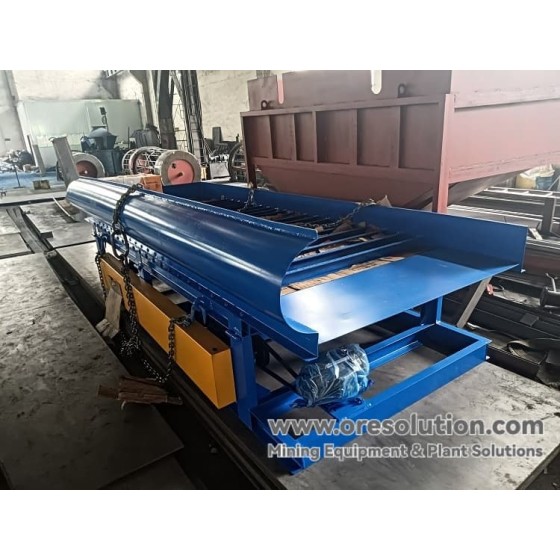
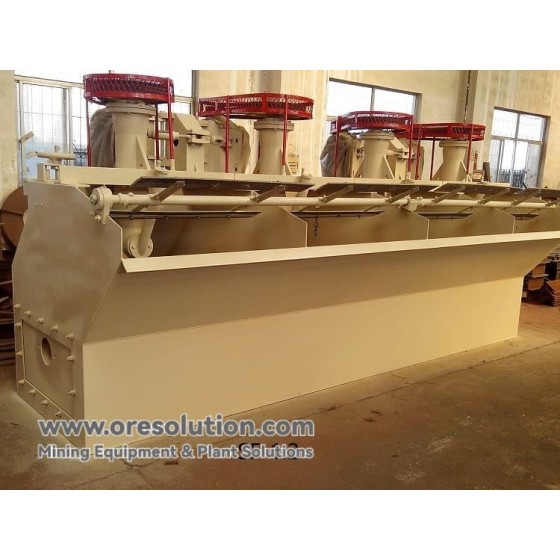
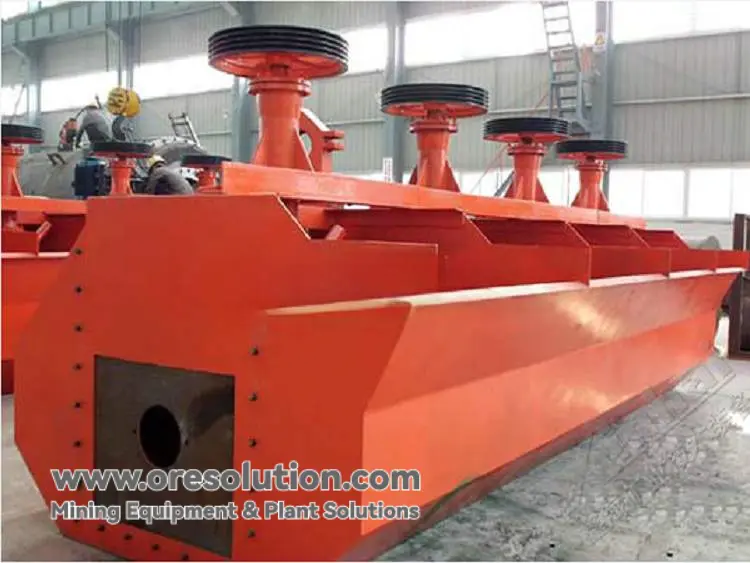
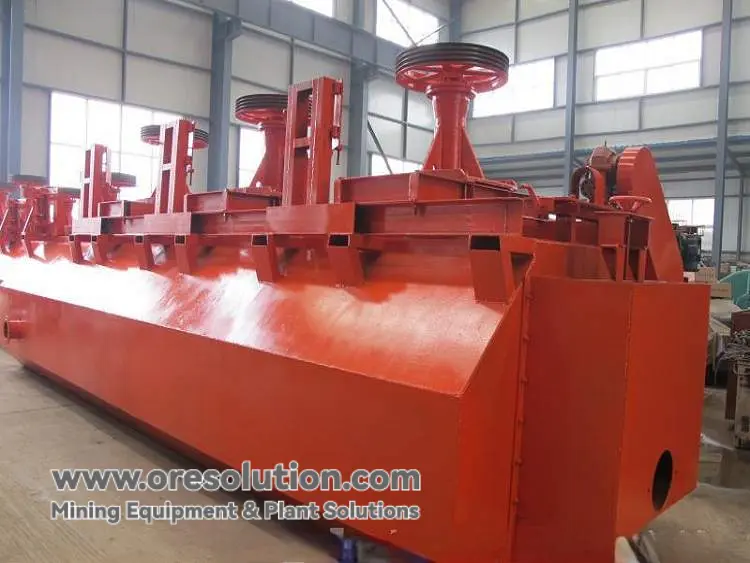
Raw ore → Trommel washer (scrubbing) → Jaw crusher (coarse crushing) → Cone crusher (fine crushing) → Ball mill (grinding) → Hydrocyclone (desliming) → Wet strong magnetic separator(rough separation) → Wet high-intensity magnetic separator (sweep separation) → Aerated flotation cell (reverse flotation for gangue removal) → Acid leaching reactor (optional stage) → Thickener + filter press (dewatering) → Rotary kiln (drying) → Final product
Flow path of fine slime in the desliming stage: hydrocyclone overflow → tailings slime thickening treatment.
Two details are worth elaborating on.
The de-sliming process is positioned after grinding and before magnetic separation, using hydrocyclones to remove fine slime. This reduces the mud content in the feed to the magnetic separator, thereby improving the concentrate grade. This step is the most easily underestimated part of a low-iron quartz sand production line.
Magnetic separation is conducted in two stages—roughing and scavenging—rather than in a single pass. Roughing maintains grade, while scavenging ensures recovery; the addition of wash water in between helps push agglomerates further down the process. The configuration of the number of magnetic separation stages in a low-iron quartz sand production line warrants more careful consideration than simply increasing magnetic field strength.
IV. Equipment Configuration for Low-Iron Quartz Sand Production Lines: Compatibility Takes Precedence Over Simply Stacking Equipment
This low-iron quartz sand production line is designed for medium-scale operations, with the core equipment configuration as follows. The table shows the actual configuration for this case study; equipment selection was based on test reports, not generic templates.
| Process Step | Equipment | Configuration Highlights |
|---|---|---|
| Scrubbing | Cylindrical Ore Washer | For iron adhering to the surface, the scrubbing concentration is determined by testing |
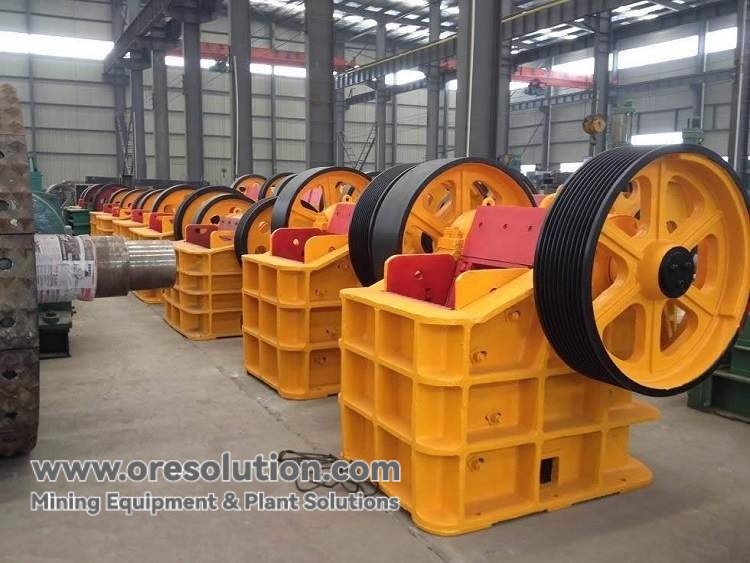
| Primary Crushing | Jaw Crusher | Feed size must match the discharge opening of the downstream unit |
| Fine Crushing | Cone Crusher | Closed-circuit operation with a ball mill |
| Grinding | Ball mill | Grinding fineness is determined by single-particle liberation; prevent over-grinding |
| Desliming | Hydrocyclone | The cut-off size is determined based on the ore sample; the underflow is sent to magnetic separation |
| Strong Magnetic Rough Concentration | Wet high-intensity magnetic separator | Roughing to maintain grade |
| High-intensity magnetic scavenging | Wet-type strong magnetic separator | Sweep Selection to Maintain Recovery Rate |
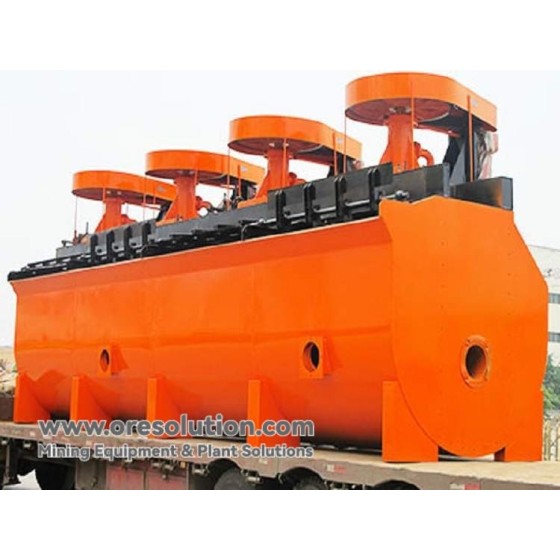
| Flotation | Aerated Flotation Cell | Reverse Flotation for Removing Iron-Bearing Gangue |
| Acid Leaching | Acid Leaching Reactor | Optional section; activated upon order; note: corrosion protection required |
| Dewatering | Thickener and pressure filter | Recirculation of Return Water |
| Drying | Rotary drying kiln | Finished Product Moisture Control |
Even for equipment of the same model, different parameter settings can lead to significantly different results. If the ore is ground too finely, both subsequent magnetic separation and flotation will be affected; if ground too coarsely, insufficient single-particle liberation will occur. This “degree” is determined by test reports and should not be decided based on experience alone.The equipment configuration for a low-iron quartz sand production line is fundamentally designed so that each stage sets the stage for the next, rather than simply stacking equipment together.
V. Key Concerns for Customers Regarding Low-Iron Quartz Sand Production Lines
Is acid washing absolutely necessary for a low-iron quartz sand production line? It depends on the target grade. For ordinary glass sand, scrubbing and magnetic separation are usually sufficient; however, for photovoltaic and electronic-grade high-purity quartz sand—which have strict requirements for iron and aluminum impurities—acid washing is often a necessary step. This also imposes higher demands on equipment corrosion resistance and environmental protection.
For low-iron quartz sand production lines, is a higher magnetic field strength always better for magnetic separators? No. The magnetic field strength must be matched to the ore\'s magnetic content and the size of the embedded particles. Excessively high field strength will carry intergrown particles and weakly magnetic gangue into the concentrate, thereby lowering the grade.Magnetic separation in a low-iron quartz sand production line requires careful coordination between the number of stages and the water used for washing.
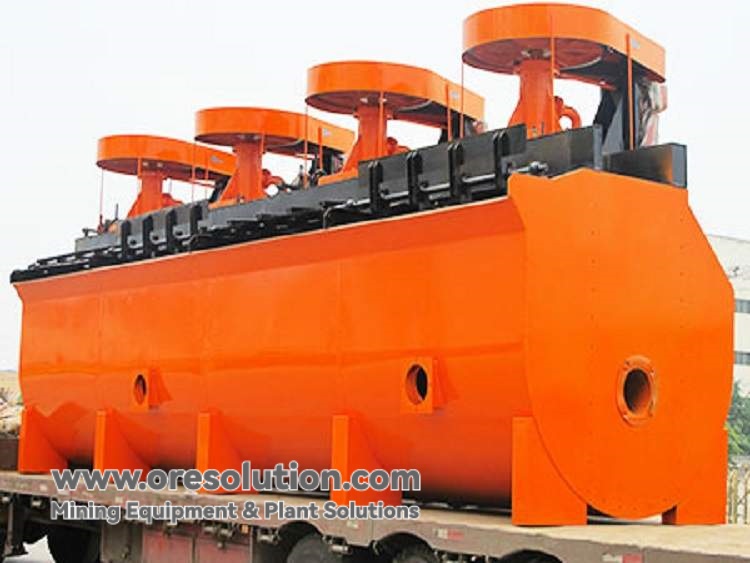
What role does flotation play in a low-iron quartz sand production line? It primarily targets iron-bearing silicate gangue, such as feldspar and mica. Reverse flotation floats the gangue to the surface, while quartz remains in the cell, complementing the magnetic separation process. Whether to include a flotation stage is determined by ore sample testing.
Why must fine slime be treated separately in a low-iron quartz sand production line? Fine slime has a large specific surface area and carries a high iron content; if it enters the magnetic separation or flotation stages, it will interfere with the separation interface. Desliming serves not only as a means of purification but also as a safeguard for stable production line operation.
How is the scale of a low-iron quartz sand production line determined? It is determined based on orders and raw material supply; there is no need to blindly pursue a large scale. Matching the scale to the equipment has a greater impact on return on investment than pursuing high-end single machines.
VI. The Value of the Turnkey Model in Low-Iron Quartz Sand Production Lines
This project adopts the EPC turnkey model, with mineral processing tests, process design, equipment manufacturing, installation and commissioning, and personnel training all carried out seamlessly by a single team.
The value lies in two aspects. First, there is no disconnect between the process and the equipment. If the process design and equipment selection for a low-iron quartz sand production line are handled by two different entities, a mismatch can easily occur—such as a process requiring fine grinding while the equipment is configured for coarse grinding. The turnkey model prevents such issues from the outset.Second, it reduces delays and accountability losses associated with coordinating multiple suppliers; responsibility for issues during the commissioning phase is clearly defined, making the time to reach full production more predictable.
The design phase is handled entirely by the OreSolution team, including mineral processing tests, process design, equipment selection and configuration, plant layout, civil engineering drawings, and technical briefings. Clients do not need to seek out a separate design institute, which represents a significant cost savings for medium- to large-scale projects.For low-iron quartz sand production lines, the savings extend beyond design fees to include the time costs associated with repeated process adjustments.
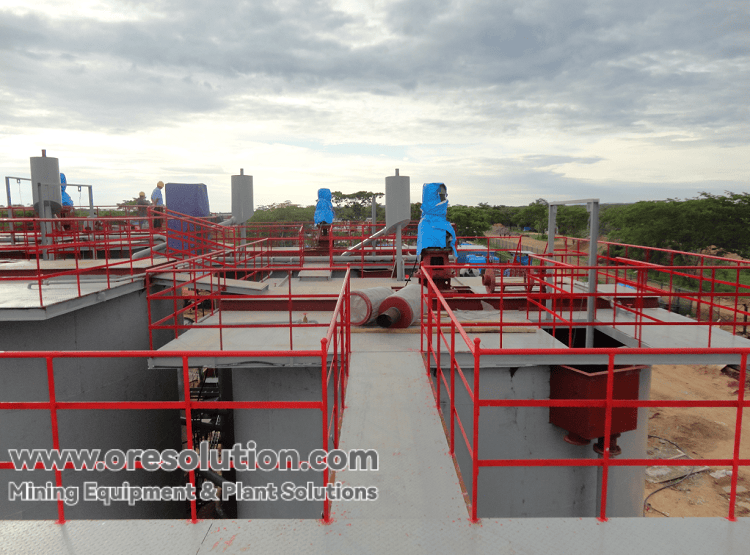
VII. Criteria for Selecting a Low-Iron Quartz Sand Production Line
Examine ore samples, not case study parameters. Case study data reflects results from specific ores and cannot be included in contracts as guaranteed values. The performance metrics for a low-iron quartz sand production line must be based on the mineral processing test report for the specific project.
Focus on process logic, not individual equipment brands. Whether the grinding, desliming, magnetic separation, and flotation stages are seamlessly integrated is more important than whether a particular piece of equipment is imported.
Examine the number of stages, not just magnetic field strength. The process structure—including rough and scavenging magnetic separation, the location of desliming, and wash water control—determines the stability of the low-iron quartz sand production line.
Prioritize corrosion protection and environmental compliance, especially regarding acid washing. The acid washing stage imposes specific requirements on equipment materials and wastewater treatment; failing to address these early on will result in costly retrofits later.
Examine the scope of services. A turnkey project does not guarantee specific performance targets, but it should cover the entire process chain—including testing, design, equipment, and commissioning—with clearly defined lines of responsibility.
Our Commitment to Low-Iron Quartz Sand Turnkey Production Lines
OreSolution adheres to the principle of “testing first, then design.” The process flow and equipment configuration for low-iron quartz sand production lines are based on test data from ore samples; we do not rely on templates, nor do we promise targets that are disconnected from the actual properties of the ore.From mineral processing trials, process design, and equipment manufacturing to installation, commissioning, and personnel training, a single team is responsible for the entire process, ensuring a high degree of alignment between the process flow and equipment for the low-iron quartz sand production line.
If you are planning a low-iron quartz sand production line, or if your existing line suffers from unstable iron content or suboptimal recovery efficiency, we welcome you to contact us with your ore samples. Conducting tests first and then discussing solutions is the starting point for avoiding detours in your low-iron quartz sand turnkey production line project.
The data in this article represents typical industry examples and range descriptions; specific indicators may vary significantly depending on ore properties, project scale, and configuration. The final determination should be based on the actual ore beneficiation test report. The process flow and equipment selection for a low-iron quartz sand production line should be determined based on professional testing.