


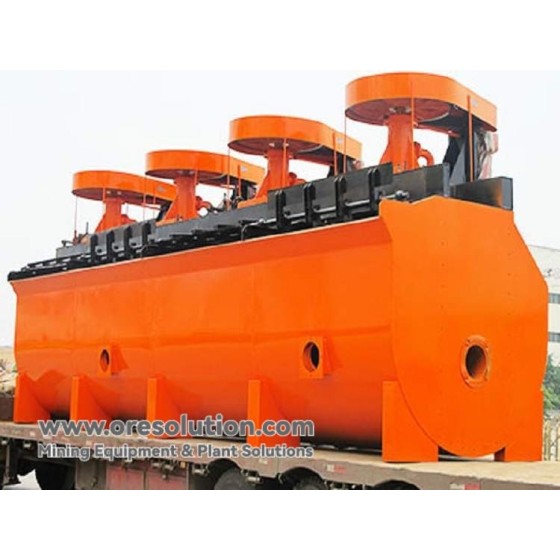
Gold Mining: Carbon-in-Pulp vs. Carbon-in-Leach—Which to Choose?
Choosing between the carbon-in-pulp (CIP) and carbon-in-leach (CIL) processes for gold mining is a decision that no new or retrofitted processing plant can avoid.The CIP and CIL processes differ by only one letter in name, and their flow diagrams are virtually identical. However, once the leaching and adsorption process is finalized, the plant layout, tank volumes, carbon screen locations, and piping routes are all fixed—attempting to make changes later would be equivalent to tearing down the plant and starting over.This comparison of mineral processing solutions breaks down the process principles, advantages and disadvantages, applicable scenarios, equipment configurations, and selection criteria for the carbon-in-pulp (CIP) and carbon-in-leach (CIL) methods for gold ore, helping you make an informed decision that best suits your mine when comparing CIP and CIL processes.
I. Clarifying the Decision: What Exactly Are the CIP and CIL Methods for Gold Ore?
You have two carbon-in-pulp process proposals before you: one is the Carbon-in-Pulp (CIP) method, and the other is the Carbon-in-Leach (CIL) method. The quotes may differ significantly, and the flowcharts look like twins, but when viewed over a five- or eight-year horizon, the financial calculations often yield two very different outcomes.
The essence of this decision is not simply choosing a set of equipment, but rather selecting a leaching and adsorption process that offers the most favorable total life-cycle cost and best suits the ore\'s characteristics—all within the constraints of ore properties, processing capacity, investment budget, and operational capabilities.The most common mistake made when selecting between the carbon-in-pulp (CIP) and carbon-in-leach (CIL) methods for gold ore processing is relying solely on quotations as the basis for decision-making—whether CIP or CIL is cheaper is merely a figure on the investment side; the operational and recovery rate calculations must be considered separately.
To be honest, I\'ve seen far too many projects agonize over these two options. Some mines received two quotes and signed on the spot because CIP had a lower capital cost, only to discover a year after production began that recovery rates wouldn\'t improve—and the savings from the lower investment were entirely offset by the lower grade of the tailings;Other mines spent more to implement CIL, only to find that high clay content in the ore and severe carbon wear caused operating costs to exceed the budget. This is precisely where the value of comparing CIP and CIL processes lies: evaluating both options within the context of your specific ore conditions, rather than focusing solely on price.
According to general mineral processing experience, the process route for gold-bearing rock should be determined based on the form of gold and its grain size: coarse-grained free gold is processed via gravity separation; gold enclosed in sulfide ores is processed via flotation; fine-grained oxidized ores are processed via CIL/CIP leaching; and difficult-to-process ores containing arsenic or carbon require pretreatment before leaching.CIP and CIL are primarily applied in two scenarios: “leaching of fine-grained oxidized ores” and “re-leaching of flotation concentrates/tailings.”
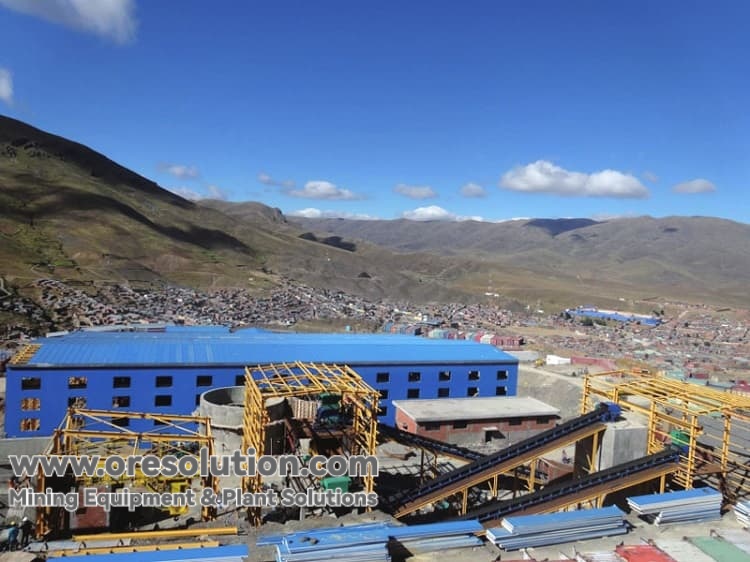
II. Option A: Introduction to the Carbon-in-Pulp (CIP) Process
CIP stands for Carbon in Pulp. Its core principle is “leaching first, then adsorption”: in the initial leaching stage, cyanide is added to the pulp in the leaching tank and air is introduced to dissolve the gold from the ore;followed by adsorption: the leached pulp flows into an adsorption tank, where activated carbon is added to adsorb the dissolved gold onto the carbon. Leaching and adsorption are carried out in two separate tank sets, effectively “dissolving” the gold into the water first and then “extracting” it with carbon—two distinct steps.
Advantages of the CIP Carbon-in-Pulp Process: Leaching and adsorption are separated, allowing ample leaching time and making the process more suitable for ores with insufficient liberation of gold-bearing minerals;There is no interference from raw ore in the adsorption tank, and carbon wear is relatively controllable; the process is clearly segmented, making it easy for operators to understand, and a problem in one stage does not affect the other; for ores with high silt content and high viscosity, the leaching stage can be adjusted independently. This is also why the gold CIP process remains widely adopted in projects involving complex ores.
Disadvantages of the CIP Carbon-in-Leach Process: There is a risk of short-circuit losses as dissolved gold flows from the leaching tank to the adsorption tank;The process involves a large number of units—two tank sets (leaching and adsorption tanks)—which increases the footprint and the complexity of the piping system; Capital investment is typically significantly higher than that of the CIL process, due to the greater number of tanks, agitators, and extensive civil engineering work.
Suitable Applications and Investment Range: Mines with generally moderate ore liberation, high clay content, and requirements for sufficient leaching time; or projects with medium throughput and relatively ample site space.In terms of investment, CIP generally requires more tank sets and civil engineering work, resulting in an overall investment that is typically higher than that of a CIL plant of the same scale. The specific difference varies significantly depending on configuration, materials, and the degree of automation; it is recommended to calculate costs on a project-by-project basis rather than applying a fixed range to all mines.
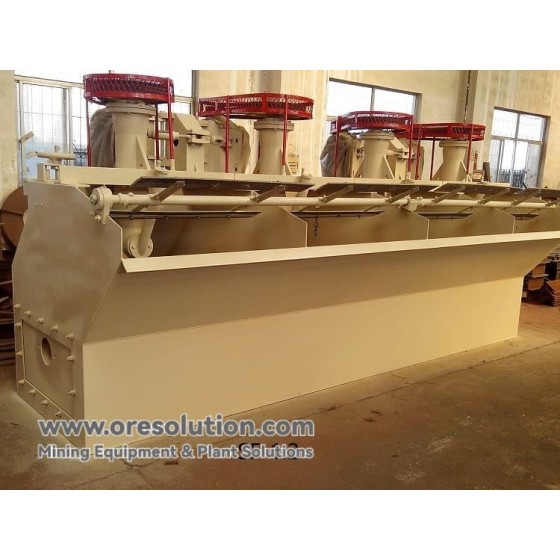
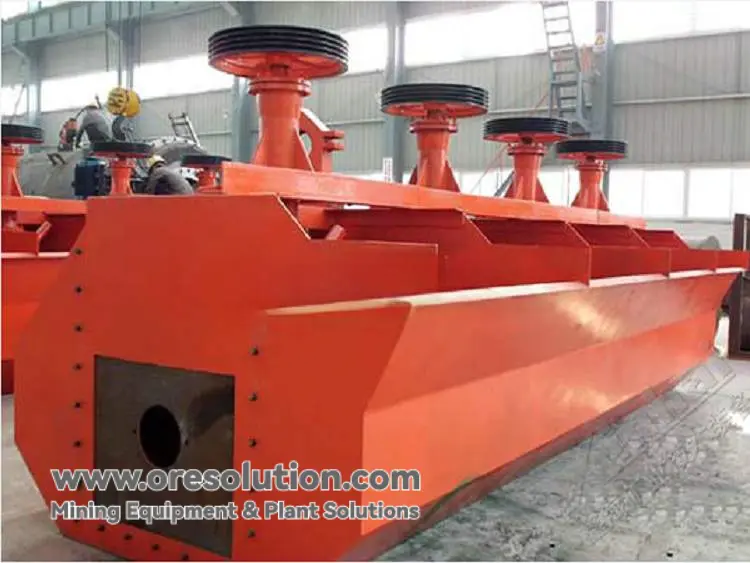
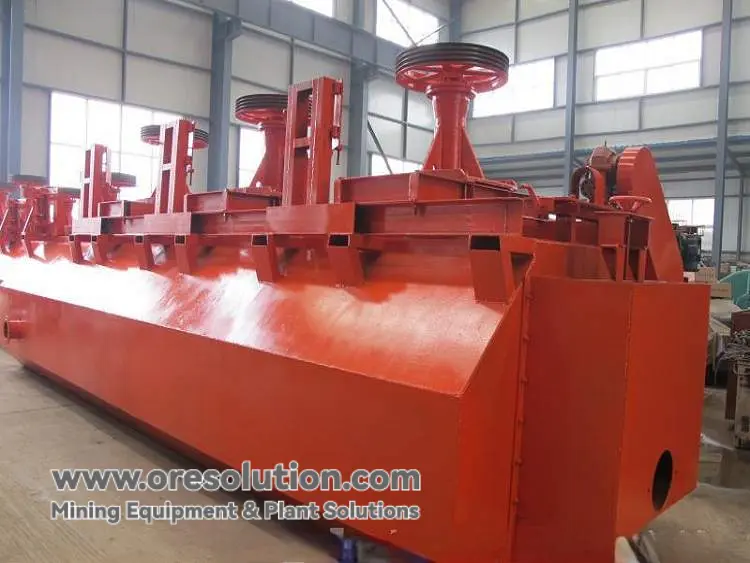
Core Equipment Configuration: Crusher, ball mill, high-efficiency dual-impeller carbon-in-pulp tanks (with separate leaching and adsorption sections), carbon-separating screen, desorption electrolysis equipment, gold smelter, high-efficiency tailings thickener, and filter press (for dry discharge).The key hardware in CIP lies in the “segmentation”—the leaching tank group and the adsorption tank group are independent of each other, and the location and number of carbon-separating screens directly affect the carbon retention efficiency.
III. Proposal B: Introduction to the Carbon-in-Leach (CIL) Process
CIL stands for Carbon-in-Leach. The core principle is “leaching and adsorption in parallel”: leaching and adsorption are combined into a single set of tanks. When cyanide is added to the slurry to initiate leaching, activated carbon is present in the tank, and as gold dissolves, it is immediately adsorbed by the carbon.To use an analogy, CIP is like brewing tea and then filtering out the tea leaves, while CIL is like brewing and filtering simultaneously—the tea is captured the moment it is released.
Advantages of the CIL carbon-in-leach process: Leaching and adsorption occur simultaneously; the dissolved gold is captured by the carbon before it has a chance to “escape,” minimizing the risk of short-circuit losses;Fewer tank groups are required—typically about 30% fewer tanks than in CIP—significantly reducing floor space and civil engineering costs; the process is shorter with fewer pipelines, resulting in shorter installation times and fewer maintenance points; for ores with rapid liberation and high leaching rates, recovery rates tend to be more stable.This is why an increasing number of processing plants prioritize CIL when selecting carbon-in-leach methods.
Weaknesses of the CIL (Carbon-in-Leach) process: Since leaching and adsorption occur in the same tank, the carbon remains in the slurry for an extended period, increasing the risk of wear and clogging; impurities and clay in the slurry can interfere with the carbon\'s adsorption efficiency, making the process less suitable for ores with high clay or carbon content;Operational parameters are highly interdependent; leaching and adsorption conditions must be adjusted simultaneously, placing higher demands on operators.
Suitable Applications and Investment Range: Mines with rapidly liberated ore, high leaching rates, and low clay content; or projects with relatively high throughput that prioritize a compact process flow and cost control.Due to the smaller number of tanks and reduced civil engineering requirements, the capital investment for CIL is typically lower than that of CIP of the same scale; however, the specific difference depends on ore conditions and configuration, so it is recommended to calculate costs on a project-by-project basis rather than relying on fixed figures.
Core Equipment Configuration: Crusher, ball mill, high-efficiency dual-impeller carbon-in-leach tank (combining leaching and adsorption in a single tank), carbon-separating screen, desorption and electrolysis equipment, gold smelter, high-efficiency tailings thickener, and filter press (for dry discharge).The key to CIL hardware lies in the “single-tank” design—the impeller configuration of the carbon leaching tanks and the arrangement of the carbon separation screens determine the residence time and wear rate of the carbon within the tanks. When selecting equipment, the three parameters—impeller speed, tank depth, and carbon concentration—must be considered together; one should not simply compare the number of tanks.
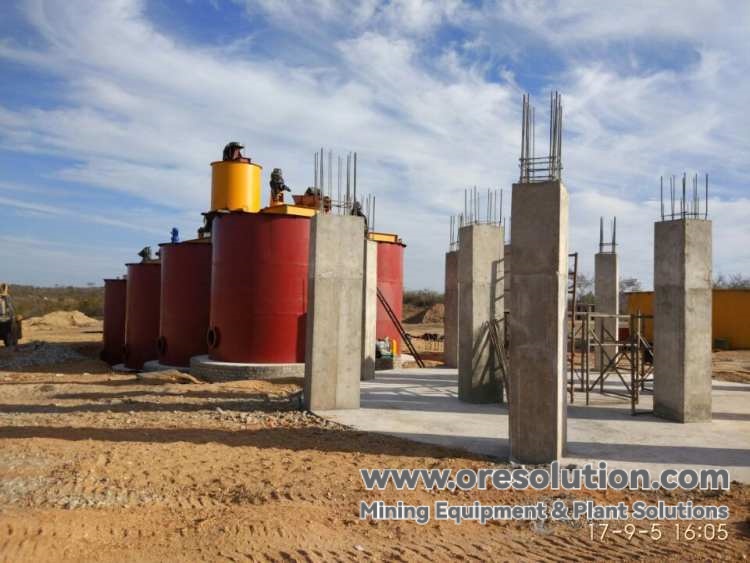
IV. Comparison of CIP and CIL Processes: A Five-Dimensional Analysis
CIP vs. CIL: A Five-Dimensional Comparison
| Comparison Dimensions | Option A: CIP (Carbon-in-Pulp Process) | Option B: CIL (Carbon-in-Leach Process) |
|---|---|---|
| Capital Investment | Higher; requires multiple tank banks and extensive civil engineering work | Lower; fewer tanks and less civil engineering required |
| Operating Costs | Cost per metric ton of ore is slightly higher; higher electricity consumption and more maintenance points | Cost per metric ton of ore is typically lower, with a shorter processing flow |
| Recovery Rate | Thorough leaching, stable recovery rate; short-circuit losses must be controlled | Simultaneous adsorption results in low short-circuit losses; carbon wear affects recovery rate |
| Ore Adaptability | More suitable for ores with high clay content and slow liberation | Ores with rapid liberation and low clay content are better suited; exercise caution with ores high in clay and carbonaceous material |
| Maintenance Difficulty | Multiple tank groups result in dispersed maintenance points, but interference within individual sections is minimal | Fewer maintenance points, but more frequent handling of carbon wear and clogging |
[Quick Reference Table of Pros and Cons]
| CIP (Carbon-in-Pulp) | CIL (Carbon-in-Leach) | |
|---|---|---|
| Key Advantage | Adequate leaching time and clearly defined process stages | Compact process, low capital investment, and minimal risk of short-circuit losses |
| Major Drawbacks | High capital investment, numerous tank banks, and risk of short-circuit losses | Significant carbon wear; relatively poor adaptability to high-slime ores |
| Most Common Mistakes | Forcing CIP on ore that liberates quickly but is hard, resulting in higher costs without improved recovery rates | Selecting CIL solely based on lower capital costs despite high clay content, only to recoup the difference through operational expenses |
Capital and operating costs must be calculated separately
The investment difference between CIP and CIL, as well as the difference in operating costs per metric ton of ore, can typically be recouped within a few years for medium-sized operations with moderate ore conditions. However, the payback period is highly dependent on the ore\'s clay content and carbon wear rate, and is not a fixed number of years.For ore with low clay content and fast liberation, CIL offers savings in both investment and operations, with advantages realized quickly; for ore with high clay content and high carbon content, CIL\'s carbon wear and reagent consumption will offset the investment advantage, significantly lengthening the payback period—in such cases, the stability of CIP becomes more valuable.
Investment focuses on the short term; operations focus on the long term. When selecting between the carbon-in-leach (CIL) and carbon-in-pulp (CIP) methods for gold ore processing, the decision is never based on which method offers the lowest quote, but rather on which method\'s total life-cycle cost best aligns with your mine\'s specific conditions.
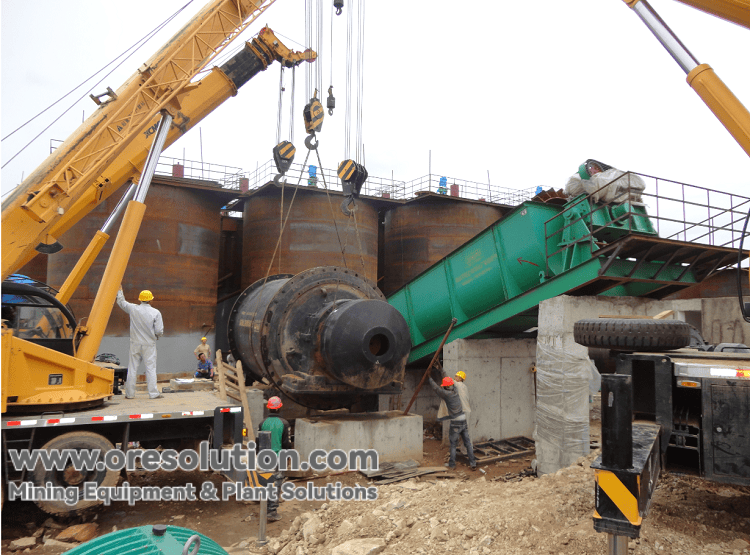
V. Ore Type and Processing Capacity: Key Variables in CIP/CIL Selection
Selection Trends for Different Ore Types
Oxidized ores and ores with low clay and low sulfur content exhibit rapid liberation and high leaching rates, making it easier to realize the synchronous adsorption advantages of CIL, while carbon wear remains relatively controllable.For oxidized ores with high clay content or ores rich in clay-bearing gangue, the high slurry viscosity can lead to clogging in CIL tanks and increased carbon wear; in such cases, the stability of CIP\'s staged processing is a more critical consideration.For ores with high carbon content, caution is warranted with both methods, as carbonaceous materials can “sequester” dissolved gold; leaching tests must be conducted before a decision is made. For ores with a high proportion of sulfide minerals, leaching kinetics tend to be slower, and a CIP design with sufficient leaching time in each stage often provides greater flexibility.
In gold-bearing rock ores, special attention must be given to ores containing arsenic, carbon, and copper—the so-called “triple-challenge” ores. Such ores cannot be processed directly using conventional cyanidation flowsheets; they must first undergo pre-treatment via roasting, bio-oxidation, or pressurized oxidation before entering the CIP or CIL process.For the leaching and adsorption stages following pretreatment, the selection logic is the same as for ordinary oxidized ores; however, the risk of carbon contamination is higher, and a CIP process with separate stages allows for more flexibility in carbon replacement and washing.
The situation is similar for silver ores.For standalone silver deposits where silver exists in a free state, both CIL and CIP are viable options; for by-product silver deposits, recovery rates primarily depend on the efficiency of the host metal flotation, with the leaching stage serving mainly as a supplementary recovery step. In combined flotation-leaching processes, the choice between CIP and CIL for the leaching stage depends on the mud content in the flotation concentrate and the expected carbon wear.
Process Selection Trends for Different Scale Operations
Small-scale projects (daily throughput in the hundreds of metric tons) are highly investment-sensitive. The CIL process is compact and requires less civil engineering, often making it easier to control initial investment—provided the ore has a low clay content.For medium-scale projects (daily processing capacity in the hundreds of metric tons), both options are viable; the key factors are ore properties and operational capabilities. The stability of CIP and the economic efficiency of CIL must be evaluated on a case-by-case basis.Large-scale projects (daily processing capacity of 1,000 metric tons or more): The impact of the number of tanks and land requirements is magnified. The compactness advantage of CIL becomes more pronounced, but it also places higher demands on carbon wear management and operational proficiency. The controllability of CIP in segmented operations remains valuable when dealing with complex ores.
VI. Gold Ore Carbon-in-Pulp vs. Carbon-in-Leach: Defining Selection Criteria
When to choose CIP (Carbon-in-Pulp): High clay content in the ore, insufficient liberation of gold minerals, and the need for sufficient leaching time; moderate to small processing capacity with ample site space; and when you prioritize a clearly segmented process where a failure in a single stage does not affect the entire system. In these cases, the additional investment will pay off in terms of stable recovery rates.
When to Choose CIL (Carbon-in-Leach): Rapid ore liberation, low clay content, and high leaching rates; larger processing capacities where a compact process and controlled investment are prioritized;you have some operational experience and can monitor carbon wear and tank blockages. In this scenario, the savings on investment are genuine, and the operational advantages can be fully realized.
When to consider both options: For projects with high carbon content, heavy clay content, or highly variable ore properties, neither CIP nor CIL is a walk in the park. Conduct leaching tests first before making a decision; do not base your decision solely on quotations.For difficult-to-process gold ores containing arsenic and carbon, first determine the pre-treatment route, then revisit the leaching stage to decide between CIP and CIL.
To sum it up: CIP is suitable for mines with high clay content, slow liberation, and a need for stability; CIL is suitable for mines with low clay content, fast liberation, and a focus on controlling investment. Once these boundaries are clear, choosing between the carbon-in-pulp (CIP) and carbon-in-leach (CIL) methods for gold mines becomes straightforward.
A solution that works for others may not necessarily work for your mine. CIP and CIL each have their own specific conditions for application; the selection must be based on the ore properties and operational capabilities of your own mine.
VII. Three Things Worth Doing Before Selecting a Process
First, conduct leaching tests. The ore\'s leaching kinetics, clay content, and carbon content form the foundation for comparing CIP and CIL processes; test data is more reliable than any quotation.Second, calculate the full life-cycle costs. Compile investment, operating, maintenance, and downtime losses into a single table to determine the payback period in years, rather than focusing solely on the initial quote. Third, when finalizing the plan, allow for future capacity expansion. Leaching and adsorption processes are difficult to modify, so tank volumes and piping layouts should be designed with room for future throughput increases.
An equipment configuration list can serve as the basis for requesting quotes, but it cannot replace test reports. Even for the same type of high-efficiency dual-impeller carbon leaching tank, CIP and CIL have different requirements regarding the series connection of tanks, the position of the carbon separation screen, and impeller speed. The configuration list must be determined based on the specific process route; a single generic list cannot be applied to both solutions.
Consulting and Collaboration
If you wish to conduct a CIP/CIL suitability assessment tailored to the characteristics of your mine\'s ore, please provide basic parameters such as grade, clay content, throughput, and target recovery rate. This will enable us to break down the investment and operating costs item by item for both the gold carbon-in-pulp (CIP) and carbon-in-leach (CIL) processes and provide recommendations for a suitable mineral processing solution.The recommended sequence of steps is as follows: first, complete ore leaching tests; then, perform a full life-cycle cost analysis; and finally, determine the process scheme.