


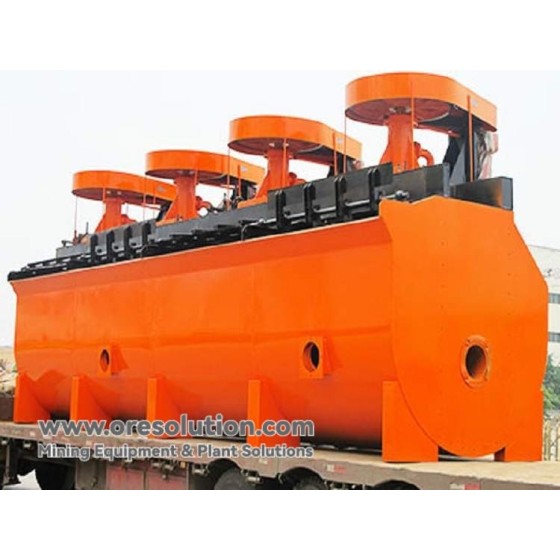
How Should a CIP Gold Ore Processing Line Be Configured? A Supplier's Proposal for a Complete Set of Equipment with a Daily Processing Capacity of 200 Metric Tons
A CIP gold ore processing line with a daily capacity of 200 metric tons is a very typical scale for small- and medium-sized gold mining projects. This scale is neither a mere “token effort” like a pilot plant nor a massive investment—often running into the hundreds of millions—like that of large-scale mines. When configured properly, it offers controllable investment costs and a quick return on investment;However, if configured poorly, it can either result in production bottlenecks or lead to wasted money due to “overkill” equipment. During the planning phase, many mine owners are most concerned about the following questions: How exactly should a 200-metric-ton-per-day CIP line be configured? What equipment is needed? How do the various process stages integrate? And what kind of supplier can be trusted?Using a daily processing capacity of 200 metric tons as a benchmark, this article systematically explains the configuration logic, equipment list, key selection criteria, and supplier selection standards for CIP mineral processing lines, helping you ensure your line is “configured accurately, built quickly, and operates reliably.”
I. First, Let\'s Clarify: What Is CIP? What Does 200 Metric Tons Per Day Mean?
CIP (Carbon-in-Pulp) is a process used after cyanide leaching of gold ore, in which activated carbon is used to directly adsorb gold cyanide complexes from the pulp.The pulp passes through a leaching tank to dissolve the gold, then enters an adsorption tank for countercurrent contact with activated carbon. The gold-loaded carbon is desorbed via electrolysis to produce gold slime, which is then smelted into refined gold. A similar process, CIL (Carbon-in-Leach), performs leaching and adsorption in the same tank, offering greater resistance to gold loss.
With a daily processing capacity of 200 metric tons—equivalent to an hourly processing capacity of approximately 8.3 metric tons (based on 24-hour continuous operation)—this facility falls into the category of small-to-medium-sized processing plants. Key characteristics of this scale include:
-
Moderate investment threshold: The investment in the complete set of equipment is manageable, making it suitable for small- and medium-sized mine owners or phased construction projects;
-
Precise configuration is essential: Oversizing equipment wastes investment, while undersizing limits production capacity; calculations must be based precisely on the processing volume;
-
A complete process flow is required: Crushing, grinding, leaching, adsorption, desorption, electrolysis, and tailings treatment—not a single step can be omitted;
-
Heavy reliance on ore sample testing: Leaching time, reagent concentration, and the number of adsorption stages must all be determined through testing; decisions cannot be made arbitrarily.
Important Prerequisite: While 200 metric tons per day is the “processing capacity” metric, equipment configuration also depends on ore properties (grade, grain size distribution, degree of gold entrapment, and clay content), as well as requirements for grinding fineness and leaching time.The following configuration serves as a typical framework; actual models and quantities must be based on the mineral processing test report and customized solutions.
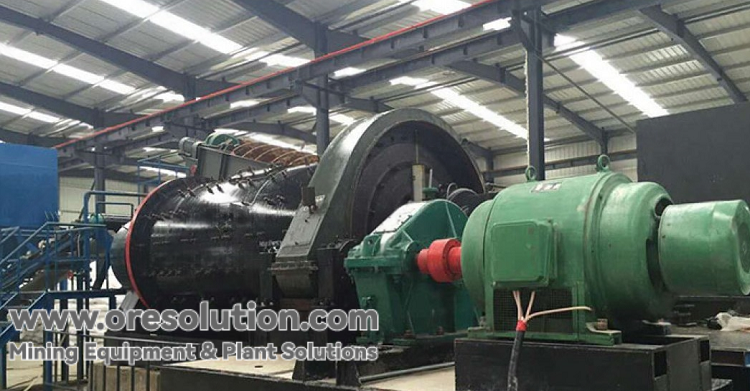
II. Complete Process Stages and Equipment Configuration for a 200-metric-ton-per-day CIP Production Line
A complete 200 metric tons per day CIP mineral processing production line is typically divided into seven process stages:
1. Crushing and Screening Section
Objective: To crush the raw ore to the grinding feed size (typically ≤15–25 mm), following the principle of “crush more, grind less” to reduce grinding energy consumption.
Core Equipment:
-
Jaw Crusher (Primary Crushing): PE-400×600 or PE-600×900, with a processing capacity of 15–50 t/h; model selection based on the raw ore\'s particle size and hardness;
-
Cone crusher or impact crusher (medium and fine crushing): Selected based on ore hardness and crushing ratio;
-
Vibrating Screen: Circular vibrating screen or linear vibrating screen; the screening size is determined based on the grinding feed requirements;
-
Feeder: ZSW vibrating feeder or trough feeder;
-
Belt Conveyor: Connects the various sections; belt width: 500–800 mm.
Key Configuration Points: For a 200 metric tons per day capacity, the crushing section is typically designed for an 8–10-hour operating cycle, with a crushing capacity of at least 20–25 t/h to allow for operational margin.
2. Grinding and Classification Section
Objective: To grind the ore to the fineness required for the liberation of free gold (typically 75%–90% passing -200 mesh, subject to specific test results).
Core Equipment:
-
Ball Mill: Φ1500 × 3000 or Φ1830 × 4500; processing capacity is calculated based on grinding fineness and ore hardness;
-
Spiral classifier or hydrocyclone: Operates in a closed circuit with the ball mill to control the classification size;
-
Feeder, slurry pump, and agitation tank.
Key Configuration Points: Grinding fineness directly determines the leaching recovery rate; if the grind is too coarse, liberation is insufficient; if too fine, slime formation leads to waste. A 200 metric tons per day operation typically consists of 1 ball mill and 1 classification unit; specific models must be determined by back-calculating based on the grinding fineness established through testing.
3. Leaching Section (the “Leaching” in CIP)
Objective: Under alkaline conditions (pH 10–11), dissolve gold into gold cyanide complexes using a sodium cyanide solution.
Core Equipment:
-
Leaching tanks (with aeration and agitation): Typically 4–6 tanks connected in series; total leaching time is determined by pilot testing (generally 24–48 hours); for a 200 metric tons per day operation, the effective volume of a single tank is approximately 20–30 m³;
-
Dosing System: Sodium cyanide preparation tank, lime/caustic soda preparation tank, dosing pumps;
-
Aeration System: Blowers, aeration piping;
-
Online Monitoring: pH meter, cyanide concentration monitor, dissolved oxygen monitor.
Key Configuration Points: The number and volume of leaching tanks are calculated using the formula “processing capacity × leaching time ÷ effective volume”; aeration volume and agitation intensity affect the rate of gold dissolution; chemical dosing points must be precisely controlled.
4. Adsorption Stage (the “Ads” in CIP)
Objective: The ore slurry enters the adsorption tank, where it comes into countercurrent contact with activated carbon, and the gold is adsorbed by the activated carbon.
Core Equipment:
-
High-efficiency dual-impeller carbon leaching tank (adsorption tank): Typically 4–6 sections connected in series, matched to the specifications of the leaching tanks;
-
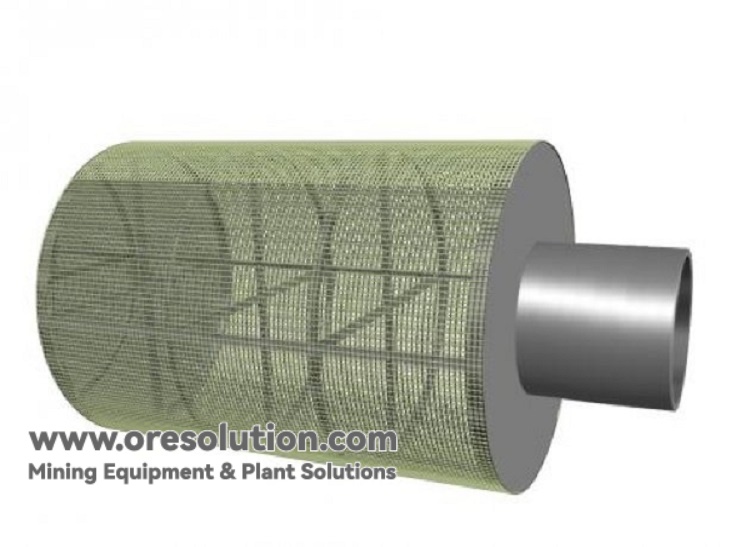
Charcoal Retention Screen: Installed inside the adsorption tank; the screen mesh size matches the activated carbon particle size to prevent charcoal loss;
-
Carbon-Lifting Pump (Air Lift or Carbon-Lifting Pump): Transports gold-laden carbon from the previous stage to the next, enabling countercurrent flow;
-
Activated Carbon: Coconut shell or apricot kernel carbon, typically with a particle size of 6–12 mesh or 8–16 mesh;
-
Charcoal Regeneration System (optional): Rotary kiln regeneration or acid washing regeneration.
Key Configuration Points: The number of adsorption stages affects the recovery rate; more stages result in higher recovery but increased investment. Activated carbon concentration (typically 10–25 g/L), carbon lift volume, and screen aperture size must be precisely designed to prevent carbon loss and blockages.
5. Desorption, Electrolysis, and Smelting Section
Objective: Gold-loaded carbon is subjected to desorption (gold removal) and electrolysis to produce gold slurry, which is then smelted into refined gold.
Core Equipment:
-
Desorption and Electrolysis Equipment: Selected based on gold-loaded carbon throughput; OreSolution equipment achieves desorption rates of over 96% and electrolysis rates exceeding 99%; a 200 metric tons per day operation typically uses units with batch capacities of 300 kg or 500 kg;
-
Gold Smelting Furnace: TG-15A (portable) or TG-35AB (cabinet-type), selected based on production capacity;
-
Activated Carbon Regeneration/Acid Washing Equipment.
Configuration Key Points: The batch processing capacity of the desorption and electrolysis equipment must match the daily output of gold-loaded carbon; the desorption solution formula, temperature, and pressure parameters affect the desorption rate and must be operated in accordance with equipment specifications.
6. Tail Liquids and Environmental Protection Section
Objective: Treat cyanide-containing tailings to meet regulatory standards; safely stockpile or dry-discharge tailings.
Core Equipment:
-
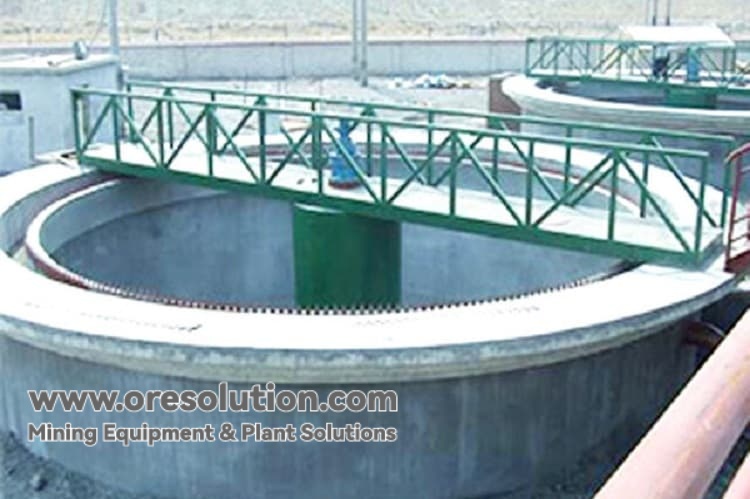
High-Efficiency Tailings Thickener: GX-type high-efficiency thickener or NG-type peripheral-drive thickener;
-
Filter Press: For dry tailings disposal or concentrate dewatering;
-
Cyanide Removal/Neutralization System: Alkaline chlorination or hydrogen peroxide method for cyanide removal, neutralization tanks, and chemical dosing systems;
-
Emergency and accident retention ponds.
Key Configuration Points: Environmental compliance is the lifeline of a CIP project; cyanide-containing tailings effluent must be treated to meet regulatory standards; dry tailings discharge promotes tailings dam safety and environmental protection.
7. Auxiliary and Automation Section
Core Equipment: Slurry pumps, carbon recovery pumps, water pumps, agitation tanks, electrical control systems, online monitoring systems (pH, cyanide concentration, flow rate, liquid level).
Configuration Highlights: The level of automation affects production stability and labor costs; for a 200 metric tons per day capacity, basic automation (PLC control + online monitoring of key parameters) is recommended.
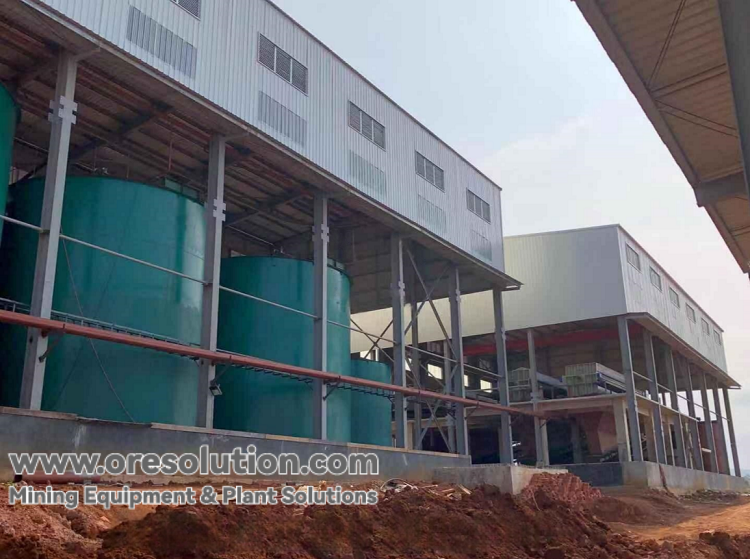
III. Quick Overview of Equipment List for a 200-metric-ton/day CIP Line (Typical Framework)
| Process Section | Core Equipment | Quantity (Typical) |
|---|---|---|
| Crushing and Screening | Jaw Crusher, Cone/Impact Crusher, Vibrating Screen, Feeder, Belt Conveyor | 1–2 units each |
| Grinding and Classification | Ball mill, spiral classifier/hydrocyclone, slurry pump | 1 unit each |
| Leaching | Leaching tanks (with aeration and agitation), dosing system, blowers | 4–6 tanks |
| Adsorption | High-efficiency dual-impeller carbon adsorption tanks, carbon separation screens, carbon recovery pumps | 4–6 stages |
| Desorption and Electrolysis | Desorption and electrolysis equipment, gold smelting furnace, carbon regeneration equipment | 1 set each |
| Tailings Treatment | High-efficiency concentrator, filter press, cyanide removal and neutralization system | 1 set each |
| Auxiliary | Slurry pumps, water pumps, mixing tanks, electrical controls, online monitoring | As needed |
Please note: This table provides a typical framework. Actual models, quantities, and specifications must be customized based on ore characteristics, processing capacity, grinding fineness, leaching time, gold recovery rate, and site conditions, and are subject to the mineral processing test report and customized proposal.
IV. Five Common Misconceptions Regarding the Configuration of a 200 metric tons/day CIP Line
Misconception 1: Skipping Tests and Blindly Adopting “Standard Configurations”
Even at the same 200 metric tons per day capacity, the leaching time, reagent regimens, and number of adsorption stages for oxidized ores may differ completely from those for arsenic- and carbon-bearing ores. Correct Approach: First, conduct leaching tests and gold recovery rate tests using representative ore samples, and determine the configuration based on the data.
Misconception 2: Equipment that is “over-sized” or “under-sized”
—purchasing an oversized crusher wastes investment, while an undersized ball mill creates a bottleneck in production capacity. Correct Approach: Precisely calculate the capacity of each stage based on throughput, ore hardness, and grinding fineness, leaving a reasonable margin (typically 10%–20%).
Misconception 3: Mismatched volumes of leaching and adsorption tanks. Insufficient
leaching time leads to incomplete gold dissolution, while an insufficient number of adsorption stages results in low recovery rates. Correct Approach: Calculate the number and volume of tanks using the formula “throughput × time ÷ effective volume,” and design the leaching and adsorption stages in a coordinated manner.
Misconception 4: Neglecting to match the mesh
size of the carbon separation screen with that of the activated carbon particles leads to carbon loss and blockages; insufficient carbon recovery results in low carbon grade. Correct Approach: Precisely match the mesh size of the carbon separation screen with the particle size of the activated carbon, and design the carbon recovery system to meet counter-current adsorption requirements.
Misconception 5: Piecing together equipment results in system incompatibility.
Crushers, ball mills, leaching tanks, and desorption electrolysers are sourced from different manufacturers; while individual units may meet standards, frequent system coordination issues arise. Correct Approach: Select an EPC supplier with in-house manufacturing capabilities for core equipment and experience in system integration.
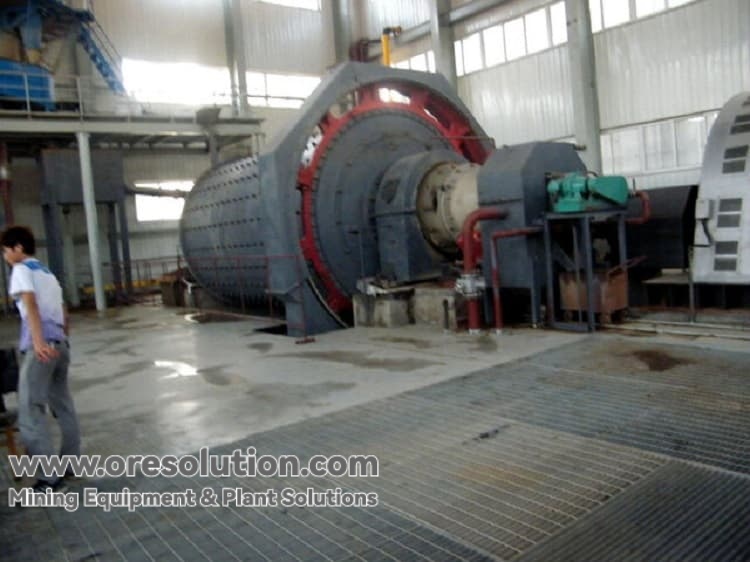
V. Why Choose a Turnkey EPC Model with a Complete Equipment Supplier?
A 200 metric tons per day CIP line involves multiple stages, including pilot testing, design, equipment procurement, installation, and commissioning. The traditional approach of “purchasing equipment separately and hiring independent contractors for installation” is prone to issues such as incompatible equipment selection, piping conflicts, and disputes during commissioning. Advantages of choosing a turnkey equipment supplier + EPC model:
-
Closed-loop accountability: A single team is responsible for the final outcome, coordinating the entire process from testing to production launch;
-
Customized Integration: Configurations are tailored based on ore sample test data, and in-house manufacturing capabilities ensure seamless integration between equipment and process;
-
Cost Reduction and Efficiency Improvement: Eliminates hidden costs associated with coordinating multiple parties and shortens the plant construction timeline;
-
Savings on Design Fees: In-house teams handle core design phases, saving hundreds of thousands of dollars in design fees for medium- to large-scale projects;
-
Guaranteed After-Sales Support: Continuous online support for spare parts supply, technical assistance, and process optimization.
VI. OreSolution\'s 200-Metric-Ton-Per-Day CIP Production Line EPC Turnkey Solution
OreSolution specializes in mining equipment and mineral processing solutions, with operations spanning five major sectors: metal ores, non-metal ores, precious metal ores, sand mines, and tailings/solid waste. The company operates three modern manufacturing bases(Shahe Industrial Park, Zhanggong District, Ganzhou, Jiangxi; Guzhang Industrial Park, Shicheng County, Ganzhou, Jiangxi; and Weifang Heavy Industry Park, Shandong). With 20 years of experience in mining equipment manufacturing and solution integration, our products are exported to more than 80 countries and regions worldwide.As a full-scale equipment supplier for gold mine CIP processing lines, we provide comprehensive EPC turnkey services from ore sample testing to production commissioning and target achievement:
Step 1: Requirements Discussion and Preliminary Assessment
—We assess the ore type, gold grade, processing capacity (200 metric tons per day), ore properties (oxidized/sulfide, arsenic and carbon content), site conditions, and target recovery rate to propose a preliminary process direction and feasibility assessment.
Step 2: Ore Sample Analysis and Processing Tests
: We conduct chemical composition analysis, phase analysis, leaching tests,gold recovery rate tests, and CIP/CIL comparison tests on representative ore samples to determine leaching time, reagent regimes, number of adsorption stages, and grinding fineness. We issue an authoritative “Mineral Processing Test Report” recommending the process flow, equipment selection, and expected performance indicators. This serves as the scientific foundation for the configuration plan.
Step 3: Customized Solution Design and Quotation
Based on the test report, we complete the Process Flow Diagram (PFD), equipment configuration list (specified by model and quantity), plant layout plan, 3D layout proposal, and civil engineering requirements drawings, and provide a transparent EPC (Engineering, Procurement, and Construction) budget.
Step 4: Equipment Manufacturing and Quality Inspection
Core equipment (crushers, ball mills, leaching tanks, high-efficiency twin-impeller carbon-in-leach tanks, carbon separation screens, carbon recovery pumps, desorption and electrolysis equipment, gold smelting furnaces, thickeners, filter presses, etc.) is manufactured strictly in accordance with drawings and standards, and undergoes rigorous quality inspection prior to shipment.
Step 5: On-Site Installation Guidance and Commissioning
We dispatch senior engineers to the site to guide equipment installation, piping connections, and electrical layout; complete individual unit commissioning and full-process integrated trial runs; and conduct commissioning with water and feed material until the production line operates stably and meets the contractually agreed-upon performance indicators.Civil engineering work is organized and carried out by the client according to the drawings; we provide technical briefings. Installation workers are sourced locally by the client, with our engineers providing on-site guidance—resulting in lower labor costs and greater flexibility.
Step 6: Personnel Training and After-Sales Support We provide systematic theoretical and hands-on training
for operators and maintenance teams (including equipment start-up and shutdown, parameter adjustment, daily inspections, and troubleshooting). We offer a 12-month warranty period, during which replacement parts are provided free of charge for quality-related issues. After the warranty period, we provide lifetime technical support at cost.
Estimated Timeline:From ore sample testing to final commissioning, the overall timeline is typically 8–12 months (ore processing testing: 30–45 days; engineering design: approximately 30 days; equipment manufacturing: approximately 60 days; logistics and transportation: approximately 60 days; installation and commissioning: 60–150 days). A 200 metric tons per day capacity is relatively compact,and the timeline may vary depending on the project\'s complexity.
VII. Frequently Asked Questions (FAQ)
Q: What is the approximate investment for a complete set of equipment to process 200 metric tons per day?
A: The investment depends on the properties of the ore, the process flow, equipment configuration, level of automation, and site conditions; there is no one-size-fits-all answer. We recommend conducting ore sample testing and preliminary design first. Based on the test report, we will provide a detailed equipment list and a transparent quote to avoid “guesswork” estimates.
Q: Is CIP absolutely necessary for a 200 metric tons per day capacity? Would CIL work instead?
A:Both CIP and CIL can be used for a 200 metric tons per day scale; the choice depends on the ore\'s gold-leaching resistance. For ores with strong gold-leaching resistance, CIL (simultaneous leaching and adsorption) offers better resistance; for ores with weak gold-leaching resistance, CIP (stage-wise leaching and adsorption) may be more economical. This must be determined through comparative leaching tests.
Q: How many leaching tanks are needed? How many adsorption stages?
A: Calculate based on “throughput × leaching time ÷ effective volume.” Leaching time is generally 24–48 hours, and adsorption typically involves 4–6 stages. Specific details depend on the leaching time and recovery rate requirements determined through testing; these cannot be decided on a whim.
Q: What recovery rate can you guarantee?
A: The recovery rate depends on the characteristics of the ore itself (gold occurrence, grain size, degree of gold entrapment, etc.).We do not promise figures based on unfounded assumptions; what we do promise is this: through rigorous mineral processing tests, we will design a process that achieves the highest possible recovery rate under the conditions of the specific ore, and we will strive for excellence in equipment selection and process control to ensure that actual production metrics closely match the test expectations.
Q: My mine is overseas. Can you provide on-site support?
A: Yes. We export equipment to over 80 countries and offer technical coordination in English or bilingual formats. Our expert engineers can travel to the site to guide installation, conduct commissioning with actual feed material, and provide staff training. We are familiar with logistics routes in Africa, Southeast Asia, South America, Central Asia, and the Middle East.
Q: Are there fees for testing and design?
A: We charge a basic service fee, which is reasonable. Upon signing an equipment or EPC contract, the initial testing and design fees can be fully offset against the equipment cost. Testing services can also be purchased separately without any obligation to enter into subsequent cooperation.
VIII. 200 Metric Tons Per Day: Precise Configuration Ensures Stable Operation
A 200 metric tons per day CIP mineral processing production line may not be large in scale, but it is “small yet fully equipped”—crushing, grinding, leaching, adsorption, desorption, electrolysis, and tailings treatment. Each stage must be precisely configured and seamlessly integrated.Over-sizing wastes investment; under-sizing creates a bottleneck in production capacity; and incorrect sizing leads to system incompatibility. The core of configuration is not simply “copying a checklist,” but rather a customized design based on ore sample test data.
As a turnkey supplier of complete CIP ore processing production lines for gold mines, OreSolution has a clear approach: testing first, design second. A single team takes full responsibility for the final outcome, providing end-to-end EPC turnkey delivery—from ore sample testing, process design, equipment manufacturing, installation, and commissioning to personnel training.Conventional processes ensure the minimum requirements, while proprietary technologies maximize potential—whether your gold ore is a conventional oxidized ore or a difficult-to-process arsenic- and carbon-bearing ore, we can configure a 200 metric tons per day CIP production line for you that features “controllable investment, compliant performance metrics, and stable operation.”
Contact OreSolution to turn your 200 metric tons per day CIP line from “blueprints” into “production capacity.”