


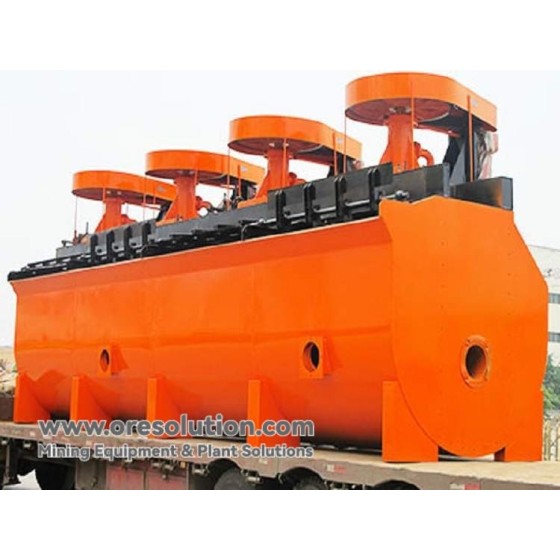
How should the mineral processing plan for a gold oxide leaching plant and the CIP process be selected?
Let\'s start with the conclusion: The core of the ore processing plan for an oxidized gold leaching plant lies not in “beneficiation,” but in “leaching.” For ores with a high degree of oxidation, heavy clay content, and fine gold particles, the recovery achievable through gravity separation and flotation is limited; the leaching and adsorption stages are what ultimately determine recovery efficiency.The choice between CIP and CIL processes essentially depends on the carbon content and clay characteristics of the ore. Determining the processing scheme for an oxidized gold leaching plant and selecting the appropriate CIP process must be based on the ore itself.
Key Conclusions at a Glance:
- For oxidized gold ores, whole-slurry cyanide leaching should be prioritized; CIP and CIL processes are the mainstream approaches, while gravity separation and flotation primarily serve as pre-enrichment steps or for the early recovery of coarse-grained gold.
- When the ore contains naturally adsorbed carbon, the CIL process is generally more reliable than the CIP process, or pretreatment may be required.
- For ores with severe muddiness and a high proportion of fine-grained gold, the issue of matching slurry concentration with carbon density must be resolved prior to leaching.
- The final beneficiation plan for an oxidized gold leaching plant is determined by the results of beneficiation test reports; simply adopting processes used by peers often results in lower grades of the precious metal solution.
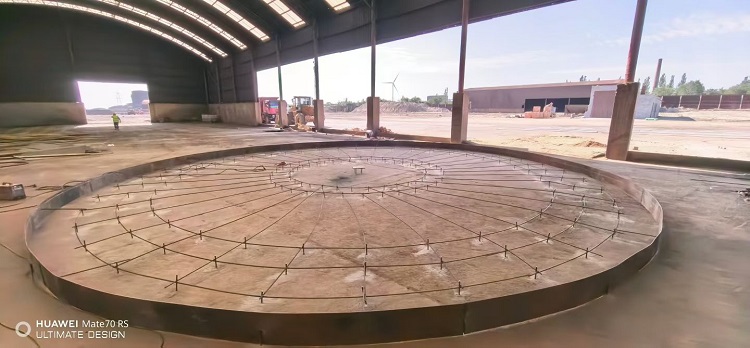
I. The characteristics of oxidized gold ore determine the starting point for the beneficiation scheme at an oxidized gold leaching plant
The difference between oxidized gold ore and primary sulfide ore lies not only in mineral composition but also in the state of gold occurrence. Gold in sulfide ores is often enclosed within pyrite and arsenopyrite; flotation can concentrate these gold-bearing minerals;In oxidized ores, prolonged weathering and leaching have nearly completely oxidized the sulfides, leaving gold primarily in a free or semi-free state among limonite, quartz, and clay minerals. The ore typically has a fine grain size and a loose disseminated texture.
Using flotation on this type of ore typically yields unsatisfactory recovery results—without sufficient sulfides to act as carriers, reagent consumption increases while concentrate grade fails to improve.Gravity separation can only capture coarse-grained free gold, while the fine-grained fraction is still lost. Therefore, the mainstream approach for ore processing in oxidized gold leaching plants is hydrometallurgical leaching, with gravity separation and flotation serving as auxiliary methods.
The direction of an ore processing scheme for oxidized gold leaching plants is primarily determined by three factors: the particle size distribution of gold, the clay content, and the presence or absence of interfering carbonaceous materials.These three factors determine whether to adopt “gravity separation + whole-slurry leaching,” “flotation + concentrate leaching,” or whole-slurry CIP/CIL throughout the entire process. Differences in ore processing schemes for oxidized gold leaching plants often diverge at this stage.
II. CIP and CIL Processes: The Key Divergence in Oxidized Gold Leaching Plant Processing Schemes
The CIP and CIL processes are often regarded as two names for the same process, but in reality, their operational logic differs.
The CIP process follows a “leach-first, adsorb-later” sequence: the ore slurry undergoes cyanide dissolution in the leaching tank, releasing gold into the solution, before entering the carbon adsorption tank, where activated carbon adsorbs the gold-cyanide complexes. Leaching and adsorption are carried out in separate stages.
The CIL process follows a “simultaneous leaching and adsorption” approach: cyanide leaching and activated carbon adsorption occur simultaneously within the same set of tanks. When the slurry enters the first tank, both cyanide and activated carbon are added at the same time, allowing gold to be dissolved and captured by the carbon simultaneously.
The direct consequences of this difference are as follows: In the CIL process, the gold concentration in the slurry is consistently maintained at a lower level, providing greater driving force for the dissolution reaction, which is more advantageous for hard-to-leach ores and ores containing carbonaceous material;dissolved gold is promptly adsorbed by the carbon, reducing the likelihood of it being “hijacked” by natural carbon in the ore—a phenomenon known as carbon hijacking of gold.The advantage of the CIP process lies in the ability to allow for a more thorough leaching time. Since the leaching and adsorption tanks are separate, operating parameters can be adjusted independently, making it suitable for ores with slow leaching kinetics but low carbon content.
| Comparison Criteria | CIP Process | CIL Process |
|---|---|---|
| Relationship Between Leaching and Adsorption | Leaching followed by adsorption; conducted in separate tanks | Leaching and adsorption occur simultaneously in the same tank |
| Suitable Ores | Oxidized ores with low carbon content and relatively fast leaching rates | Ore with naturally occurring adsorbent carbon, high clay content, and relatively slow leaching rates |
| Gold Solution Concentration | Higher concentration in the leaching section; concentration decreases in the adsorption section | Low concentration maintained throughout the process, providing strong driving force |
| Risk of gold loss to carbon | Relatively high | Relatively low |
| Operational complexity | Leaching and adsorption parameters are independent, allowing for flexible adjustment | Carbon concentration in the tank and pulp residence time must be controlled in tandem |
This table should not be used as a “one-size-fits-all guide” for process selection. For oxidized ores with relatively high carbon content, it is not uncommon for the grade of the precious metal solution to remain low and the gold load on the carbon to be unsatisfactory after implementing the CIP process; these indicators are often restored only after switching to the CIL process. Conversely, for oxidized ores with fast leaching rates, the CIP process may operate stably, and there may be no need to adopt the CIL process.The basis for judgment lies in the leaching curves and carbon-based material adsorption test data from the test reports; this is an essential step that cannot be skipped when selecting a beneficiation scheme and CIP process for an oxidized gold leaching plant.
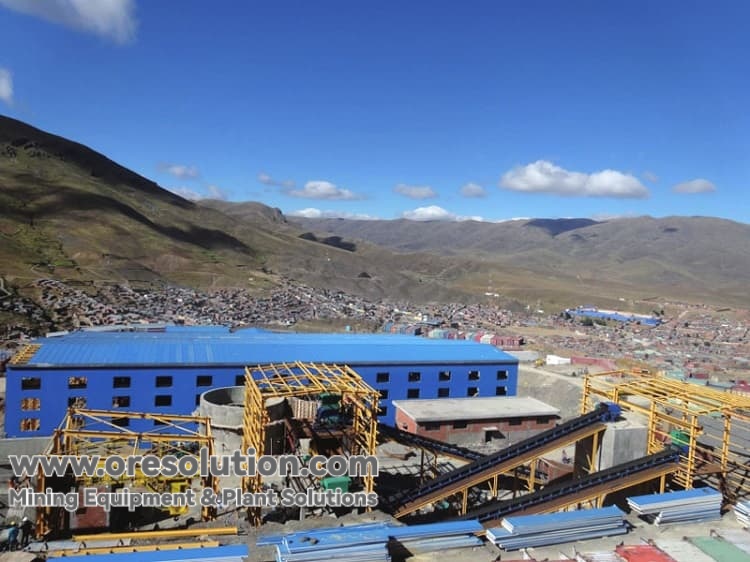
III. How to Design the Process Flow for an Oxidized Gold Leaching Plant
A complete oxidized gold leaching plant generally consists of four process stages: crushing and grinding, pre-concentration (optional), leaching and adsorption, and desorption and electrolysis.
Crushing and grinding stage. Oxidized ores are generally soft and have high clay content; therefore, the crushing ratio does not need to be excessively fine, and grinding should ensure adequate single-particle liberation.The grinding fineness is determined based on test reports; the typical reference range is relatively broad and depends specifically on the grain size distribution of the gold. For ore with severe clay contamination, pre-grinding washing to remove clay may be considered, with the clay-rich fraction processed separately to prevent the accumulation of fine clay in the leaching tanks, which could impair slurry flow.
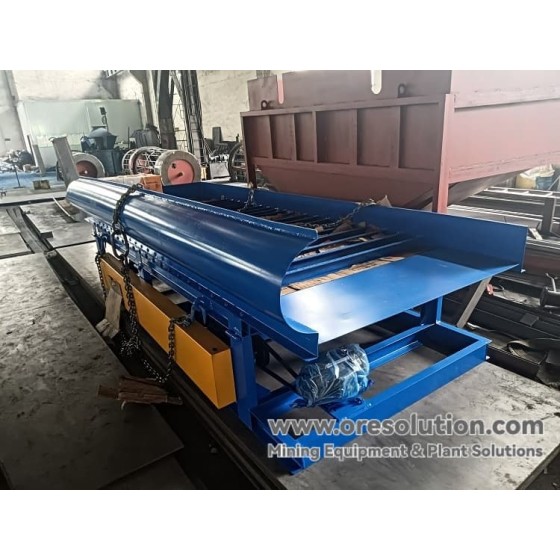
Pre-concentration stage. This step is not mandatory. For ores with high coarse-grain free gold content, adding a jig or centrifuge to the grinding circuit to recover a portion of the coarse-grain gold in advance can reduce the load on the subsequent leaching stage; the gravity concentration concentrate can then be sent directly to smelting or processed separately via cyanidation.For fine-grained, disseminated oxidized ores, pre-concentration is of little benefit; direct whole-slurry leaching is more economical. This is why the mineral processing schemes for oxidized gold leaching plants must be tailored to specific ore types.
Leaching and Adsorption Stage. This is the core process. For whole-slurry cyanide leaching, the slurry concentration, cyanide concentration, pH range, and leaching time should all be determined based on the mineral processing test report; common industry parameters should be used only as a reference.In the CIP process, the leaching and adsorption tanks are separate; in the CIL process, leaching and adsorption are combined. The activated carbon concentration must be matched to the pulp concentration, with specific values determined by testing.
Desorption and Electrolysis Stage. Gold-loaded carbon is subjected to desorption to transfer the gold into solution, which is then electrolytically deposited to produce gold slime, and finally smelted into refined gold. The desorption rate and electrolysis efficiency directly impact the final product specifications. The operational stability of this stage is often underestimated, yet it serves as the final link ensuring the quality of the mineral processing plan\'s implementation at oxidized gold leaching plants.
IV. Key Points for Equipment Configuration in the Beneficiation Plan for an Oxidized Gold Leaching Plant
There is no shortage of templates for equipment lists in ore processing plans for oxidized gold leaching plants within the industry. What truly impacts production performance, however, are several details that are easily overlooked.
| Process Steps | Process Step Key Equipment | Configuration Key Points |
|---|---|---|
| Crushing and Grinding | Jaw crusher, cone crusher, ball mill, hydrocyclone | Pre-screening machine when mud content is high; grind to the fineness specified in the test report to avoid over-grinding |
| Pre-concentration | Jig, centrifugal concentrator | Installed only when the proportion of coarse-grained gold is high; concentrate is processed separately |
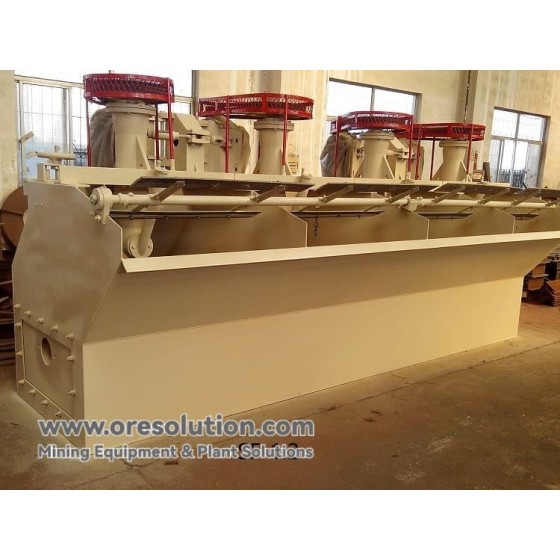
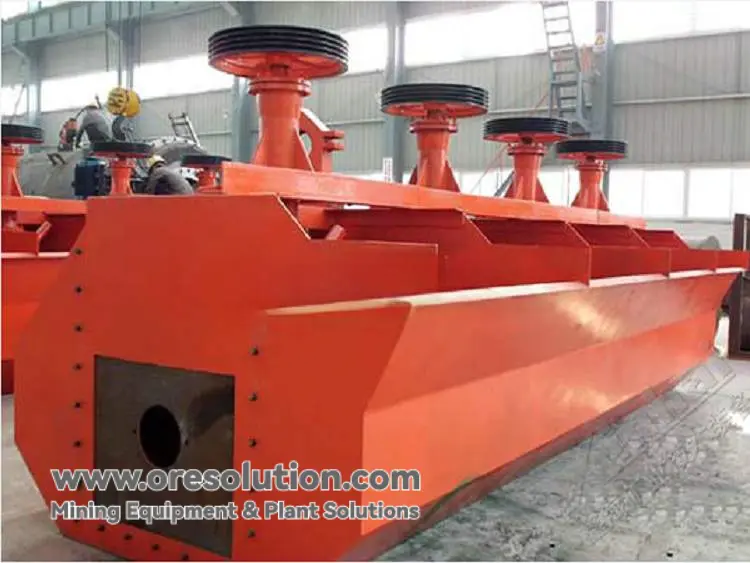
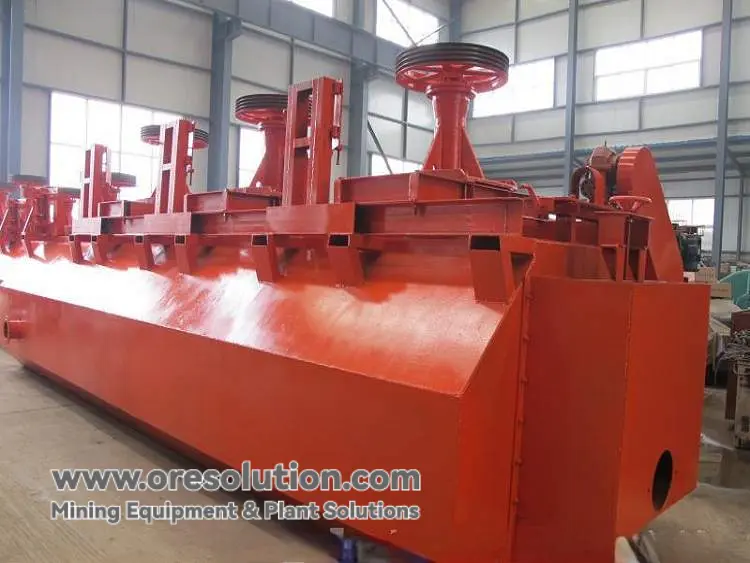
| Leaching and Adsorption | Leaching tanks, CIP/CIL adsorption tanks, activated carbon | Tank volume calculated based on leaching time; carbon density matched to slurry concentration |
| Desorption and Electrolysis | Desorption column, electrolytic cell, smelting furnace | Desorption rate and electrolysis efficiency affect the grade of gold slime |
| Tailings Treatment | Thickener, filter press, tailings pond | Cyanide tailings must be treated; environmental protection measures cannot be overlooked |
To calculate leaching tank volume, use the formula “processing capacity × leaching time ÷ slurry concentration” to work backward; do not simply select based on the nominal volume listed in equipment catalogs. There are also specific considerations for selecting activated carbon: coconut shell carbon has high adsorption capacity and low wear, but is relatively expensive;apricot-shell carbon typically offers better value for money, though this depends on the grade of the cyanide solution and the carbon regeneration plan. In the CIL process, carbon remains in the tanks for extended periods, placing higher demands on its wear resistance. While these details may seem trivial, they directly impact whether the ore processing plan at an oxidized gold leaching plant can achieve stable production.
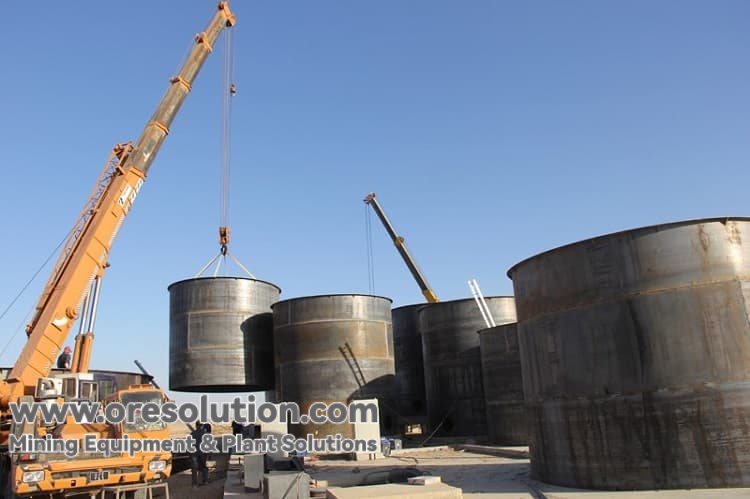
V. Common Technical Issues in Ore Processing Schemes for Oxidized Gold Leaching Plants and CIP Process Selection
Why is cyanide consumption higher than the test data? Common causes include uncontrolled pulp pH or higher-than-expected levels of cyanide-consuming minerals such as copper and zinc in the ore.Copper oxides in oxidized ores are significant cyanide consumers; therefore, an analysis of cyanide-consuming minerals must be conducted during the pilot phase. Another reason is incorrect lime addition points, leading to large pH fluctuations. When designing the chemical dosing regimen for an oxidized gold leaching plant\'s mineral processing scheme, a margin must be built in to account for cyanide-consuming minerals.
Why isn\'t the concentrate grade improving? First, check the leaching efficiency; then check the adsorption efficiency. If leaching efficiency is low, examine the grinding fineness and cyanide concentration; if adsorption efficiency is low, examine the carbon density, carbon activity (whether contaminated by oil or calcium deposits), and the carbon retention time in the adsorption tank.For ore containing carbonaceous material, carbon-mediated gold loss should be the primary suspicion; this is also a key aspect that requires thorough verification when selecting between CIP and CIL processes.
Can a CIP process be directly converted to a CIL process? It is feasible in terms of the flow process, but the tank configuration must be modified.Since CIP leaching tanks do not have carbon-retention screen plates, converting to the CIL process requires installing screens inside the tanks, modifying the agitation method, and adjusting the activated carbon feed points and carbon recovery methods. Adjusting the beneficiation plan for an oxidized gold leaching plant cannot be achieved simply by changing the process name; normal operation requires comprehensive adjustments.
VI. Why Choose Us
The selection of a mineral processing scheme for an oxidized gold leaching plant and the choice between CIP and CIL processes are fundamentally determined by test data. OreSolution\'s approach to such projects is as follows: First, representative ore samples are collected for chemical composition analysis and leaching tests; then, the leaching curves, carbon adsorption curves, and cyanide consumption data for both the CIP and CIL processes are compared before finalizing the process flow.On the equipment manufacturing side, leaching tanks, adsorption tanks, and desorption electrolysis systems are custom-built according to test parameters rather than based on standard models. The customization of this solution is reflected in the alignment between the process and the equipment, rather than a generic list of components.
If you have an analysis report for an oxidized gold ore sample, or are currently evaluating a beneficiation plan for an oxidized gold leaching plant and weighing the pros and cons of the CIP and CIL processes, you can submit the ore data to us. We will first conduct a round of comparative leaching tests before discussing equipment configuration and project budgeting.Until the process route is finalized, all equipment lists for the oxidized gold leaching plant\'s mineral processing plan are for reference only.