


How to Process High-Arsenic Gold Ore? CIP/CIL Processes and Complete Mineral Processing Equipment Solutions
Mechanisms of
Difficulties in the Beneficiation Process for High-Arsenic Gold Ore · Pretreatment Routes · Full-Line Configuration
The “challenges” of high-arsenic gold ore processing are concentrated on three levels: Physical Encrustation—Gold is disseminated as fine particles within the crystal lattices of arsenopyrite and arsenopyrite, and leaching rates cannot be improved without breaking this encrustation;Chemical Interference—Arsenic minerals decompose, consuming cyanide and dissolved oxygen, while associated organic carbon also competes for gold; Environmental Constraints—Regulatory thresholds for the disposal of arsenic-containing tailings and cyanide-containing wastewater continue to rise. Only by understanding these three aspects can one comprehend the rationale behind the subsequent process sequence.
I. Mechanisms Behind the Difficulty in Processing High-Arsenic Gold Ore
Physical Encapsulation
Gold is distributed in a finely dispersed, disseminated state within the crystal lattices or fissures of arsenopyrite (FeAsS) and arsenopyrite, with particle sizes typically ranging from just a few micrometers to over ten micrometers.Grinding to this fineness not only increases costs but also generates secondary slime from over-grinding, which further complicates subsequent operations. Unless this encapsulation is broken, the leaching rate cannot be improved. This is the primary challenge facing the beneficiation process for high-arsenic gold ores.
Chemical Interference
Arsenic minerals decompose in alkaline cyanide systems, producing arsenates, thiosulfates, and other compounds that consume cyanide and dissolved oxygen.If the ore contains associated organic carbon, “preg-robbing” can occur, whereby dissolved gold is re-adsorbed by carbonaceous matter, directly lowering leaching performance. The reagent regimen for high-arsenic gold ores must take these two sources of interference—arsenic and carbon—into account.
Environmental Constraints
Regulatory thresholds for the disposal of arsenic-containing tailings and cyanide-containing wastewater continue to rise, and the costs of end-of-pipe treatment cannot be overlooked. Environmental protection measures should be integrated into the process design of high-arsenic gold ore beneficiation schemes from the outset, rather than being added as an afterthought after the plant is built.
It should be noted that high-arsenic gold ores vary significantly across different mining areas. The mineral form of arsenic, the grain size of gold, and the amount of associated carbonaceous material will all influence the selection of the processing route. Any figures regarding recovery rates or investment costs are valid only under the specific conditions of a given ore sample and cannot be applied across different projects.To be honest, I have seen many projects where pilot-scale test results looked promising but failed upon scale-up; the problem usually lies in the representativeness of the ore samples and the thoroughness of pretreatment. This is precisely why the processing of high-arsenic gold ore must begin with ore sample testing.
II. Core Logic: Break Down the Encrustation First, Then Consider Leaching
When processing high-arsenic gold ore, the choice of process route depends on the state of gold occurrence and the mineral form of arsenic. Mainstream pretreatment methods include roasting and oxidation, pressurized oxidation, biooxidation, and chemical oxidation, each with its own applicable limits.For small- to medium-scale mines with moderate arsenic content, chemical pre-treatment combined with flotation for pre-enrichment often offers the best balance between investment and operational costs.
The key consideration is whether it is possible to first concentrate the arsenic-bearing gold concentrate through flotation, and then subject the concentrate to pretreatment and cyanidation. The benefits of this approach are tangible—it reduces the processing volume from a large amount of raw ore to a small amount of concentrate, thereby decreasing the scale of pretreatment and leaching equipment, chemical consumption, and environmental impact.A significant portion of the potential for optimizing the beneficiation process for high-arsenic gold ores lies precisely here.
The key to the flotation stage is the inhibitor regimen. During the flotation of high-arsenic ores, the floatability of arsenopyrite and pyrite is similar; therefore, it is necessary to either selectively separate the arsenic-bearing minerals from the gold-bearing sulfides or, conversely, float the gold-bearing sulfides together with the arsenic for subsequent processing.This requires exhaustive testing to determine the optimal priority flotation (selectively floating target minerals while suppressing others) or mixed flotation-separation process, ensuring that what should be recovered is recovered and what should be rejected is rejected.
Following pretreatment, the material proceeds to leaching. For high-arsenic gold concentrates, CIP (carbon-in-pulp) and CIL (carbon-in-leach) are two well-established routes.CIL involves simultaneous leaching and adsorption in the same tank, making it suitable for slurries with high clay content and fast adsorption rates; CIP involves leaching followed by adsorption, with separate leaching and adsorption tanks, making it suitable for ores with slower leaching rates that require longer leaching times.For concentrates from high-arsenic ores after pretreatment, leaching kinetics tend to be slow, making the staged control of CIP relatively more stable; if severe slime formation occurs after pretreatment and gold adsorption competition is intense, the simultaneous adsorption in CIL can reduce the loss of dissolved gold. The choice between the two routes should be determined based on test data.
III. Process Flow: Six Steps from Ore Sample to Refined Gold
Based on the “flotation pre-enrichment + pretreatment + CIP/CIL” framework, the entire high-arsenic gold ore beneficiation process can be broken down into six steps.
- Ore Sample Analysis and Mineral Processing Tests. Begin with chemical composition analysis and rock/ore identification to determine the occurrence state of gold, the mineral forms of arsenic, and the grain size distribution. If this step is not thoroughly conducted, the subsequent stages will be like “the blind men feeling the elephant.”
- Flotation Pre-Enrichment. The ore is ground to the target liberation degree, and customized inhibitors and collectors are added to float out arsenic-bearing gold concentrate, with the tailings discarded. The concentrate yield depends on the test results and is typically controlled at a relatively small percentage of the original ore.
- Concentrate pretreatment for arsenic removal. Alkaline leaching or acid oxidation pretreatment is used to disrupt the encapsulating structures of arsenopyrite and arsenic pyrite, exposing fine-grained gold. Arsenic from the pretreatment solution is mobilized into the solution and subsequently solidified via lime precipitation or iron salt precipitation for safe disposal.
- CIP/CIL Leaching and Adsorption. The pretreated concentrate is slurried and fed into the leaching system, where pH, cyanide concentration, dissolved oxygen, and leaching time are controlled.In the CIL process, activated carbon flows with the slurry, and gold is adsorbed simultaneously; in the CIP process, leaching is completed first before the slurry enters the adsorption tank. The equipment requirements here are very specific—the aeration rate must be adjustable, the slurry suspension within the tank must be uniform, and the carbon concentration must be stable.
- Desorption of Gold-Loaded Activated Carbon and Electrowinning. The gold-loaded activated carbon undergoes desorption (using hot alkaline solution to elute gold from the activated carbon) and electrowinning (electrolytic deposition to produce gold slime). The resulting gold slime is then smelted into refined gold. The desorption rate and electrowinning efficiency directly impact the final product specifications.
- Tailings and wastewater treatment. Cyanide-containing wastewater undergoes cyanide destruction (oxidative decomposition of cyanides); arsenic-containing tailings are solidified and stabilized; and tailings are dry-stacked. This step determines whether the project can pass environmental impact assessment and sustain continuous production.
IV. Comparison of Options: Applicability Limits of Different Pretreatment Routes
There is no one-size-fits-all process for the beneficiation of high-arsenic gold ores. The table below outlines the applicability limits of several mainstream routes for reference during process selection.
| Pre-treatment Scheme | Applicable Conditions | Advantages | Limitations |
|---|---|---|---|
| Flotation Pre-concentration + Chemical Pre-treatment for Arsenic Removal | Moderate arsenic content; gold is present as fine grains disseminated within sulfides | Moderate capital investment, relatively mild reagents, small concentrate volume | Limited arsenic removal efficiency for highly encapsulated ores |
| Roasting and Oxidation | Large-scale, difficult-to-process ores with high arsenic and sulfur content | Thorough destruction of the mineral matrix; proven and reliable | Flue gas acid production and arsenic capture systems require significant investment and are subject to strict environmental approvals |
| Pressurized oxidation | Large-scale mines with extremely fine gold grain size | High oxidation efficiency | High investment in autoclave equipment; high operational and maintenance requirements |
| Biological Oxidation | Medium-scale, cost-sensitive | Mild, low energy consumption | Long oxidation cycle; sensitive to pulp conditions |
| Atmospheric chemical oxidation | Small- to medium-scale, concentrate pretreatment | Short process, quick results | Chemical costs require precise control |
The selection of equipment is based on ore sample test data. Testing must precede plant construction; no drawings shall be finalized and no equipment lists submitted until the test report is available. This is a fundamental requirement for implementing a beneficiation plan for high-arsenic gold ore.
V. Complete Mineral Processing Equipment Configuration
The process chain for high-arsenic gold ore is long, and the compatibility between equipment is more important than the performance of individual machines.In the crushing and grinding stage, the “more crushing, less grinding” principle reduces over-grinding and slime formation; in the flotation stage, aeration rates and cell volume must be matched to concentrate recovery rates; and in the leaching stage, the timing of aeration must align with carbon adsorption. The table below outlines the core configuration framework for high-arsenic gold ore beneficiation equipment.
| Process Step | Core Equipment | Configuration Key Points |
|---|---|---|
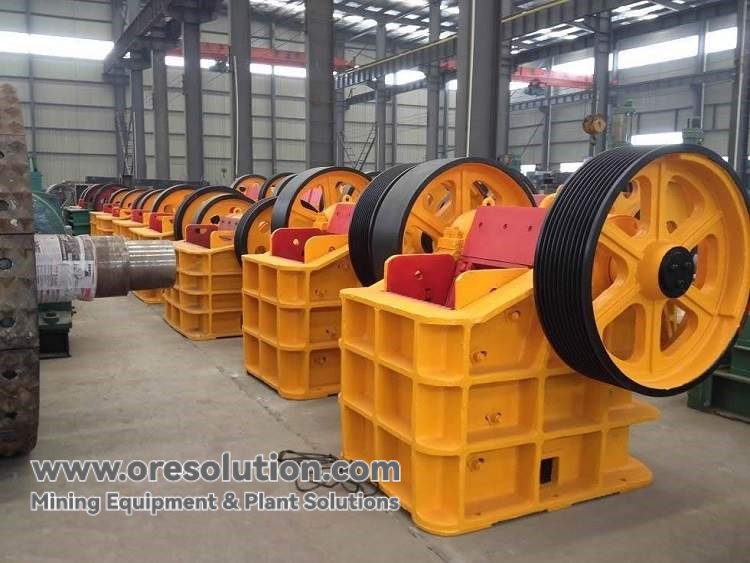
| Crushing and Screening | Jaw Crusher, Cone Crusher, Circular Vibrating Screen | Prioritize crushing over grinding; control feed size |
| Grinding and Classification | Ball mills, spiral classifiers, hydrocyclones | Determine grinding fineness based on liberation degree to avoid over-grinding |
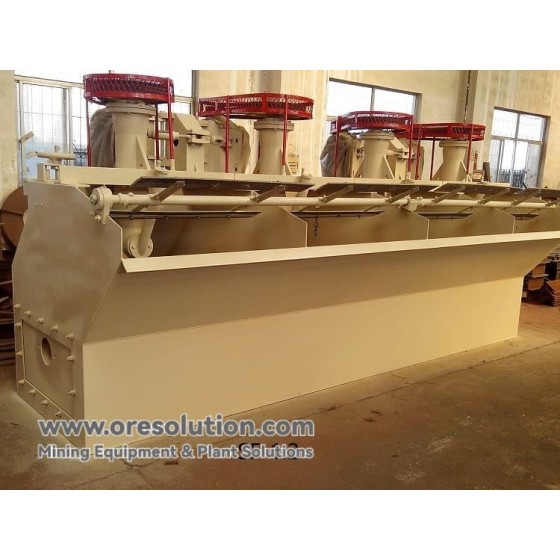
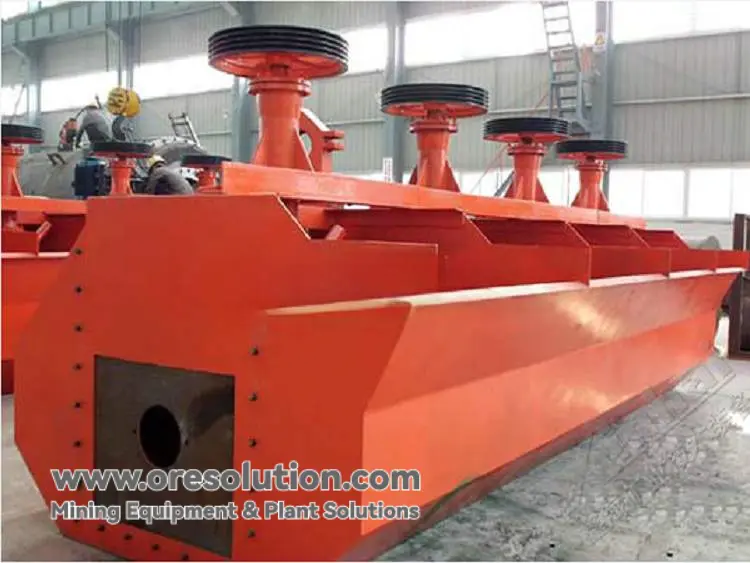
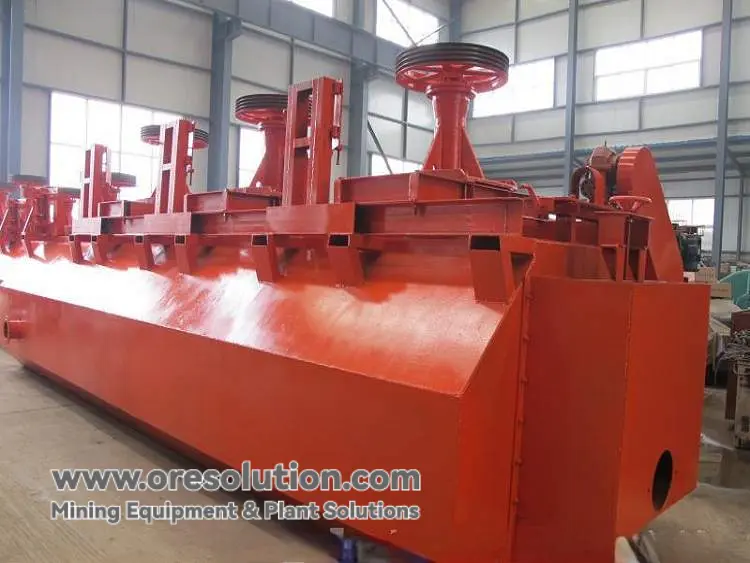
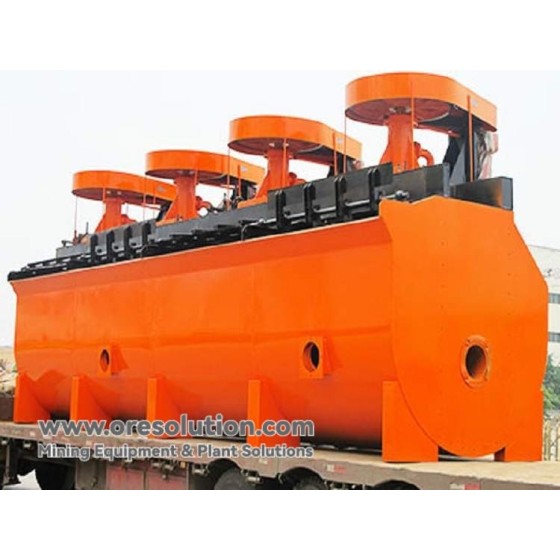
| Flotation | SF/BF-type flotation cells, JJF-type flotation cells, aerated flotation cells | Adjustable aeration rate to accommodate the inhibitor regime |
| Pre-treatment | Agitation tanks, chemical dosing systems, solid-liquid separation equipment | Precise control of reaction time and reagent concentration |
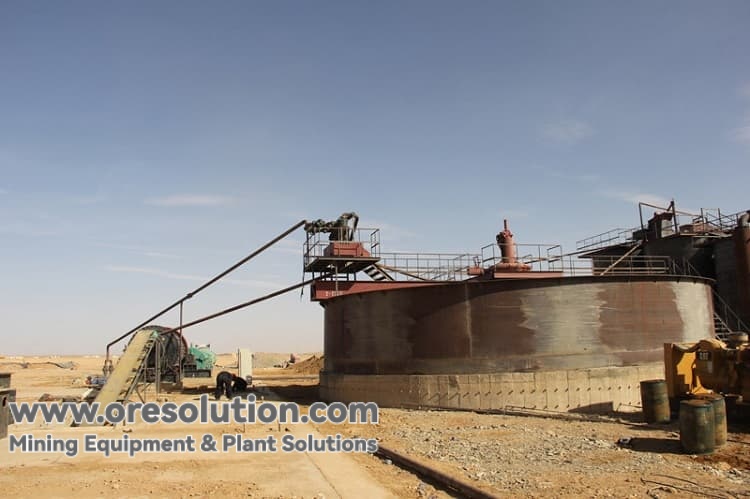
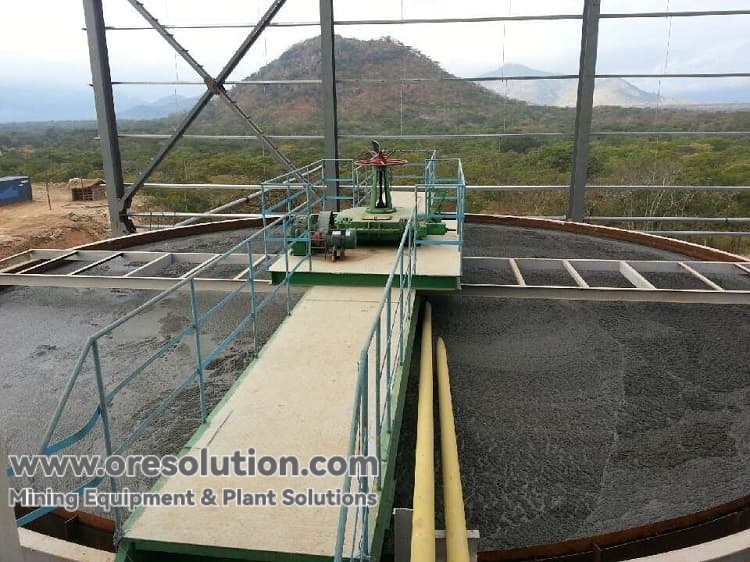
| Leaching and Adsorption | Leaching tanks, high-efficiency thickeners, filter presses | Aeration, suspension, and stable carbon concentration |
| Desorption and Electrolysis | Desorption column, electrolytic cell, smelting furnace | Matching desorption rate with electrowinning efficiency |
| Tailings treatment | Dewatering screens, filter presses, tailings dry-discharge systems | Simultaneous design of dry stacking and wastewater reuse |
The integration of flotation and leaching equipment warrants special mention.Flotation concentrate foam is sticky, and its concentration fluctuates widely; feeding it directly into the leaching tank can cause localized cyanide concentration runaway. Adding an intermediate thickening and filter press stage to stabilize the concentrate concentration may seem like an extra equipment cost, but it actually saves on chemical costs and minimizes fluctuations in performance indicators.While individual manufacturers may ensure their standalone equipment meets specifications, issues such as pipeline conflicts and mismatched production capacities—when integrated into a long process chain—are magnified. The true value of a complete mineral processing plant lies in achieving a high degree of integration between process design and equipment hardware.
VI. Environmental Compliance and Tailings Disposal
Environmental compliance is often the first hurdle for the implementation of high-arsenic gold ore projects. The disposal pathway for arsenic-containing materials must be determined during the process design phase, rather than being addressed only during the environmental impact assessment.
- Stabilization of arsenic-containing tailings—tailings generated during pre-treatment and leaching are treated with lime or iron salts to immobilize arsenic as insoluble compounds, followed by solidification and stabilization, and then classified and disposed of in accordance with solid waste regulations.Effective control of tailings volume depends directly on the rejection ratio during the front-end pre-concentration process.
- Cyanide Removal and Reuse of Cyanide-Containing Wastewater—After leaching tailwater undergoes cyanide removal via alkaline chlorination or hydrogen peroxide oxidation, it is either recycled back into the process or discharged after meeting regulatory standards. The higher the water recycling rate, the lower the fresh water consumption and discharge pressure.
- Dry Tailings Discharge and Resource Recovery—Dry tailings discharge reduces the land area required for tailings ponds and the risk of dam failure; for tailings containing multiple metals, valuable components can be recovered through re-processing, transforming an environmental burden into a secondary resource.
In a similar project at a mine in Yunnan, flotation pre-enrichment allowed for the early rejection of most gangue, while arsenic-containing materials were centrally treated, resulting in a simultaneous reduction in tailings pond pressure and environmental treatment costs. Specific indicators vary by mine, but the approach of “early waste rejection, centralized treatment, and dry stacking for reuse” is universally applicable.
VII. Common Technical Issues
Can high-arsenic gold ore undergo direct whole-ore cyanidation without pretreatment?
This depends on the form in which the gold is present. If the gold exists primarily as free or intergrown particles and is not heavily encapsulated by arsenic minerals, direct cyanidation may be feasible.However, if rock and ore analysis indicates that the gold is primarily disseminated in arsenopyrite or arsenopyrite, direct cyanidation will most likely yield unsatisfactory leaching results, and reagent consumption will be abnormally high. Conduct leaching tests first and make a decision based on the data. When determining how to process high-arsenic gold ore, the first step is always to let the ore sample speak for itself.
How should one choose between CIP and CIL?
It depends on the leaching kinetics and the properties of the pulp. If leaching is fast and slime formation is minimal, CIP offers clearer stage-by-stage control; if leaching is relatively slow and dissolved gold is easily interfered with by slime or carbonaceous material, the simultaneous adsorption provided by CIL is more advantageous.For concentrate from high-arsenic ore after pretreatment, it is recommended to conduct comparative tests using both processes and make a comprehensive assessment based on three criteria: leaching parameters, gold grade on carbon, and cyanide consumption.
How should arsenic-containing tailings and cyanide-containing wastewater be treated?
Arsenic-containing tailings should follow a solidification and stabilization route, using lime or iron salts to immobilize arsenic as insoluble compounds, followed by disposal in accordance with solid waste regulations; cyanide-containing wastewater should undergo cyanide removal treatment before being reused or discharged in compliance with standards. These measures must be incorporated during the process design phase; environmental protection facilities should not be added after the plant is completed.
VIII. Project Implementation: Why Choose Us
A beneficiation plan for high-arsenic gold ore is a systematic engineering project. If technical bottlenecks cannot be resolved, equipment links fail to connect, or responsibilities within the operational model remain unclear—any disconnect in these areas will ultimately manifest in poor performance metrics and production downtime losses.
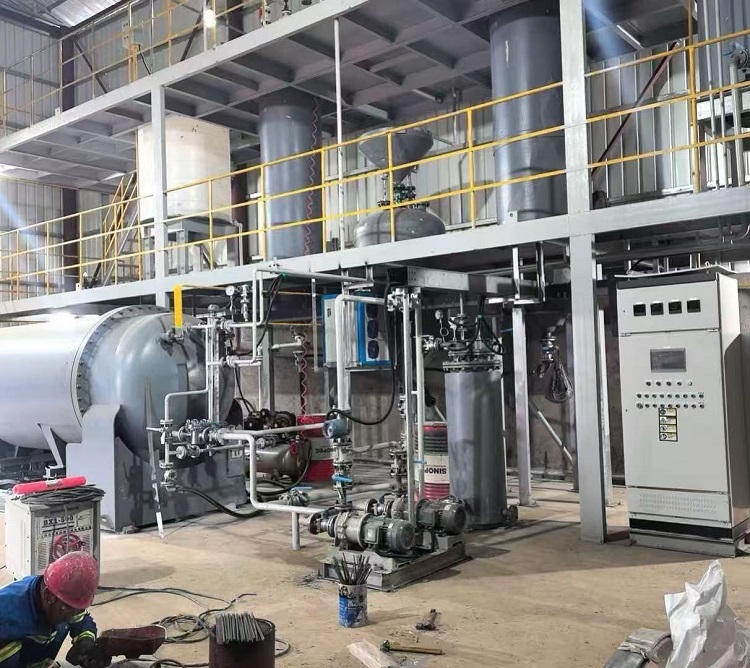
OreSolution\'s capabilities are concentrated in three areas. First, our core strength lies in customized process R&D; our in-house mineral processing laboratory adheres to the principle of “test first, build later,” and complex, difficult-to-process ores are precisely our area of expertise.Second, we manufacture our own core equipment and ensure full-process integration. Our complete set of beneficiation equipment—from feed to dewatering and tailings disposal—is highly synchronized, rather than a loose assembly pieced together from multiple manufacturers. Third, we offer a full-cycle EPC turnkey model, where a single team coordinates the entire project and takes full responsibility for the final outcome, ensuring an unbroken chain of accountability.
Supported by a bilingual technical team and localized response capabilities, we ensure that installation guidance, spare parts supply, and process optimization are consistently maintained. We take on the complexity ourselves and deliver the profits to you—this is the trade-off inherent in our model design, and it is where our engineering responsibility ultimately lies.
We provide process design and turnkey EPC projects for high-arsenic gold ore beneficiation, covering ore sample testing, process flow design, equipment manufacturing, installation, commissioning, and personnel training.
If you would like to learn more about the processing methods and complete equipment solutions for high-arsenic gold ore, please submit your requirements, and we will provide tailored recommendations based on your ore data.