

Iron Cap-Type Gold Ore Processing—Professional Gold Ore Beneficiation Processes and Equipment Solutions—High-Efficiency Gold Extraction Technology
Article at a Glance
- These types of ores look like “red soil,” but the gold is hidden in the pores of limonite. Choosing the wrong processing method can result in a significant drop in recovery rates.
- Conducting tests isn\'t just a formality. I\'ve seen far too many cases where simply copying the process from a neighboring mine resulted in double the chemical consumption and a failure to achieve the desired leaching rate.
- There are two key focuses for testing: determining exactly where the gold is embedded, and figuring out whether your ore is better suited for whole-ore cyanidation or flotation pre-concentration.
- A useful report must specify the required grind size, reagent dosages, and process sequence—and it must translate directly into an equipment list.
Iron-cap-type gold deposits are quite interesting. They\'re reddish-brown, porous, and honeycomb-like—resembling a thoroughly weathered piece of rust. But the gold is right there inside. Unlike quartz vein-type gold deposits, the gold is hosted within the pores and fractures of limonite, with a fine grain size and complex distribution.Treating it as ordinary oxidized gold ore sometimes works, and sometimes it doesn\'t. What\'s the difference? It depends on how deeply the ore beneath your feet has been weathered, and whether the gold is “locked” too tightly within the limonite.
To be honest, there\'s something quite frustrating about testing this type of ore: it looks easy to process, but in practice, the details can drive you crazy. For some samples, the cyanide leaching recovery rate for the whole-slurry method can reach 80–90 percent;but in a different mining area, using the exact same reagent regimen, the leaching rate drops to just over 60 percent, and the gold in the tailings is carried away along with the fine Limonite slurry. So every time someone brings me an analysis report for “Iron Cap” ore and asks, “Is this ore easy to process?” I always say: looking at the grade alone is useless—you have to run tests.
Skipping pilot testing saves a little money but costs a lot in the long run.
This is a fairly common phenomenon. A mine receives an exploration report showing that the gold grade looks decent and the degree of oxidation is high, so they decide to proceed directly with whole-slurry cyanidation. Equipment manufacturers are happy to cooperate—they provide quotes, draw up blueprints, and ship the equipment—and the entire process moves at lightning speed.The result? After production begins, leaching rates fail to improve, while sodium cyanide consumption skyrockets. Upon investigation, it turns out that a significant portion of the gold is trapped within the microscopic pores of limonite; the grinding fineness is insufficient, so the leaching agent simply cannot reach it.
The “oxidized” label for iron-cap-type gold deposits can be misleading. While they are indeed oxidized ores, the degree of oxidation, the crystallinity of the limonite, and the clay mineral content—each of these factors influences leaching behavior.An iron-cap gold deposit in Anhui conducted whole-slurry cyanidation tests. With a grinding fineness set at 85% -200 mesh and a leaching time of 24 hours, the leaching recovery rate reached nearly 90 percent. However, those results were specific to that particular ore sample.In a different mining area, even with the same fineness, this might not be sufficient. Without thorough prior investigation, you\'re simply gambling on luck.
The cost of conducting tests is orders of magnitude lower than that of a single failed equipment selection. For a leaching system with a daily processing capacity of 100 metric tons, the costs of equipment, installation, and commissioning—plus the cash flow pressure caused by delayed production—amount to at least dozens of times the testing costs.In my experience, when testing this type of ore, you shouldn\'t skip a single required step—especially process testing and closed-circuit verification.
What to Focus on in Testing for Iron Cap-Type Gold Deposits
Testing for this type of deposit follows a different approach than for copper or iron ore deposits. For copper, the focus is on grade and grain size distribution; for iron ore, it\'s on the magnetic separation ratio and magnetic susceptibility. For iron-capped gold deposits, there is only one core issue: where is the gold, and how do you extract it?
Gold in iron cap deposits typically exists in three forms. Intergranular gold lies between goethite particles and is relatively easy to handle; fissure gold is embedded in the fissures of goethite and can be liberated when ground to a certain fineness;the most troublesome is colloidally adsorbed gold, which is adsorbed onto the surfaces of clay minerals or iron oxides. Cyanide solution can penetrate the material, but the gold either cannot be extracted or is released extremely slowly. The proportion of these three forms determines which processing route to take.
Whole-ore cyanidation is the most common route for this type of ore. The process is straightforward: grinding, slurry preparation, addition of cyanide and calcium oxide, aeration and agitation for leaching, and carbon adsorption. The key parameters are simply grind fineness, pH, cyanide concentration, and leaching time.However, “common” does not mean “universal.” If the ore contains a high clay content and is severely muddied, pre-treatment such as concentration or pelletization prior to leaching must be considered. Studies have conducted column leaching tests on iron cap ore, showing that particle size has a very direct impact on leaching efficiency; fine-grained ore exhibits significantly better leaching results than coarse-grained ore.
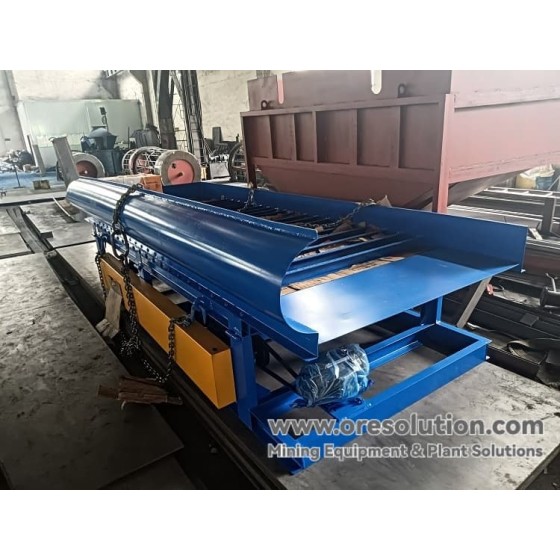
Another approach involves pre-concentration via gravity separation followed by cyanidation.Gold in Tiehao ore has a high density, and goethite also has a relatively high density, making gravity separation more challenging than for quartz vein ores. However, if the gold particles are not too fine, using a shaking table or a centrifugal separator to remove some of the coarse gold particles in advance will significantly reduce the burden on the subsequent leaching process.This approach is suitable for ores with relatively coarse gold particles and low grades.
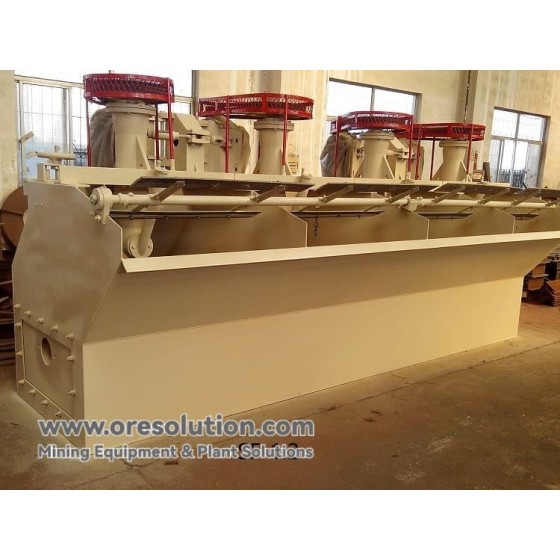
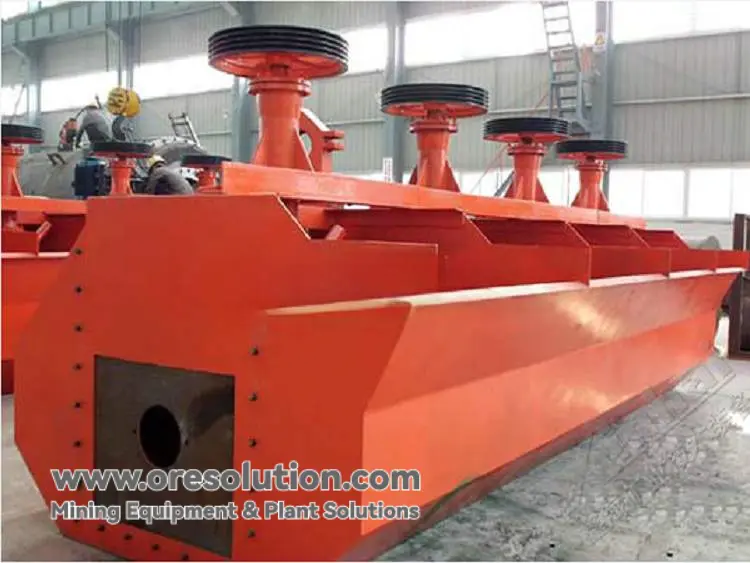
Flotation is used less frequently for iron-capped ores, but it is not impossible.There is a case study of a “iron cap” type gold deposit in Wuwei: the ore was heavily oxidized, had a high iron content, and the gold was finely disseminated. By using a combination of butyl xanthate and butylamine black as collectors—with one roughing, one scavenging, and two concentrating stages—the recovery rate was raised from just over 60% to 75%; later, the addition of bituminous coal further increased the recovery rate.This demonstrates that iron-cap ores are not limited to leaching; if the residual sulfide content is sufficient, flotation enrichment followed by further processing of the concentrate is also a viable option.
Follow the proper experimental steps—don\'t skip any. Exploratory tests should first establish the general direction: Is this ore best suited for leaching, gravity separation, or flotation? Sometimes, a simple leaching tube test—left to soak for several dozen hours to observe the gold leaching trend—is enough to give you a clear idea.Conditional tests then refine the details: test several points for grind size ranging from 70% -200 mesh to 90%; create a gradient for cyanide dosage from a few hundred grams to one or two kilograms per metric ton; and vary leaching time from 12 to 36 hours to identify the inflection points on the curve.Open-circuit tests verify whether the process is viable, while closed-circuit tests assess how reagents perform under recirculating conditions. Scale-up tests or semi-industrial trials provide support for feasibility studies and design; once ore volumes reach a certain scale, this step is indispensable.
There\'s a hurdle between the test report and the equipment list
I\'ve seen some test reports—thick stacks of documents that, upon opening, are filled with lab reports and photographs. When you turn to the last page, the conclusion consists of a single sentence: “This ore is easily processable; the whole-slurry cyanidation process is recommended.” Reports like this are practically useless.
A useful report must answer several specific questions. What should the grinding fineness be set at? Should the -200 mesh fraction account for 75% or 85%? How many percentage points does this affect the leaching rate, and by how much does it change the grinding cost?What is the chemical dosing regimen? What ranges should the initial and maintenance concentrations of sodium cyanide be controlled within, and at what pH level should calcium oxide be added? At what leaching time does the yield reach its inflection point, and is there any further benefit to extending the leaching time?If the flotation route is chosen, clear recommended ranges must be provided for the dosage of roughing collector, scavenging conditions, and the method of returning intermediate concentrate to the concentrate stream.
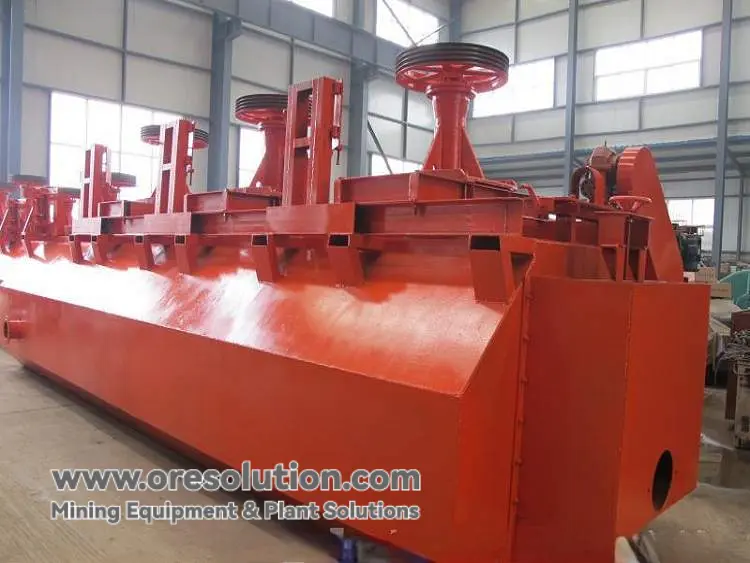
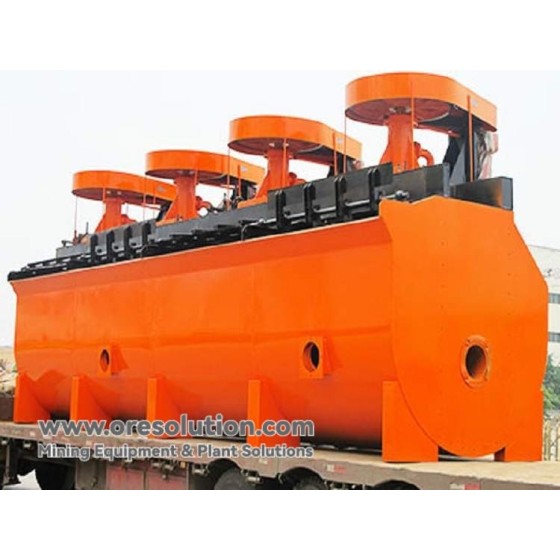
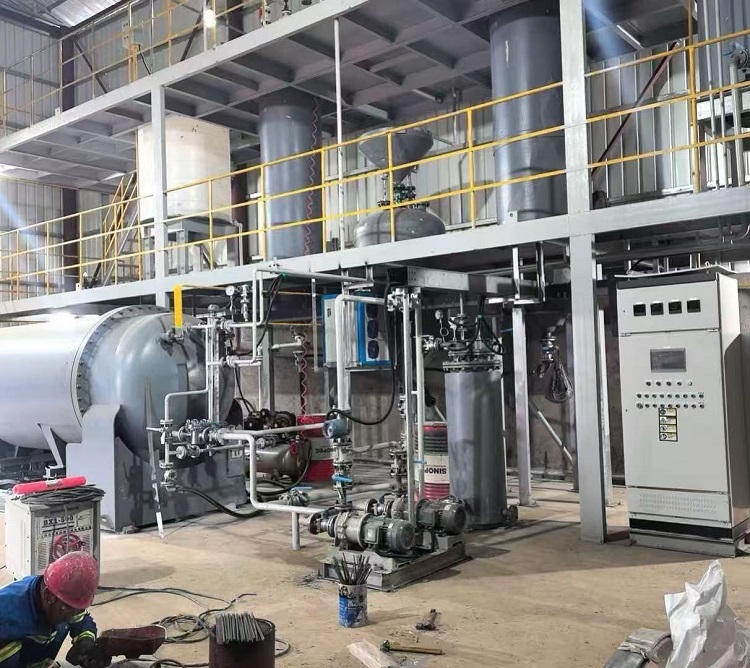
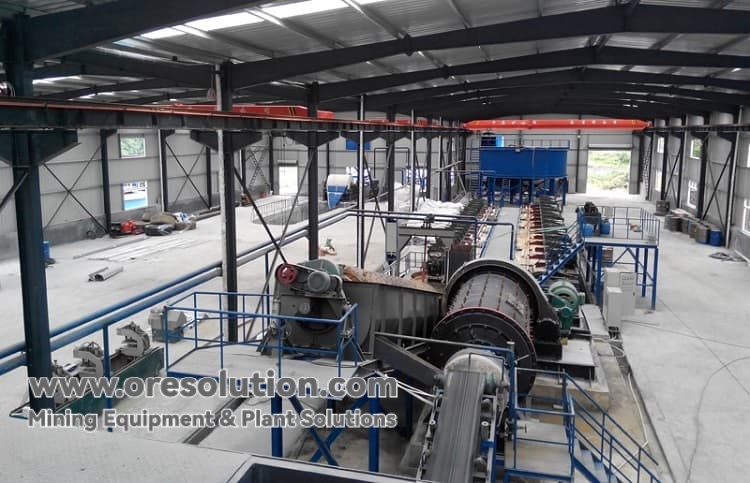
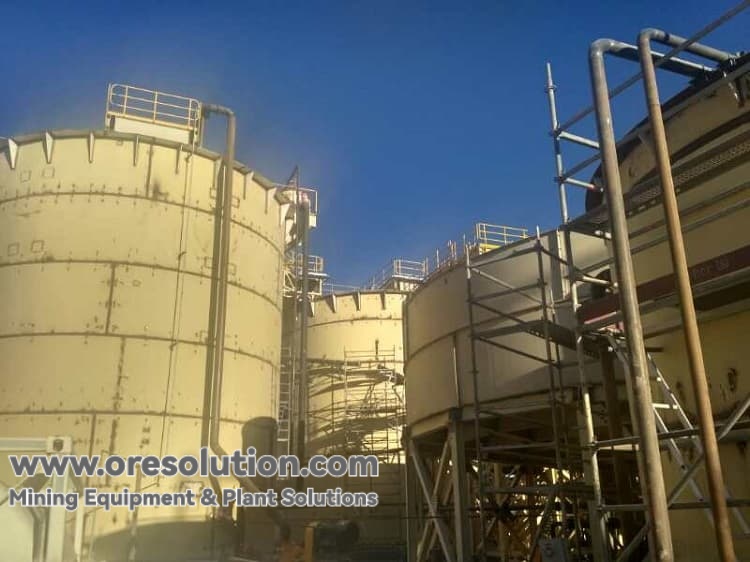
An even more critical step is determining whether these parameters can be implemented on the equipment. The Tiehao Mine uses whole-slurry cyanidation (carbon-in-pulp process, where cyanide is added to finely ground ore for leaching, while activated carbon is used to adsorb gold), and the core equipment consists of just a few items:jaw crusher, cone crusher (for fine crushing), ball mill, classifier or hydrocyclone, and a twin-impeller high-efficiency carbon-in-pulp tank(where leaching and carbon adsorption occur in the same tank), a carbon-separating screen (to separate gold-bearing carbon from the ore slurry), desorption and electrolysis equipment (to elute gold from the gold-bearing carbon and electrolyze it into gold slurry), a gold smelting furnace, and, for tailings, a high-efficiency thickener and filter press for dry disposal.If the flotation route is chosen, flotation cells, regrinding mills, and concentrate thickening and filter press equipment must be fully equipped. If the gold particle size is relatively coarse, a portion should be recovered via gravity separation first, requiring the use of jigs, shaking tables, and centrifugal separators.The sequence of these units and their specifications are determined based on the grinding fineness, processing capacity, reagent regime, and number of process stages outlined in the test report. If the parameters in the report are vague, equipment selection becomes a guesswork, resulting in a configuration that is either over-engineered or insufficient.
Another aspect that\'s easily overlooked is tailings and recirculated water. Leaching tailings from iron-capped ores often contain residual cyanide and heavy metals; the report must address whether recirculated water can be reused directly and whether this affects the leaching recovery rate. Not all testing laboratories will proactively conduct these tests, but you must ask.
My criteria are simple: once you receive the report, can you use it to approach a design institute for process design and negotiate equipment selection with manufacturers? If the report is still riddled with “TBD” entries or notes suggesting “further testing,” then the testing process has not been properly concluded.
A Few Honest Words on How to Choose a Testing Facility
There are plenty of places on the market that conduct mineral processing tests, but their quality varies widely.There are university labs, research institutes, and testing centers operated by equipment manufacturers. Each has its own agenda. Universities and research institutes are relatively neutral, but they can sometimes be too academic, failing to provide engineering parameters clearly enough. Tests conducted by equipment manufacturers are efficient and draw on their deep familiarity with their own equipment, but their recommendations for equipment selection will inevitably lean toward their own products.It depends on your current needs. In the early stages, to determine whether the ore is viable for processing, find a neutral institution to conduct exploratory tests—it won\'t cost much. Once the processing route is largely determined and you need to fine-tune equipment selection details, it\'s more efficient to turn to an institution with engineering experience or an equipment manufacturer\'s testing center.
There\'s one essential step before submitting samples: clearly explain the characteristics of the ore samples to the testing personnel. Specify which mining area the samples were collected from, at what elevation, whether they come from the oxidation zone or the transition zone, what mining method was used, and whether any waste rock was mixed in.In cap-type gold deposits, vertical zoning is very pronounced, and the ore properties of the surface leaching zone and the underlying oxidation zone can differ significantly.If you send a composite sample, the test results may appear “moderate,” but when it comes to segregated mining and beneficiation in production, none of the results will match the actual conditions in any specific section. Given the significant variability within the ore body, it\'s better to submit several separate samples for individual testing rather than mixing them together just to save trouble.
Regarding sample quantity: for routine testing of gold-bearing rocks, we recommend preparing 50 to 100 kilograms per sample group. For iron-capped deposits, if you plan to conduct closed-circuit or scaled-up tests, the quantity must be increased further. Don\'t attempt testing with just a few kilograms of sample—you won\'t even be able to subdivide it accurately, and if the gold grade fluctuates significantly, the calculated recovery rate will be so unreliable that you won\'t even trust your own results.
If you have samples of iron-capped ore, here\'s how to proceed
Don\'t rush to finalize the process yet. Take a batch of representative ore samples and conduct a round of exploratory leaching tests.Grind the ore until 70–80% of the particles are below -200 mesh. Start with a sodium cyanide dosage of about 1 kilogram per metric ton of ore and leach for 24 hours to see what range the leaching recovery falls into. If the leaching recovery is satisfactory, fine-tune the conditions further to optimize the grinding fineness and reagent dosage.If the leaching recovery is significantly low, go back and examine the gold occurrence pattern. Conduct a phase analysis to see if the proportion of encapsulated gold is too high or if clay content is affecting leaching. Once you reach that stage, consider options such as gravity pre-concentration or flotation.
This type of ore isn\'t a particularly tough nut to crack, but it is one that requires your serious attention. There are only a few possible processing routes; the key is knowing exactly which one is right for the ore you\'re working with. That\'s what the tests are for. Get it right, and the rest of the process will go smoothly; cut corners, and you\'ll be playing catch-up at every turn.
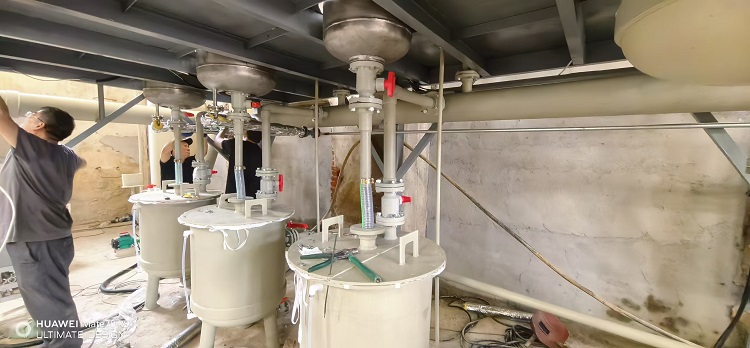
About Us: We specialize in mineral processing testing and process design, following a “test first, design later” approach—we don\'t rely on cookie-cutter templates. Once testing is complete, the same team takes over to finalize the process flow, equipment selection, and plant layout, eliminating the need for you to coordinate with a separate design institute.For ore types like the “iron-cap” gold deposit, the process chain is seamless—from exploratory testing to closed-circuit validation, all the way through the equipment configuration for carbon-in-leach tanks, desorption electrolysis, and concentration via filter presses.
Inquiries and Collaboration: If you have ore samples from an iron-cap-type gold deposit that require feasibility testing, or if you\'d like to discuss ways to optimize your existing process, please send us your samples. Before shipping, please provide basic information about the ore samples—origin, grade, degree of oxidation, and mining method—as this will be helpful for designing a solution.Contact information is available on our homepage, where you\'ll also find the shipping address and sample submission requirements.