


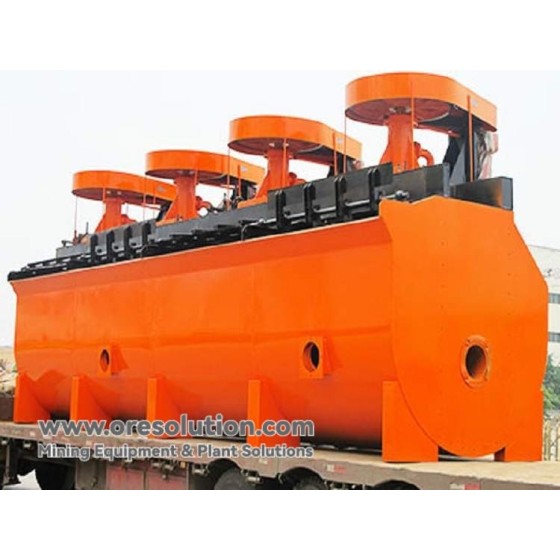
Leaching Technology for Difficult-to-Process Gold Ore: High-Efficiency Gold Extraction Solutions and Process Approaches from Professional Mineral Processing Manufacturers
Leaching Technology for Difficult-to-Process Gold Ore Slurry
Gold particles encased in sulfides, trapped by carbonaceous material, and disseminated at the micrometer scale—for ores that conventional cyanidation simply cannot process, the solution lies in open-circuit pre-treatment followed by leaching. The value of a professional mineral processing company lies in tailoring this process to the specific properties of the ore.
📌 Quick Overview of Key Conclusions
- The key to overcoming challenges with difficult-to-process gold ores lies in the pre-treatment stage prior to leaching; if the wrong pre-treatment route is chosen, no amount of subsequent parameter adjustment can compensate for it;
- There is no one-size-fits-all solution for pre-treatment routes; fine grinding, bio-oxidation, pressurized oxidation, roasting, and chemical pre-treatment each have their own applicable limits;
- Leaching parameters for whole-ore leaching must be recalibrated based on ore characteristics, as the tolerance ranges for time, aeration, and pH are narrower than those for conventional ores;
- The role of professional mineral processing companies is to translate experimental data into practical process parameters, rather than simply applying templates.
I. Industry Background: Why Do Hard-to-Process Gold Ores Require Specialized Whole-Slurry Leaching Technology?
After years of gold mining, the proportion of easily processable ores has been declining annually, while the proportion of encapsulated, carbon-bearing, and high-arsenic, high-sulfur ores among the remaining resources has been rising.When treated with conventional whole-ore cyanidation, the leaching rates for these ores are often significantly lower than those for easily treatable ores, while reagent consumption is considerably higher, making it easy to exceed economic viability thresholds.
This is where the significance of whole-ore leaching technology for difficult-to-process gold ores lies: rather than simply replicating conventional processes with increased reagent dosages, it employs pre-treatment to address the root causes of “gold not leaching out.” These causes can be broadly categorized into three types: — Physically encapsulated: Gold particles are tightly encapsulated by sulfide minerals;chemical interference, where arsenic- or carbon-containing materials, or “preg-robbing carbon” (carbonaceous material that re-adsorbs dissolved gold cyanide complexes), re-adsorb the dissolved gold;reagent- and oxygen-depleting type, where high sulfide content leads to massive consumption of cyanide and dissolved oxygen. These three issues often occur simultaneously, which is the fundamental reason why solutions for difficult-to-process ores must be tailored to each specific mine.
For mining companies, determining whether a difficult-to-process mine is worth investing in a whole-ore leaching line hinges not on the grade of the raw ore, but on whether the leaching parameters after pretreatment can support the economic viability. This assessment specifically requires the involvement of professional mineral processing manufacturers, who can provide evidence based on experimental data.OreSolution\'s approach to such projects is to first conduct ore sample tests to identify the type of mineral inclusion and interfering components before discussing the process route—rather than simply applying a standard flowchart.
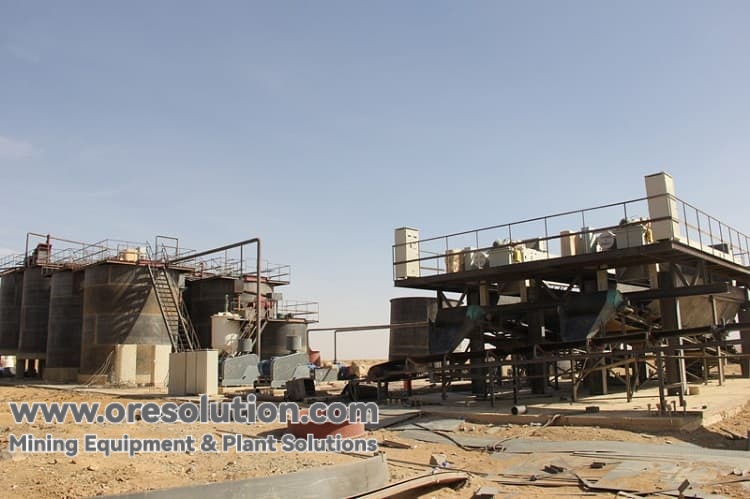
II. Technical Principles: The Core Logic of Whole-Ore Leaching Technology for Difficult-to-Process Gold Deposits
The logical sequence of whole-ore leaching technology for hard-to-process gold ores can be summarized as follows: first, break down the encapsulation; second, remove interfering components; and third, enhance leaching. These three stages correspond to different process methods, and the selection of the appropriate method depends on the properties of the ore.
Pre-treatment serves as the watershed in this chain.Fine or ultrafine grinding is suitable for ores with mild encapsulation and relatively coarse grain sizes, relying on liberation to expose gold particles; bio-oxidation and pressurized oxidation target arsenic- and sulfur-containing sulfide ores with encapsulation. The former has relatively controllable operating costs but a longer oxidation cycle, while the latter achieves thorough oxidation but requires higher capital investment and more sophisticated equipment;roasting and oxidation are suitable for ores containing carbon and significant organic carbon interference; they can simultaneously remove carbon and sulfur, but the flue gas treatment process is complex; chemical pretreatments such as alkali leaching and acid washing are used for the preliminary dissolution of specific interfering components; these are carried out at ambient temperature and pressure, produce results relatively quickly, but have limited ability to break the shells of sulfur-encased particles.
The leaching stage relies on thorough pretreatment. Conventional cyanidation remains the mainstream method, while difficult-to-process ores require greater emphasis on parameter fine-tuning—leaching concentration, pH window, dissolved oxygen levels, and leaching time are recalibrated according to the specific characteristics of the ore.For ores with significant carbon interference, activated carbon competitive adsorption can be employed, or resin slurry technology can be used to circumvent the “gold-stealing effect.” To address the issues of poor selectivity and high consumption associated with conventional reagents, specialized mineral processing manufacturers also develop targeted formulations, using proprietary reagent systems to reduce co-leaching and minimize reagent consumption.
III. Process Flow: Five Steps in Whole-Ore Leaching for Hard-to-Treat Gold Ore
Centered on “fine grinding + pretreatment + whole-ore leaching,” a complete whole-ore leaching production line for difficult-to-process gold ores is typically organized according to the following steps, with specific parameters determined by ore testing:
The raw ore undergoes two-stage or three-stage crushing before entering the mill, with the grinding and classification system operating in a closed circuit. Refractory ores require a finer grinding fineness; ores with severe mineral encapsulation require the use of ultra-fine grinding equipment. Fineness specifications are determined by working backward from liberation requirements, rather than being arbitrarily set based on experience.
Oxidation or chemical pretreatment is selected based on the ore type. Bio-oxidation requires agitated oxidation tanks and an aeration system, with residence times measured in days; alkali leaching pretreatment is conducted at ambient temperature and pressure, with residence times measured in hours. This step determines the upper limit of subsequent leaching efficiency.
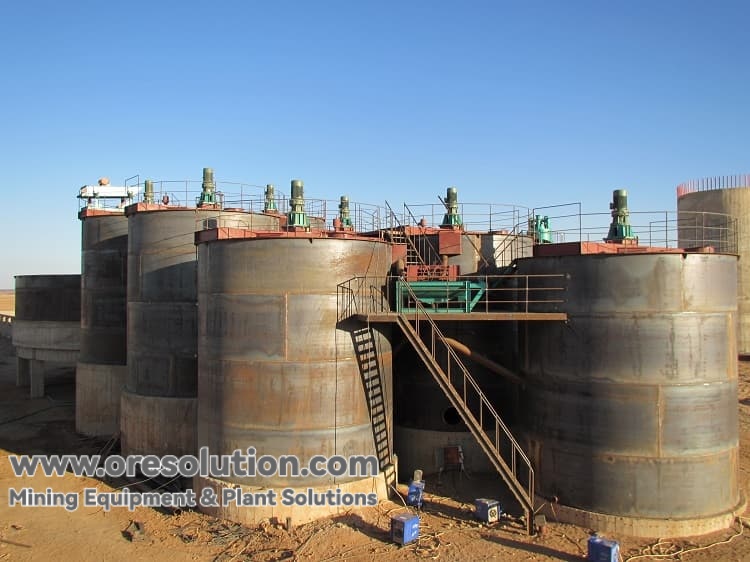
After the pH of the pretreated slurry is adjusted, it enters the leaching tank, where cyanide is added and the mixture is aerated and agitated. Leaching is carried out in a series of tanks using counter-current leaching. Leaching times for difficult-to-process ores are typically longer than for conventional ores, and the requirements for aeration and pH control are more stringent.
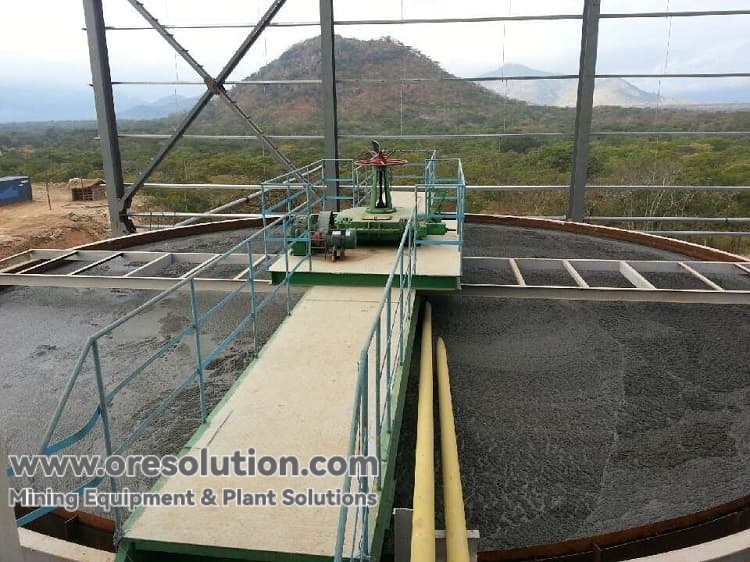
The leached slurry undergoes counter-current washing in a thickener; the precious liquid is sent to the gold recovery stage, while the wash underflow is processed through a filter press to recover residual liquid, thereby minimizing the loss of soluble gold in the tailings.
The precious liquid is treated via activated carbon adsorption or zinc powder displacement to produce gold slime, which is then smelted to yield refined gold. For ores containing carbon-bearing impurities, an inhibition step must be implemented prior to adsorption.
Field experience has repeatedly confirmed one key point: a correctly drawn process flowchart does not guarantee that performance targets will be met. Compressed pretreatment retention times and insufficient aeration in leaching tanks are common reasons why performance targets are not met in production lines processing difficult-to-treat ores.The whole-ore leaching technology for difficult-to-process gold ores is far more sensitive to process control than conventional whole-ore cyanidation. This is also why the EPC turnkey model is more suitable for difficult-to-process ore projects—the process, equipment, and commissioning are coordinated by a single team, ensuring a seamless chain of responsibility.
IV. Solution Comparison: How to Select a Pretreatment Route
There is no “optimal process” for difficult-to-process gold ores, only a “suitable process.” Comparing the mainstream pre-treatment routes side by side makes the selection logic clearer:
| Pre-treatment Options | Suitable Ore Conditions | Key Advantages | Major Limitations |
|---|---|---|---|
| Fine Grinding / Ultrafine Grinding | Low degree of encapsulation, relatively coarse grain size of embedded particles | Simple process, relatively low capital investment | Grinding costs rise significantly when fineness is too high |
| Biological Oxidation | Arsenic- and sulfur-bearing sulfide ores with encapsulation | Operating costs are relatively manageable, and environmental pressure is low | Long oxidation cycle; high demands on temperature and process control |
| Pressurized Oxidation | High-arsenic, high-sulfur, hard-to-treat ores | Thorough oxidation and good leaching performance | High capital investment; equipment must be pressure-resistant and corrosion-resistant |
| Roasting Oxidation | Contains carbonaceous material; significant interference from organic carbon | Simultaneous decarbonization and desulfurization possible | Complex flue gas treatment; high environmental protection costs |
| Alkaline leaching / chemical pretreatment | Contains carbon-bearing materials or specific interfering components | Room temperature and atmospheric pressure; relatively fast results | Limited ability to break the shells of sulfide inclusions |
When selecting a process, a comprehensive evaluation of the type of mineral inclusion, the content of interfering components, the processing scale, investment capacity, and environmental conditions is essential; the optimal solution generally becomes clear through this analysis. Whether leaching technology for difficult-to-process gold ore can be successfully implemented depends largely on how well the pretreatment route matches the ore\'s properties—this is also the stage where professional mineral processing manufacturers allocate the most resources to testing during the design phase.For complex ores characterized by polymetallic association, fine-grained embedding, and high clay content, a single process is often insufficient. A combined configuration of gravity separation, flotation, and leaching is required, with recovery carried out in stages according to the mineral composition.
V. Equipment Configuration: Core Components of the Production Line and Key Configuration Considerations
Taking a medium-scale daily processing capacity with a fine grinding and chemical pretreatment route as an example, the core equipment configuration is as follows:
| Process Step | Main Equipment | Configuration Key Points |
|---|---|---|
| Crushing and Grinding | Jaw crusher, cone crusher, ball mill, or ultrafine mill | Grinding fineness determined by testing; closed-circuit classification |
| Pre-treatment | Pre-treatment agitation tank, chemical dosing system, aeration unit | Residence time and reagent regimen are calibrated according to ore type |
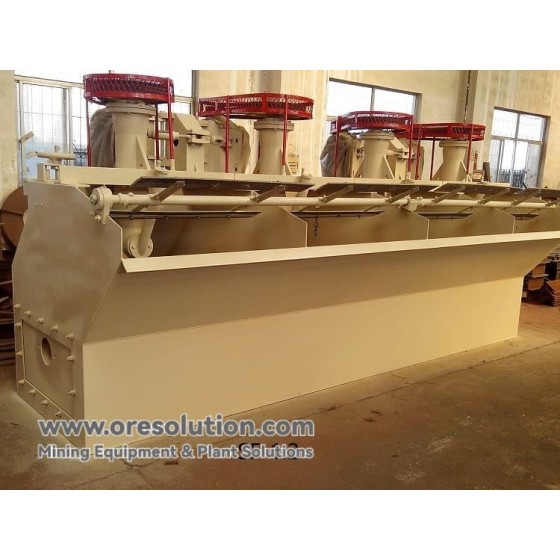
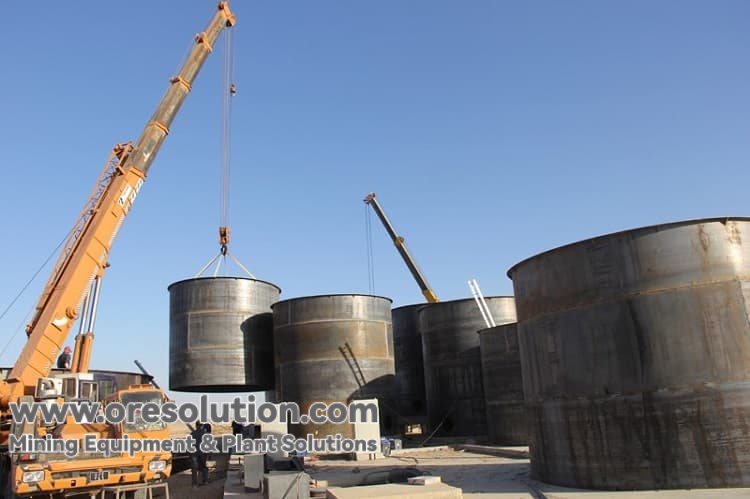
| Leaching | Leaching tanks: multiple tanks connected in series; aeration and agitation system | Number of stages in series matched to total residence time |
| Solid-Liquid Separation | Thickener, filter press | The number of countercurrent washing stages affects washing efficiency |
| Gold Extraction | Activated carbon adsorption columns or zinc powder displacement units, smelting equipment | Select equipment based on the volume of precious liquid and the level of carbon interference |
The principle for equipment configuration is to avoid over-specification while ensuring no weak links.The proportion of investment allocated to the pretreatment stage is typically high in projects involving difficult-to-process ores, while power consumption for grinding and pretreatment chemicals are the two major components of operating costs. Professional mineral processing manufacturers will conduct calculations during the configuration phase based on ore volume, ore properties, and local operating conditions to avoid situations where “the flowchart looks good, but the operating costs are high.”OreSolution\'s in-house manufacturing system covers crushing, grinding, flotation, gravity separation, magnetic separation, electrostatic separation, thickening and dewatering, as well as cyanidation and carbon-in-pulp (CIP) equipment. Processes and hardware are matched by the same team, reducing system incompatibilities caused by piecemeal assembly of individual units.
VI. Economic Analysis: How to Calculate the Costs for Difficult-to-Process Gold Ore
The economic analysis for difficult-to-process ores differs from that of conventional ores; standard cost-per-metric-ton templates cannot be simply applied.On the investment side, the pre-treatment stage is the primary cost item; on the operational side, electricity consumption for grinding, as well as the unit consumption of pre-treatment reagents and cyanide, constitute the largest portions of costs. Improvements on the revenue side stem from increased gold metal output resulting from higher recovery rates, as well as cost reductions achieved through optimization of reagent consumption.
It should be emphasized that the calculation logic presented below serves as a general analytical framework; specific figures must be determined through item-by-item calculation based on leaching test data from representative ore samples, as well as local gold prices, reagent prices, electricity costs, and labor costs.Results such as the extent of recovery rate improvement and the payback period vary from mine to mine; the performance of the same process route can differ significantly across different mining areas, and any commitment to absolute values lacks practical significance.
For mining companies, determining whether whole-ore leaching technology is suitable for difficult-to-process gold deposits hinges on three key factors: whether leaching indicators after pretreatment are supported by experimental data; whether investment and operating costs fall within an acceptable range; and whether on-site management capabilities can meet process control requirements. Only when all three criteria are met does the project have a solid foundation for implementation.The value of the EPC model in this context lies in front-loading and absorbing the hidden coordination costs associated with design, equipment, construction, and commissioning, thereby avoiding delays caused by disputes among multiple parties and missing market opportunities.
VII. Answers to Common Technical Questions
No. Grinding fineness should be determined by liberation requirements; grinding should continue only until the target minerals are essentially liberated. Over-grinding increases grinding costs and worsens thickening and filtration performance. The fineness target should be determined by working backward from leaching test results.
In most cases, this is not economical and does not fundamentally solve the problem. The adsorption rate of carbon-bound gold exceeds the leaching rate; adding more cyanide merely causes more gold to be leached out only to be recaptured by the carbon, resulting in increased chemical costs without a substantial improvement in recovery rates.The correct approach is to eliminate the carbon\'s activity during the pretreatment stage or to implement a competitive adsorption design during the leaching and adsorption process.
The essence of pretreatment for difficult-to-process ores is to trade reaction time for effective desorption. Insufficient retention time results in incomplete oxidation or shell breaking, which is directly reflected in the leaching rate. For such ores, a trade-off between production capacity and recovery rate is often necessary; it is recommended to establish a lower limit based on experimental data.
The design will incorporate adjustment margins and operational tolerance, but if fluctuations exceed a certain range, parameters or specific process steps will need to be adjusted. The adaptability limits should be evaluated through comparative testing with different ore samples during the pilot phase and clearly communicated to the operations team during training.
VIII. Why Choose a Professional Mineral Processing Manufacturer
The successful implementation of whole-ore leaching technology for difficult-to-process gold ores depends on the precision of the alignment between “ore properties—pre-treatment routes—leaching parameters.”The value of a professional mineral processing provider is reflected in three areas: first, testing capabilities—using representative ore samples to identify inclusion types, interfering components, and leaching kinetic parameters; second, design capabilities—translating test data into process routes, equipment configurations, and target parameter ranges; and third, on-site capabilities—continuous optimization during the commissioning phase until performance indicators stabilize.
OreSolution\'s approach in this regard is as follows: Before project initiation, representative ore samples must be obtained for leaching tests; performance targets not supported by test data are not included in the proposal; equipment configuration is calculated based on actual ore volume and ore properties; and technical personnel are stationed on-site during the commissioning phase to monitor the line.For difficult-to-process ores, the team also employs proprietary reagent systems, proprietary process packages, and proprietary core equipment—using conventional methods to ensure minimum performance standards and specialized technologies to maximize potential. There is no one-size-fits-all template for whole-ore leaching of difficult-to-process gold ores; the professionalism of a specialized mineral processing provider is precisely demonstrated by its refusal to apply templates indiscriminately.
In terms of service models, OreSolution offers two options: full-cycle EPC turnkey projects and phased services. The former provides one-stop coordination covering testing, design, equipment procurement, installation, commissioning, and personnel training; the latter allows clients to opt for testing, equipment procurement, design, or commissioning on an as-needed basis.Initial testing and design fees can be offset against equipment costs upon the subsequent signing of an equipment or EPC contract, thereby reducing the client\'s upfront decision-making pressure. With manufacturing bases located in Ganzhou and Shicheng, Jiangxi, as well as Weifang, Shandong, the company exports equipment to multiple mining markets and offers bilingual technical coordination and on-site support capabilities.
IX. Consulting and Cooperation
If you are managing a difficult-to-process mine—where leaching rates remain low, reagent consumption cannot be reduced, or tailings grades are too high—or if you are evaluating whether a difficult-to-process gold mine warrants the installation of a whole-ore leaching line, please send us your ore property data and current performance metrics.We will conduct a process diagnosis and provide recommendations for pretreatment routes along with estimated performance ranges.
When designing a whole-ore leaching solution for difficult-to-process gold deposits, the starting point is always the ore itself. Entrust your ore samples and data to a professional mineral processing manufacturer, and let the process route emerge from actual testing rather than being copied from a template.If you\'d like to learn more about whole-ore leaching technology for difficult-to-process gold ores and high-efficiency gold recovery solutions, please submit your ore data and project requirements, and we\'ll arrange for a technical specialist to assist you.
📩 Submit Ore Data · Get Process Diagnostic Recommendations