


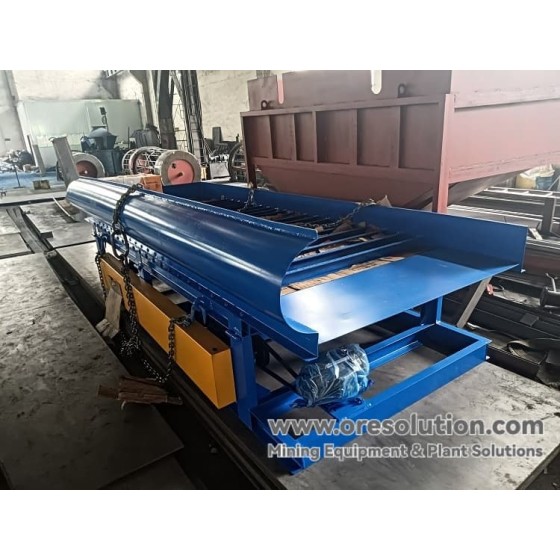
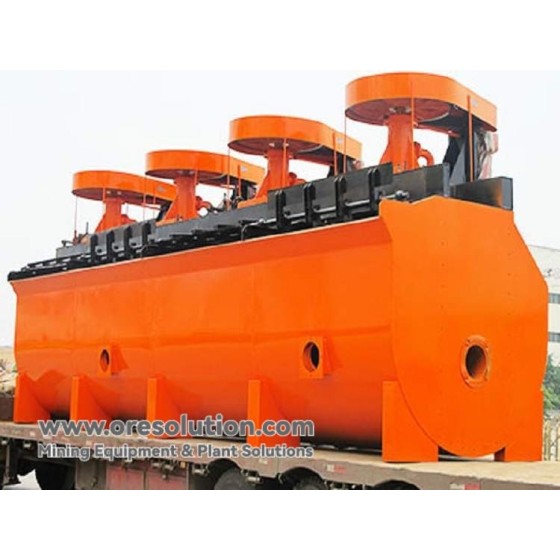
Looking for a complete set of quartz sand processing equipment for TFT glass? Get everything you need in one place.
Key Findings
-
The key requirements for quartz sand used in TFT glass are low iron, low titanium, low alkali metal content, and a narrow particle size distribution.
-
Iron reduction and purification cannot rely on a single machine; they require the coordinated operation of multiple processes, including crushing, grinding, magnetic separation, flotation, and acid washing.
-
The key to a mechanical processing line for low-iron quartz sand lies in the coordination of parameters across each process step, rather than the length of the equipment list.
-
Securing a complete, one-stop solution for TFT glass quartz sand equipment essentially means finding a process provider that takes responsibility for the final product specifications.
-
The treatment of acid washing wastewater and acid mist are hidden costs that must be carefully calculated before the project goes into production.
I. Specification Thresholds for Quartz Sand Used in TFT Glass
The requirements for quartz sand in TFT-LCD glass substrates are one level higher than those for photovoltaic glass. While Fe₂O₃ levels of 100 to 150 ppm are generally acceptable for sand used in photovoltaic glass, sand for TFT substrates often needs to be reduced to below 50 ppm, and some high-end production lines require even lower levels.
Iron causes discoloration of the glass and reduces light transmittance. Titanium reacts with iron to form dark oxides, which create microcrystalline defects during the laser annealing process. Alkali metals—such as sodium, potassium, and lithium—can migrate into the active layer of thin-film transistors, directly degrading the device\'s electrical performance.The removal mechanisms for these three types of impurities are entirely different, so it is unrealistic to expect a single piece of equipment to handle them all.
Particle size distribution is also a critical requirement. For TFT glass, the finer the sand is not necessarily better; rather, it must be concentrated within a narrow range, with D50 typically between 100 and 200 μm.If the particles are too coarse, quartz residues will not have time to dissolve during melting; if they are too fine, they are prone to agglomeration and dust generation, and may also accelerate the erosion of platinum channels (precious metal channels used in glass substrate forming).
Therefore, to procure a complete, one-stop set of equipment for TFT glass quartz sand production, one must first clarify the target product specifications and then work backward to determine the process route and equipment configuration.
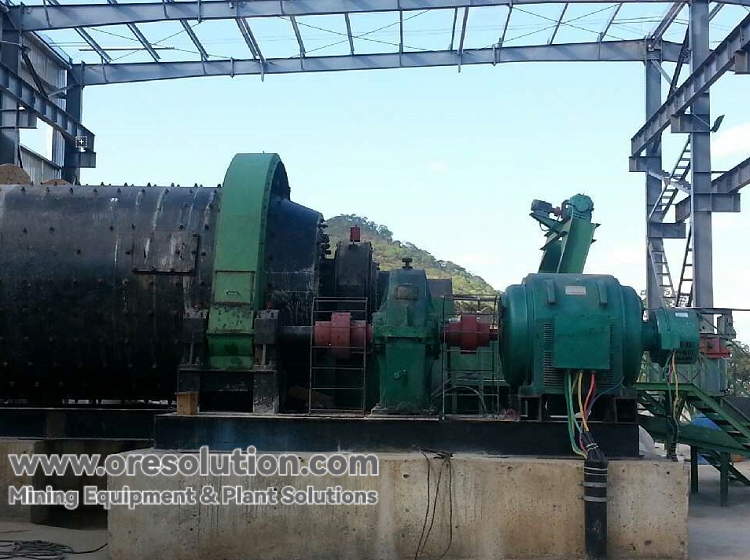
II. The Core Logic of Iron Reduction and Purification: Staged Dissociation and Step-by-Step Purification
Impurities in quartz sand exist in different forms, and their liberation methods vary significantly.
Most of the coarse-grained, embedded independent minerals—such as hematite, rutile, and feldspar—can be removed through grinding and magnetic separation. Impurities in the form of inclusions, hidden inside quartz grains, require fine or even ultra-fine grinding to be released.Impurities that substitute for silicon atoms in the silicate tetrahedra through isomorphous substitution (a phenomenon where impurity atoms replace silicon atoms in the crystal structure) cannot be removed by grinding, no matter how fine the grind; these can only be eliminated through acid leaching or high-temperature chlorination.
Putting this logic together leads to the principle of “stage grinding and stage separation.” It is neither economical nor realistic to liberate all impurities in a single step.A reasonable process for iron reduction and purification is as follows: after coarse crushing, perform dry magnetic separation or photoelectric separation first to remove most of the iron-bearing gangue; after medium crushing, proceed to wet high-intensity magnetic separation to remove weakly magnetic iron minerals; and after fine crushing to near the target particle size, proceed to the acid leaching stage to treat inclusions and surface iron.
The three parameters—grinding fineness, magnetic separation field strength, and acid leaching time—are interdependent. If the grinding is too coarse, the acid leaching time must be extended; if the acid leaching time is too long, the dissolution rate of fine-grained quartz will increase. The value of a low-iron quartz sand mechanical processing line lies in optimizing these parameters to achieve a balanced state.
III. Process Flow of the Low-Iron Quartz Sand Mechanical Processing Line
The process route for quartz sand is not derived by working backward from a list of equipment, but rather by working forward from ore testing.Scrubbing combined with magnetic separation is suitable for ordinary glass sand; scrubbing combined with magnetic separation and flotation is suitable for high-purity sand; and scrubbing combined with magnetic separation, flotation, and acid washing is the essential process for photovoltaic and electronic-grade high-purity quartz. Different combinations of processes correspond to different states of impurity distribution.
Taking a production line at a quartz mine in Anhui as a reference, the raw ore contains Fe₂O₃ and TiO₂ at levels of several hundred ppm each, while the target product must have Fe₂O₃ content controlled below 50 ppm.
The raw ore undergoes two-stage crushing—first in a jaw crusher, then in a cone crusher—to reduce it to -20 mm, after which it enters a rod mill. Rod milling results in minimal over-grinding and a more uniform particle size distribution.The grinding fineness is controlled so that approximately 90% of the particles are within the -0.6 mm range; this range allows for the liberation of most individual minerals without grinding the quartz too finely.
The ground material is fed into a spiral classifier and a hydrocyclone for desliming to remove fine slime particles smaller than -20 μm. The fine slime is enriched with iron and clay minerals; retaining it would interfere with subsequent separation processes.
The underflow from the desliming process first undergoes medium-strength magnetic separation to remove strongly magnetic iron, followed by high-gradient magnetic separation (a process utilizing magnetic media to generate a high magnetic field gradient within a background magnetic field) to recover weakly magnetic iron and some titanium minerals.The cleaning cycle of the magnetic media has a greater impact on actual performance than the magnetic field strength parameters; this point is often overlooked in on-site production.
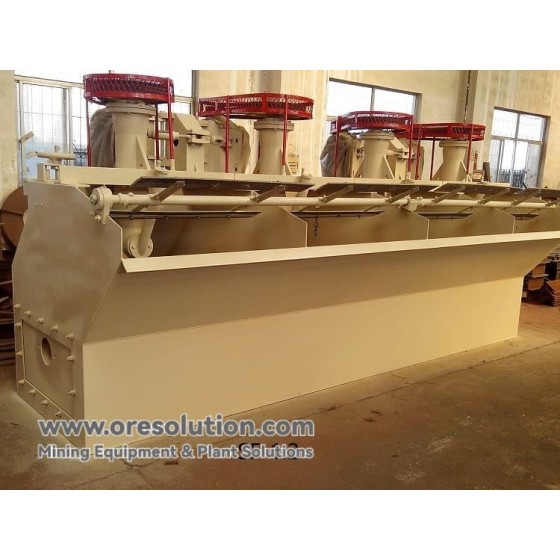
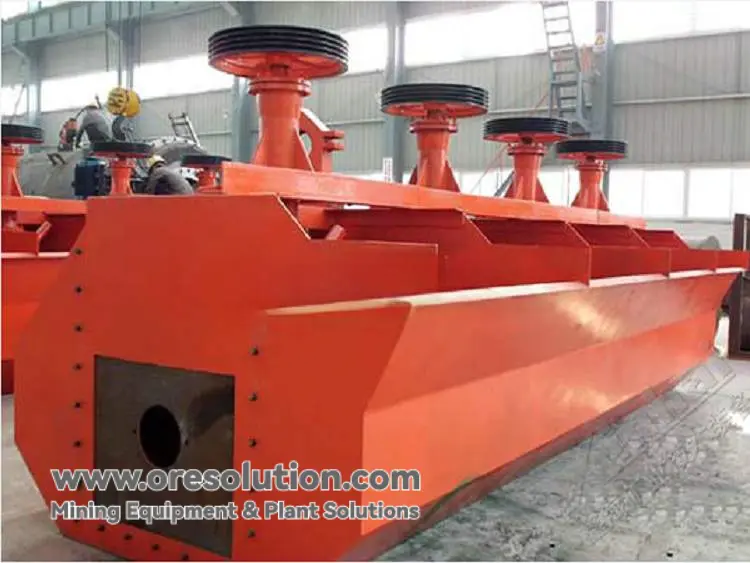
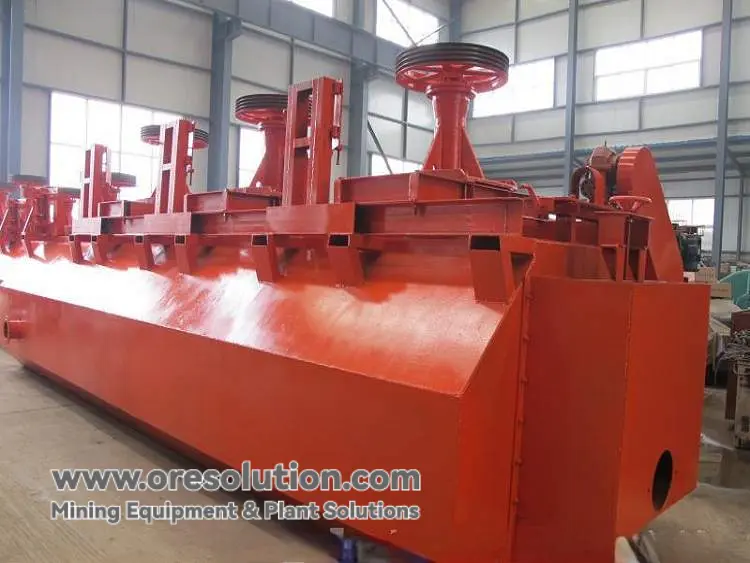
The magnetic concentrate is fed into flotation, where amine collectors are used for reverse flotation of feldspar and mica, and fatty acid collectors are used to float iron-bearing minerals. The pH and reagent ratios for flotation must be adjusted according to the properties of the ore; there is no universal formula.
Acid leaching is a key process for TFT-grade quartz sand. The mixed acid is stirred and leached under heated conditions, with temperature and time determined based on the distribution of impurities. Hydrofluoric acid dissolves inclusions, oxalic acid complexes iron ions, and hydrochloric acid provides an acidic environment.After acid leaching, Fe₂O₃ levels can typically be reduced to below 50 ppm.
The process concludes with multi-stage counter-current rinsing until the rinse water reaches a neutral pH, followed by centrifugal dewatering, flash drying, and a final pass through an electromagnetic iron remover as a safeguard. Once the entire line is operating stably, the SiO₂ content, Fe₂O₃ content, TiO₂ content, and total alkali metal content will meet the basic requirements for sand used in TFT glass.
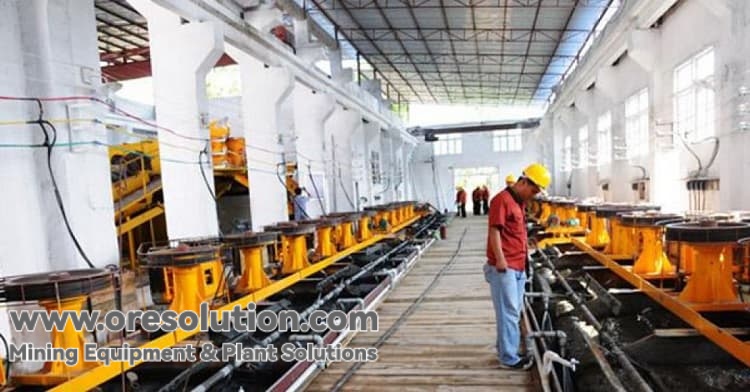
IV. Key Considerations for Complete Equipment Configuration and Selection
| Process Steps | Core Equipment | Key Parameters | Selection Criteria |
|---|---|---|---|
| Crushing | Jaw Crusher + Cone Crusher | Output Size: -20 mm | Select a deep-chamber jaw crusher; use a multi-cylinder hydraulic cone crusher |
| Grinding | Rod mill | -0.6 mm accounts for 90% | The rod diameter ratio affects the particle size distribution; testing is required to determine it |
| Desliming | Hydrocyclone | Separation point: 20 μm | A parallel configuration of multiple small-diameter cones is more stable than a single large cone |
| Magnetic separation | High-gradient magnetic separator | Background magnetic field strength is determined based on the ore | The capture efficiency is determined by the type of magnetic medium |
| Flotation | Aerated mechanical agitation flotation cell | Tank capacity is determined by production capacity | The reagent regimen is more important than the equipment model |
| Acid Leaching | Plastic-lined reactor + heating system | Temperature and time are determined by testing | Acid mist collection is mandatory due to strict environmental regulations |
| Cleaning | Multi-stage counter-current rinsing tank | Wash water must be pH-neutral | Number of rinse stages determined by acid residue levels |
| Drying | Flash dryer | Inlet air temperature control | Excessively high temperatures can introduce secondary iron contamination |
| Iron Removal | Electromagnetic Iron Remover | Field strength is determined based on the product | Placed as the final step before packaging |
This table may seem simple, but the key lies in the seamless integration of parameters across each piece of equipment. It is not uncommon for projects to encounter operational issues even when individual units are all from well-known brands. The problem often stems from the lack of a single party taking full responsibility for the entire process—from “ore entering at one end to finished product exiting at the other.”
When individual units are procured separately and equipment manufacturers do not coordinate with one another, conflicting parameters are the norm, leading to lengthy commissioning periods and repeated corrective actions. When a complete, turnkey system is provided—designed according to a unified process package with clearly defined interfaces—commissioning is rapid, and integrated trial runs are highly efficient. While the initial investment may be slightly higher, the project reaches full production capacity and meets standards quickly, resulting in lower hidden costs.When mineral processing tests, process design, equipment selection and configuration, plant layout, civil engineering drawings, and technical briefings are all handled by a single team, medium- to large-scale projects can save hundreds of thousands of dollars in the design phase alone—while also avoiding the back-and-forth disputes where “the design institute\'s drawings are rejected by the equipment manufacturer, and the design institute refuses to modify them based on the manufacturer\'s requirements.”For project owners seeking a one-stop solution for a complete set of equipment to process quartz sand for TFT glass, this is a factor worth careful consideration.
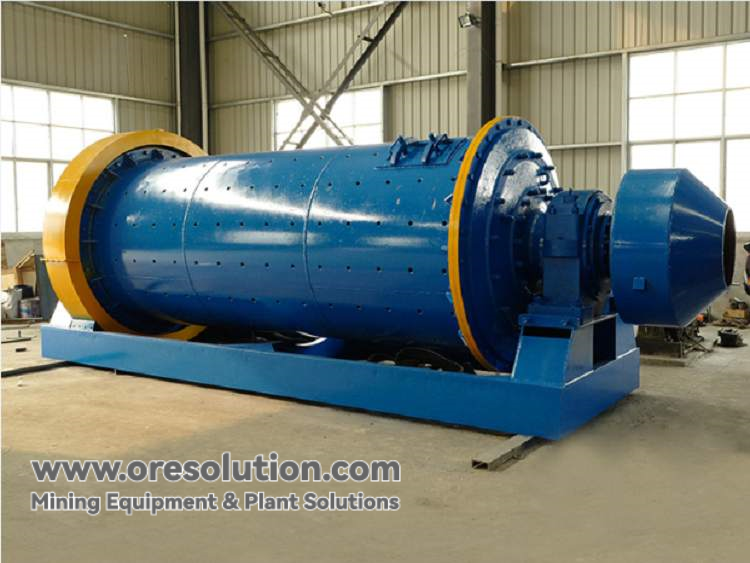
V. Differences in Iron Removal and Purification for Different Types of Ore
Depending on the genesis of the quartz ore, the state of impurity occurrence varies significantly, and the focus of iron removal and purification also differs.
Granite-type quartz ore: Impurities are primarily feldspar and mica, with iron mostly present in mica and iron-bearing minerals. Flotation is the primary process, supplemented by magnetic separation. Acid leaching is mainly used to treat surface iron and is used in relatively small quantities.
Quartzite-type ores: The ore is dense, and iron is predominantly present as inclusions. A finer grinding fineness is required, and both magnetic separation and acid leaching are more intensive. For TFT-grade production lines processing this type of ore, both capital investment and operating costs tend to be higher.
Veined quartz-type ore: Naturally high in grade, with impurities consisting mainly of surface iron and a small amount of inclusions. The processing route can be simplified; magnetic separation combined with acid washing is often sufficient to meet standards, making it a high-quality raw material for TFT sand.
Sandstone-type ore: The cementing material contains iron and clay minerals, making desliming and scrubbing critical. If the initial desliming is not thorough, it will hinder all subsequent processes.
Before selecting a mechanical processing line for low-iron quartz sand, it is far more important to thoroughly understand the ore type and the distribution of impurities than to rush into deciding on equipment.
VI. Several Practical Issues of Concern to Customers
Can environmental standards be met when using hydrofluoric acid for acid washing?
Compliance is achievable, but the associated costs must be calculated in advance. Hydrofluoric acid mist must be absorbed using an alkali spray tower; waste acid must be treated with calcium salts to precipitate fluoride ions; and sludge must be disposed of as hazardous waste.If local environmental regulations are particularly strict, a fluoride-free leaching process can be considered; however, this will compromise impurity removal efficiency, requiring more precise upstream magnetic separation and flotation.When selecting a route for iron reduction and purification, environmental conditions are a hard constraint. Treatment and resource recovery pathways for the high-salt wastewater and fluoride-containing sludge generated after acid leaching should be designed simultaneously during the planning phase, rather than being added as an afterthought once the environmental impact assessment (EIA) process hits a roadblock.
Why can\'t iron levels be reduced after magnetic separation?
It is highly likely that the iron exists in the form of inclusions. Magnetic separation can only process dissociated, independent iron minerals; fine iron particles enclosed within quartz cannot be extracted, no matter how high the magnetic field strength. In this case, the solution is either to perform fine grinding to break open the inclusions or to proceed directly to acid leaching.The drawback of fine grinding is severe sludge formation and subsequent dewatering difficulties, while the drawback of acid leaching is cost and environmental impact. After weighing the pros and cons, most projects opt for acid leaching.
How can a stable particle size distribution be maintained?
A closed-circuit grinding circuit combined with screening is the foundation. Even more critical are the washing and classification steps following acid leaching. Acid leaching alters the surface properties of the particles, causing fine particles to agglomerate easily and reducing the effectiveness of hydraulic classification. Adding an ultrasonic dispersion step after acid leaching, followed by classification equipment, makes a noticeable difference in actual operation.Many design institutes overlook this detail, but it is worth incorporating into mechanical processing line designs for low-iron quartz sand.
What is the approximate investment range?
The scale of investment is directly related to production capacity, ore properties, environmental requirements, and the degree of automation, and there are significant variations among different solutions.Equipment, plant buildings, and environmental protection facilities each account for a certain proportion of the total cost. The margin between the comprehensive cost per metric ton of product and the selling price depends on the product\'s yield rate and batch consistency. For every incremental improvement in the yield rate, the payback period is significantly shortened. Specific calculations must be based on ore testing and product positioning; figures from other projects should not be applied indiscriminately.From a time perspective, the typical cycle from ore sample testing to production commencement is approximately 8 to 12 months. This includes 30 to 45 days for mineral processing tests, about 30 days for engineering design (which may overlap with equipment manufacturing), approximately 60 days for equipment manufacturing, about 60 days for logistics, and 60 to 150 days for installation and commissioning.plus an additional 30 days should be set aside as a buffer for handoffs and uncontrollable delays. To shorten the overall project duration, the first step is to submit representative ore samples for testing as early as possible.
VII. Common Misconceptions About Iron Removal and Purification
Misconception 1: The higher the magnetic field strength, the better. Once the field strength exceeds a certain threshold, the gain in capturing weakly magnetic iron minerals is limited, while energy consumption and equipment wear actually increase. The field strength should be determined based on the magnetic susceptibility of the iron minerals in the ore.
Misconception 2: The longer the acid washing time, the cleaner the result. If the acid washing time is too long, the quartz itself will be dissolved by hydrofluoric acid, leading to a decrease in the yield of fine-grain fractions and an increase in silicon loss. The optimal balance for time parameters must be determined through testing.
Misconception 3: The more expensive the equipment, the more reliable it is. Equipment selection must be matched to the properties of the ore and the production capacity. Using oversized equipment for small-scale operations results in high energy consumption due to idling; conversely, using undersized equipment for large-scale operations prevents the plant from operating at full design capacity. A proper match is more important than price.
Misconception 4: Ignoring the impact of water quality. Calcium, magnesium, and iron ions in the water used for washing and flotation can re-contaminate the quartz surface. Water pretreatment is underestimated in many projects.
VIII. What We Can Do
If you have quartz ore and wish to establish a production line for TFT glass sand, we can provide end-to-end services—from ore testing to process package design, equipment selection, installation and commissioning, and personnel training.
First, we conduct laboratory tests on the ore to determine the distribution of impurities and the ore\'s processability. We then perform continuous scale-up tests to verify the stability of the process flow.Based on the test data, we will develop an equipment configuration plan, with the parameters of each piece of equipment linked to the process package. Once the equipment arrives on-site, we will oversee the integrated commissioning until the production line is stable and producing qualified products. Civil engineering work will be organized and carried out by the project owner based on the civil engineering drawings we provide. Installation workers will be sourced locally, and we will dispatch engineers to the site to provide on-site guidance, resulting in lower labor costs;The equipment warranty period is 12 months. During this period, spare parts will be replaced free of charge for damage caused by equipment quality issues. After the warranty period, we provide lifetime technical consultation, and spare parts are charged at cost only; upfront testing and design fees can be fully offset against the equipment payment when a subsequent equipment or EPC contract is signed.
A complete set of equipment for producing quartz sand for TFT glass is, at its core, a system “tailored to the ore”—it is not a standard off-the-shelf product. Even with the same equipment list, parameters must be readjusted when processing a different type of ore. Solutions for low-iron quartz sand production lines and iron-reduction purification processes must be designed specifically for the given ore.
Send us your ore data—raw ore grade, impurity composition, target product specifications, and planned production capacity—and we\'ll provide a customized proposal, including a process flowchart, equipment configuration table, investment estimate, and performance guarantee. If you\'d like to learn more about a complete set of equipment for TFT glass-grade quartz sand—a one-stop solution—please submit your requirements.