


How to Select the CIL Process for a Carbon-in-Leach Plant Processing Carbonaceous Gold Ore? Solutions from Suppliers of Complete Mineral Processing Equipment
Supplier of
Complete Equipment for CIL Plants Processing Carbonaceous Gold Ore · OreSolution
Carbon-bearing gold ore is widely recognized as the “hidden killer” in gold ore beneficiation and smelting… Starting from the characteristics of carbon-bearing gold ore, this article systematically analyzes the logic behind selecting the CIL process, the configuration of complete equipment sets, and the criteria for choosing suppliers—helping you build your carbon-in-leach plant correctly and effectively.
I. Why Is “Gold Loss” a Critical Concern for Carbonaceous Gold Ore?
The “carbon” in carbonaceous gold ore primarily refers to active carbonaceous substances such as organic carbon (humic acid, casein, etc.) and graphitized carbon. Their harmful effects manifest on three levels:
1. Gold scavenging effect: The surfaces of active carbonaceous materials possess adsorption activity, causing dissolved gold cyanide complexes to be re-adsorbed into the tailings, resulting in a precipitous drop in leaching recovery. For ores with severe gold scavenging, direct cyanide leaching recovery may drop from 90% to below 50%.
2. Skyrocketing chemical consumption: Carbon-based materials continuously consume cyanide and oxygen, causing operating costs to spiral out of control.
3. Abnormal Grade of Gold-Loaded Carbon: Low gold concentration in the precious metal solution reduces the efficiency of subsequent adsorption and desorption, creating a vicious cycle in the system.
Key Consideration: A high “Total Carbon (TOC)” value on an analysis report does not necessarily indicate gold entrapment. Total carbon includes non-entrapping carbon sources such as carbonate carbon; the true determinants of the extent of gold entrapment are the active organic carbon content and gold entrapment rate tests. Therefore, the first step in selecting a processing method is always to conduct ore sample tests, rather than making decisions based solely on analysis reports.
II. Why Is CIL Preferred Over CIP for Carbonaceous Gold Ore?
Both CIP (Carbon-in-Pulp) and CIL (Carbon-in-Liquid) are gold ore leaching and adsorption processes, but their core difference lies in:
- CIP: The leaching tank and adsorption tank are separate; the slurry first undergoes leaching before entering the adsorption tank to come into contact with activated carbon;
- CIL: Leaching and adsorption occur simultaneously in the same tank; once gold is dissolved, it is immediately captured by activated carbon.
For carbonaceous gold ores, the advantage of CIL lies in the “time window”: gold stripping is the process by which “dissolved gold is seized by carbonaceous material”; the longer the gold remains in solution, the greater the risk of it being seized.CIL synchronizes leaching and adsorption, allowing activated carbon to “intercept” the gold immediately after it dissolves, thereby significantly shortening the window during which it can be scavenged by carbonaceous materials. As a result, CIL offers significantly stronger resistance to gold scavenging than CIP.
However, CIL is not a panacea. For ores with severe gold leaching, relying solely on CIL is insufficient; it is typically necessary to combine the following measures:
- Addition of gold stripping inhibitors (masking agents): kerosene, diesel, nonylphenol ethoxylate, etc., which preferentially occupy the active sites on the surface of carbonaceous materials;
- Flotation decarbonization: First, use flotation to remove carbonaceous matter, thereby reducing the carbon load on the leaching system;
- Pre-treatment: Roasting, bio-oxidation, or pressurized oxidation to disrupt the structure of carbonaceous matter.
Process Selection Conclusion: The CIL process for carbonaceous gold ores typically follows a “CIL as the core + combination of masking agents/flotation decarbonization/pretreatment” approach. The specific combination must be determined through gold leaching rate tests on ore samples and leaching comparison tests; it is absolutely essential not to simply follow standard design specifications.
III. Complete Process Stages and Equipment Configuration for CIL Plants Processing Carbonaceous Gold Ore
A complete CIL processing line for carbonaceous gold ore typically consists of seven process stages:
1. Crushing and Screening Stage
The ore is crushed to the feed size required for grinding (typically ≤15–25 mm), following the principle of “more crushing, less grinding.” Core equipment: jaw crusher, cone crusher (or impact crusher), vibrating screen, feeder, and belt conveyor.
2. Grinding and Classification Stage
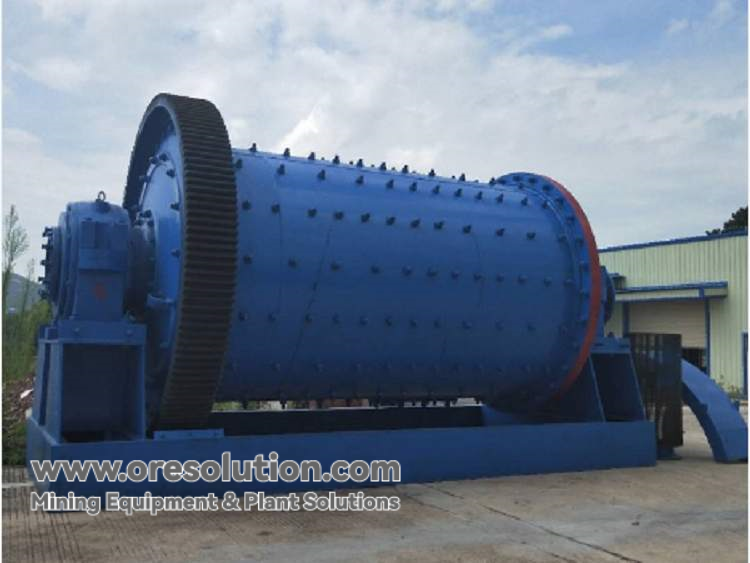
The ore is ground to the fineness required for single-particle liberation of gold (as determined by testing), while avoiding over-grinding and slime formation. Key equipment: ball mill, spiral classifier or hydrocyclone, slurry pump.
3. Flotation Decarbonization Section (if determined necessary by testing)
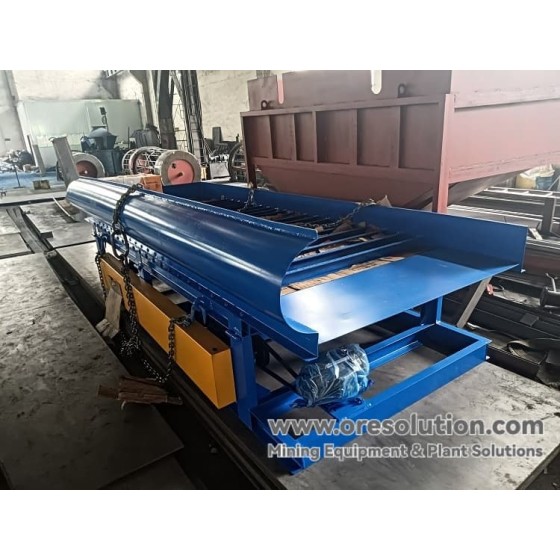
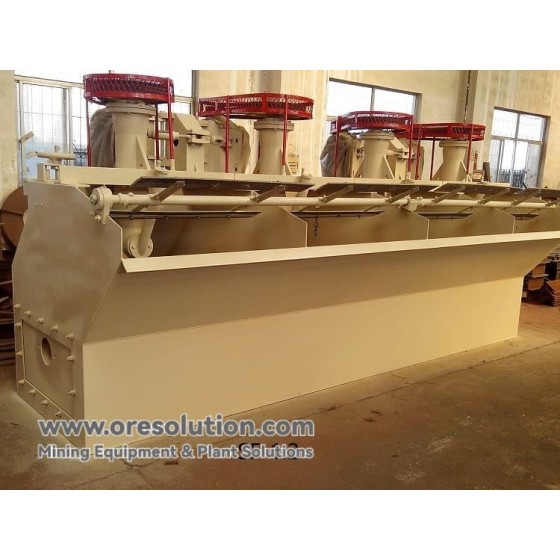
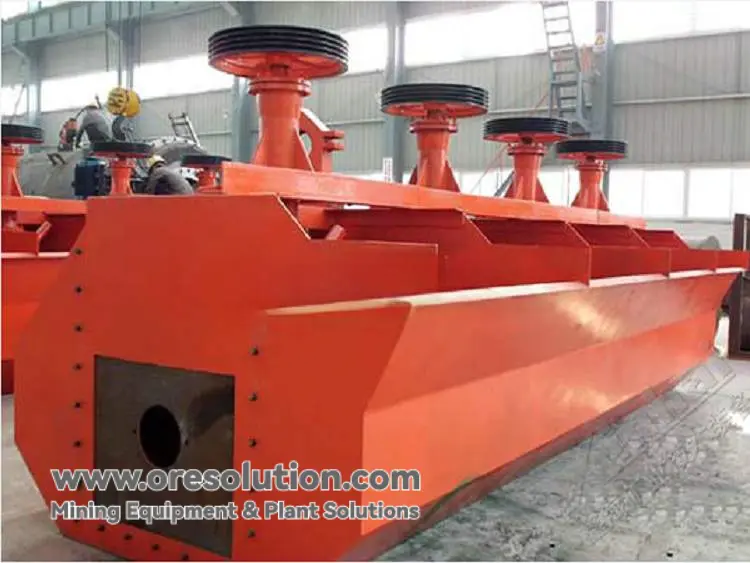
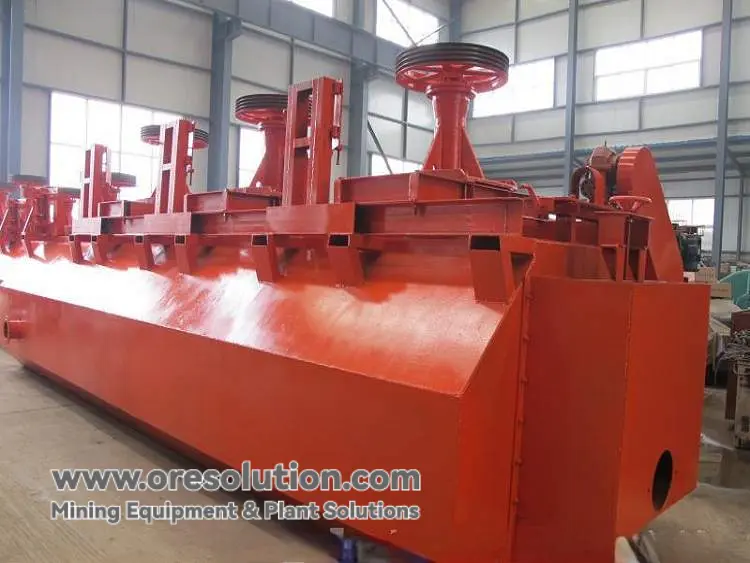
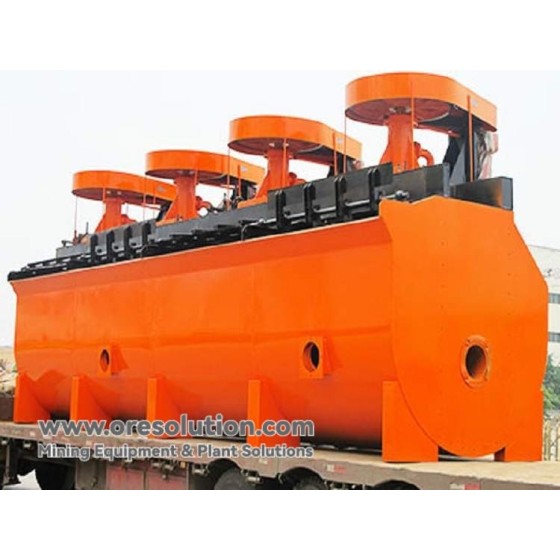
First, carbon-bearing materials (and some sulfides) are removed via flotation to reduce the carbon load entering the leaching system. Core equipment: agitation tanks, dosing systems, SF/BF-type flotation cells, thickeners, and filter presses.
4. Leaching and Adsorption Section (CIL Core)
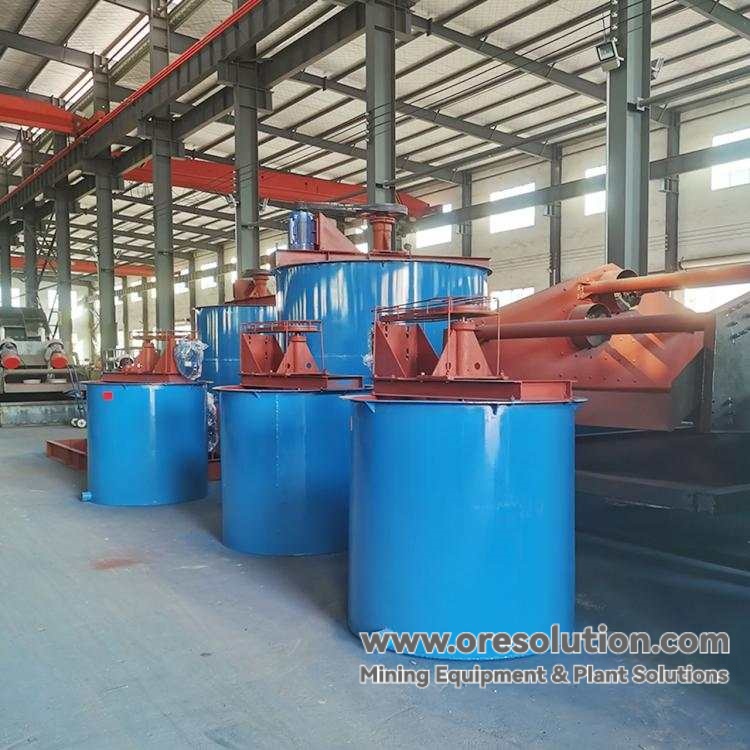
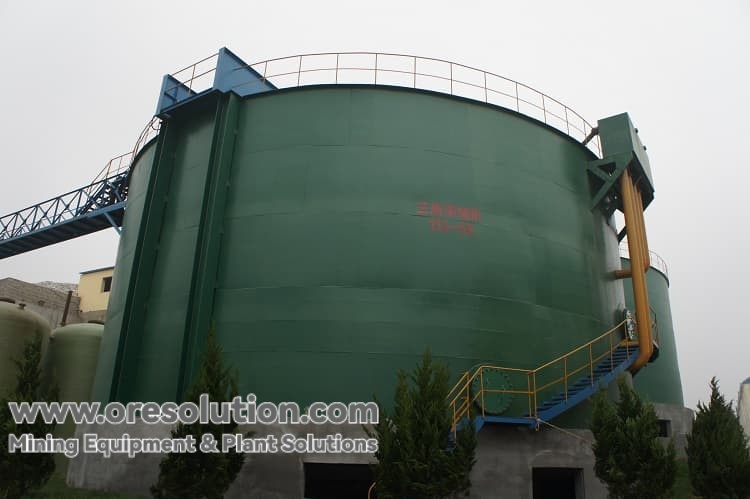
Leaching and adsorption occur in the same tank; gold is leached with sodium cyanide under alkaline conditions (pH 10–11), while activated carbon adsorbs the gold simultaneously.Core equipment: High-efficiency dual-impeller carbon-in-leach tanks (typically 4–6 stages in series), carbon-separating screens, carbon-extraction pumps (air lifters), sodium cyanide and lime dosing systems, inhibitor dosing systems, blowers, and online monitoring of pH and reagent concentrations.
Key Configuration Points: The volume and number of stages of the carbon leaching tanks are calculated based on the processing capacity and leaching time; the mesh size of the carbon-retaining screen must precisely match the particle size of the activated carbon to prevent carbon loss; the addition points for the masking agent must be precise and controllable, as excessive amounts will affect activated carbon adsorption.
5. Desorption, Electrolysis, and Smelting Section
Gold-laden carbon is subjected to desorption to remove gold, followed by electrolysis to produce gold slime, which is then smelted into refined gold. Core Equipment: Desorption and electrolysis equipment (desorption rate up to 96% or higher, electrolysis rate exceeding 99%), gold smelting furnace, and carbon regeneration/acid washing equipment.
6. Tailings and Environmental Protection Section
Cyanide-containing tailings are treated to meet regulatory standards, and tailings are safely stockpiled or dry-discharged. Core equipment: high-efficiency thickeners, filter presses, cyanide removal/neutralization treatment systems, and emergency ponds.
7. Auxiliary and Automation Section
Slurry pumps, carbon-extraction pumps, water pumps, agitation tanks, electrical control systems, and online monitoring systems.
It should be emphasized again: The above represents a typical framework; actual equipment models, quantities, and specifications must be customized based on ore characteristics, processing capacity, gold recovery rate, and site conditions, with the mineral processing test report serving as the definitive reference.
IV. Five Common Misconceptions in CIL Process Selection
Misconception 1: Assuming severe gold leaching simply because the total carbon content is high, and blindly proceeding with pretreatment
. Total carbon includes non-leachable carbon; a gold leaching rate test must be conducted first. Correct Approach: Laboratory analysis + gold leaching rate test + leaching comparison test; make decisions based on data.
Misconception 2: Choosing Between CIP and CIL Arbitrarily.
Carbonaceous gold ores have a strong tendency for gold entrapment, and CIL\'s resistance to gold entrapment is significantly superior to that of CIP. Correct Approach: Verify the difference in recovery rates between CIL and CIP through leaching comparison tests, and give priority to CIL.
Misconception 3: Relying solely on CIL without adding masking agents or decarbonization
. CIL narrows the gold leaching window, but combined measures are still required for ores with severe gold leaching. Correct approach: Conduct tests to evaluate the types and dosages of masking agents, as well as the feasibility of flotation decarbonization, to develop a combined solution.
Misconception 4: Neglecting Gold Losses from Flotation Decarbonization. Flotation
decarbonization removes some gold; recovery rates must be comprehensively evaluated. Correct Approach: Conduct tests to compare the overall recovery rates and economic viability of “decarbonization + tailings CIL” versus “direct CIL + masking agent.”
Misconception 5: Piecing Together Equipment, Leading to Incompatibility in the Leaching and Adsorption System. When
carbon leaching tanks, carbon separation screens, carbon transfer pumps, and desorption electrolysis units are sourced from different manufacturers, issues such as carbon carryover, blockages, and mismatched production capacity frequently occur. Correct Approach: Select a turnkey equipment supplier with in-house manufacturing capabilities for core equipment and experience in system integration.
V. Why Choose a Turnkey Equipment Supplier + EPC Model?
CIL projects for carbonaceous gold ore involve multiple stages, including gold recovery testing, process combination evaluation, equipment manufacturing, installation, and commissioning, presenting high technical barriers and complex lines of responsibility.Under the traditional fragmented model—where “design institutes draw up plans, equipment manufacturers sell machines, and construction teams build plants”—multiple parties shift blame when performance targets are not met, forcing mine owners to act as “referees.”
Advantages of choosing a turnkey equipment supplier + EPC model:
- Closed-loop accountability: A single team takes full responsibility for the final outcome, coordinating the entire process from pilot testing to commercial operation;
- Customized Integration: Processes are tailored based on test data from ore samples, and in-house equipment manufacturing capabilities ensure seamless integration between hardware and process;
- Proactive Anti-Extortion Measures: CIL/CIP selection, suppressant solutions, and flotation decarbonization feasibility are comprehensively planned during the design phase;
- Cost Reduction and Efficiency Improvement: Eliminates hidden costs associated with coordinating multiple parties and shortens the plant construction timeline;
- Reduced Design Costs: Core design phases are completed by our in-house team, saving hundreds of thousands of dollars in design fees for medium- to large-scale projects.
VI. OreSolution\'s Turnkey Equipment Supply Solution for CIL Carbon-in-Leach Plants for Carbonaceous Gold Ore
OreSolution specializes in mining equipment and mineral processing solutions, with operations spanning five major sectors: metal ores, non-metal ores, precious metal ores, alluvial deposits, and tailings/solid waste. The company operates three modern manufacturing bases(Shahe Industrial Park, Zhanggong District, Ganzhou, Jiangxi; Guzhang Industrial Park, Shicheng County, Ganzhou, Jiangxi; and Weifang Heavy Industry Park, Shandong). With 20 years of experience in mining equipment manufacturing and solution integration, our products are exported to more than 80 countries and regions worldwide.As a supplier of complete mineral processing equipment for CIL (carbon-in-leach) plants processing carbonaceous gold ore, we provide comprehensive EPC turnkey services ranging from ore sample testing to production commencement and compliance with standards:
We assess the ore type, gold grade, total carbon/organic carbon content, sulfur content, processing capacity, and site conditions to propose a preliminary process direction and feasibility assessment.
We conduct chemical composition analysis, phase analysis, gold recovery rate tests, and leaching comparison tests (CIL vs. CIP, with vs. without masking agents, flotation decarbonization vs. without decarbonization) on representative ore samples. We then issue an authoritative “Mineral Processing Test Report” recommending process routes, parameters, equipment selection, and expected performance indicators.This forms the scientific foundation of the entire project.
Based on the test report, we complete the Process Flow Diagram (PFD), equipment configuration list, plant site layout plan, 3D layout proposal, and civil engineering requirements drawings, and provide a transparent EPC (Engineering, Procurement, and Construction) budget. All core design work is completed by our in-house team, eliminating the need for you to engage a separate design firm.
Core equipment (crushers, ball mills, flotation machines, high-efficiency twin-impeller carbon-in-leach tanks, carbon separation screens, carbon-lifting pumps, desorption and electrolysis equipment, gold smelting furnaces, thickeners, filter presses, etc.) is manufactured strictly in accordance with drawings and standards, and undergoes rigorous quality inspection prior to shipment.
We dispatch senior engineers to the site to supervise equipment installation, piping connections, and electrical layout; complete individual unit commissioning and full-process integrated trial runs; and conduct commissioning with water and feed material until the production line operates stably and meets the contractually agreed-upon performance metrics.Civil engineering work is organized and carried out by the client according to the drawings, with technical briefings provided by us; installation workers are organized locally by the client, with engineers dispatched by us to provide guidance, resulting in lower labor costs and greater flexibility.
We provide systematic theoretical and hands-on training for operators and maintenance teams (including equipment start-up and shutdown, parameter adjustment, daily inspections, and troubleshooting). We offer a 12-month warranty period, during which spare parts are replaced free of charge for quality-related issues. After the warranty period, we provide lifetime technical support at cost.
Estimated Timeline: From ore sample testing to final commissioning,the overall timeline is typically 8–12 months (ore beneficiation testing: 30–45 days; engineering design: approximately 30 days; equipment manufacturing: approximately 60 days; logistics and transportation: approximately 60 days; installation and commissioning: 60–150 days). For projects involving carbon-containing ores that are difficult to process, the timeline may be extended slightly due to the complexity of gold recovery testing and process comparison.
VII. Frequently Asked Questions (FAQ)
VIII. Carbon Is Not a Terminal Illness—Choosing the Right CIL Solution Is the Key
Carbon-bearing gold ores are challenging because the carbon-bearing material “steals” the gold, leading to high reagent consumption and low recovery rates.However, there are proven technical approaches within the industry to address these challenges—including CIL simultaneous leaching and adsorption, masking agents, flotation decarbonization, and combined pretreatment methods. The key lies in selecting the right approach based on your ore sample\'s gold stripping rate test data and implementing the process through a closed-loop EPC responsibility system provided by a turnkey equipment supplier.
As a supplier of complete mineral processing equipment for CIL carbon-in-leach plants treating carbon-bearing gold ore, OreSolution has a clear approach: test first, design later. A single team takes full responsibility for the final outcome, providing end-to-end EPC turnkey delivery—from ore sample testing, process design, equipment manufacturing, installation, and commissioning to personnel training.Conventional processes ensure the minimum yield, while proprietary technologies maximize it—whether your carbon-bearing gold ore suffers from moderate or severe gold loss, we have tailored solutions to address it.
Contact OreSolution to transform your carbon-bearing gold ore from a “gold recovery challenge” into “gold extraction profits.”
OreSolution · Complete Equipment and EPC Services for Carbon-in-Leach (CIL) Plants for Carbonaceous Gold Ore