


Process Flow Chart and Mineral Processing Equipment Plan for Difficult-to-Process Gold Ore
⚙️ What Problems Does It Solve?
For difficult-to-process gold ores with low conventional cyanide leaching rates, this process improves gold leachability through pretreatment, resulting in significantly higher recovery rates compared to direct cyanidation. The specific improvement depends on experimental results.
🧩 Core Components
Crushing and grinding → Flotation pre-concentration → Pretreatment (one of three options: roasting / bio-oxidation / pressurized oxidation) → Cyanide leaching → Carbon-in-pulp adsorption → Desorption and electrolysis → Tailings treatment.
📐 Applicability
This process is particularly effective for sulfide-encased and arsenic-bearing gold ores; quartz vein-type oxidized ores generally do not require pre-treatment.
⏳ Implementation Timeline
From pilot testing to commercial operation, small- to medium-sized processing plants typically take several months to about one year, depending on the ore and processing route.
I. Project Definition
Key Points of the Proposal: The process flow diagram and mineral processing equipment proposal for difficult-to-process gold ores constitute a combined “pretreatment + leaching” process route specifically designed for sulfide-encased and arsenic-bearing gold ores.
The core of this solution is the addition of a pre-treatment step prior to conventional leaching to break down the sulfide coating, exposing the gold before it enters the cyanide leaching and carbon-in-pulp (CIP) adsorption processes.“Difficult-to-process gold ore” typically refers to ore in which gold particles are encapsulated by sulfides such as pyrite and arsenopyrite, or ore containing arsenic or carbonaceous matter, making it difficult for the sodium cyanide solution to come into contact with the gold particles and resulting in suboptimal leaching performance.
This is not a single piece of equipment, but rather a complete mineral processing line. There are three proven routes to choose from for the pretreatment stage: roasting and oxidation, bio-oxidation, and pressurized oxidation. The choice depends on the properties of the ore, the available budget, and environmental regulations.
II. Problems Addressed
Key Points of the Solution: Addressing three typical issues associated with hard-to-process gold ores: low leaching rates, high reagent consumption, and restrictions on the sale of gold concentrate.
The “difficulty” of hard-to-process gold ores typically centers on three aspects:
First, direct cyanide leaching recovery rates are unsatisfactory. Sodium cyanide solutions struggle to penetrate gold encapsulated by sulfides, resulting in leaching rates that are often significantly lower than those of easily treatable ores. When gold from ores with relatively high grades cannot be recovered, economic returns are compromised.
Second, chemical consumption is relatively high. Arsenic, sulfur, and carbonaceous matter in the ore consume sodium cyanide and dissolved oxygen, and the specific chemical consumption may exceed that of normal ore. Carbonaceous gold ore also exhibits “gold scavenging”—where carbonaceous matter re-adsorbs already dissolved gold—further impairing recovery rates.
Third, there are restrictions on the sale of arsenic-containing gold concentrates. Smelters are reluctant to purchase gold concentrates with high arsenic content, and it is not uncommon for them to deduct processing fees as a penalty. If a processing plant has pretreatment capabilities, the concentrate can be converted on-site, significantly reducing pressure on the sales process.
This solution is primarily intended for gold processing plants with a certain daily processing capacity, where the ore has a relatively high sulfide content and direct leaching performance is suboptimal. Such issues are relatively common in fine-grained disseminated gold deposits found in domestic gold-producing regions such as Yunnan, Guizhou, and Gansu.
III. Core Components and Principles
Key Points of the Solution: The entire process consists of five stages, with pretreatment serving as the pivotal point, followed by a conventional carbon-in-pulp (CIP) process.
Stage 1: Crushing and Grinding
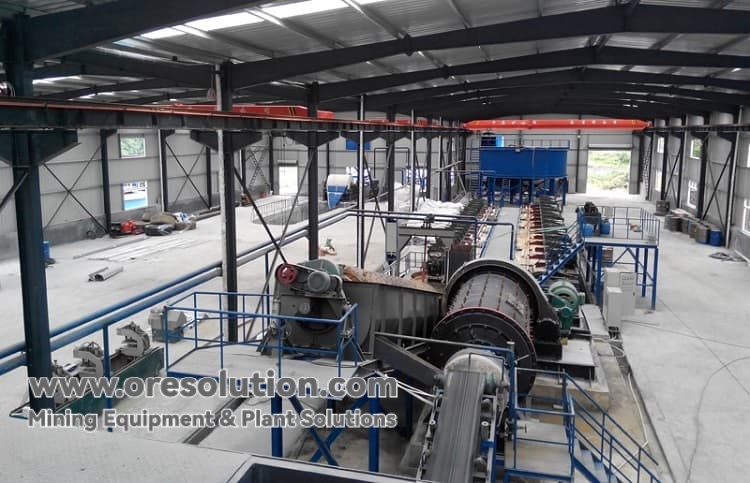
A two-stage closed-circuit crushing process is employed, with the grinding fineness designed to ensure sufficient liberation of sulfides. Insufficient grinding fineness will adversely affect both subsequent flotation and pre-treatment. This stage follows a relatively conventional process, but controlling the grinding fineness is critical.
Process Section 2: Flotation Pre-concentration
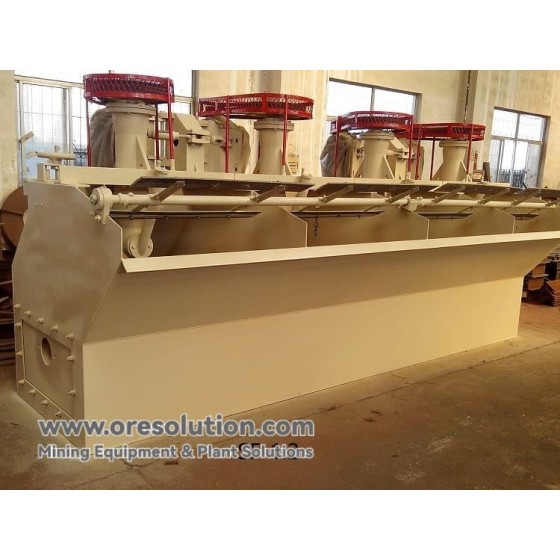
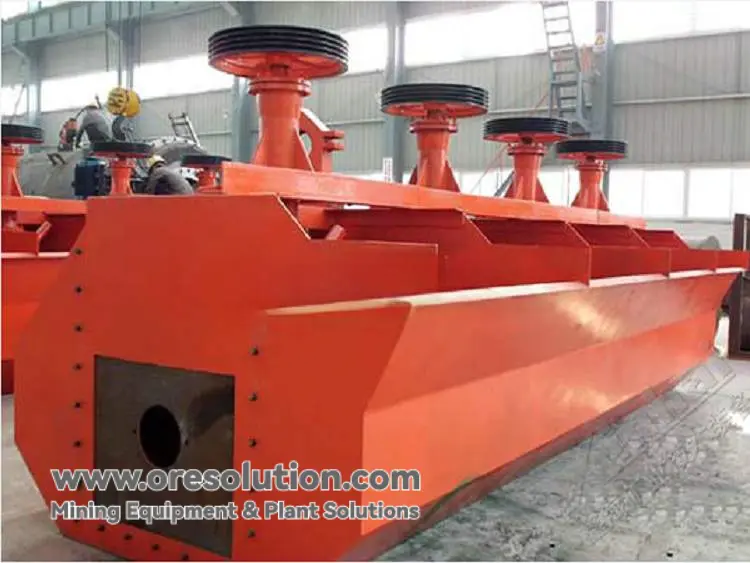
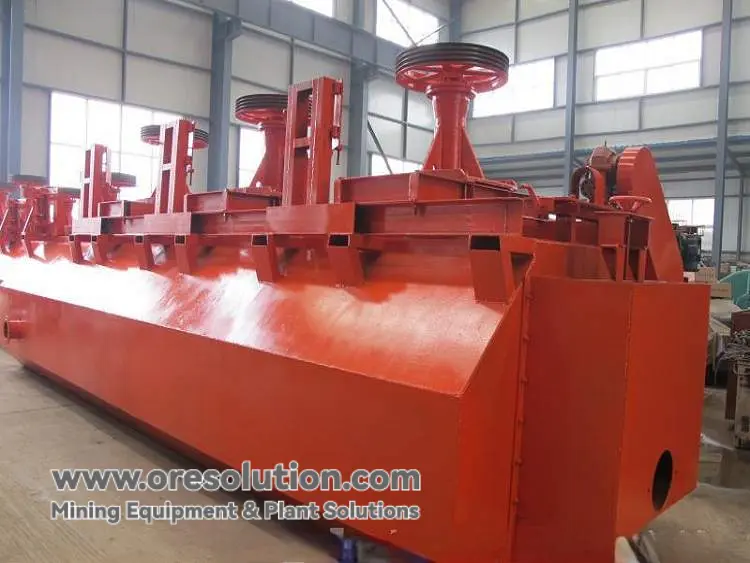
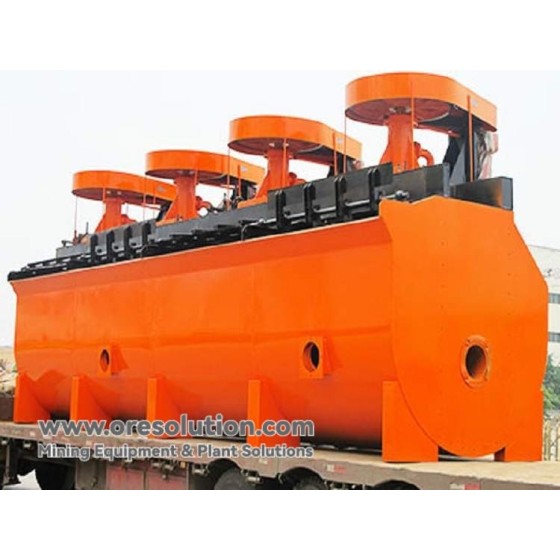
Xanthate-type collectors are used to float pyrite and arsenopyrite, along with the gold encapsulated within them, to produce a gold concentrate.The purpose of flotation is to “reduce the processing volume”—subsequent pretreatment handles only the concentrate, thereby lowering capital investment and operating costs. Flotation recovery rates and enrichment ratios vary depending on the ore and must be determined through testing.
Stage 3: Pre-treatment (Choose One of Three)
🔥 Roasting and Oxidation
The concentrate enters a fluidized bed roaster, where sulfur and arsenic are oxidized under a high-temperature oxidizing atmosphere, exposing the gold particles. This method is suitable for ores with high sulfur and arsenic content and where flue gas treatment facilities are available. Flue gas acid production and environmental protection measures are key considerations.
🧬 Biological Oxidation
This process utilizes acidophilic bacteria to oxidize sulfides. It operates at ambient temperature and pressure, resulting in relatively controllable operating costs. However, the oxidation cycle is relatively long, requiring large-volume oxidation tanks, and it places high demands on bacterial strain cultivation and parameter control.
⚡ Pressurized Oxidation
Sulfides are oxidized and decomposed under high-temperature, high-pressure conditions in an autoclave. The reaction is relatively fast, and gold recovery performance is good. This process requires relatively high capital investment and a high level of operational expertise.
Process Stage 4: Cyanide Leaching + Carbon-in-Pulp (CIP) Adsorption
After pretreatment, the material is slurried and leached with sodium cyanide; once the gold is dissolved, it is adsorbed by activated carbon. Carbon-in-pulp (CIP) adsorption is a process in which activated carbon adsorbs gold-cyanide complexes. This stage employs a well-established process, and leaching efficiency depends on the adequacy of the pretreatment.
Process Stage 5: Desorption and Electrolysis + Tailings Treatment
Gold-bearing carbon is subjected to desorption and electrolysis to produce gold slurry, which is then smelted into refined gold. Tailings are sent to a tailings pond, and the solidification treatment of arsenic is a critical step in environmental compliance.
The core logic of the entire process: flotation concentrates gold in sulfides; pretreatment decomposes the sulfides; and leaching dissolves the gold.
The traditional approach involves directly cyanidizing the raw ore, but leaching recovery rates for difficult-to-process ores often remain low. By adding a pre-treatment step in the middle of this process, this solution effectively clears a pathway for the gold—adding one extra step to achieve improved recovery rates.
IV. Advantages of the Solution
Key Points of the Solution: The four advantages ultimately boil down to the fact that the overall recovery rate and operating costs add up to a sound economic case.
📈 Advantage 1: Significant Room for Improvement in Recovery Rates
When hard-to-process gold ore undergoes pre-treatment followed by leaching, the total gold recovery rate typically shows a significant improvement compared to direct cyanidation. The specific improvement varies greatly depending on the properties of the ore and must be determined by test data, but the trend is clear—pre-treatment makes gold that was originally encapsulated leachable.
🧪 Advantage 2: Chemicals Costs Become More Manageable
Pre-treatment removes arsenic, sulfur, and carbon-bearing materials in advance, typically reducing the specific consumption of sodium cyanide. For processing plants where chemical costs account for a high proportion of expenses, this improvement is worth noting.
💰 Advantage 3: On-site Conversion of Gold Concentrate Reduces Constraints on External Sales
It is common for processing fees to be deducted when selling arsenic-containing gold concentrate to third parties. By establishing an in-house pre-treatment line, the concentrates are converted into refined gold, simplifying the sales process and enabling more direct cash flow recovery.
🔧 Advantage 4: Flexible Process Routes, Customizable by Ore Type
Not all three pretreatment routes need to be implemented simultaneously; instead, the selection should be based on the ore\'s sulfur-to-arsenic ratio, carbon content, and available capital. For ores with high sulfur and low arsenic, roasting should be prioritized; for those with high arsenic and low sulfur, pressurized oxidation should be considered; and for projects with limited capital where site conditions permit, bio-oxidation may be an option.
It should be objectively noted that the upfront investment for this solution is higher than that of conventional direct cyanidation processes, and there is also a significant difference in investment between the bio-oxidation and pressurized oxidation lines. For difficult-to-process ores, failing to implement pretreatment will result in poor recovery rates, and the waste of resources would be even more regrettable. This calculation must be made over the entire lifecycle; one cannot simply look at the purchase order.
The economics of difficult-to-process gold ores must be evaluated over the entire lifecycle: while pre-treatment adds an extra process step, it recovers the gold that was previously trapped—the benefits derived from improved recovery rates typically outweigh the additional costs of pre-treatment, provided the ore properties are suitable and the processing route is correctly selected.
V. Applicable Scenarios and Limitations
Key Points of the Solution: This approach is primarily applicable to sulfide-hosted gold deposits; oxidized ores and low-sulfide ores generally do not require this solution.
Three situations where this approach is particularly suitable:
- Ores in which gold is present as fine-grained disseminations within pyrite and arsenopyrite, with relatively high sulfide content;
- Ore where arsenic-bearing gold concentrates are difficult to sell externally, or where local environmental regulations permit the implementation of flue gas and tailings treatment systems;
- Medium-sized or larger processing plants with a certain daily processing capacity, sufficient funding, and an operations and maintenance team.
[Table of Applicable Ore Types]
| Ore Type | Suitability | Description |
|---|---|---|
| High-sulfur, high-arsenic, fine-grained disseminated gold ore | Suitable | Typically applicable; significant improvement with pretreatment |
| Gold deposits containing carbonaceous material (placer-type) | Fairly suitable | Requires pre-treatment measures for carbonaceous material |
| Gold ores with moderate sulfide content | Fairly suitable | Floating pre-concentration is economically viable |
| Quartz vein-type oxidized gold deposits | Generally not required | direct cyanidation; cyanidation is usually sufficient |
| Low-sulfur gold ore | Not recommended | The flotation enrichment ratio is insufficient, making pretreatment uneconomical |
| Placer gold deposits containing coarse-grained free gold | Not recommended | Gravity separation + cyanidation is more economical |
Objective explanation of limitations:
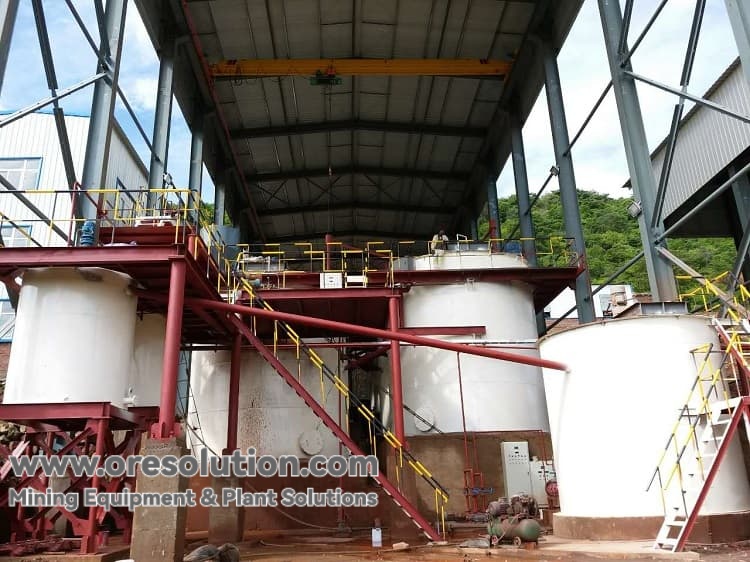
First, the investment threshold is relatively high. A bio-oxidation line requires additional equipment compared to a conventional carbon-in-pulp (CIP) plant, including oxidation tanks, aeration systems, and temperature control systems; a pressurized oxidation line also requires autoclaves and supporting systems. Smaller-scale processing plants should evaluate the adoption of this method with caution.
Second, bio-oxidation requires high operational precision. Issues in any of the following areas—microbial culture, pH control, temperature control, or nutrient ratio—will affect the oxidation cycle. Without knowledgeable personnel, achieving stable operation poses a challenge.
Third, the roasting route faces significant environmental pressure. Arsenic management must be handled in a closed-loop system, and there are clear standards for both acid production from flue gas and the solidification of arsenic slag. Without approval from the environmental impact assessment, this route is not viable.
Fourth, this method is not suitable for all difficult-to-process ores. For some ores, the “difficulty” stems from gold being trapped in carbonaceous material rather than being encapsulated in sulfides; forcing an oxidation pretreatment in such cases yields limited results. In these situations, a process mineralogy analysis should be conducted first to determine the state of gold occurrence before finalizing a plan.
VI. Implementation Pathway
Key Points of the Plan: A six-step process, from ore sampling to production, with clear deliverables at each stage.
- Step 1: Process Mineralogy Analysis. Collect representative ore samples and conduct microscopic identification, chemical phase analysis, and statistics on the grain size distribution of gold inclusions. Determine the specific minerals in which gold is hosted, the minimum grain size, and the respective contents of sulfur, arsenic, and carbon. This step determines the selection of the subsequent pretreatment route and cannot be omitted.
- Step 2: Small-Scale Testing. Design the process based on the mineralogical results and conduct tests on flotation conditions, pre-treatment conditions, and leaching conditions. Small-scale bio-oxidation tests have a relatively long cycle, so sufficient time must be allocated. The deliverables are the recommended process flow and estimated performance indicators.
- Step 3: Scaled-up Continuous Testing. Good results from pilot-scale tests do not guarantee stable continuous operation. Scaled-up testing validates the rationality of the reagent regimen, water balance, and equipment selection; the data obtained serves as the basis for subsequent design.
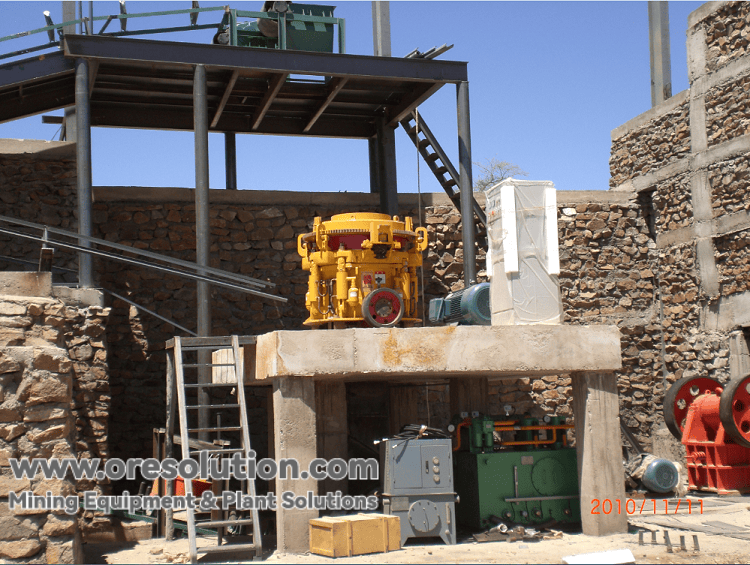
- Step 4: Process Design + Equipment Selection. Determine the specifications for equipment in each process section—crushers, ball mills, flotation cells, oxidation tanks (or roasting furnaces, autoclaves), leaching tanks, carbon-in-pulp (CIP) adsorption tanks, and desorption/electrolysis units. The pre-treatment section is a key focus of the design; retention time, aeration rate, and temperature control accuracy must be carefully calculated.
- Step 5: Construction, Installation, and Commissioning. Civil engineering, installation, individual equipment testing, and integrated commissioning. For biological oxidation lines, microbial cultivation must be initiated in advance, resulting in a commissioning period slightly longer than that of conventional lines.
- Step 6: Production Capacity and Performance Evaluation. Continuous operation is evaluated based on recovery rates, specific chemical consumption, and tailings quality; the project is delivered upon meeting all standards.
The total project duration varies depending on the project scale and pretreatment route. For small- to medium-sized processing plants, it typically ranges from several months to about one year; large-scale projects or pressurized oxidation routes may take longer. Thorough execution of the first two steps—mineralogical analysis and testing—will help avoid detours in subsequent design and construction phases.
Key Considerations for Equipment Selection
Key Points of the Proposal: When selecting equipment for processing difficult-to-treat gold ores, the focus should be on the pre-treatment stage; crushing, grinding, leaching, and adsorption can be configured according to standard practices.
The equipment configuration for this solution can be divided into three parts:
🔩 Pre-treatment equipment is the core
For the roasting route, focus on the temperature control accuracy of the fluidized bed furnace and the associated flue gas treatment system;For the biological oxidation route, focus on the volume of the oxidation tanks, the aeration method, and the temperature control system; For the pressurized oxidation route, focus on the pressure rating of the autoclaves, the flash evaporation system, and the level of automation. The equipment selection in this area directly determines the effectiveness of the pretreatment; it is recommended to base decisions on expanded pilot test data.
🪨 Flotation equipment is determined by processing capacity
The specifications and number of flotation cells are determined based on concentrate recovery rate and flotation time; the collector regimen must be optimized through testing. If the flotation enrichment ratio is insufficient, the processing capacity of subsequent pretreatment stages cannot be reduced.
🧴 Leaching and adsorption equipment should be configured according to standard carbon-in-pulp (CIP) plant standards
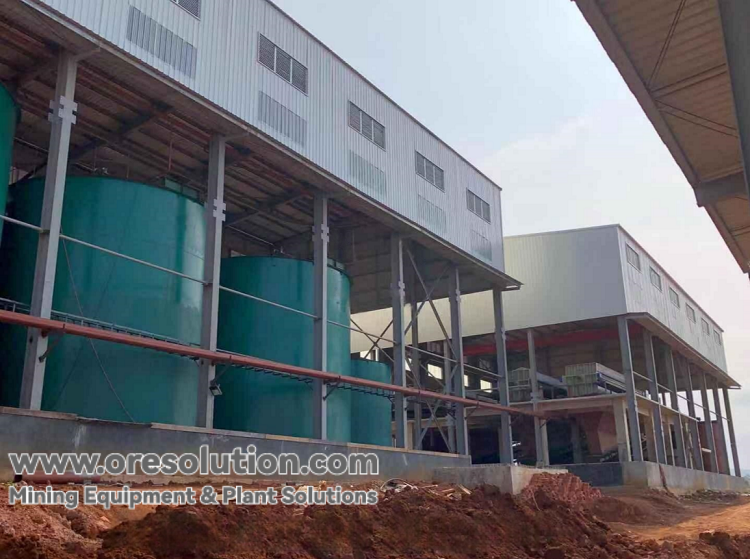
Leaching tanks, carbon-in-pulp (CIP) adsorption tanks, and desorption electrolysis units are mature technologies; their selection primarily depends on processing capacity and residence time. For the tailings treatment stage, the solidification scheme must be determined based on arsenic content.
📋 Verification of Equipment Compatibility and Consistency
From an equipment compatibility perspective, there are already mature domestic supply systems for processes such as crushing, grinding, flotation, leaching, and desorption-electrolysis. When selecting equipment, it is crucial to verify that equipment specifications align with test reports to avoid “over-engineering” or capacity shortages in critical processes.
If you need
If you are evaluating whether a difficult-to-process gold deposit is suitable for this solution, we recommend doing two things first: First, collect representative ore samples for process mineralogy analysis to determine the state of gold occurrence and its inclusion types; second, based on the mineralogy results, arrange small-scale tests to verify the pre-treatment route and leaching parameters.Once these two steps are completed, you will essentially have the answers regarding the solution\'s applicability and which route to choose.
It should be noted that pilot testing and solution design for difficult-to-process gold ores require a high degree of expertise, and the choice of pretreatment route directly impacts subsequent investment and operating costs. If the ore sample has complex properties, it is recommended to integrate the flotation, pretreatment, and leaching stages for continuous validation during the pilot phase, rather than conducting small-scale tests for each stage separately.If further discussion regarding the selection of a pretreatment route for a specific ore sample is needed, we can conduct a separate evaluation based on the test data.
If your ore is a sulfide-encased or arsenic-bearing difficult-to-process gold ore, this plan can proceed directly to the process mineralogy analysis and testing phase; if it is a carbon-bound gold ore or primarily consists of oxidized ore, a mineralogical analysis must be conducted first to determine whether a pretreatment route is necessary.