


Reprocessing of Sulfide Gold Tailings: High-Efficiency Recovery Technologies and Solutions
Re-processing of Sulfide Gold Tailings—High-Efficiency Recovery Technologies and Solutions—Improving Resource Utilization
Many sulfide gold processing plants are currently facing the reality of high-grade tailings and low recovery rates. Ultimately, the reprocessing of sulfide gold tailings is about reclaiming metals that have already been discharged while reducing the environmental pressure on tailings dams.Whether it is worth pursuing, how to proceed, and to what extent depends on the state of the residual gold in the tailings and how well the reprocessing process matches the tailings characteristics. Below, we will clearly outline the technical approach and implementation plan for the reprocessing of sulfide gold tailings, organized into five sections: problems, causes, solutions, implementation, and results.
I. Gold Sulfide Tailings Reprocessing: Where Exactly Does the Problem Lie?
The reason why the reprocessing of sulfide gold tailings is being prioritized by an increasing number of processing plants is that there is indeed gold remaining in the tailings that has not been fully recovered.Common manifestations include: tailings grades consistently exceeding design specifications; dark-colored flotation foam with low skimming volume; significant fluctuations in concentrate grade; slow tailings settling and turbid return water; and marked variations in indicators across different shifts.
These phenomena point to a single issue: the material being reprocessed in gold sulfide tailings is no longer the new ore that was originally fed into the plant, but rather old tailings whose properties have changed after grinding, flotation, and stockpiling.The residual gold exists in a more complex state, with lower liberation, more pronounced surface oxidation, and a higher content of fine silt. Naturally, applying the same approach used for processing new ore to these tailings will result in inconsistent performance metrics.
Key Indicators: To determine whether reprocessing of sulfide gold tailings is necessary, focus on three key factors—tailings grade, particle size distribution of residual gold, and the remaining service life of the tailings dam. When these three data points are considered together, they provide a solid basis for assessing both the necessity and economic viability of the project.The properties of tailings vary greatly from mine to mine; no single solution can be applied universally. Process parameters must be determined based on the mineral processing test reports specific to the tailings in question.
II. Fundamental Causes of Poor Results in the Reprocessing of Sulfide Gold Tailings
The unsatisfactory results of reprocessing sulfide gold tailings are often not due to a single factor, but rather a combination of several factors. The root of the problem lies elsewhere than where you might expect—many people start by adjusting the chemical dosages, but in reality, the main issues lie in grinding and liberation.
First, insufficient liberation leaves residual gold entrapped. In sulfide gold ores, gold is often associated with sulfides such as pyrite and arsenopyrite, and is finely disseminated.When the grinding fineness in the original process is insufficient, a significant portion of the gold remains entrapped within sulfides or gangue, making it inaccessible to flotation. These coarse intergrown particles and entrapped gold are one of the primary sources of gold loss in tailings.
Second, oxidation of the tailings surface reduces their floatability. While tailings are stockpiled in the storage area, oxidation occurs on the surface of the sulfides, forming a hydrophilic film that makes it difficult for collectors to adsorb effectively.The flotability of old tailings differs significantly from that of new ore; continuing to use the original reagent regimen often results in poor foam formation and low recovery rates.
Third, interference from fine silt and process mismatches. During tailings reprocessing, the high content of fine silt—which has a large specific surface area—leads to increased reagent consumption and can easily coat the surfaces of coarse particles, causing false hydrophilicity. At the same time, the accumulation of residual reagents in the return water complicates the flotation environment. If the original process is directly applied, classification efficiency will be low, and slime and sand will be mixed during separation, making it difficult to stabilize performance indicators.
The combined effect of these three factors manifests as an inability to reduce tailings grade, difficulty in maintaining concentrate grade, and persistently high specific reagent consumption. The process design for the reprocessing of sulfide gold tailings must address each of these three causes individually. Changing one\'s mindset is more effective than replacing equipment; thoroughly understanding the ore sample is paramount.
III. Core Process Scheme for the Reprocessing of Sulfide Gold Tailings
In response to the aforementioned causes, the process route for the reprocessing of sulfide gold tailings can be summarized as a three-stage approach: “re-liberation, re-activation, and re-separation.” This serves only as a general reference framework; the specific process combination and parameters must be determined based on tailings beneficiation tests.
Stage One: Re-disassociation. Determine the particle size range where gold losses are concentrated through full-size-range screening. For tailings with a high proportion of coarse intergrown particles, use regrinding equipment to improve the degree of disassociation. The goal of regrinding is to break up the intergrown particles, not merely to achieve finer particle sizes; over-grinding will produce more fine slime, which will actually worsen subsequent separation.In terms of equipment, vertical mills or tower mills offer advantages in energy consumption and particle size uniformity; the specific selection should be based on processing capacity and test results.
Stage Two: Reactivation. For oxidized tailings, activators are added during the slurry preparation stage to improve mineral surface properties and restore floatability. Common activators include copper sulfate, among others, used in conjunction with pH adjusters to control the slurry environment. The activation agitation time must be sufficient; insufficient time yields limited results, while excessive time leads to waste. Specific parameters must be determined through testing.
Third stage: re-concentration. Following a sand-slime separation approach, coarse sand and fine slime are fed separately into appropriate flotation circuits, with staged reagent addition and independent control.In the fine silt circuit, reagent dosage is appropriately reduced and added in batches, combined with pre-desliming to minimize interference. Recirculated water is treated and reused to prevent the accumulation of residual reagents from affecting separation stability.
Process Location: The three-stage scheme is integrated following the existing grinding and flotation process. After classification, tailings are directed separately into the regrinding, activation, and flotation circuits, with the concentrates combined and fed into the final concentration operation.
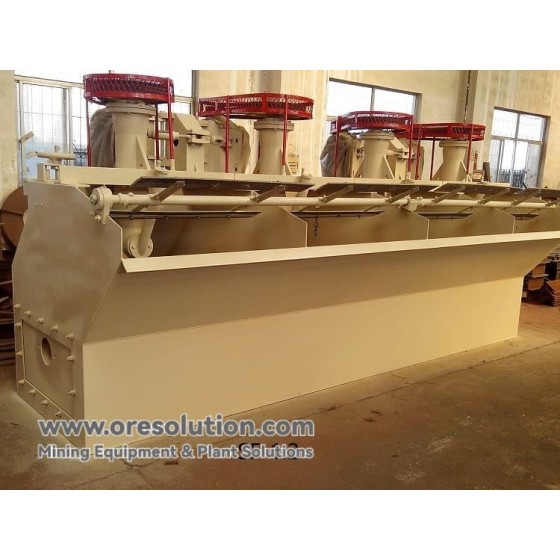
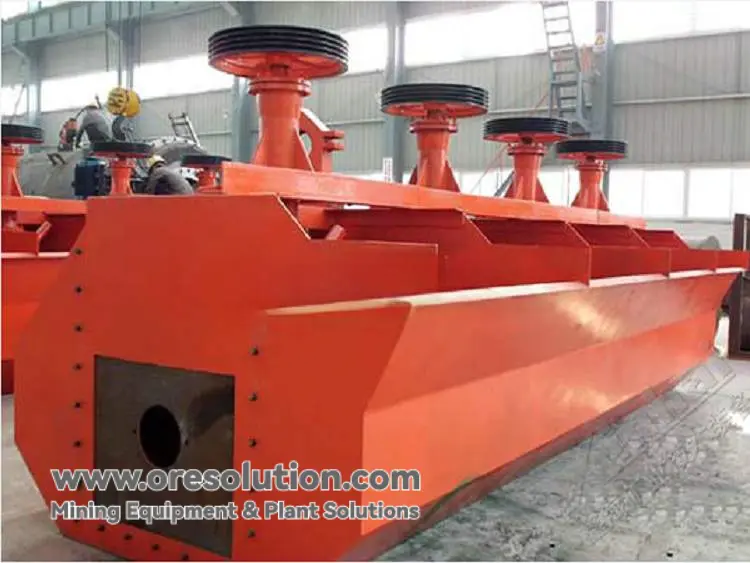
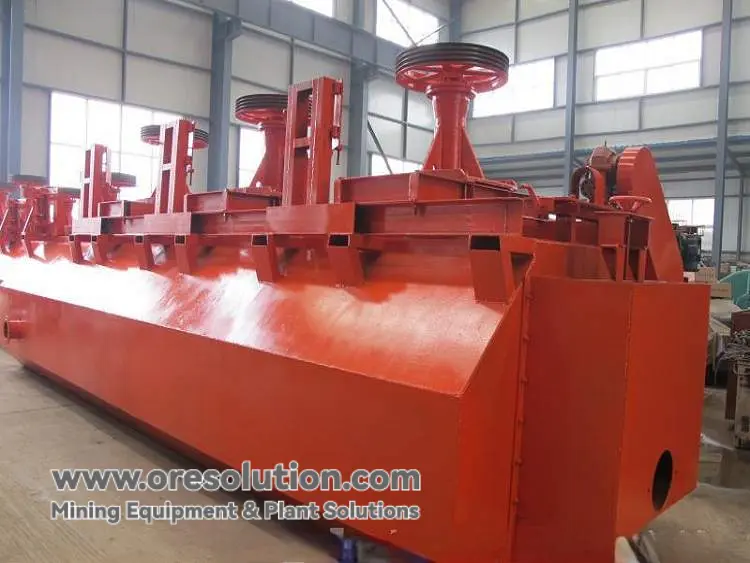
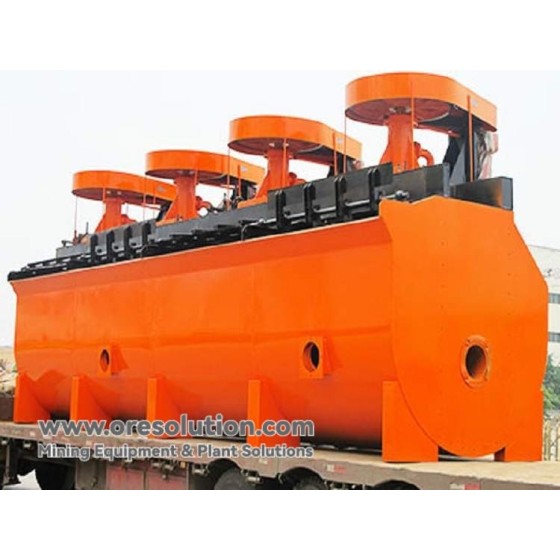
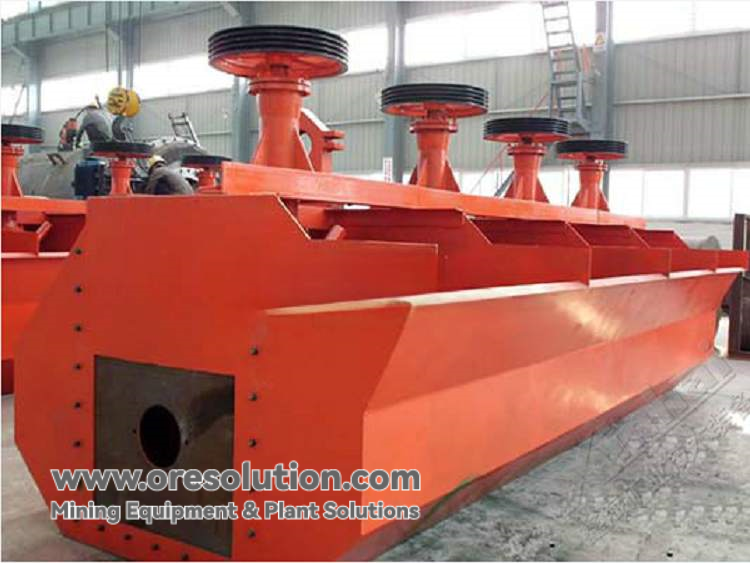
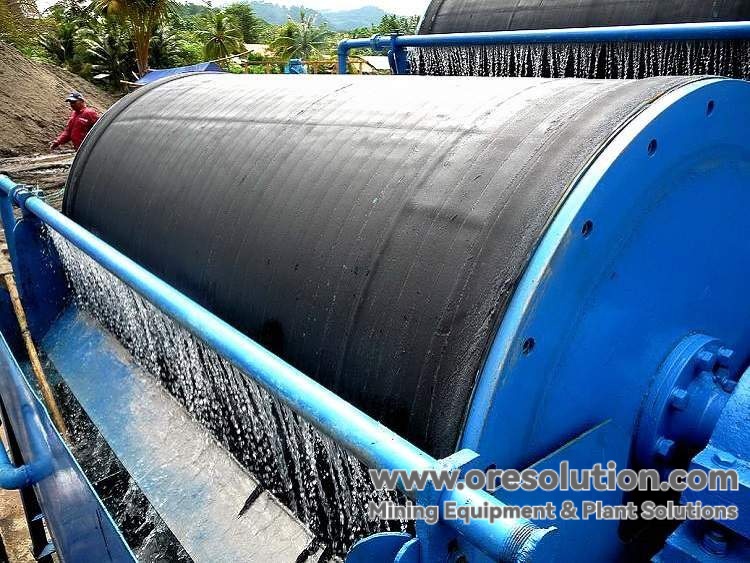
In terms of process selection, the reprocessing of sulfide gold tailings is not limited to flotation alone. Tailings with residual gold consisting primarily of coarse-grained heavy minerals may be considered for gravity separation; those containing iron-bearing magnetic materials may be supplemented with magnetic separation; and complex polymetallic tailings are suitable for a combined gravity-magnetic-flotation process.OreSolution offers a comprehensive suite of solutions in the field of tailings reprocessing, ranging from standalone gravity separation, magnetic separation, and flotation to combined gravity-magnetic-flotation processes.The approach involves first conducting tailings sampling, analysis, and beneficiation tests, then customizing the process route and equipment configuration based on the test data—consistent with the principle of “tailoring the process to the ore” for the reprocessing of sulfide gold tailings.
IV. Quick Reference Guide to Processes for Different Tailings Types
There is no one-size-fits-all process route for the reprocessing of sulfide gold tailings; the key factor is the form in which the residual gold exists within the tailings. The table below outlines corresponding process directions based on the state of the residual gold; specific solutions must still be determined by mineral processing tests.
[Correspondence Table for Different Tailings Types]
| Tailings Type Characteristics | Primary Form of Residual Gold | Corresponding Process Approaches | Parameters Requiring Focused Validation |
|---|---|---|---|
| Primarily coarse-grained intergrown particles | Gold is associated with sulfides; insufficient liberation | Re-grinding + Flotation | Re-grinding fineness, degree of liberation |
| Oxidized old tailings | Surface oxidation, poor floatability | Activation + flotation | Type and dosage of activator |
| High content of fine silt | Fine-grained gold, severe silt coverage | Desliming + Flotation with Silt-Sand Separation | Dewatering Particle Size, Fine Silt Reagent Regimen |
| Presence of coarse-grained free gold | Free gold particles with significant density differences | Early recovery by gravity separation + flotation | Lower Limit of Recovery Size for Gravity Separation |
| Complex polymetallic tailings | Gold associated with copper, lead, zinc, etc. | Combined gravity-magnetic-flotation process | Separation sequence, metal interference |
| Predominantly gold encapsulated | Gold encapsulated in sulfides or silicates | Fine grinding + combined flotation or leaching | Inclusion liberation and leaching feasibility |
This table is intended to help you make an initial assessment of the direction to take; for specific projects, you will need to perform item-by-item calculations based on tailings grade, processing scale, and tailings pond conditions.
V. How to Implement a Re-processing Plan for Sulfide Gold Tailings
Once a plan is finalized, the pace of implementation directly impacts the final results. The implementation of gold sulfide tailings reprocessing can be divided into four phases.
Phase 1: Sampling and Sieve Analysis. Samples are collected from various locations within the tailings pond, homogenized, and subdivided. Full-grain-size sieve analysis and mineralogical identification are conducted to determine the grain-size distribution and occurrence forms of gold losses. At the same time, the specific consumption of reagents, electricity consumption, and processing capacity of the existing process are assessed to serve as baseline data prior to modification. This step forms the foundation of the plan design and cannot be omitted.
Stage Two: Mineral Processing Tests. Representative tailings samples are collected for laboratory testing to examine the effects of parameters such as regrinding fineness, activator dosage, and collector regime on performance indicators, thereby identifying approximate process parameters.
Phase Three: Process Modification and Commissioning with Actual Feed. Implement process modifications based on the test parameters, including regrinding equipment, activation and agitation systems, and the slurry-sand separation circuit. Commissioning should proceed circuit by circuit, starting with coarse sand and then fine slurry. During commissioning, intensify monitoring of tailings grade and make timely adjustments.
Phase Four: Parameter Finalization and Operating Procedures. Incorporate the stabilized process parameters into operating procedures to standardize shift operations and minimize human error. This step is critical to ensuring the long-term stability of reprocessing performance for sulfide gold tailings, yet it is also the most easily overlooked aspect.
Avoid Common Pitfalls: Before installing equipment for the reprocessing of sulfide gold tailings, a technical and economic feasibility study must be conducted. For projects with excessively low tailings grades or severe oxidation, reprocessing may not be economically viable; this assessment must be completed prior to investment.
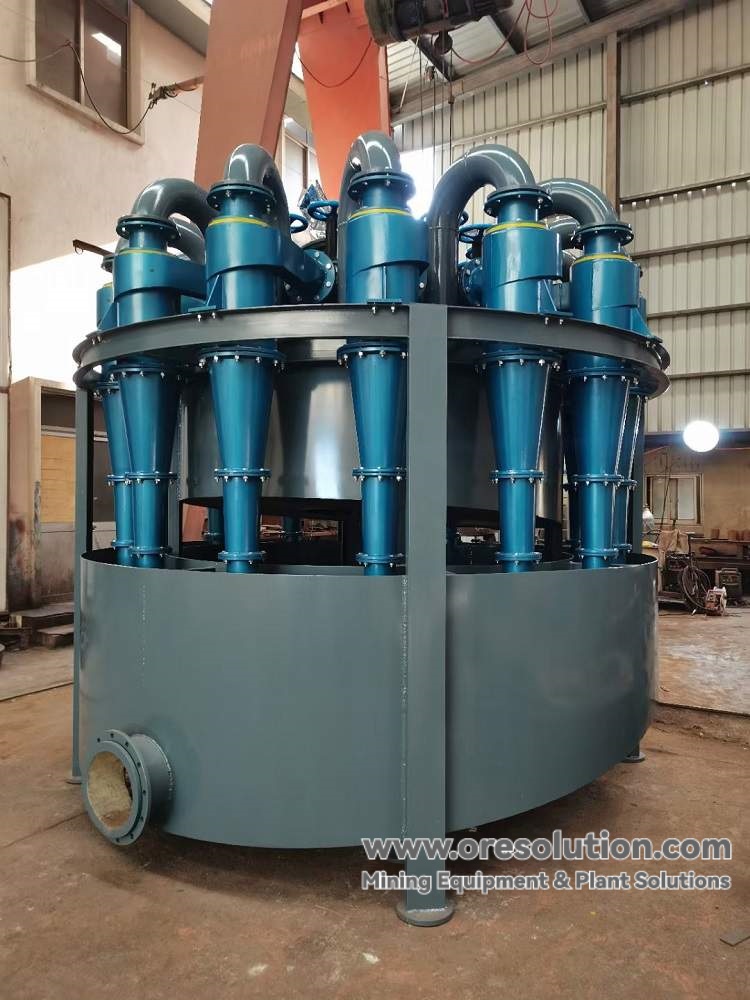
At the project implementation level, the reprocessing of sulfide gold tailings involves multiple stages—including pilot testing, design, equipment procurement, construction, and commissioning—and a lack of coordination between these stages is a common risk.OreSolution adopts an EPC turnkey model, integrating mineral processing testing, process design, equipment manufacturing, installation, commissioning, and personnel training into a single team. The core equipment required for tailings reprocessing—including hydrocyclones, spiral chutes, centrifuges,magnetic separators, flotation cells, and thickening filter presses—are all supplied through its in-house manufacturing system. Its advantage lies in bridging the gap between testing and engineering, thereby reducing finger-pointing and performance deviations during implementation. This approach is suitable for processing plants seeking to shorten commissioning cycles and lower coordination costs.
VI. Effectiveness and Applicability Limits of Sulfide Gold Tailings Reprocessing
The effectiveness of reprocessing sulfide gold tailings is heavily influenced by the nature of the tailings and cannot be summarized by a single figure.In projects with appropriately matched processes, the tailings grade can decrease significantly, recovery rates can improve accordingly, concentrate grade can remain stable, and both reagent consumption per unit and recycled water quality can improve simultaneously; specific improvements must be determined based on project testing and commissioning data.
In terms of performance indicators, the core objectives are to reduce tailings grade and increase gold recovery rate while ensuring that concentrate grade meets downstream requirements; these three factors must be considered holistically.In terms of costs, reprocessing increases electricity consumption for regrinding and the cost of activation reagents; however, the revenue from additional metal recovery typically offsets these additional costs. Whether it is cost-effective depends on the residual grade of the tailings, the scale of processing, and metal prices, and must be calculated on a project-by-project basis.In terms of stability, once parameters are optimized, operational variations among work crews are minimized, tailings grade fluctuations are reduced, water recirculation is improved, the grade of material entering the tailings dam is lowered, and environmental pressure is correspondingly alleviated.
Important Note: The reprocessing of sulfide gold tailings is not a one-size-fits-all solution. For projects where tailings are severely oxidized and gold exists as fine inclusions within silicate minerals, the potential for improvement through flotation alone is limited; leaching or combined processes should be considered. The selection of a solution must be based on mineral processing tests.
Conclusion
The reprocessing of sulfide gold tailings is, at its core, a customized engineering project based on the characteristics of the tailings. To summarize the entire text in three sentences: First, take samples to determine where the gold is lost; second, conduct tests to verify the feasibility of the process; and third, design the process by defining the workflow and equipment based on the data.Improvements in resource utilization do not stem from a single piece of equipment or a single chemical reagent, but rather from an accurate assessment of the tailings\' properties and the appropriate selection of a process route.
If you are evaluating the reprocessing value of your own tailings, we recommend starting with tailings sampling and analysis, followed by mineral processing tests. Use the data to assess feasibility before deciding on the process route and investment timeline. Whether the reprocessing of sulfide gold tailings is done correctly often hinges on the success of the initial ore sample analysis.