


Analysis of the Iron-Removal Purification Process in a Quartz Sand Purification Production Line for LCD Glass Substrates
1. The Success of a Production Line Depends First on the “Origin” of the Raw Materials
The first issue that a quartz sand purification production line for LCD glass substrates must address is not equipment selection, but rather raw material evaluation.
The tolerance for iron content in LCD glass substrates is measured in ppm (parts per million).Industry-grade raw materials typically require Fe₂O₃ levels of around 0.015%, while high-end substrates can be reduced to approximately 0.01% depending on the product grade. This level of precision means that a quartz sand purification production line for LCD glass substrates is not a standard sand-washing line, but rather a sophisticated impurity removal system.
However, while equipment can be upgraded, the “origin” of the raw material cannot be changed. There are two types of iron in the raw material: surface-adhered iron, which can be removed through scrubbing and acid washing; and lattice iron, which is embedded within the crystal structures of feldspar or clay minerals—a problem that physical beneficiation is largely powerless to address. The former can be remedied; the latter is difficult to address.
Therefore, when assessing the feasibility of a mechanical production line for low-iron quartz sand, the first step is not to review equipment quotes, but to conduct a geological and mineralogical analysis. If the Fe₂O₃ content in the raw material exceeds a certain threshold—and if the iron is primarily embedded within the crystal lattices of hard-to-treat minerals—the economic viability of iron-reduction and purification becomes questionable.First identify the ore source, then select the equipment—the order must not be reversed.
2. How the Four-Stage Process Forms the Main Line of Iron Reduction and Purification
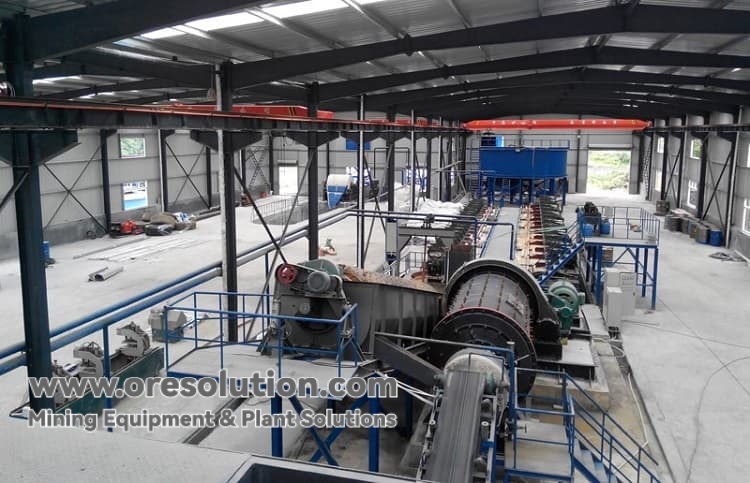
The main process flow of a quartz sand purification production line for LCD glass substrates is generally divided into four stages.While different mechanical production line designs for low-iron quartz sand may vary in detail, their basic framework is similar, following this sequence: the raw sand first undergoes scrubbing to remove silt, then proceeds to magnetic separation to remove iron, followed by flotation to remove feldspar and mica, then acid leaching, followed by washing to remove acid, dewatering, and drying, ultimately yielding the finished sand.Tailings generated in the flotation stage are sent separately to tailings treatment, while waste acid from the acid leaching stage is directed to the wastewater neutralization process.
🔹 Key Points of the Four-Stage Process
- Scrubbing and Desliming: A significant proportion of the iron stains and clay film on the surface of quartz sand can be removed through high-intensity agitation and scrubbing. This step is often underestimated, but it significantly reduces the burden on subsequent iron-reduction and purification processes.
- Magnetic Separation: This involves two to three stages of roughing and concentrating. High-intensity magnetic separators are used to handle weakly magnetic iron minerals such as hematite and limonite. Hydraulic classification prior to magnetic separation is essential—the finer the particle size, the poorer the magnetic separation efficiency; therefore, feed particle size must be controlled within a reasonable range.
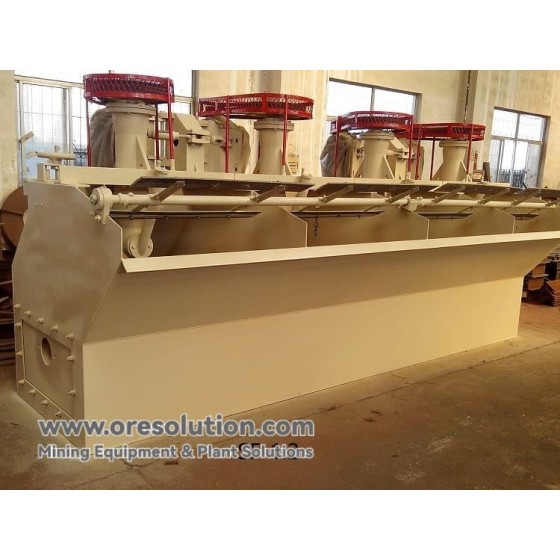
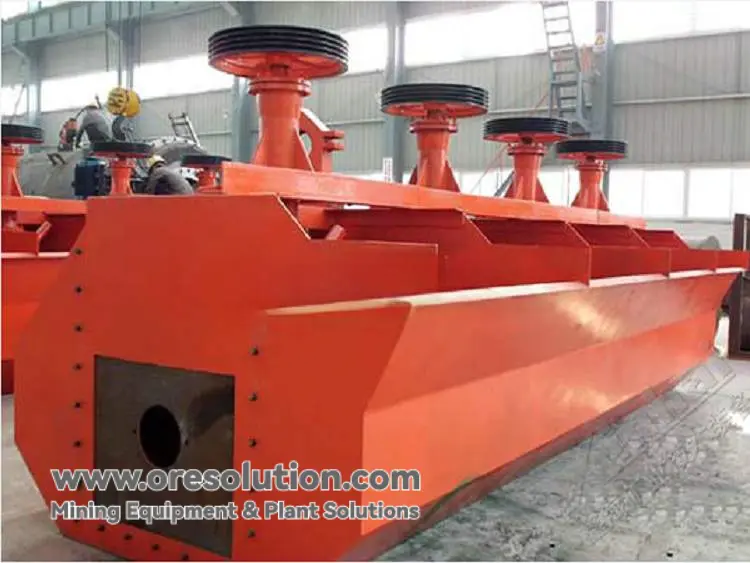
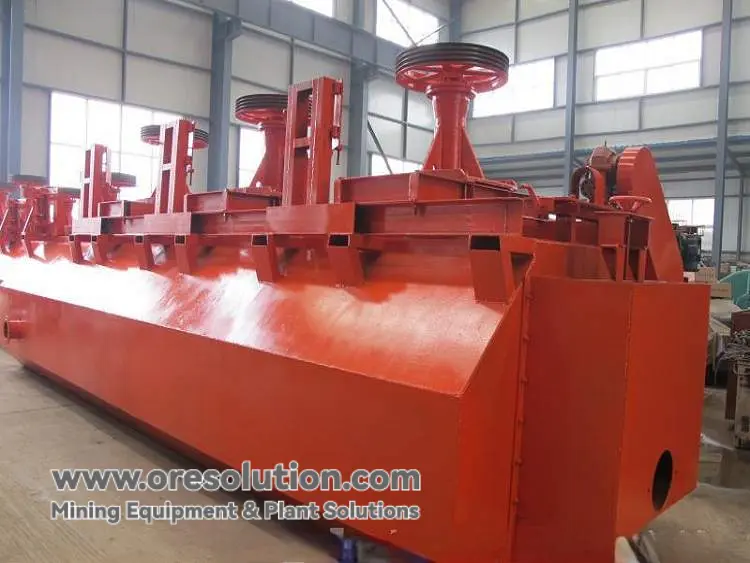
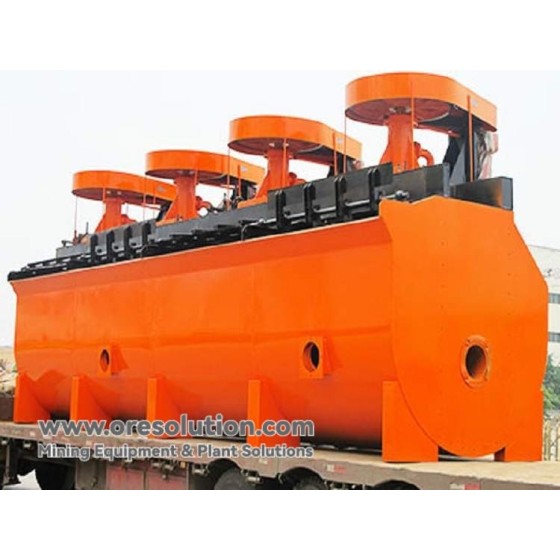
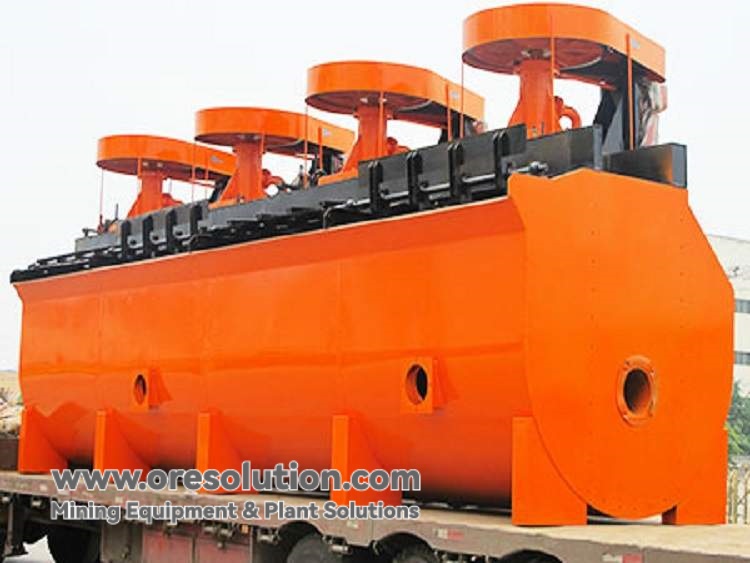
- Flotation: This step primarily removes feldspar and mica. Amine collectors are used under acidic conditions to float the feldspar, while quartz remains in the cell. This step significantly contributes to the removal of aluminum and titanium; however, if the chemical regime is not properly adjusted, selectivity decreases, and quartz may be carried over as well.
- Acid Leaching: This is the final step. Mixed-acid leaching further removes lattice iron and residual iron that were not eliminated by magnetic separation and flotation. After acid leaching, thorough washing is essential to keep chloride ion residues at a low level; otherwise, foaming may occur during downstream glass melting.
Of the four stages, the first three determine “whether iron levels can be reduced,” while the acid leaching stage determines “how low they can be reduced.” This is also the stage in the mechanical processing line for low-iron quartz sand that warrants the most effort in commissioning and fine-tuning. The success or failure of iron reduction and purification often depends not on the length of the equipment list, but on whether the parameters can be effectively implemented.
3 Equipment Configuration: Where You Spend Your Money Is Where the Risks Lie
A quartz sand purification production line for LCD glass substrates with a daily processing capacity of 100 metric tons is generally composed of the following equipment:
| Process Stage | Process Segment | Key Considerations |
|---|---|---|
| Scrubbing | High-Efficiency Scrubber | Dual-tank series configuration for greater stability |
| Classification | Hydraulic Classifier/Cyclone | Controls the feed particle size for magnetic separation |
| Magnetic Separation | Vertical-Ring High-Gradient Magnetic Separator | At least two stages; magnetic field strength determined by mineral composition |
| Flotation | Aerated mechanical agitation flotation cell | Roughing and scavenging; reagent regimen requires testing |
| Acid Leaching | Reaction vessel/soaking tank | Corrosion protection is a priority |
| Cleaning | Multi-stage counter-current cleaning | Chloride Ion Residue Control |
| Dewatering | Plate-and-frame filtration/centrifugal dewatering | Moisture Content Control |
The areas of this line most prone to budget cuts—and consequently most prone to problems—are corrosion protection and wastewater treatment. Using ordinary carbon steel in the acid washing section can lead to leaks in the short term; inadequate neutralization of wastewater directly transfers environmental risks to production. Cost savings in these two areas often end up costing twice as much later on.When selecting equipment for a low-iron quartz sand mechanical processing line, corrosion protection and environmental protection measures should be treated as separate budget items, rather than ancillary expenses.
4 Common Issues
At what iron content level is the raw material still worth processing on this line?
There is no single answer; it depends on the form in which the iron is present. Raw materials with a high proportion of surface iron offer greater potential for iron reduction and purification, whereas those with a high proportion of lattice iron have limited potential. It is recommended to conduct a process mineralogical analysis first before discussing a solution.
Can flotation reagents be directly adopted from the photovoltaic sand formulation?
This is not recommended. LCD substrate sand has stricter requirements for aluminum; if the feldspar removal rate is insufficient, the Al₂O₃ content cannot be reduced. The pH and collector ratio must be adjusted based on the type of feldspar, and inhibitors should be added if necessary. This is one of the most common misconceptions during the commissioning of low-iron quartz sand mechanical processing lines.
What level of cleanliness is considered acceptable after acid washing?
Residual chloride ions are a key indicator and must be kept at a low level. A common practice in the washing section is to use a three-stage counter-current system with deionized water in the final stage.
Why does efficiency in the magnetic separation stage tend to decline?
Excessive fine silt can clog the magnetic separator media, leading to uneven magnetic field distribution and reduced iron removal efficiency. The parameters of the hydrocyclones in the classification stage must be adjusted according to the feed particle size; a single set of parameters cannot be used throughout the entire process.
How to address significant fluctuations in yield?
The yield is the core economic variable for a quartz sand purification production line used in LCD glass substrates. Fluctuations often stem from variations in raw material batches and a failure to synchronize adjustments to the chemical treatment regimen. Establishing a mechanism that links raw material batch testing with process parameter adjustments is more effective than remedial actions taken after the fact.
Will the process recommended in the test report be the same as the one ultimately implemented?
While the main process flow remains consistent, minor adjustments may be made during engineering implementation based on site conditions and equipment specifications; however, the core process route and key parameters remain unchanged. This is why iron-reduction and purification projects emphasize “testing first, then design”—the test report serves as the basis for engineering design and is not a preliminary step that can be skipped.
5 Investment Decision-Making: Consider the Logic First, Then the Numbers
Investment costs vary significantly among different low-iron quartz sand processing line proposals, depending on scale, raw material complexity, environmental requirements, and the degree of automation. Providing an absolute figure is not particularly meaningful, but the logic behind the assessment is clear.
In the investment breakdown, equipment typically accounts for the largest portion, with corrosion protection and wastewater treatment systems making up a significant proportion, and installation and electrical work comprising the remainder. The processing cost per metric ton of sand is influenced by chemicals, electricity consumption, water consumption, and labor costs, with chemical and energy consumption in the acid washing and flotation stages being the most variable components.
The payback period depends on whether the yield rate can be maintained at a stable level and whether the selling price of the finished product can hold steady. If the yield rate declines, the payback period will lengthen accordingly. This is why it is recommended to conduct semi-industrial trials before commissioning the line—calibrating investment decisions with trial data is a more prudent approach than using production line funds to validate a hypothesis.
Frankly speaking, the main challenge for this iron-reduction and purification line lies not in equipment procurement, but in process commissioning and stable operation. Even with identical equipment, yield rates can vary significantly depending on the level of commissioning expertise. The value of a low-iron quartz sand processing line solution is not merely reflected in the equipment list, but rather in whether the process parameters can be successfully implemented and maintained consistently over time.
6. Several Formal Recommendations Regarding This Line
At its core, a quartz sand purification production line for LCD glass substrates is a precision impurity removal system built around iron reduction and purification. The relative importance of raw material quality, process commissioning, and equipment configuration determines the project\'s economic viability.
If you already have raw material test reports on hand, you can first assess feasibility by comparing the initial levels of iron, aluminum, and titanium. If the indicators exceed the controllable range, prioritize adjusting the ore sourcing strategy; if the indicators fall within a reasonable range, proceed to the process design and equipment selection phase for the quartz sand purification production line for LCD glass substrates.Iron reduction and purification are the core objectives of this production line, and the mechanical processing solution for low-iron quartz sand serves as the pathway to achieving them.
Key Conclusion: The essence of a quartz sand purification production line for LCD glass substrates is a precision impurity removal system built around iron reduction and purification. The relative importance of raw material quality, process commissioning, and equipment configuration determines the project\'s economic feasibility.
7 What We Can Do
🛠️ Scope of Services
- Based on raw material analysis data, we assess the feasibility limits of the low-iron quartz sand mechanical processing line solution and clarify the achievable targets for iron reduction and purification.
- Provide process design, equipment configuration, and commissioning support for quartz sand purification production lines used in LCD glass substrates.
- Assist in conducting mineral processing tests and semi-industrial trials to calibrate investment decisions and yield expectations using actual measurement data.
- Provide recommendations for parameter optimization in key processes such as flotation reagent systems, acid washing, and magnetic separation and classification.
If you would like to discuss this further, please provide the raw material test reports and product grade requirements,
and we will provide a preliminary assessment based on this information.