

CIL/CIP Processing System Manufacturers: How High-Efficiency CIP Processing Solutions Boost Gold Production Efficiency
CIL/CIP Processing System Manufacturers: How High-Efficiency CIP Processing Solutions Boost Gold Production Efficiency
There\'s an industry adage in the gold mining sector: Every one percentage point increase in recovery rate translates to millions—or even tens of millions—in net profit for a large mine annually. In the cyanide gold extraction process, CIL (carbon-in-leach) and CIP (carbon-in-pulp) are the core processes that determine whether that “one percentage point” actually translates into profit.The problem is that there are numerous CIL/CIP processing system manufacturers on the market, with quotes ranging from hundreds of thousands to tens of millions. While the equipment may appear similar at first glance, recovery rates can vary dramatically once operations begin. Choosing the wrong manufacturer often means that the money saved on equipment costs is more than offset in the first year of operation through chemical waste, carbon loss, and downtime for repairs.
This article examines the essence of the process to break down what a high-efficiency CIP processing solution should entail, as well as the hard criteria for determining whether a CIL/CIP processing system manufacturer is reliable.
I. CIL vs. CIP: A Single Character Difference, but Completely Different Selection Logics
Many clients vaguely state, “I want a carbon-in-pulp plant,” when requesting quotes. However, CIL and CIP have key differences in process configuration, and choosing the wrong one directly impacts return on investment.
The core logic of CIP (carbon-in-pulp) is “leaching first, then adsorption”: after the ore slurry is cyanide-dissolved in the leaching tank, it enters the adsorption tank to come into contact with activated carbon. Leaching and adsorption are separated in both time and space, making this method suitable for ores with slow leaching kinetics that require sufficient reaction time.Its advantage lies in more precise control of leaching conditions; its disadvantage is a longer process, more equipment, and a larger footprint.
CIL (Carbon-in-Leach) operates on the principle of “leaching and adsorption simultaneously”: activated carbon is added directly to the leaching tank, and the gold is adsorbed by the carbon as it dissolves.This eliminates the risk of “dissolved gold being re-adsorbed by other minerals (gold loss),” and the process is more compact, making it suitable for oxidized ores with high clay content or prone to clay formation, as well as ores with relatively fast leaching rates.However, CIL places higher demands on the strength of the activated carbon—since the carbon remains in the agitation tank for an extended period, carbon dust generated by wear can directly carry away the gold, resulting in “gold loss due to carbon wear.”
There is only one solid basis for making a process selection decision: ore sample testing. Without conducting agitation leaching tests and adsorption kinetics tests, it is irresponsible for any manufacturer to confidently claim that “CIL is right for you” or that “CIP is more cost-effective.”The clay content of the ore, the grain size of the gold particles, and the concentrations of harmful elements (arsenic, carbon, copper) are the sole criteria for determining the process route.
II. Four Core Metrics for High-Efficiency CIP Processing Solutions
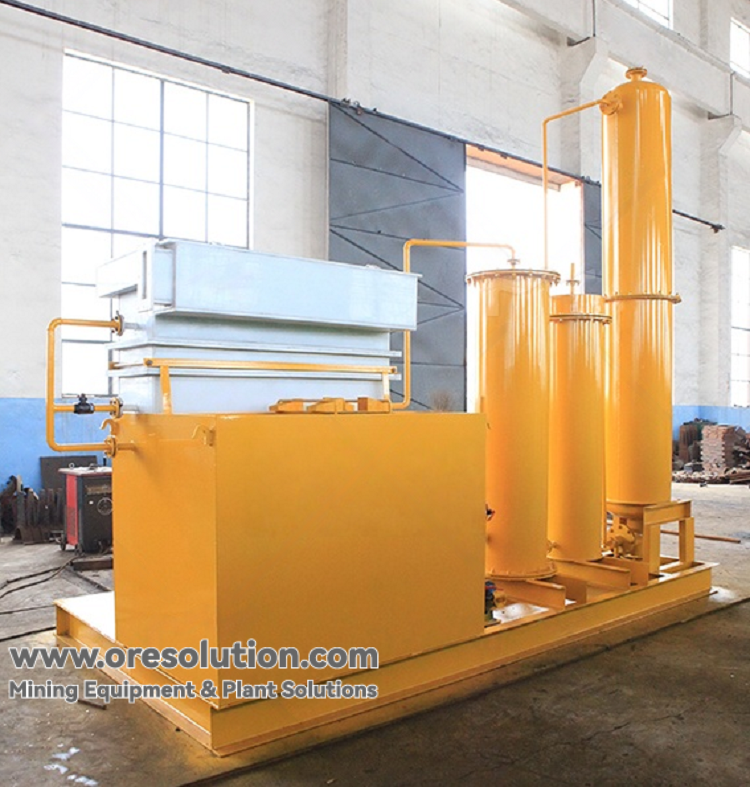
An “efficient” CIP system cannot be judged solely by the number of tanks listed on the equipment specification sheet. The following four dimensions are the true determinants of efficiency.
1. Leaching Tanks: Agitation Efficiency Determines Gold “Recovery Rate”
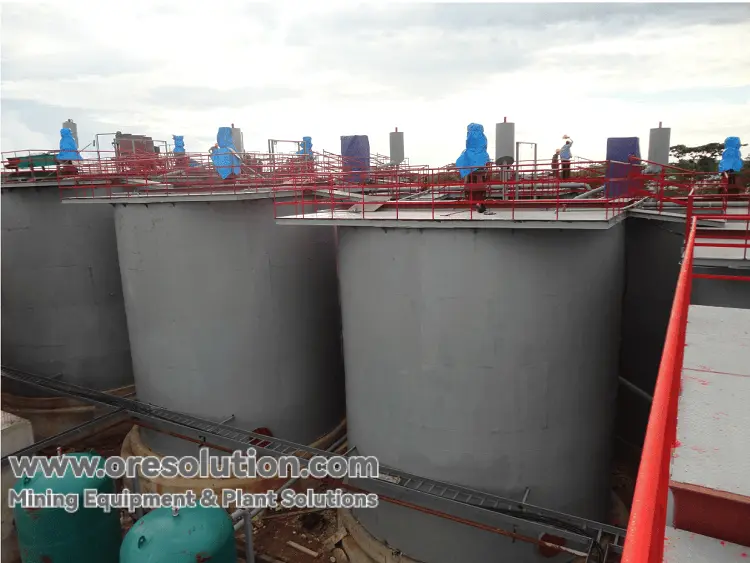
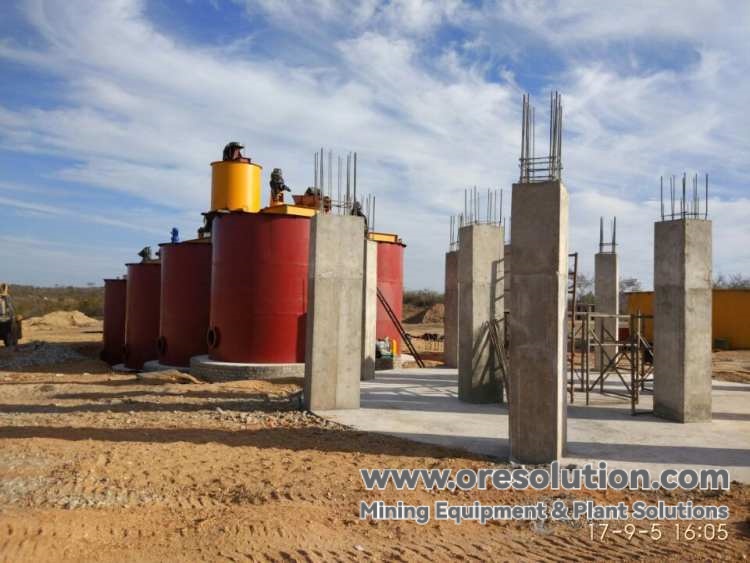
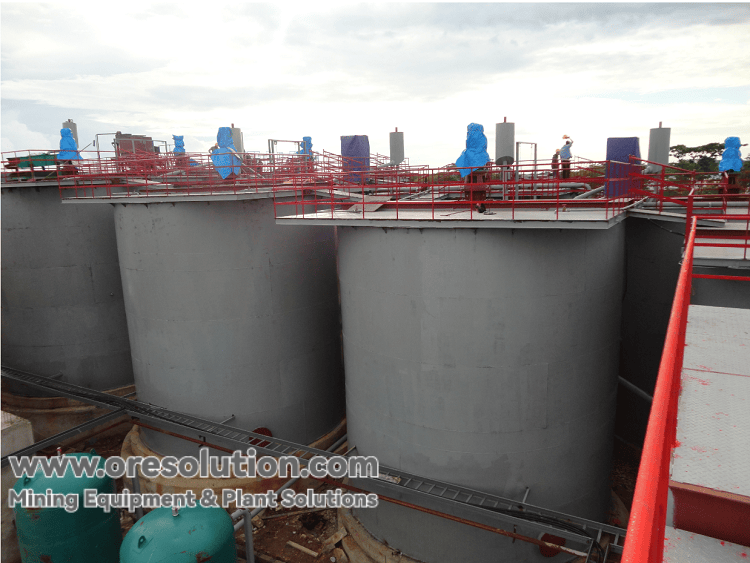
The leaching tank is the heart of the CIL/CIP system. The slurry concentration typically needs to be maintained between 40% and 45% to ensure that solid particles remain suspended without settling, while also allowing cyanide and oxygen to come into full contact with the gold particles.The choice between mechanically agitated tanks and air-agitated tanks depends on the specific gravity of the ore: ores with higher specific gravity require stronger shear forces to prevent settling, while insufficient aeration can lead to “oxygen starvation” in the leaching reaction.
The industry-leading practice is composite agitation—combining bottom aeration with top mechanical agitation. Case studies show that after a carbon-in-pulp plant in Shandong converted its original mechanically agitated tanks to a composite system, leaching time was reduced by 2 hours, and recovery rates increased by 1.8 percentage points. Those 1.8 percentage points translate directly into net profit.
2. Number of Adsorption Stages and Activated Carbon Management: One Too Few Means Waste; One Too Many Means Carbon Loss
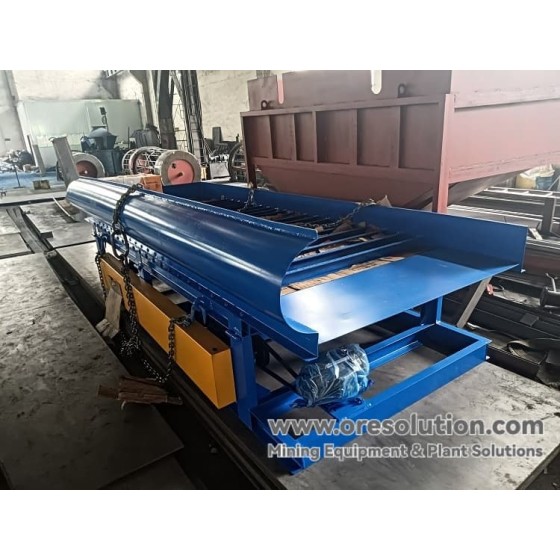
CIP adsorption typically employs 4 to 6 stages of counter-current adsorption. If there are too few stages, the gold grade in the tailings solution remains too high, causing gold to be lost with the tailings; if there are too many stages, the number of times activated carbon is transferred between tanks increases, and fine carbon powder generated by wear enters the tailings solution, similarly carrying away gold.The key to a high-efficiency system lies in the reliability of the inter-stage screens—the activated carbon must remain in the designated tank, and the slurry must flow smoothly to the next stage. If the screens become clogged or damaged, the consequences range from carbon loss in mild cases to a complete production shutdown for carbon removal in severe cases.
The quality of the activated carbon itself is equally critical. Coconut shell carbon is widely used in the industry due to its superior wear resistance and adsorption capacity, typically capable of adsorbing 5% to 8% of its own weight in gold. However, even the best carbon cannot withstand unreasonable agitation intensity.Equipment designed by reputable manufacturers proactively considers the “well-being of the carbon”—stirring speed, tank shape, and flow-guiding structures are all engineered to minimize carbon wear.
3. Desorption and Electrolysis: Don\'t Let the “Last Mile” Undermine Overall Recovery Rates
After the gold-loaded carbon is removed from the adsorption tank, it must undergo two steps: desorption (washing the gold off the carbon) and electrolysis (depositing the gold from the solution).The performance metrics for this stage are equally demanding: the desorption rate must reach at least 96%, and the electrolysis rate at least 99%. Otherwise, no matter how well the leaching and adsorption were performed earlier, if the gold remains trapped in the carbon or the solution, all the effort will have been in vain.
A high-temperature, high-pressure desorption system can complete a batch of desorption within 8 to 12 hours, whereas an atmospheric-pressure system typically requires 36 to 72 hours.Time equals cost: the longer the desorption cycle, the greater the backlog of gold-loaded carbon, and both the system\'s capital tied up and cyanide consumption rise accordingly. However, high-temperature, high-pressure equipment places higher demands on materials and control systems; when selecting a manufacturer, it is essential to confirm whether they have mature pressure vessel designs and automated temperature control solutions.
4. Tailings Treatment: Environmental Compliance Is Not an “Afterthought”
The cost of treating cyanide-containing tailings is becoming a major hidden expense in concentrator operations.An efficient CIL/CIP system should incorporate interfaces for dry tailings disposal or cyanide detoxification as early as the design phase. If a manufacturer only sells the leaching and adsorption sections while remaining vague about tailings treatment, environmental acceptance inspections after commissioning are likely to stall the entire line.
III. Checklist for Avoiding Pitfalls When Selecting a CIL/CIP Processing System Manufacturer
Based on real-world industry lessons, the following are hard criteria for determining whether a manufacturer is reliable:
First, do they have actual testing capabilities, or do they merely follow blueprints? A gold mining project in Africa once skipped ore sample testing and directly applied a conventional carbon-in-pulp (CIP) process; after production began, the recovery rate was only 65%, far below the design value of 90%.Arsenic in the ore severely impeded cyanide leaching, forcing the addition of a pre-oxidation process at a retrofitting cost exceeding $3 million. Reputable manufacturers should have the capability (or access to partner laboratories) to conduct column leaching and agitated leaching tests and issue comprehensive reports—rather than simply stating, “Our equipment is fine.”
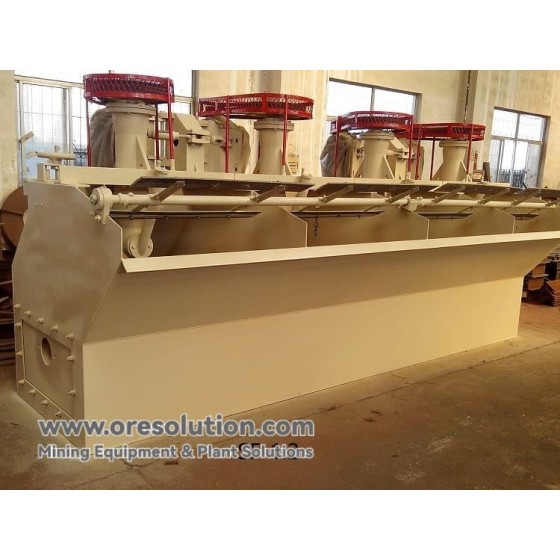
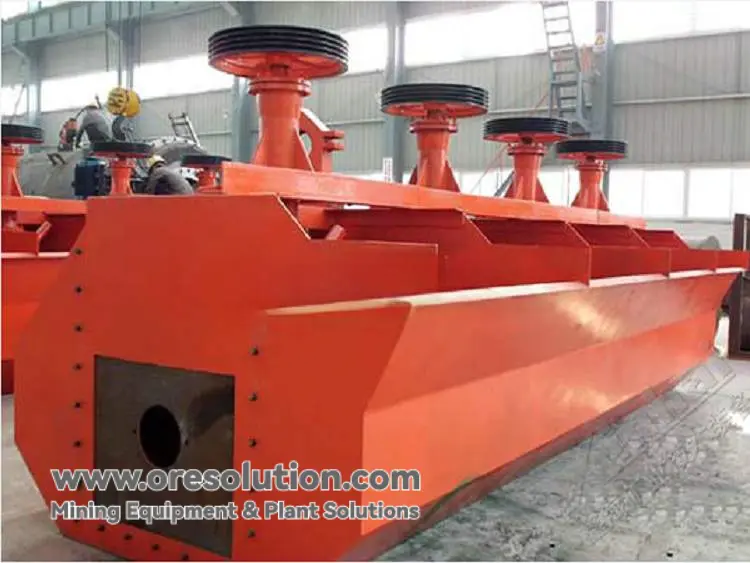
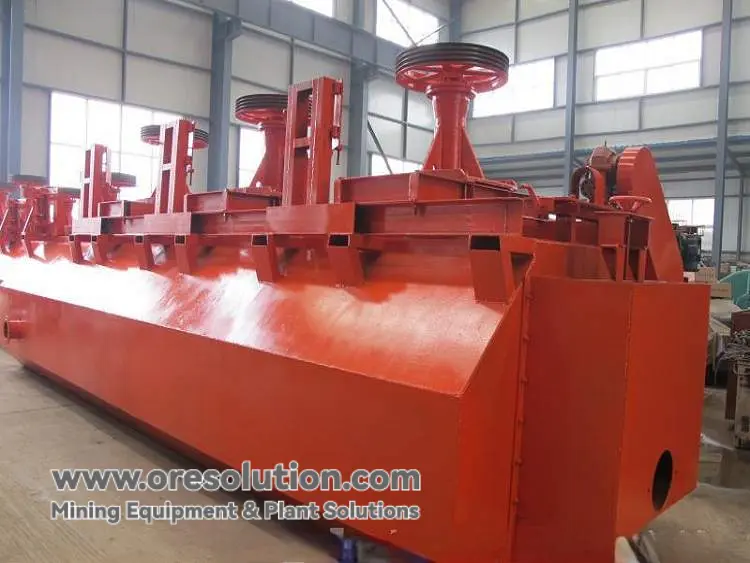
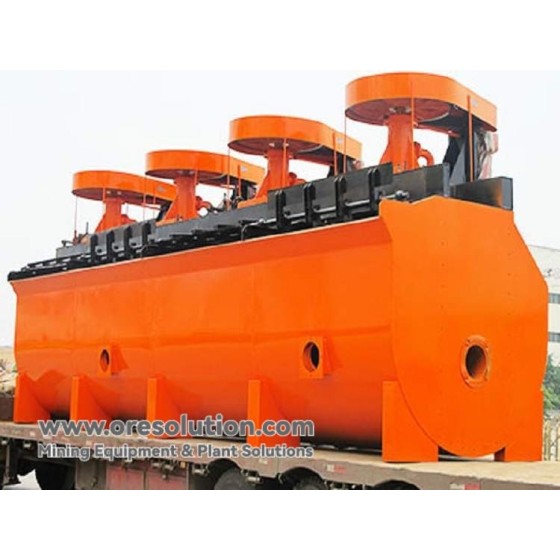
Second, does the equipment list specify model numbers and materials? It is risky to simply state “a batch of flotation machines/leaching tanks” in the contract. Is the leaching tank made of carbon steel with a corrosion-resistant lining, or stainless steel? What is the motor power of the agitator, and what is the brand of the gearbox? Are there commitments regarding the source of activated carbon replenishment and consumption metrics? These details determine maintenance costs three years down the line.In one EPC project, custom-made, non-standard equipment led to price increases, resulting in a final settlement that exceeded the quoted price by 15 million, while the project schedule was delayed by three months.
Third, ask if they can provide operational data for the same type of ore.Don\'t just look at the “recovery rate ≥92%” claimed in the manufacturer\'s brochures. Request actual project case studies involving the same type of ore (oxidized ore, sulfide ore, or arsenic-bearing ore), and ideally, contact customers whose facilities are currently in operation. Only actual operational data can bridge the gap between laboratory and industrial performance metrics.
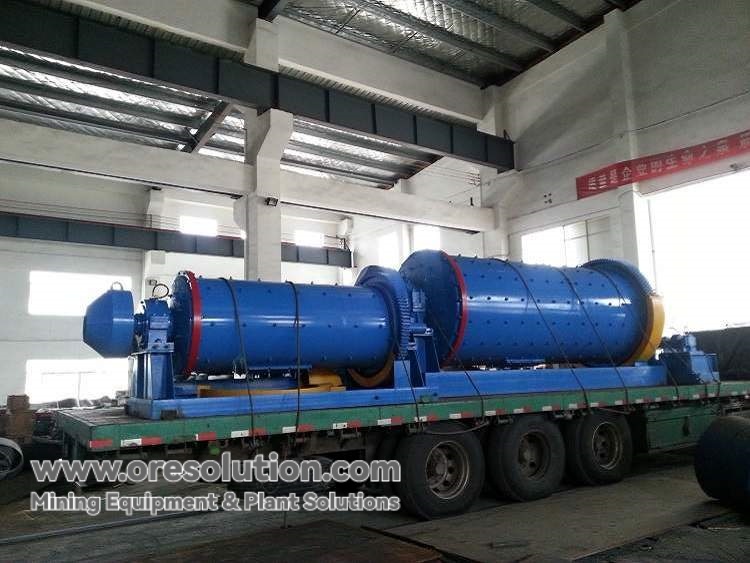
Fourth, is the desorption-electrolysis system manufactured in-house or sourced from a third party? Among the core equipment of a CIL/CIP line, the technical barriers for leaching and adsorption tanks are relatively manageable, but the desorption-electrolysis system—which involves high temperatures, high pressure, electrochemistry, and control logic—is the true technical dividing line.If a manufacturer relies on OEM-sourced desorption columns and electrolytic cells, its after-sales responsiveness and ability to iterate on technology become questionable.
IV. Why OreSolution\'s CIL/CIP Solution Deserves Serious Consideration
In the CIL/CIP processing system market, OreSolution does not position itself as merely a “tank seller,” but rather as the party responsible for the entire process—from ore samples to gold production.
First, the process route is determined by experimental data, not by sales pitches. OreSolution adheres to the principle of “test first, design later.”Upon receipt of a mineral sample, OreSolution first conducts chemical composition analysis and leaching kinetics testing to confirm the gold\'s occurrence state, the cyanide consumption curve, and the carbon adsorption capacity. Only then does it determine whether CIL or CIP is suitable for the project, how many adsorption stages are required, and what the carbon replenishment rate should be. Every figure in the test report serves as the basis for subsequent equipment selection.
Second, we manufacture our own core equipment, ensuring that the process and hardware are fully integrated. OreSolution operates its own equipment manufacturing facility, and all key CIL/CIP equipment—including high-efficiency twin-impeller agitated carbon leaching tanks, desorption electrolysis equipment, and carbon-separating screens—is produced in-house.This means that the agitation flow field design of the leaching tanks, the aperture sizes of the inter-stage screens, and the temperature control logic of the desorption columns are all tailored to specific process parameters—rather than being cobbled together from standard product catalogs.Process engineers and mechanical engineers collaborate directly to fine-tune parameters, avoiding the back-and-forth disputes that arise when “the design institute\'s drawings are rejected by the equipment manufacturer.”
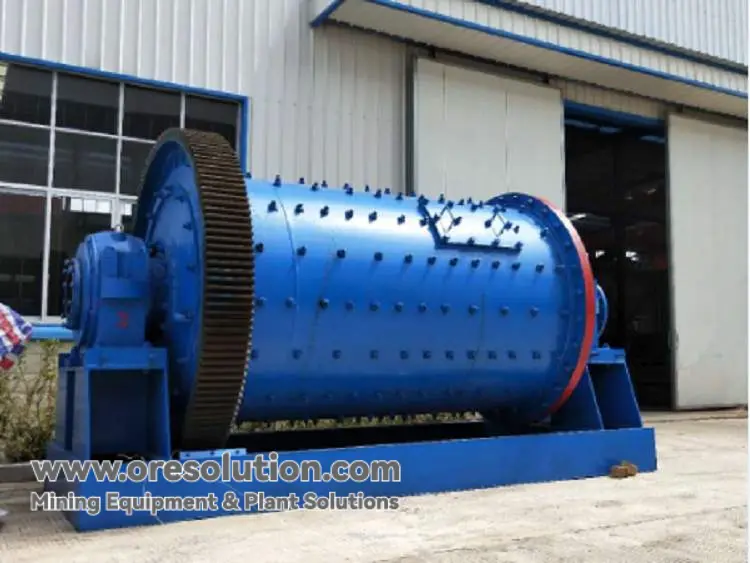
Third, our full-cycle services cover everything from pilot testing to gold recovery. The complexity of CIL/CIP systems lies in the fact that they are not isolated process stages. If the fineness of crushing and grinding in the preceding stage is insufficient, gold cannot be liberated; if the desorption and electrolysis efficiency in the subsequent stage is low, gold remains trapped in the carbon and cannot be recovered.OreSolution provides end-to-end EPC services covering the entire process—from crushing and grinding, through leaching and adsorption, to desorption and electrolysis, and finally to tailings treatment—ensuring a seamless chain of responsibility. Engineers remain on-site during the commissioning phase, and the project is not considered delivered until integrated commissioning with actual feed has stabilized and performance indicators meet contractual requirements.
Fourth, we offer specialized solutions for difficult-to-process gold ores. Conventional CIL/CIP processes often fall short when dealing with the “three difficult” types of gold ores—those containing arsenic, carbon, and copper.The “gold stripping” phenomenon in carbon-bearing ores requires pretreatment or the addition of inhibitors, while arsenic-bearing ores require oxidative pretreatment to break down the encapsulation. OreSolution has proven project experience with combined flotation-leaching processes and pretreatment-leaching processes, and does not apply a one-size-fits-all standard process to all ores.
V. Conclusion: Choosing a Manufacturer Boils Down to Determining “Who Is Accountable for the Final Performance Metrics”
When investing in a CIL/CIP processing system, the equipment cost is just the tip of the iceberg. What truly determines the return on investment is whether the recovery rate meets targets, how well carbon and reagent consumption are controlled, the length of the desorption cycle, and whether the tailings can successfully pass environmental impact assessments. None of these metrics can be automatically achieved simply by “buying a good machine.”
When selecting a CIL/CIP processing system manufacturer, asking three questions is sufficient: Do you conduct ore sample testing? Are you willing to specify model numbers and materials in your equipment list? If performance targets aren\'t met after production begins, will you take responsibility?
If the answers to these three questions leave you feeling uncertain, feel free to send your ore sample data and production capacity requirements to OreSolution\'s engineers. Starting with a real test report is far more reliable than starting with a flashy quote.