


Complete CIP/CIL Leaching Plant Production Line for Gold Ore, a Turnkey EPC Solution with a Daily Processing Capacity of 100 Metric Tons
Complete Production Line for a Gold Mine CIP/CIL Leaching Plant with a
Daily Processing Capacity of 100 Metric Tons · From Problem Diagnosis to EPC Implementation
A complete production line for a gold mine CIP/CIL leaching plant, with a daily processing capacity of 100 metric tons, may seem small in scale, but it is a comprehensive system encompassing crushing, grinding, thickening, leaching, adsorption, desorption, electrolysis, and tailings treatment.The real bottlenecks in many projects are not that the equipment fails to operate, but rather that after the complete production line for the gold mine CIP/CIL leaching plant is built, the tailings grade remains too high, recovery rates are unstable, and chemical consumption cannot be reduced.To resolve these issues, one must not focus solely on individual pieces of equipment but must address them simultaneously across several levels: gold ore beneficiation testing, process design, equipment selection, and the implementation of EPC turnkey projects.This article focuses on a complete production line for a 100-metric-ton-per-day gold CIP/CIL leaching plant, explaining where the problems lie, how to determine a solution, how to implement the project, and how to evaluate the results.
I. Problem Manifestations: Why Do Performance Indicators Fluctuate in Gold CIP/CIL Leaching Plants?
Common issues in a 100-metric-ton-per-day gold ore CIP/CIL leaching plant typically center on several aspects:
First, the tailings grade gradually increases, and the recovery rate fails to meet design expectations; Second, while the leaching and adsorption tanks appear to operate normally, the gold-bearing carbon grade is low, and the desorption and electrolysis processes cannot keep pace; Third, there are significant fluctuations in the consumption of chemicals such as sodium cyanide and lime, making cost control difficult;Fourth, there are significant operational differences between shifts, resulting in inconsistent performance metrics; fifth, while individual pieces of equipment operate normally, the entire line does not function smoothly as a coordinated system, with upstream and downstream processes constraining one another.
On the surface, these issues appear to be operational problems, but in reality, they are often related to the initial selection of the process route, the depth of ore sample testing, the compatibility of equipment, and the quality of implementation of the EPC turnkey project for the entire CIP/CIL leaching plant of a gold mine.For a gold ore processing plant with a daily capacity of 100 metric tons, the system is relatively small but includes every necessary step; any unreasonable design in a single process segment will ultimately be reflected in the tailings grade and recovery rate.
Therefore, to determine whether a gold CIP/CIL production line is sound, one must look beyond the equipment list and assess whether the entire line is tailored to the ore\'s properties, whether it possesses the capability for stable process parameter control, and whether a single team is accountable for the final performance metrics.
II. Root Cause Analysis: Three Common Categories of Issues in Gold CIP/CIL Production Lines
1. Insufficient ore sample testing; process route mismatched with ore properties
The occurrence of gold in ores varies greatly. Free gold, gold encapsulated in sulfide ores, fine-grained disseminated gold, and difficult-to-process arsenic- and carbon-bearing gold ores all require different CIP/CIL leaching processes.If preliminary ore sample testing is insufficient and a standard CIP or CIL process is applied directly, issues such as slow leaching rates, low adsorption efficiency, and failure to achieve the desired grade in gold-loaded carbon may arise.
In particular, for carbon-bearing gold ores, if the “gold hijacking” phenomenon is not identified, conventional CIP/CIL processes can easily cause already leached gold to be re-adsorbed onto organic carbon, resulting in persistently high tailings grades.Therefore, the starting point for a complete CIP/CIL leaching production line at a gold ore processing plant must be representative ore sample testing and mineral processing process validation.
2. Discrepancy between test data and actual engineering implementation; mismatch between equipment and process
There are engineering-scale differences between laboratory and production parameters.Parameters such as pulp concentration, grinding fineness, leaching time, sodium cyanide concentration, pH, and carbon concentration can be precisely controlled in the laboratory; however, at a gold processing plant with a daily throughput of 100 metric tons, these parameters may deviate due to equipment operation, operator skill levels, and fluctuations in ore quality.
If the process design does not allow for adjustment margins and the equipment selection is not matched to the process parameters, a situation will arise where “the test report indicators look good, but actual production targets are not met.” A gold mine CIP/CIL production line is not simply an assembly of standard equipment, but rather a systems engineering project in which the process and equipment are highly integrated.
3. Incomplete Chain of Responsibility in EPC Turnkey Projects, and Inadequate Commissioning and Training
In some project implementations, design, equipment supply, construction, and commissioning are handled by different entities, leading to unclear lines of responsibility when problems arise. For a gold CIP/CIL leaching plant with a daily processing capacity of 100 metric tons, the adequacy of integrated line commissioning, trial runs with actual feed, and operator training directly impacts the stability of performance metrics after production begins.
The core value of an EPC turnkey project for a gold ore leaching plant lies in having a single team responsible for process testing, design, equipment manufacturing, installation and commissioning, and personnel training, thereby reducing issues such as discrepancies between design and equipment, as well as gaps between construction and commissioning.
III. Solution: How to Configure a Complete Production Line for a 100-Metric-Ton-Per-Day Gold CIP/CIL Leaching Plant
Based on a daily processing capacity of 100 metric tons, a complete CIP/CIL leaching plant for gold ore typically includes the following processes: crushing and screening, grinding and classification, thickening, leaching and adsorption, desorption and electrolysis, smelting, and tailings treatment. The design should adhere to the principle of “determining the process based on the ore and determining the equipment based on the process.”
Determine the Process Flow Based on Mineral Processing Tests
First, conduct chemical composition analysis, phase analysis, and leaching tests on representative ore samples to determine the occurrence state of gold, grain size distribution, and cyanide-consuming substances.Based on the test results, determine whether to use the CIP (Carbon-in-Pulp) or CIL (Carbon-in-Liquid) process, and establish the number of leaching and adsorption stages, slurry concentration, sodium cyanide concentration, and pH control range.
For conventional oxidized ores, the CIL process is shorter and requires relatively less capital investment; for ores with slow leaching rates or those requiring extended leaching times, the CIP process is more suitable. The process route must be based on test reports and cannot be simply copied.
Determine Equipment Configuration Based on Process Design
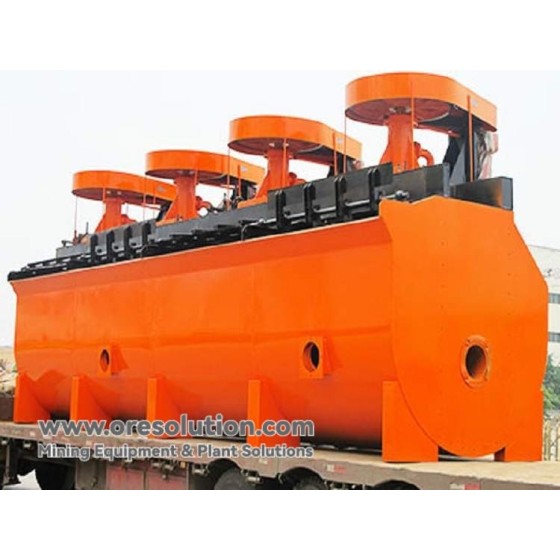
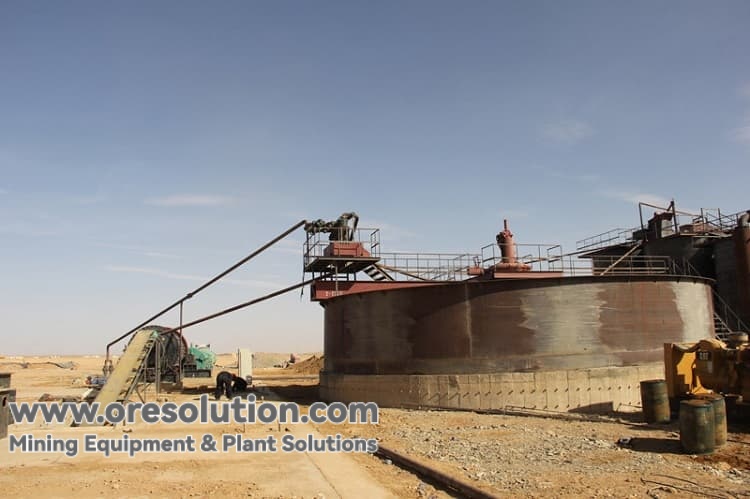
Once the process flow is determined, equipment selection can proceed. The core equipment for a gold ore processing plant with a daily capacity of 100 metric tons includes crushers, ball mills, classifiers, thickeners, leaching tanks, high-efficiency twin-impeller carbon-in-leach tanks, carbon-separating screens, desorption and electrolysis equipment, gold smelting furnaces, tailings thickeners, and filter presses.
Equipment selection must avoid two extremes: first, insufficient performance, which leads to inadequate grinding fineness, insufficient leaching time, and insufficient adsorption capacity; second, over-specification, which results in wasted investment and increased operating costs. Equipment selection should be aligned with test data, processing capacity, and the range of ore fluctuations.
Coordinated Implementation via an EPC Turnkey Project
An EPC turnkey project for a gold ore leaching plant should cover ore sample testing, process design, equipment manufacturing and procurement, on-site installation guidance, commissioning with water and feed material, and personnel training.The civil engineering portion may be organized and constructed by the client according to the drawings, while installation workers may be sourced locally and supervised on-site by our engineers. This approach controls labor costs while ensuring installation quality.
The advantage of the EPC turnkey model lies in its clear chain of responsibility, where the process, equipment, and commissioning are coordinated by a single team, thereby avoiding project delays and disputes over performance metrics caused by coordination among multiple parties.
IV. Implementation: Implementation Path for the Gold Mine CIP/CIL Leaching Plant EPC Project
Preliminary Communication and Ore Sample Testing
The client provides information on the ore type, processing capacity, basic ore characteristics, and site conditions, and sends representative ore samples. Through mineral processing tests, the CIP/CIL leaching process parameters for the gold ore are determined, and a test report is issued to serve as the basis for subsequent design. Test and design fees may be offset as agreed upon when the equipment or EPC contract is subsequently signed.
Process Flow Design and Equipment Selection
Based on the test report, we complete the process flow diagram, equipment configuration list, and plant layout plan. We specify the equipment specifications, quantities, power ratings, and interconnection methods for each stage of the gold CIP/CIL production line, and provide civil engineering requirement drawings and technical briefing documents.
Equipment Manufacturing and Shipping
Core equipment is manufactured according to drawings and undergoes quality inspection prior to shipment. Supporting components and installation materials are procured centrally. Logistics are arranged based on the project location; for overseas projects, allow for buffer time for customs clearance and shipping schedules.
On-Site Installation and Commissioning
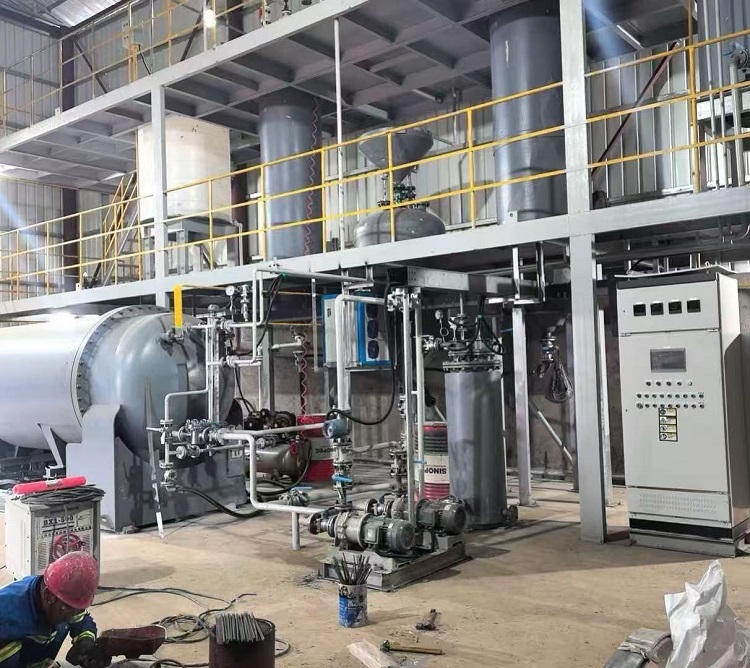
Engineers are stationed on-site to supervise equipment positioning, pipeline connections, and electrical installations. After completing individual unit commissioning, integrated line commissioning and material-based commissioning are conducted. Parameters such as grinding fineness, slurry concentration, chemical dosing, and carbon concentration are gradually optimized until the production line operates stably.
Personnel Training and After-Sales Support
Operators, shift supervisors, and maintenance personnel receive training that combines theory with hands-on practice, covering equipment start-up and shutdown, parameter adjustment, daily inspections, and troubleshooting common malfunctions. After production begins, we provide spare parts, remote technical support, and process optimization recommendations to ensure the long-term, stable operation of the entire production line.
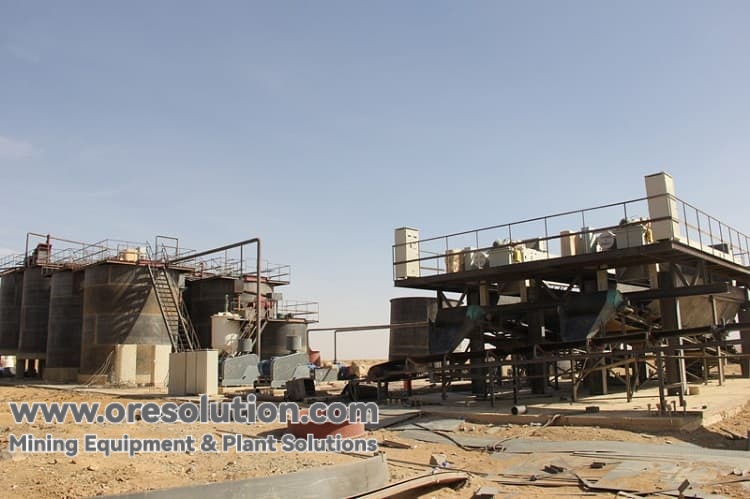
V. Evaluating Performance: How to Assess the Value of a Gold Mine CIP/CIL Production Line
The performance of a gold CIP/CIL leaching plant cannot be generalized by a single metric, as ore properties, particle size distribution, and operational proficiency vary significantly. However, the feasibility of the solution can be assessed from several perspectives:
- Whether the tailings grade is stable and controlled, and whether the recovery rate is close to the expected results from pilot testing;
- Whether the gold-bearing carbon grade, desorption rate, and electrolysis rate align with the leaching schedule;
- Whether reagent consumption falls within a reasonable range and whether there is significant waste;
- Have operational variations between shifts been minimized, and have indicator fluctuations decreased?
- Is equipment operation stable, and are the service life of wear parts and maintenance costs under control?
For a complete CIP/CIL leaching production line with a daily processing capacity of 100 metric tons of gold ore, a reasonable EPC turnkey solution should ensure adjustable process parameters, stable equipment operation, standardized operating procedures, and controllable fluctuations in performance indicators.Specific recovery rates and tailings grade indicators should be based on ore sample test reports and contractual agreements; absolute values should not be promised without considering actual ore conditions.
[Quick Reference Table: Issues, Causes, and Solutions for Gold Mine CIP/CIL Leaching Plants]
| Common Phenomena | Possible Causes | Troubleshooting Approach | Corresponding Measures |
|---|---|---|---|
| Excessively High Tailings Grade | Insufficient grinding fineness, insufficient leaching time, low carbon adsorption efficiency | Classification overflow particle size, residence time in the leaching tank, carbon concentration | Adjust grinding parameters, optimize leaching circuit configuration, check carbon activity |
| Low Gold Content in Activated Carbon | Insufficient carbon charge, insufficient number of adsorption stages, uneven mixing of slurry and carbon | Amount of carbon added, number of adsorption stages, agitation effectiveness | Replenish with new carbon, add adsorption stages, check carbon leaching tank operation |
| Excessive reagent consumption | pH fluctuations, high cyanide-consuming substances, unstable chemical dosing regimen | Lime addition, pulp pH, ore properties | Stabilize pH, optimize chemical dosing regimen, and enhance ore sample analysis |
| Fluctuating performance indicators | Inconsistent operating parameters, significant differences between shifts | Operational records, chemical dosing records, grinding parameters | Standardize operating procedures, enhance training, and improve record-keeping |
| Desorption and electrolysis are not keeping pace | Mismatch between gold-loaded carbon output and desorption capacity | Desorption batches, gold-loaded carbon inventory | Adjust desorption cycles; optimize desorption electrolysis configuration |
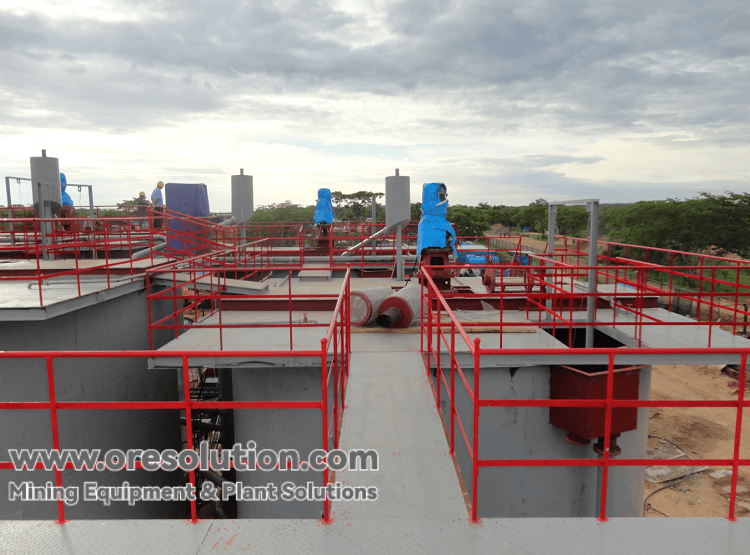
Schematic Diagram of a Typical CIP/CIL Leaching Plant Process Flow for Gold Ore
VI. Conclusion: The key to a complete CIP/CIL leaching plant for gold ore lies in system integration
A complete production line for a 100-metric-ton-per-day gold ore CIP/CIL leaching plant is not simply a matter of assembling equipment; rather, it involves systematic work centered on ore properties, including mineral processing tests, process design, equipment selection, and the implementation of an EPC turnkey project.Whether the CIP/CIL leaching process for gold ore is selected correctly, the equipment is matched accurately, and commissioning and training are carried out thoroughly will ultimately be reflected in the tailings grade, recovery rate, and operating costs.
For projects currently planning or retrofitting a gold ore CIP/CIL production line, it is recommended to first conduct tests on representative ore samples before discussing process flows and equipment selection; for plants that are already operational but exhibit unstable performance indicators, a systematic investigation should be conducted covering aspects such as grinding fineness, leaching time, adsorption efficiency, and operating protocols.The value of an EPC turnkey project for a gold ore leaching plant lies not in the length of the equipment list, but in the ability to ensure stable operation of the entire production line, controllable performance metrics, and a clear return on investment.
provides comprehensive EPC turnkey solutions for gold CIP/CIL leaching plants, covering mineral processing testing, process design, equipment manufacturing, installation, commissioning, and personnel training.
We welcome further discussions regarding a 100-metric-ton-per-day gold ore processing plant project.