


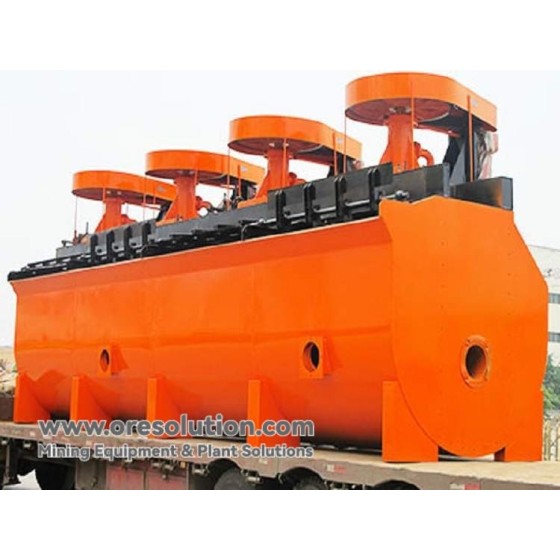
Complete EPC Turnkey Solution for a 5,000-Metric-Ton-Per-Day CIP Carbon-in-Pulp Plant for a Gold Mine
A gold mine CIP (carbon-in-pulp) plant with a daily processing capacity of 5,000 metric tons has joined the ranks of large-scale industrial processing plants.
This scale implies a significant leap in equipment specifications; a single ball mill may reach a diameter of Φ3,600 or more, and the SABC process—combining semi-autogenous grinding with ball milling—may even be considered. The number and volume of leaching and adsorption tanks are substantial, and the complexity of piping and automated control systems increases exponentially;the proportion of investment in civil engineering, electrical systems, and tailings facilities has risen significantly; any error in equipment selection or poor coordination at any stage could result in losses amounting to tens of millions.For projects of this magnitude, the EPC turnkey model is virtually the only option that allows mine owners to sleep soundly, as a break in the chain of responsibility would result in losses incomparable to those of a small plant.
Based on a daily processing capacity of 5,000 metric tons, this article systematically analyzes the process configuration logic, key equipment selection considerations, and the scope of delivery for an EPC turnkey CIP carbon-in-pulp plant, as well as the most common pitfalls at this scale.
I. What Does 5,000 Metric Tons Per Day Mean? Let\'s Run Some Numbers
Before discussing equipment, let\'s first quantify the concept of scale.
Note that this figure covers only the controllable costs of equipment and civil engineering; it excludes external supporting infrastructure such as land acquisition, tailings ponds, environmental protection facilities, power capacity expansion, and water supply projects. Tailings ponds often occupy an area larger than the plant site itself, depending on the terrain and the plant\'s design life.
In terms of equipment capacity: A daily processing capacity of 5,000 metric tons, calculated based on 24-hour continuous operation, equates to an hourly processing capacity of approximately 208 metric tons.If the crushing stage is designed for a 10-hour work shift, the crushing capacity must reach 500–600 metric tons per hour or higher; in the grinding stage, ball mills are typically sized at Φ3200×5400 or Φ3600×6000, depending on the ore hardness and required grind size.The total effective volume of the leaching and adsorption tank bank is calculated by multiplying the processing capacity by the leaching time and dividing by the effective volume. If the leaching time is 36 hours and the slurry concentration is 40%, the total volume required is on the order of several thousand cubic meters, typically requiring 8–12 large dual-impeller carbon-in-leach (CIL) tanks connected in series.
Investment costs vary depending on ore properties: for facilities of the same scale, investment differences can be enormous depending on the type of ore. For difficult-to-process gold ores containing arsenic and carbon, the total investment may be two to three times that of easily processable ores. The equipment configuration and process complexity for a 5,000-metric-ton-per-day facility processing difficult-to-process ores are on a completely different scale compared to those for easily processable oxidized ores.
Conclusion: There is no standard checklist for configuring a 5,000 metric tons per day CIP processing plant. Every variable—including ore properties, grinding fineness, leaching time, gold recovery efficiency, and site conditions—will affect the equipment models and quantities required. The configuration below serves as a typical framework; the actual plan must be based on mineral processing test reports and customized design.
II. Complete Process Stages and Equipment Configuration Framework for a 5,000-metric-ton-per-day CIP Plant
1. Crushing and Screening Section
The objective is to crush the raw ore to the feed size required for grinding, typically 12 to 15 millimeters or less, following the principle of “more crushing, less grinding.”
Core equipment includes large jaw crushers for primary crushing, hydraulic cone crushers for secondary and tertiary crushing (single-cylinder or multi-cylinder), circular vibrating screens or linear vibrating screens (screening area typically 20 square meters or more),heavy-duty feeders, and wide-belt conveyors (belt width 800–1,000 millimeters).
Key configuration points: For a capacity of 5,000 metric tons per day, the crushing stage typically employs a two-stage closed-circuit or three-stage closed-circuit process.Equipment selection must take into account ore hardness, moisture content, and maximum feed size. The choice of cone crusher chamber type (coarse, medium, or fine) directly affects product particle size and subsequent grinding energy consumption.
2. Grinding and Classification Stage
The objective is to grind the ore to the fineness required for the liberation of free gold, typically with 75% to 90% of the material below -200 mesh, subject to test results.
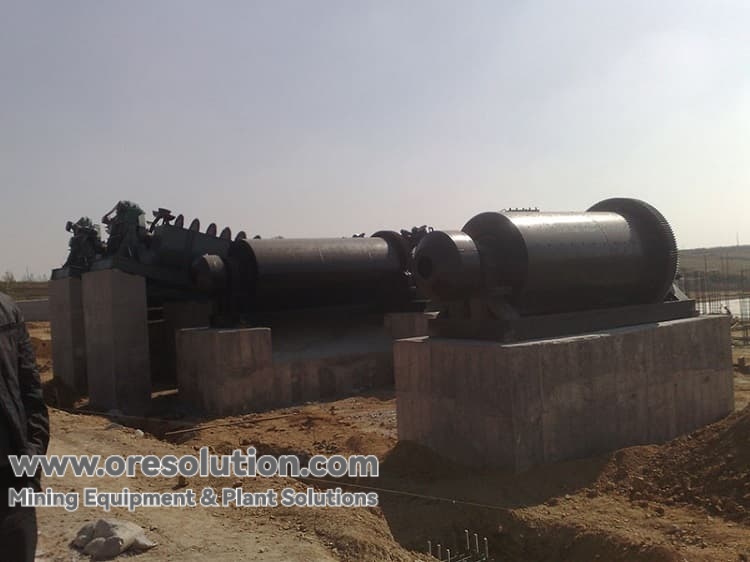
Core equipment includes large ball mills (overflow or grate type, Φ3200 or larger), hydrocyclone banks (which replace traditional spiral classifiers and offer higher classification efficiency), large slurry pumps, and feeders.
Key Configuration Points: For a 5,000 metric tons per day operation, the grinding section is the primary driver of energy consumption and capital investment. If the ore has high hardness, the SABC process—combining semi-autogenous grinding with ball milling—may be considered. Although this increases capital investment, it simplifies the crushing process and reduces the load on the fine crushing stage.The classification efficiency and underflow concentration control of the hydrocyclone bank directly affect the fineness of the grinding product and leaching efficiency; therefore, it must be precisely matched to the ball mill.
3. Leaching Section: CIP Leaching
is to dissolve gold into gold cyanide complexes using a sodium cyanide solution under alkaline conditions (pH 10 to 11).
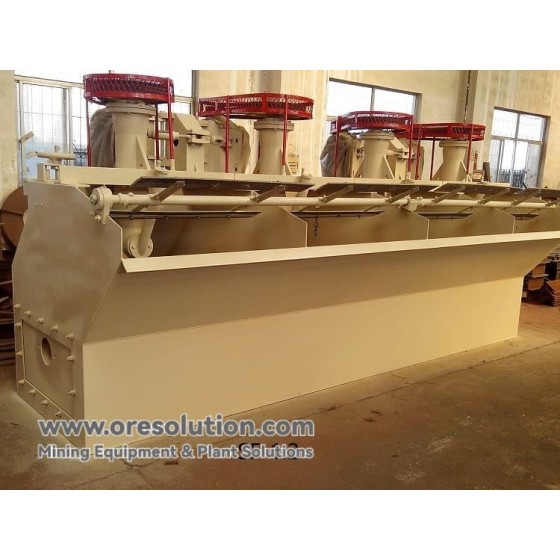
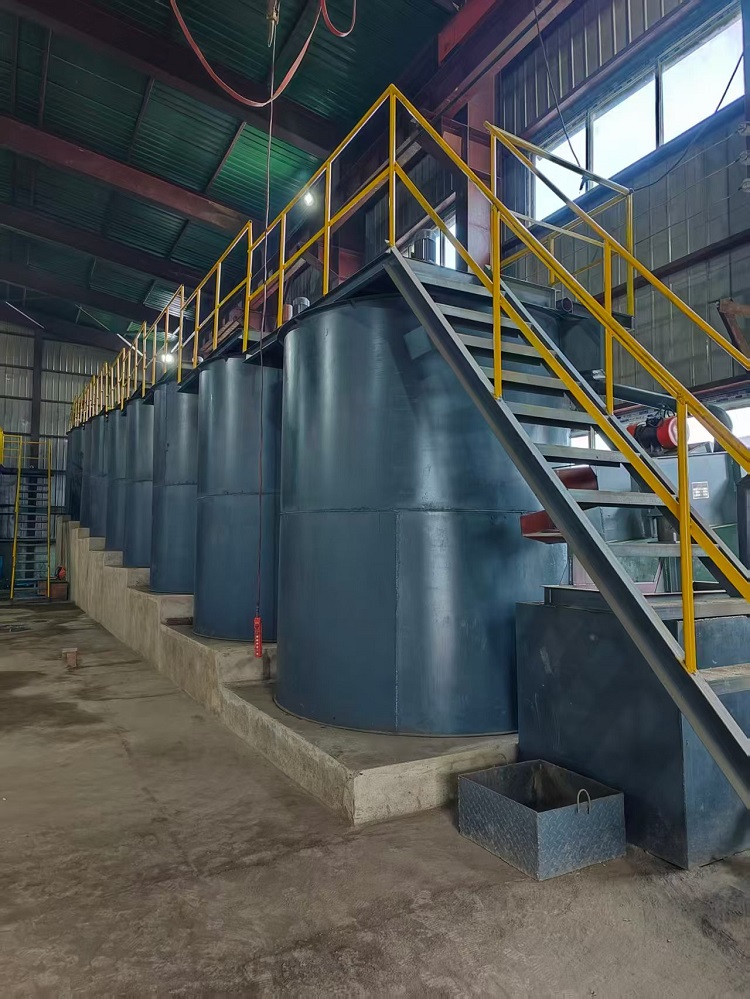
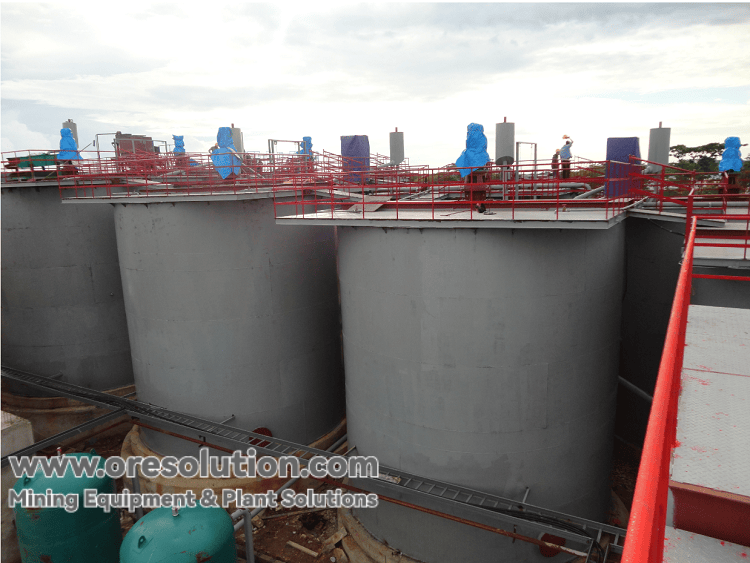
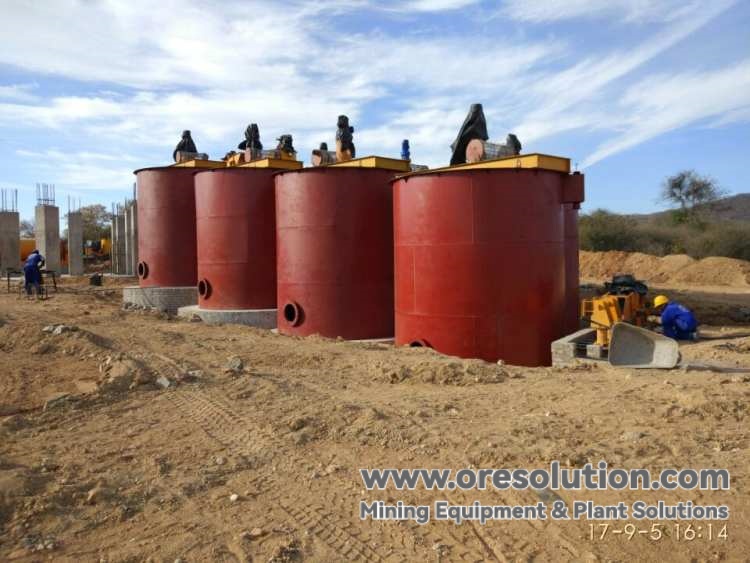
Core equipment includes large leaching tanks (equipped with high-efficiency aeration and agitation; typically 4–8 tanks connected in series, with the effective volume of a single tank determined by dividing the total volume by the number of tanks), sodium cyanide and lime preparation and dosing systems, large blowers, and online monitoring instruments for pH and cyanide concentration.
Key configuration points: Leaching time is typically 24–48 hours, subject to experimental verification. The agitation intensity, aeration rate, and pulp concentration (typically 35%–45%) directly affect the gold dissolution rate.For a 5,000-metric-ton-per-day operation, the accuracy and reliability of the chemical dosing system are critical; even minor deviations in chemical consumption can result in significant costs on an annual basis.
4. Adsorption Stage: The objective of CIP adsorption
is for the slurry to enter the adsorption tank, where it comes into countercurrent contact with activated carbon, causing the gold to be adsorbed.
Core equipment includes large, high-efficiency dual-impeller carbon-in-leach tanks (adsorption tanks, typically 4–6 sections in series, sized to match the leaching tanks), a carbon-retaining screen (with mesh size precisely matched to the activated carbon particle size, typically 0.8–1.0 millimeters), a carbon-lifting pump or air lifter, activated carbon (coconut shell carbon, particle size 6–12 mesh or 8–16 mesh), and a carbon regeneration system(rotary kiln regeneration or acid washing regeneration).
Key configuration points: The CIP process follows a “leach-then-adsorb” sequence, with the leaching tank and adsorption tank located separately. The number of adsorption stages affects the recovery rate; more stages result in higher recovery but also increase capital investment. The activated carbon concentration is typically 10–25 grams per liter, and the carbon extraction rate is designed according to countercurrent adsorption requirements.The carbon retention screen is critical for preventing carbon loss; at a scale of 5,000 metric tons per day, any carbon loss would result in significant financial losses.
5. Desorption, Electrolysis, and Smelting Section
The objective is to desorb the gold from the gold-loaded carbon, electrolytically produce gold slime, and smelt it into refined gold.
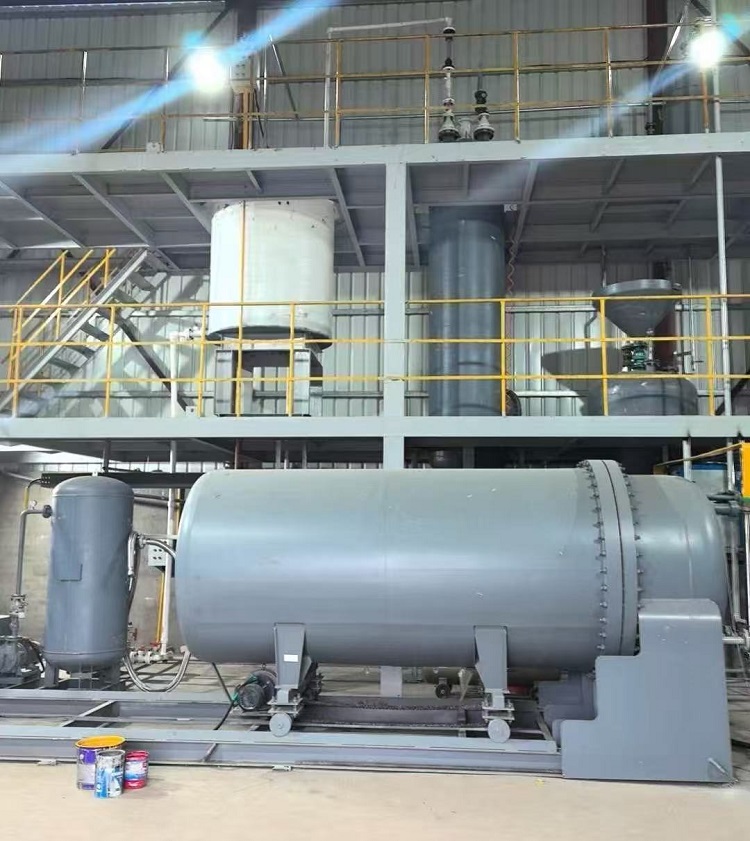
Core equipment includes desorption and electrolysis units (selected based on the daily output of gold-loaded carbon; multiple units in parallel or a single large-scale batch unit may be required), a gold smelting furnace, and carbon regeneration or acid washing equipment.
Key Configuration Points: At a scale of 5,000 metric tons per day, the daily output of gold-loaded carbon is substantial; the batch processing capacity of the desorption and electrolysis equipment must be precisely matched to the desorption cycle, otherwise gold-loaded carbon will accumulate or equipment will remain idle. Desorption and electrolysis efficiency targets must be clearly specified in the contract.
6. Tail Liquids and Environmental Protection Section
The objective is to treat cyanide-containing tailings liquid to meet regulatory standards and to ensure the safe stockpiling or dry discharge of tailings.
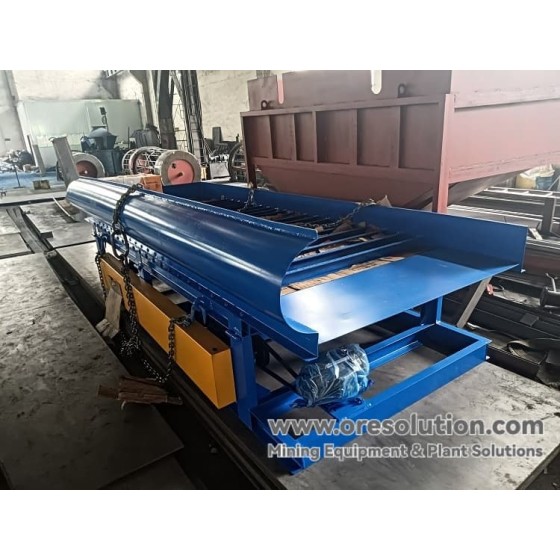
Core equipment includes large, high-efficiency thickeners (GX-type or deep-cone thickeners), large filter presses (for tailings dry discharge), cyanide removal or neutralization treatment systems (alkaline chlorination or hydrogen peroxide methods, designed based on treatment capacity), emergency ponds, and accident ponds.
Key Configuration Points: With a tailings volume of 5,000 metric tons per day, the choice between dry tailings disposal and compliant discharge directly impacts environmental investment and operating costs. The treatment capacity of the cyanide-containing tailings treatment system must align with the production schedule and must not become a bottleneck.
7. Auxiliary and Automation Section
Core equipment includes large slurry pumps, carbon recovery pumps, water pumps, agitation tanks, electrical control systems (MCC, PLC, central control room), and online monitoring systems (pH, cyanide concentration, flow rate, liquid level, density).
Key Configuration Points: For a 5,000-metric-ton-per-day facility, the level of automation directly impacts production stability and labor costs. We recommend implementing at least a medium level of automation—combining PLC control with central control room operation and online monitoring of key parameters. While this increases investment by approximately 15%–20%, it significantly reduces fluctuations in performance indicators caused by human operational errors.
III. The Unique Value of an EPC Turnkey Solution at This Scale
For a 5,000 metric tons per day project, the value of an EPC turnkey solution lies not in convenience, but in risk control.
There is a strict requirement for a closed-loop accountability system. A 5,000 metric tons per day processing plant involves a large number of equipment units and complex interfaces. From crushers and ball mills to leaching tanks, adsorption tanks, desorption and electrolysis units, and tailings treatment—any error in equipment selection or poor coordination at any stage, if exposed during commissioning, will result in losses starting in the millions.Under the traditional fragmented model, design institutes, equipment manufacturers, and construction teams pass the blame onto one another, forcing the mine owner to act as the arbitrator—with every day of project delay incurring massive capital costs. Under the EPC model, a single team is accountable for the final performance metrics, and interface issues are resolved internally within the contractor\'s organization.
Performance metrics are specified in the contract. A mature EPC solution can incorporate target ranges for recovery rates, processing capacity, unit chemical consumption, tailings grade, and other metrics into the contract, along with penalties for failure to meet these targets. This is particularly crucial for projects handling 5,000 metric tons per day; the larger the investment, the more essential it is to have contractual safeguards in place.
Parallel Advancement of Design, Procurement, and Construction.Under the EPC model, design, equipment manufacturing, and on-site construction can proceed partially in parallel. Once the core parameters of the process design are finalized, long-lead-time equipment (such as ball mills, large leaching tanks, and desorption/electrolysis equipment) can be sent to the factory for manufacturing immediately—there is no need to wait for the complete set of drawings to be finalized before starting construction. Reasonable overlapping of work can shorten the overall project duration.
This eliminates the costs and bureaucratic hassles associated with hiring a separate design firm. Core design tasks—including mineral processing tests, process flow design, equipment selection and configuration, site layout, civil engineering condition drawings, and technical briefings—are handled entirely by the EPC team, saving hundreds of thousands of dollars in design fees for medium- to large-scale projects.Even when detailed civil engineering drawings or local regulatory approvals are required, the EPC team facilitates the process, sparing the mine owner any additional hassle.
Clear boundaries must be established. The total price of an EPC contract is typically higher than the total cost of purchasing equipment alone, as it includes design, management, and a risk premium.The mine owner\'s control over intermediate processes is relatively reduced, so they must safeguard their interests through contract terms and milestone acceptance. Civil construction and installation workers are typically organized locally by the mine owner, with the EPC team providing technical briefings and on-site guidance—resulting in lower and more flexible labor costs. If the EPC team is to assume full responsibility for these tasks, arrangements will be negotiated separately based on the project\'s location.
IV. Five Common Misconceptions Regarding the Configuration of a 5,000-Metric-Ton-Per-Day CIP Processing Plant
- Misconception 1: Quoting based on standard 5,000 metric tons per day specifications without conducting pilot tests. Even for the same 5,000 metric tons per day capacity, the equipment configuration, process complexity, and investment scale for easily processable oxidized ore versus difficult-to-process arsenic- and carbon-bearing ore can differ by two to three times.Quoting a price without a pilot test report is either a half-hearted effort or a trap.
- Misconception 2: “The grinding stage doesn\'t need to be precise.”A 5-percentage-point difference in grinding fineness can result in a several-point difference in leaching efficiency, and grinding accounts for the lion\'s share of a processing plant\'s total energy consumption. Under-sizing ball mills creates a bottleneck in capacity, while over-sizing wastes investment and electricity. Calculations must be precise, based on ore hardness and the grinding fineness determined by testing.
- Misconception 3: Mismatched volumes of leaching and adsorption tanks. In the CIP process, leaching precedes adsorption; insufficient leaching time results in incomplete gold dissolution, while an inadequate number of adsorption stages leads to low recovery rates. For a 5,000-metric-ton-per-day operation, even a slight deviation in tank group design translates into tangible financial losses when scaled up to annual production.
- Misconception 4: Neglecting the carbon separation screens and carbon recovery systems. In large plants, carbon loss can result in daily losses equivalent to a month\'s worth of gold-laden carbon at a small plant. Screen mesh size, screen area, and carbon recovery capacity must be precisely designed according to the plant\'s scale—approximations are unacceptable.
- Misconception 5: Putting environmental protection and tailings facilities on the back burner until after production begins. For a 5,000 metric tons per day operation, tailings volume and cyanide-containing wastewater treatment are hard constraints; if environmental protection facilities are inadequate, the plant faces the risk of shutdown immediately upon commissioning. The EPC solution must incorporate dry tailings disposal or compliant treatment into the overall design—this cannot be left to be addressed later.
V. OreSolution\'s 5,000 Metric Tons Per Day Gold Mine CIP Processing Plant EPC Turnkey Solution
OreSolution specializes in mining equipment and mineral processing solutions, operating three modern manufacturing bases (Shahe Industrial Park in Zhanggong District, Ganzhou, Jiangxi; Guzhang Industrial Park in Shicheng County, Ganzhou, Jiangxi; and Weifang Heavy Industry Park in Shandong),with 20 years of experience in mining equipment manufacturing and solution integration, and products exported to more than 80 countries and regions worldwide. For a 5,000 metric tons per day CIP carbon-in-pulp processing plant, we provide a comprehensive EPC turnkey service framework.
Phase 1: Requirements Discussion and Project Definition. We clarify the ore type, gold grade, ore properties (oxidized or sulfide, arsenic and carbon content), target processing capacity, site conditions, and investment budget constraints.
Phase 2: Ore Sample Analysis and Mineral Processing Tests. Conduct chemical composition analysis, phase analysis, embedded grain size determination, leaching tests, gold recovery rate tests, and CIP versus CIL comparison tests on representative ore samples to determine grinding fineness, leaching time, reagent regimens, and the number of adsorption stages, and issue an authoritative mineral processing test report.This serves as the scientific foundation for all subsequent decisions regarding the 5,000-metric-ton-per-day project and cannot be omitted.
Phase Three: Customized Solution Design and Quotation.Based on the test report, we complete the Process Flow Diagram (PFD), equipment configuration list (specified down to model, quantity, and specifications), plant layout plan, 3D layout proposal, civil engineering requirements drawings, and technical briefing documents. We provide a transparent EPC (Engineering, Procurement, and Construction) budget that clearly defines the cost boundaries for equipment, design, technical services, and installation guidance.
Phase 4: Equipment Manufacturing and Quality Inspection. Core equipment (large jaw crushers,hydraulic cone crushers, large ball mills, hydrocyclone units, large twin-impeller carbon-in-leach tanks, carbon separation screens, carbon-lifting pumps, desorption and electrolysis equipment, gold smelting furnaces, high-efficiency thickeners, large filter presses, etc.) are manufactured strictly in accordance with drawings and standards, and undergo rigorous quality inspection prior to shipment.Long-lead-time equipment is scheduled well in advance to ensure the critical path is not delayed.
Phase 5: On-site Construction Guidance and Commissioning. A team of senior engineers is dispatched to the site to guide equipment installation, pipeline connections, and electrical layout; they complete individual unit commissioning and full-process integrated test runs, conducting commissioning with water and feed material until the production line operates stably and meets the contractually agreed-upon performance indicators.Civil engineering work is organized by the client according to the drawings, with technical briefings provided by us; installation workers are organized locally by the client, and we dispatch engineers to the site to provide on-site guidance.
Phase 6: Personnel Training and After-Sales Support. We provide comprehensive training for the operations, maintenance, and technical management teams; offer a 12-month warranty period, during which spare parts are replaced free of charge for equipment quality issues; provide lifetime technical support after the warranty period at cost only; and ensure long-term spare parts supply and process optimization recommendations.
Regarding the estimated timeline, for a 5,000-metric-ton-per-day project, the overall cycle from ore sample testing to production commencement is typically 10–15 months:
- Mineral processing trials: 30–45 days
- Engineering design: approximately 45–60 days
- Equipment manufacturing: approximately 90–120 days
- Logistics and transportation depend on the destination
- Installation and commissioning: 90–180 days
For large-scale projects, it is recommended to allow for a more generous buffer period.
VI. Frequently Asked Questions
VII. Entrust the certainty of a 5,000-metric-ton-per-day operation to a team accountable for results
A 5,000-metric-ton-per-day CIP carbon-in-pulp plant is not simply a scaled-up version of a 200-metric-ton line. The leap in equipment specifications, increased complexity of interfaces, and expanded investment scale mean that any error in a single环节 is magnified exponentially. The risks associated with a fragmented construction approach at this scale far exceed the cost difference of the equipment itself.
OreSolution\'s approach is clear: test first, then design. A single team takes full responsibility for the final outcome, providing a full-scope EPC turnkey delivery—from ore sample testing, process design, equipment manufacturing, installation, and commissioning to personnel training.For a 5,000-metric-ton-per-day project, we recommend bringing in an EPC team at the project initiation stage to advance testing, design, and the production scheduling of long-lead-time equipment in parallel, using professional coordination to compress the construction schedule and control risks.