


EPC Turnkey Solution for the CIP Mineral Processing Production Line at the Yanjin Carbon Slurry Plant
Rock gold deposits are the primary source of gold production in China, and CIP (carbon-in-pulp) processing lines are among the most widely used gold extraction processes in rock gold mines.From quartz vein-type to altered rock-type deposits, and from coarse-grained free gold to fine-grained inclusional gold, the properties of rock gold ore vary greatly. Whether a CIP production line can operate effectively depends on whether the process design is tailored to the specific conditions, the equipment configuration is appropriate, and the construction and commissioning are carried out properly.In reality, many mine owners have fallen into the same trap when building carbon-in-pulp plants: design institutes draw up plans, equipment manufacturers sell machines, and construction teams build the facilities—each party is responsible for only one segment of the process. When problems arise, they pass the blame onto one another, ultimately resulting in failure to meet production targets and wasted investment.The core value of an EPC turnkey solution for a CIP processing line at a rock gold CIP plant lies in having a single team take full responsibility for the final outcome—from ore sample testing to achieving production targets—thereby bridging all gaps in the chain of accountability.
This article will systematically analyze the process logic, equipment configuration, and the scope and value of the EPC turnkey delivery for Yanjin\'s CIP production line, helping you determine how to select a truly profitable CIP production line for your own Yanjin mine.
I. Why Is the CIP Process Suitable for Rock Gold Mines?
Rock gold ore refers to primary gold deposits found within rock, with common types including quartz vein, altered rock, and sulfide deposits. Gold in the ore may exist in forms such as free gold, gold enclosed in sulfides, or fine-grained disseminated gold. The CIP process has become the mainstream choice for gold extraction from rock gold ore for the following reasons:
1. Suitable for fine-grained disseminated gold: After grinding, gold in rock-hosted ores is liberated or exposed as individual particles. Cyanide leaching dissolves the gold, which is then adsorbed and recovered by activated carbon in the CIP process—making it ideal for processing fine-grained gold.
2. Seamless integration of leaching and adsorption: After leaching, the slurry flows directly into the adsorption tank, where dissolved gold is rapidly captured by activated carbon, minimizing losses.
3. Mature process with stable performance: CIP is widely used in the global gold mining industry. Process parameters and operational experience are well-established, with recovery rates typically exceeding 90% (depending on ore characteristics).
4. Suitable for small, medium, and large-scale operations: CIP can be flexibly configured to handle daily processing capacities ranging from tens of metric tons to over a thousand metric tons.
However, it is important to note that CIP is not a panacea.If the gold-bearing ore has high arsenic, carbon (gold-trapping), or copper content, or if the gold is heavily encapsulated by sulfides, direct CIP leaching efficiency will be significantly reduced, requiring pretreatment or a switch to a combined flotation-leaching process. This is why the first step in an EPC project is always ore sample testing, not drawing up blueprints.
II. Complete Process Stages of a CIP Production Line for Rock Gold Carbon-in-Pulp Plants
A complete CIP processing line for rock gold typically consists of the following seven process stages, each of which affects the final recovery rate and operating costs:
1. Crushing and Screening Stage
The ore is crushed to the feed size required for grinding (typically ≤15–25 mm), following the principle of “crush more, grind less.” Core equipment: jaw crusher, cone crusher (or impact crusher), vibrating screen, feeder, and belt conveyor.
2. Grinding and Classification Stage
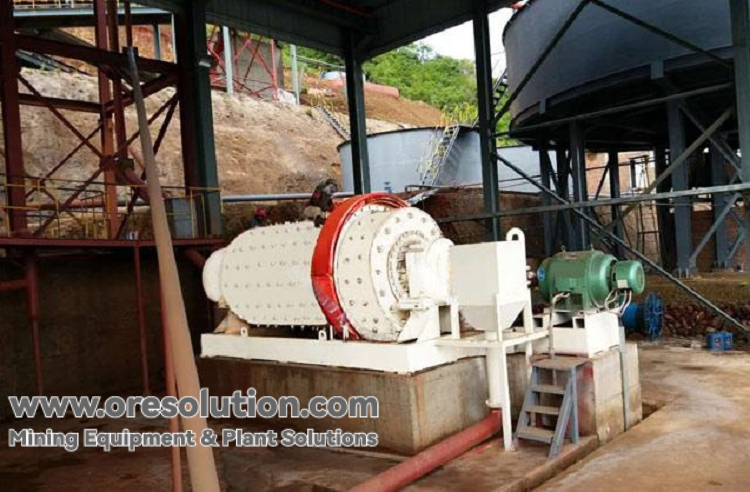
The ore is ground to the fineness required for gold liberation (typically 75%–90% passing -200 mesh, subject to laboratory testing). Key equipment: ball mills, spiral classifiers or hydrocyclones, slurry pumps.
3. Leaching Section (Cyanidation Leaching)
Gold is dissolved using a sodium cyanide solution under alkaline conditions (pH 10–11). Core equipment: leaching tanks (with aeration and agitation, typically 4–6 units in series), sodium cyanide and lime dosing systems, blowers, and online monitoring of pH and chemical concentration.
4. Adsorption Stage (Carbon Adsorption)
The slurry enters the adsorption tank, where it comes into countercurrent contact with activated carbon, and the gold is adsorbed. Key equipment: high-efficiency dual-impeller carbon adsorption tanks (typically 4–6 stages), carbon separation screens, carbon lift pumps (air lifters), and activated carbon.
5. Desorption, Electrolysis, and Smelting Section
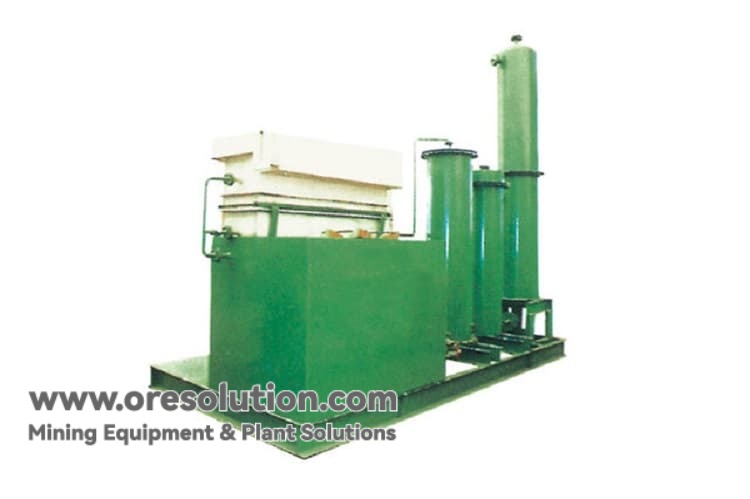
Gold-laden carbon is subjected to desorption to extract the gold; through electrolysis, gold slime is produced and smelted into refined gold. Core equipment: desorption and electrolysis equipment (desorption rate up to 96% or higher; electrolysis rate exceeding 99%), gold smelting furnace, and carbon regeneration/acid washing equipment.
6. Tailings and Environmental Protection Section
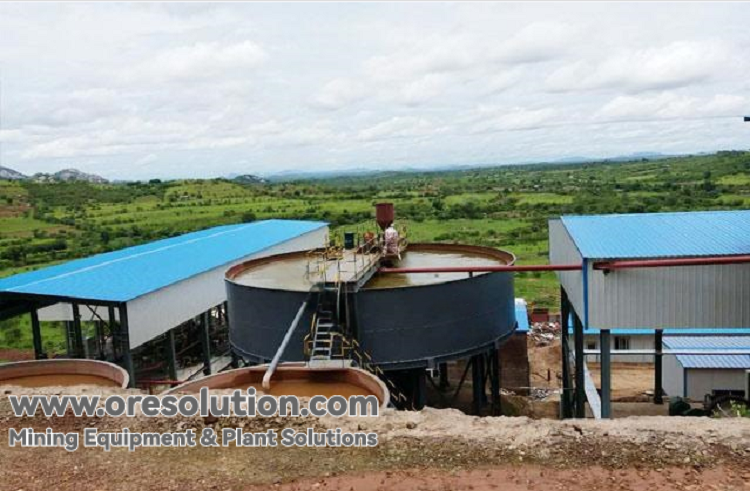
Cyanide-containing tailings are treated to meet regulatory standards, and tailings are safely stockpiled or dry-discharged. Core equipment: high-efficiency thickeners, filter presses, cyanide removal/neutralization treatment systems, and emergency ponds.
7. Auxiliary and Automation Section
Slurry pumps, carbon-extraction pumps, water pumps, agitation tanks, electrical control systems, and online monitoring systems.
To reiterate: The above represents a typical framework; actual equipment models, quantities, and specifications must be customized based on ore characteristics, processing capacity, grinding fineness, leaching time, gold recovery efficiency, and site conditions, with the mineral processing test report serving as the definitive reference.
III. What Exactly Does an EPC Turnkey Solution “Deliver”?
Many mine owners view “EPC turnkey” as merely “equipment and installation included.” In reality, a true EPC turnkey solution delivers a complete package of certainty. OreSolution\'s EPC turnkey solution for a rock-gold CIP production line includes a comprehensive six-phase delivery process:
Phase 1: Requirements Discussion and Project Consultation
—Understand the ore type, gold grade, processing capacity, ore properties (oxidized/sulfidized, arsenic and carbon content), site conditions, and target recovery rate to provide a preliminary feasibility assessment and process direction.
Phase 2: Ore Sample Analysis and Mineral Processing Tests
—Conduct chemical composition analysis, phase analysis, embedded grain size determination, leaching tests,gold recovery rate tests, and CIP/CIL comparison tests on representative ore samples to determine grinding fineness, leaching time, reagent regimes, and the number of adsorption stages. An authoritative “Mineral Processing Test Report” is issued, recommending the process flow, equipment selection, and expected performance indicators. This serves as the scientific foundation of the entire project and represents the fundamental distinction between an EPC solution and a mere “equipment sale.”
Phase 3: Customized Solution Design and Quotation
Based on the test report, we complete the Process Flow Diagram (PFD), equipment configuration list, plant site layout plan, 3D layout proposal, civil engineering requirements drawings, and technical briefing documents, and provide a transparent EPC project budget.All core design elements—including mineral processing tests, process flow design, equipment selection and configuration, plant layout, civil engineering requirement drawings, and technical briefing documents—are completed entirely by OreSolution\'s in-house team. This eliminates the need for you to engage a separate design firm, saving hundreds of thousands of dollars in design fees for medium- to large-scale projects.
Phase 4: Equipment Manufacturing and Procurement
Core equipment (crushers, ball mills, leaching tanks, high-efficiency twin-impeller carbon-in-leach tanks, carbon separation screens, carbon recovery pumps, desorption and electrolysis equipment, gold smelting furnaces, thickeners, filter presses, etc.) is manufactured strictly in accordance with drawings and standards, and undergoes rigorous quality inspection prior to shipment;We coordinate the procurement of supporting auxiliary equipment and installation materials to ensure a smooth supply chain.
Phase 5: On-Site Construction, Installation, and Commissioning
: We dispatch senior engineers to the site to oversee equipment positioning, piping connections, and electrical layout; complete individual unit commissioning and full-process integrated testing; and conduct commissioning with water and feedstock until the production line operates stably and meets the contractually agreed-upon performance metrics.Civil engineering work is organized and carried out by the client according to the drawings, with technical briefings provided by us; installation workers are sourced locally by the client, with our engineers providing guidance—resulting in lower labor costs and greater flexibility. If the client requires us to take full responsibility for civil engineering or provide installation workers, this will be discussed separately based on the project location.
Phase 6: Personnel Training and After-Sales Support Provide systematic theoretical and hands-on training
for operators and maintenance teams (equipment start-up and shutdown, parameter adjustment, daily inspections, and troubleshooting);A 12-month warranty period is provided, during which spare parts will be replaced free of charge for equipment quality issues; lifetime technical support is available after the warranty period ends, with charges based solely on cost; long-term spare parts supply and process optimization recommendations are provided.
Estimated Timeline: From ore sample testing to final commissioning, the overall timeline is typically 8–12 months (ore processing testing: 30–45 days; engineering design: approximately 30 days; equipment manufacturing: approximately 60 days; logistics and transportation: approximately 60 days; installation and commissioning: 60–150 days), though this may vary depending on the project\'s scale and complexity.
IV. EPC Turnkey vs. Traditional Fragmented Plant Construction: Calculating the “Hidden Costs”
Many mine owners ask: “Wouldn\'t it be cheaper for me to purchase the equipment myself, hire a design firm, and find a construction team, rather than using an EPC contractor?” On the surface, the quotes for each individual item may seem lower, but in reality, you\'re still shouldering several hidden costs:
-
Hidden management costs from coordinating multiple parties: Coordinating design, equipment, construction, and commissioning involves high communication costs and blurred lines of responsibility;
-
Rework costs resulting from incorrect equipment selection: Equipment mismatched with the process, rendering it unusable or resulting in insufficient production capacity;
-
Market losses due to project delays: Missing the optimal market conditions for production launch, while capital tie-up costs continue to accumulate;
-
High energy and chemical consumption costs in the long run: Cheap equipment leads to high OPEX; over a few years, the extra expenses could buy several new units;
-
Costs arising from disputes between design institutes and equipment manufacturers: Equipment manufacturers reject the drawings, while design institutes refuse to modify them to meet equipment requirements—ultimately, the investor bears the brunt of the loss.
When added together, these hidden costs often far exceed the price difference between equipment options. The EPC turnkey model mitigates these hidden costs in advance through a closed-loop accountability system, precise equipment selection, system integration, and centralized management.OreSolution integrates design, equipment manufacturing, and engineering services, resulting in a shorter supply chain and fewer intermediary markups. We base equipment selection precisely on ore sample data, ensuring you don\'t end up with unnecessary configurations—when you look at the big picture, choosing EPC not only saves you money but also helps you make money.
V. Five Common Misconceptions About EPC Solutions for Rock Gold CIP Production Lines
Misconception 1: Skipping pilot tests and directly copying drawings from similar mines
. Rock gold ores come in many varieties; leaching conditions for quartz vein-type and altered rock-type ores may differ completely, and a process that worked at a neighboring mine may fail at your site. Correct approach: First, collect representative ore samples to conduct beneficiation tests and use the data to determine the process.
Misconception 2: Ignoring “gold hijacking” and gold-in-host issues. Direct CIP processing of
carbon-bearing gold ores can lead to “gold hijacking,” while direct leaching of arsenic-bearing sulfide-hosted gold yields low recovery rates. Correct approach: Conduct gold hijacking rate tests and pre-treatment feasibility assessments during the pilot phase; if necessary, adopt a combined flotation-leaching process or a pre-treatment-plus-CIP scheme.
Misconception 3: Mismatched Volumes of Leaching and Adsorption Tanks. Insufficient
leaching time results in incomplete gold dissolution, while an inadequate number of adsorption stages leads to low recovery rates. Correct Approach: Calculate based on “throughput × time ÷ effective volume” and design the leaching and adsorption stages in a coordinated manner.
Misconception 4: Pieced-together equipment and system incompatibility.
Crushers, ball mills, leaching tanks, and desorption/electrolysis units are sourced from different manufacturers; while individual units meet standards, frequent system coordination issues arise. Correct Approach: Select an EPC supplier with in-house manufacturing capabilities for core equipment and experience in system integration.
Misconception 5: Focusing Only on Initial Investment Without Considering Full Life-Cycle Costs
. While inexpensive equipment may have a low initial investment, its high failure rate, high energy consumption, and significant chemical waste result in OPEX that far exceeds the price difference between equipment options. Correct Approach: Calculate the full life-cycle return on investment.
VI. OreSolution\'s Turnkey EPC Solution for the Rock Gold Carbon-in-Pulp (CIP) Production Line
OreSolution specializes in mining equipment and mineral processing solutions, with operations spanning five major sectors: metal ores, non-metal ores, precious metal ores, sand mines, and tailings/solid waste. The company operates three modern manufacturing bases (Shahe Industrial Park, Zhanggong District, Ganzhou, Jiangxi;Guzhang Industrial Park, Shicheng County, Ganzhou, Jiangxi; and Weifang Heavy Industry Park, Shandong). With 20 years of experience in mining equipment manufacturing and solution integration, our products are exported to more than 80 countries and regions worldwide. For rock gold carbon-in-pulp plants, we provide a complete EPC turnkey solution for CIP mineral processing production lines:
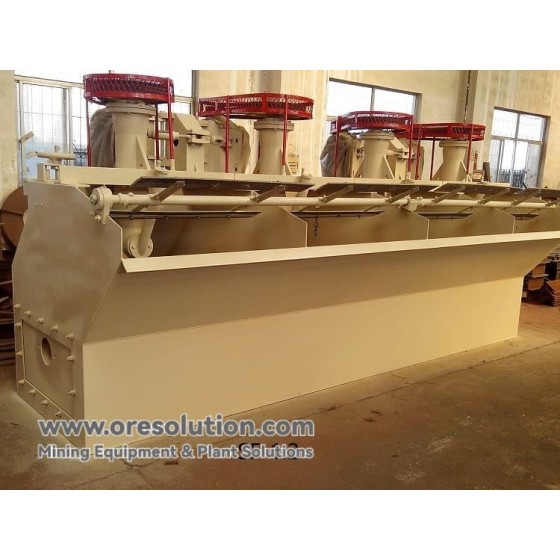
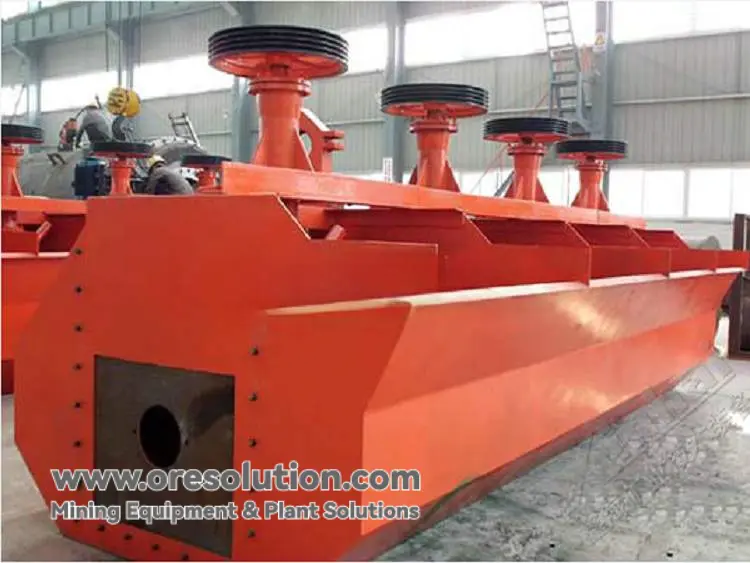
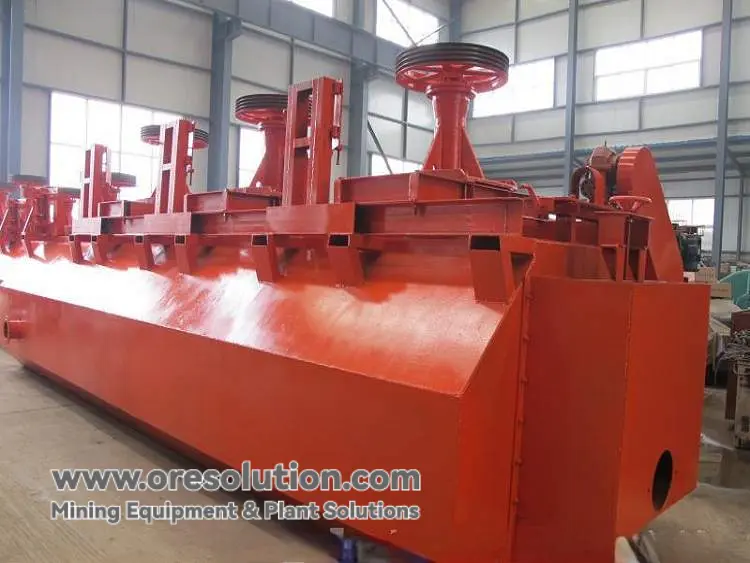
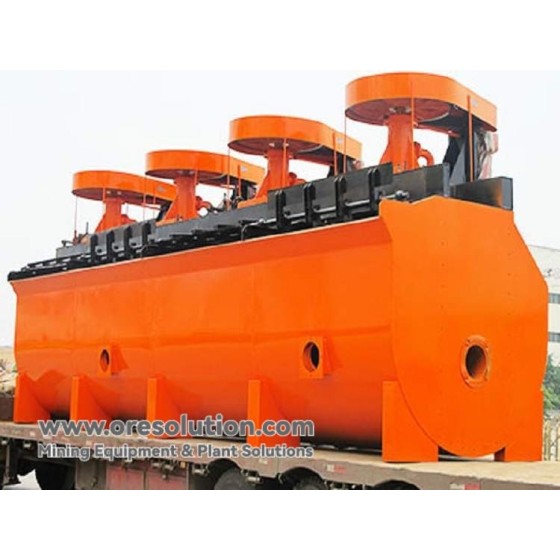
In-house manufacturing of core equipment: jaw crushers, cone crushers, ball mills,spiral classifiers, hydrocyclones, SF/BF/XCF-KYF flotation cells, high-efficiency dual-impeller carbon-in-pulp tanks, carbon-separating screens, carbon-lifting pumps, desorption and electrolysis equipment, gold smelting furnaces, high-efficiency thickeners, filter presses, slurry pumps, and other full-range equipment, ensuring seamless integration between process and hardware.
Flexible Process Route Combinations: Conventional gold-bearing rock ores follow the “crushing—grinding—CIP leaching and adsorption—desorption and electrolysis—tailings treatment” process; difficult-to-process arsenic- and carbon-bearing ores use “flotation + pretreatment + CIP” or “flotation + combined leaching”; copper-gold ores employ “copper-gold separation flotation + tailings CIP”. Conventional processes ensure minimum performance standards, while proprietary technologies maximize potential.
Global service capabilities: We provide technical coordination in English or bilingual formats. Expert engineers can travel to site to guide installation, conduct commissioning with actual feed, and provide staff training. We are familiar with logistics routes across Africa, Southeast Asia, South America, Central Asia, and the Middle East. Our equipment has been exported to over 80 countries, and spare parts supply and technical support are continuously available online.
Transparent Pricing: A modest base service fee is charged for mineral processing tests and design drawings; upon subsequent signing of an equipment or EPC contract, the initial testing and design fees can be fully offset against the equipment cost. Testing services may also be purchased separately, with no mandatory requirement for subsequent collaboration.
VII. Frequently Asked Questions (FAQ)
Q: Is a mineral processing test absolutely necessary for gold-bearing rock ore?
A: Absolutely. Gold-bearing rock ores come in many varieties, with significant variations in gold occurrence, grain size distribution, and arsenic and carbon content. Designing a process without conducting tests is like “a blind man feeling an elephant.” The test report serves as the sole scientific basis for process design, equipment selection, and performance guarantees.
Q: How do I choose between CIP and CIL?
A: For ores with a strong tendency for gold leaching, CIL (simultaneous leaching and adsorption) offers greater resistance to gold leaching; for ores with weak gold leaching tendencies, CIP (stage-wise leaching and adsorption) may be more economical. The specific choice must be determined through comparative leaching tests.
Q: My gold-bearing rock contains arsenic and carbon. Can I still use CIP?
A: Yes, but pretreatment or a combination of processes is required. Arsenic-encapsulated gold requires pretreatment such as roasting, bio-oxidation, or pressurized oxidation to break down the encapsulation; carbon-encapsulated gold requires carbon removal via flotation or the addition of a masking agent. The specific solution must be determined through testing, which is precisely where the value of an EPC solution lies.
Q: What recovery rate can you guarantee?
A: The recovery rate depends on the characteristics of the ore itself (gold occurrence, grain size, degree of gold entrapment, etc.).We do not make unfounded promises; what we do promise is this: through rigorous mineral processing tests, we will design a process that achieves the highest possible recovery rate under the conditions of this ore, and we will strive for excellence in equipment selection and process control to ensure that actual production performance closely matches the test results.
Q: Are you responsible for civil engineering and installation workers?
A: Civil engineering is organized and carried out by the client based on the drawings we provide; we offer technical briefings. Installation workers are organized locally by the client, and we dispatch engineers to the site to provide guidance, resulting in lower labor costs and greater flexibility. If you require us to also handle civil engineering or provide installation workers, this will be discussed separately based on the project\'s location.
Q: My mine is overseas. Can you provide on-site support?
A: Yes. We export equipment to over 80 countries and offer technical coordination in English or bilingual formats. Expert engineers can travel to the site to guide installation, conduct commissioning with materials provided, and provide staff training.
Q: Are there fees for testing and design?
A: We charge a basic service fee, which is reasonable. Upon signing an equipment or EPC contract, the initial testing and design fees can be fully offset against the equipment cost. Testing services can also be purchased separately without any obligation to enter into subsequent cooperation.
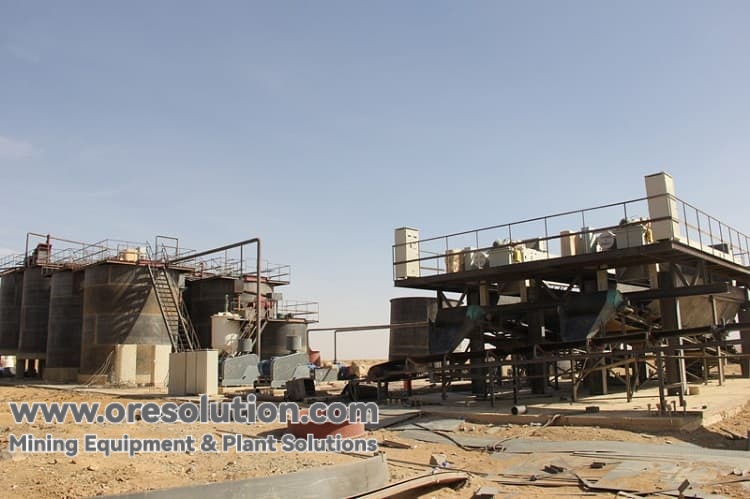
VIII. EPC Turnkey Projects Deliver Certainty
Building a CIP mineral processing production line for a rock gold carbon-in-pulp plant is never as simple as “buying a few pieces of equipment and drawing a few diagrams.” From ore sample testing to process design, and from equipment manufacturing to installation and commissioning, a mistake at any stage could result in recovery rates falling short of targets and investments going down the drain.The core value of the EPC turnkey solution is not simply “handling everything,” but rather transforming uncertainty into certainty through a closed-loop accountability system—a single team takes full responsibility for the final outcome, freeing the mine owner from having to act as a “referee” among multiple suppliers.
OreSolution\'s approach is clear: testing first, then design. A single team takes full responsibility for the final outcome, delivering a comprehensive EPC turnkey solution that covers the entire process—from ore sample testing, process design, and equipment manufacturing to installation, commissioning, and personnel training.Conventional processes ensure the minimum yield, while proprietary technologies maximize it—whether your gold-bearing ore is conventional and easy to process or difficult to treat due to arsenic and carbon content, we have a specialized solution for you.
Contact OreSolution to transform your rock gold CPC plant from “blueprints” to “production capacity,” and from “a rock” to “a stack of cash.”