


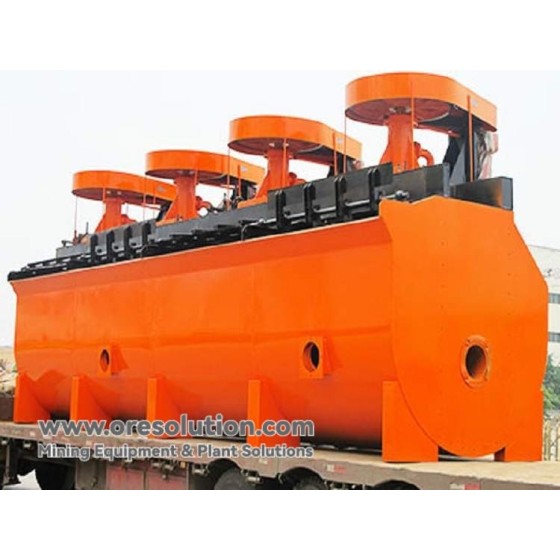
Full-Scale Flotation and Purification Line Solution for Silica Sand
Mechanical Production Line Solution for Low-Iron Quartz Sand: How to Set Up a Full-Scale Line for Iron Removal and Purification
Title: Low-Iron Quartz Sand Processing Line Solution | How to Implement a Large-Scale Integrated Line for Iron Reduction and Purification
Description: How does a low-iron quartz sand processing line achieve iron reduction and purification? This article explains the composition, principles, advantages, applicable scenarios, and implementation steps of a complete quartz sand iron reduction and purification line, serving as a reference for selecting equipment in projects involving glass sand, photovoltaic sand, and high-purity sand.
Keywords: Low-Iron Quartz Sand Processing Line Solution, Iron Reduction and Purification, Quartz Sand Iron Reduction and Purification, Low-Iron Quartz Sand Purification Solution, Quartz Sand Flotation Purification, Low-Iron Quartz Sand Production Line, Quartz Sand Iron Removal Turnkey Solution
[30-Second Quick Read]
-
The core objective of the low-iron quartz sand mechanical processing line solution is to reduce the iron content in quartz sand and increase the SiO₂ grade, following a complete purification process of “crushing—grinding—flotation—dewatering.”
-
The solution focuses on addressing three key challenges: the difficulty of removing iron impurities, the difficulty of separating mica and feldspar, and unstable performance metrics at scale. It is suitable for applications such as glass sand, photovoltaic sand, and high-purity sand.
-
The key to iron reduction and purification lies not in individual pieces of equipment, but in the proper matching of grinding fineness and reagent regimes.
-
The entire line has a processing capacity of 50–200 metric tons per day, with a delivery cycle of approximately 3–6 months.
-
Suitability depends on the form in which iron is present in the ore; we recommend conducting ore tests before finalizing the process.
Market demand for low-iron quartz sand has been rising in recent years, as downstream industries—including glass sand, photovoltaic sand, and high-purity sand—have imposed increasingly stringent requirements on iron content. Yet many processing plants still rely on outdated methods: single-stage magnetic separation and single-stage washing, which fail to reduce iron levels and keep the grade stuck at a medium-to-high level.The mechanical processing line solution for low-iron quartz sand centers on “iron reduction and purification,” integrating crushing, grinding, flotation, and dewatering into a complete production line that manages the process from raw ore all the way to finished concentrate. This article explains this solution in detail—what it is, what problems it solves, how it is structured, what its advantages are, who it is suitable for, and how to implement it.
I. What Is the Low-Iron Quartz Sand Mechanical Processing Line Solution?
Key Points: The low-iron quartz sand mechanical processing line solution is a large-scale, integrated production line centered on flotation purification, supplemented by crushing, grinding, and dewatering processes, designed to reduce the iron content in raw quartz sand and refine it into low-iron concentrate.
To put it simply, raw ore enters the line, and as it passes through this mechanical process, impurities such as iron, mica, and feldspar are separated out, resulting in refined quartz sand with a lower iron content.
It is not a single flotation machine, nor is it the selection of an isolated piece of equipment; rather, it is a complete production line—from the raw ore stockpile to the finished concentrate silo. Every stage—including crushing particle size, grinding fineness, flotation reagents, and dewatering and water recycling—is covered within the scope of the solution.The value of the low-iron quartz sand processing line lies in the overall integration of the entire line, rather than in the advanced capabilities of any single piece of equipment.
II. What Problems Does Iron Reduction and Purification Aim to Solve?
Key Points of the Solution: The low-iron quartz sand mechanical production line solution primarily addresses three pain points—the difficulty of thoroughly removing iron impurities, the challenge of separating mica and feldspar-type minerals, and significant fluctuations in quality indicators during large-scale production.
Let\'s start with iron. Iron in quartz sand exists in various forms: some as free iron oxide, some embedded within mineral lattices, and some adhering to particle surfaces. Magnetic separation alone has limited effectiveness against weakly magnetic iron and embedded iron, while washing alone cannot remove iron embedded within mineral lattices.Iron reduction and purification rely on flotation, which uses a chemical regime to create a difference in surface properties between iron-bearing minerals and quartz, causing the iron impurities to selectively float or sink.
Next, let\'s discuss mica and feldspar. These two minerals are very common in granite-type quartz sand deposits. While their flotation behavior differs from that of quartz, the differences are not significant; therefore, the reagent formulation and process design must be optimized to amplify these differences. This is an indispensable step in iron reduction and purification.
The third challenge is scaling up. While it is not difficult to produce low-iron refined sand in a laboratory, the real challenge lies in consistently processing hundreds of metric tons daily without deviations in quality specifications. A mechanical processing line solution for low-iron quartz sand must address this by selecting equipment with sufficient capacity margins, ensuring no bottlenecks in the process flow, and maintaining stable and controllable water flow and reagent dosing.
Who needs this iron-reduction and purification solution the most? Glass sand manufacturers seeking to increase their raw material self-sufficiency rate; new entrants in the photovoltaic sand sector looking to rapidly establish production capacity; and existing quartz sand processing plants facing purification bottlenecks that require technological upgrades.Operations with a daily processing capacity of 50 metric tons or more and raw ore with relatively high iron content should seriously evaluate this low-iron quartz sand mechanical processing line solution.
III. Core Components and Principles of the Low-Iron Quartz Sand Mechanical Processing Line
Key Features: The complete low-iron quartz sand mechanical production line consists of five modules arranged in series—crushing and screening, grinding and classification, flotation and purification, dewatering and drying, and water treatment and chemical dosing systems.
The material flow of the entire line is as follows: raw ore enters the crushing and screening stage from the stockpile; the crushed ore proceeds to the grinding and classification stage; ore of the required particle size from grinding enters the flotation and purification stage; the flotation concentrate proceeds to the dewatering and drying stage, yielding the final low-iron concentrate product;The tailings generated from flotation proceed to tailings treatment, while the tailings water, after undergoing water treatment, is recycled to the flotation and ore washing stages, forming a closed-loop water circulation system.
Crushing and Screening. The raw ore first undergoes jaw or hammer crushing to reduce particle size, then proceeds to a vibrating screen for classification. The key is to control the feed size for the grinding mill; if the feed is too coarse, grinding efficiency is low, while if it is too fine, over-grinding and slime formation can occur, affecting flotation selectivity.The feed size is generally controlled between 0 and 2 mm, depending on the hardness and mineral distribution characteristics of the raw ore.
Grinding and Classification. The purpose of grinding is to ensure sufficient liberation of quartz and impurities without over-grinding. Typically, about 80% of the ore is ground to -0.6 mm, and classification is performed using hydrocyclones or spiral classifiers; the qualified particle size is sent to flotation, while coarse particles are returned for regrinding.The most common issues here are selecting a mill that is too large, resulting in severe overgrinding; once the ore becomes slurry-like, reagent consumption increases and selectivity deteriorates.
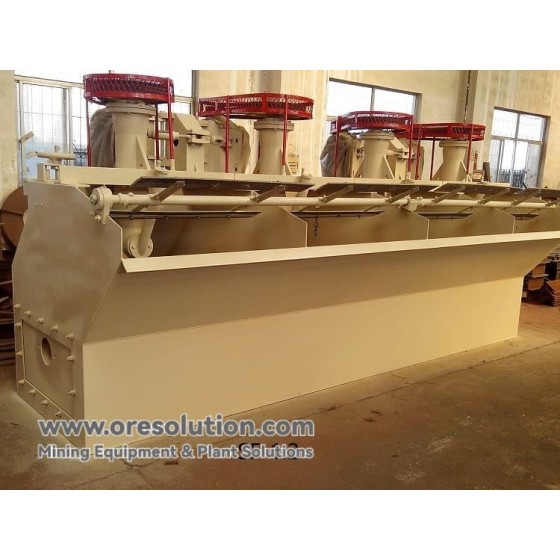
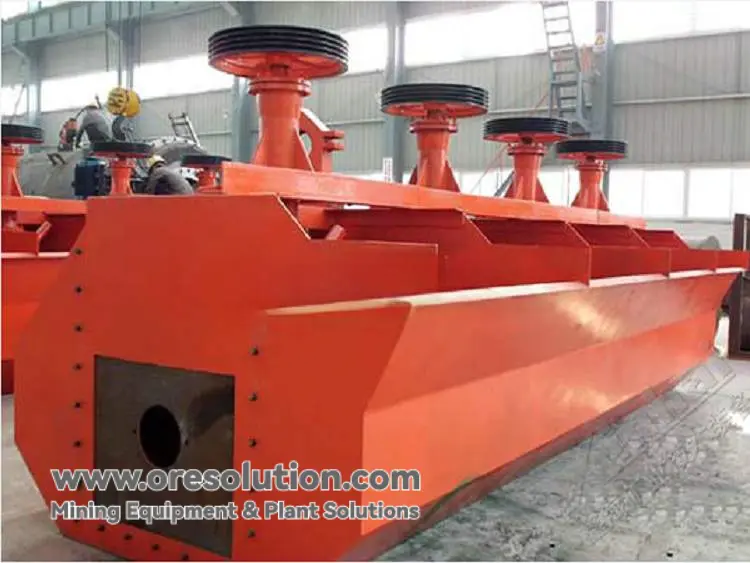
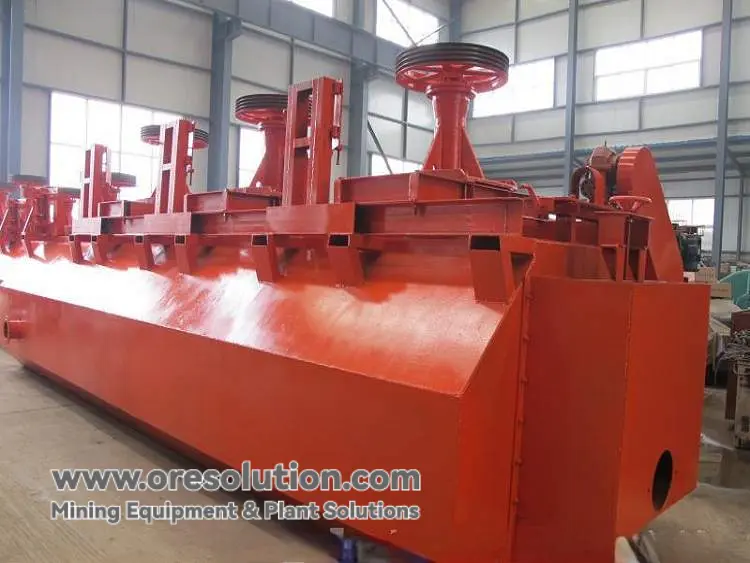
Flotation and Purification. This is the core stage of iron removal and purification. It is generally divided into two stages: the first stage involves reverse flotation for iron removal (a flotation method where iron-bearing impurity minerals are floated out while quartz remains in the cell), using adjusters and collectors to float the iron-bearing minerals; the second stage involves the removal of mica or feldspar, depending on the type of impurities in the ore.Silica sand flotation commonly uses aerated mechanically agitated flotation cells, with the volume of each cell configured according to the processing capacity. The reagent regimen is crucial; the types and dosages of pH adjusters, inhibitors, and collectors must be determined through ore testing, as there is no single formula that works for all ores.
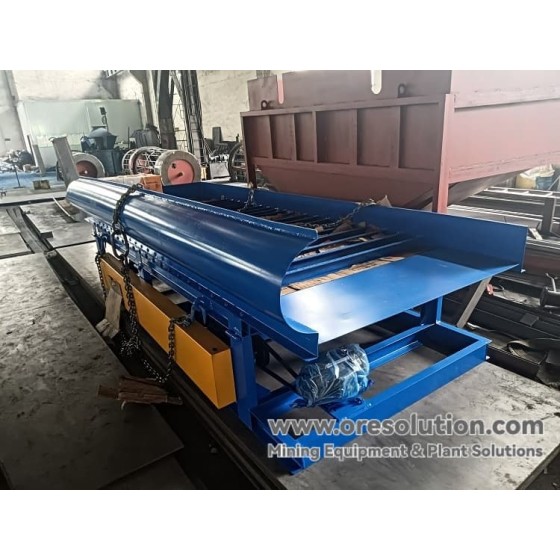
Dewatering and drying. Since flotation concentrate has a high moisture content, it first passes through a dewatering screen before entering a thickener or filter press.If the product requires a low moisture content, drying equipment must also be provided. This step may seem simple, but it often becomes a bottleneck—if flotation runs smoothly but the filter press cannot keep up with the throughput, the entire line must reduce its load.
Water Treatment and Reagent System. Flotation processes consume large amounts of water, and the reuse rate of recycled water directly impacts operating costs. The design incorporates a thickener to treat tailings water; the supernatant is recycled for flotation and ore washing, while the underflow is sent to a filter press for dry stacking. The reagent system is equipped with dosing pumps and mixing tanks according to the process flow, with reagents added at specific points to ensure stability.
The logic behind the entire low-iron quartz sand processing line can be summed up in one sentence: ensure the ore passes through the appropriate chemical environment at the correct particle size to separate out iron and impurities.
The bottleneck in iron reduction and purification does not lie in the size of the flotation cells, but in the matching of reagents and particle size—with the right particle size, reagent consumption is cut in half; with the wrong particle size, even the largest cells are useless.
IV. Why Choose the Low-Iron Quartz Sand Mechanical Line Solution
Key Points of the Solution: Compared to single-step magnetic separation or single-step washing, this complete iron-reduction and purification line offers significant advantages in terms of iron removal depth, adaptability to impurities, and stability at scale.
Take, for example, the test results from a granite-type quartz sand mine near Dexing, Jiangxi: The iron content in the ore was relatively high, and after single-stage strong magnetic separation, it could only be reduced to a moderate level, with limited increases in SiO₂ and virtually no reduction in mica content; after single-stage washing and desliming, the reduction in iron was even smaller.After switching to the low-iron quartz sand mechanical processing line, the iron content in the refined sand was reduced to an even lower level, SiO₂ was raised to a high level, and the mica content decreased significantly. The depth of iron reduction was significantly higher than that achieved by strong magnetic separation alone—this demonstrates the advantage of the integrated processing line solution.
As long as the iron content in the ore falls within the medium-to-high range, this low-iron quartz sand mechanical processing line can reduce the iron content in the concentrate to a level one tier lower than that achieved by traditional magnetic separation—provided that the grinding particle size and reagent regimen are properly matched, this result can be consistently maintained.
The first advantage is the depth of iron removal. Flotation is more effective than magnetic separation for weakly magnetic iron and embedded iron; when iron exists in the form of goethite or acicular iron, magnetic separation cannot remove it, whereas flotation can selectively separate it using reagents.In actual projects, the iron removal rate in the flotation stage is significantly higher than that achieved by strong magnetic separation alone.
The second advantage is adaptability to impurities. The types of impurities in quartz sand ores vary widely—some have high iron content, some contain abundant mica, and others have feldspar that is difficult to separate. The flotation scheme can adapt to different impurity combinations by adjusting the reagent regime, offering greater flexibility than a single physical method.
The third advantage is stability at scale. While conducting experiments with a single unit is straightforward, the entire line offers better continuity and controllability during large-scale production. Reagent addition is controlled by metering pumps, water flow by flow meters, and grinding fineness by classifiers; each variable has its own adjustment mechanism, resulting in minimal fluctuations in performance indicators.
The fourth advantage is overall operating costs. Although the cost of flotation reagents is higher than that of magnetic separation, the total cost is not necessarily higher. Magnetic separation consumes more electricity, performs poorly on fine particles, and often requires repeated separation steps; flotation removes both iron and mica in a single pass, resulting in a shorter process and lower electricity consumption.Based on a line processing 100 metric tons per day, the electricity consumption per metric ton for the entire line is approximately 20 percent lower than that of a multi-stage magnetic separation solution.
Traditional magnetic separation reaches its limit when reducing iron content to a moderate level, whereas this low-iron quartz sand processing line can reduce it by another level—the additional cost of flotation reagents is recouped many times over through the selling price of the refined sand.
V. Applicable Scenarios and Limitations
Key Points of the Solution: This low-iron quartz sand mechanical processing line is best suited for granite-type and quartz porphyry-type quartz sand deposits, where the iron content in the ore is moderately high and the levels of mica and feldspar impurities are moderate. It is not recommended for kaolinite-type quartz sand or severely iron-stained weathered quartz sand.
Let\'s start with suitable scenarios. In granite-type quartz sand mines, quartz particles are coarsely distributed, and impurities consist primarily of mica, feldspar, and small amounts of iron minerals—this is where the low-iron quartz sand mechanical processing line excels.Quartzite deposits in the areas surrounding Dexing, Jiangxi, and Zhaoyuan, Shandong, have undergone testing using this iron-reduction and purification approach, yielding stable results. For similar scenarios abroad, quartz vein-type quartz sand deposits near Dzhezkazgan, Kazakhstan, have comparable impurity profiles, making this solution directly applicable.
The most effective conditions are when the iron content in the raw ore is moderately high and the SiO₂ content is moderately low. Within this range, the cost-benefit ratio for iron reduction and purification is highest—if the raw ore is too clean, flotation is unnecessary; if it is too contaminated, flotation becomes difficult.
We must also clearly outline situations where this method is not recommended. First, kaolinite-type quartz sand, which has a high clay mineral content, requires extensive washing and desliming before flotation, lengthening the process and reducing economic viability.Second, for weathered quartz sand with severe iron staining, where iron is present in a disseminated state within the quartz grains, it cannot be removed by flotation; acid leaching or other chemical purification methods must be considered first. Third, for small-scale operations with a daily processing capacity below 30 metric tons, the payback period for the entire line is relatively long, making it less cost-effective than purchasing refined sand from external sources.
There are also environmental restrictions. Flotation reagents include pH adjusters and collectors, so tailings water treatment must be integrated into the process. If the project site has extremely strict environmental requirements—such as zero liquid discharge—the plan must include enhanced water treatment steps, which will increase investment costs. This is determined by the project conditions and is not an issue with the plan itself.
VI. How to Implement a Mechanical Processing Line for Low-Iron Quartz Sand
Key Points of the Solution: Implementation involves five steps—ore testing, process design, equipment manufacturing and procurement, installation and commissioning, and operational training. The delivery cycle for the entire line is approximately 3–6 months.
Step 1: Ore Testing. Take 50–100 kilograms of representative raw ore to conduct particle size analysis, mineral composition identification, and flotation condition testing. The tests answer three questions: how fine the ore should be ground, what chemical regime to use, and what performance targets can be achieved. This step typically takes 2–4 weeks and cannot be skipped—only thorough testing provides a solid basis for equipment selection.
Step 2: Process Design. Based on the test results, determine the process structure: single-stage or two-stage flotation; reverse or direct flotation; and whether to incorporate magnetic separation. Simultaneously, perform water balance calculations and equipment configuration design, producing a process flow diagram, equipment list, and site layout plan.
Step 3: Equipment Manufacturing and Procurement. Organize the production or procurement of flotation cells, mills, crushers, and dewatering equipment according to the list. Allow sufficient lead time for non-standard and custom components. Conduct pre-assembly and no-load test runs before equipment arrives on-site to resolve any issues at the factory.
Step 4: Installation and Commissioning. On-site installation proceeds in the following order: main equipment first, then auxiliary equipment; mechanical work first, then electrical work. Commissioning consists of three phases: single-unit testing, integrated testing, and test runs with feed material. During test runs with feed material, close attention is paid to the dosage of flotation reagents and the grinding fineness; once these two parameters are stabilized, the performance indicators will remain stable.
Step 5: Operational Training. Once commissioning meets the standards, provide on-site operator training covering reagent preparation and dosing, flotation cell level adjustment, filter press operation, and key points for daily inspections. Training should involve hands-on, on-the-job guidance until operators can independently adjust parameters to accommodate fluctuations in the raw ore.
The delivery cycle for the entire line—from contract signing to the production of qualified concentrate—ranges from 3 months at the fastest to 6 months at the slowest, depending primarily on the extent of equipment customization and the progress of on-site civil engineering work.
Key Issues to Verify During Equipment Selection
During the selection phase, in addition to process design, four key aspects must be verified to avoid deviations during implementation.
The form in which iron is present in the ore. Whether iron is in a free, embedded, or disseminated state directly determines whether flotation can effectively remove iron and achieve purification. Flotation is effective for free and embedded iron; however, for iron disseminated within the quartz crystal lattice, flotation effectiveness is limited, so it is necessary to assess in advance whether chemical purification should be incorporated.
Target Grade. Different downstream applications have vastly different requirements for iron content and SiO₂ grade. Glass sand, photovoltaic sand, and high-purity sand each have their own specific specifications. Clearly define the target before selecting equipment; avoid designing to low standards only to be accepted against high standards.
Processing Capacity. A daily processing capacity of 50 metric tons differs significantly from one of 200 metric tons in terms of equipment configuration and process flow design. For smaller-scale operations, the payback period for the entire line is longer; therefore, conduct a thorough cost analysis before proceeding.
Water Reclamation Conditions. Local requirements regarding water reclamation rates and zero-discharge standards directly impact investment in the water treatment phase. In areas with strict environmental regulations, water treatment must be incorporated into the plan early on; do not wait until commissioning to address it.
Frequently Asked Questions
Q: Does a mechanical processing line for low-iron quartz sand necessarily require flotation?
Not necessarily. For raw ore with low iron content and simple impurities, magnetic separation combined with scrubbing may suffice. However, for ore with higher iron content and high levels of mica and feldspar, flotation is a more effective method for iron removal and purification. Whether to include flotation depends on the results of ore testing.
Q: What is the approximate investment level for the entire line?
Investment varies significantly depending on processing capacity, equipment configuration, and site conditions, so it\'s impossible to provide a uniform figure. We recommend conducting ore testing and process design first, then calculating costs based on the equipment list; only then will the resulting figures be meaningful for reference.
Q: Can the existing processing plant be retrofitted into a mechanical production line for low-iron quartz sand?
This can be evaluated. Where possible, existing crushing, grinding, and dewatering equipment should be reused, with the focus on upgrading the flotation and water treatment sections. Before retrofitting, an inspection of equipment condition and a process compatibility analysis must be conducted.
About Us
OreSolution has been active in the fields of mining equipment manufacturing and mineral processing solution integration for 20 years. We operate three production bases in Jiangxi, Shandong, and Guangdong, with a total area exceeding 100,000 square meters.The low-iron quartz sand processing line is one of our mature product lines. We provide turnkey delivery, covering everything from testing, design, and equipment manufacturing to installation and commissioning. Our products are sold in more than 50 countries and regions, with proven operational cases in quartz sand projects across Asia, Africa, and South America.
Consulting and Collaboration: Technical discussions regarding low-iron quartz sand processing line solutions, commissioned ore testing, and equipment selection consulting.