


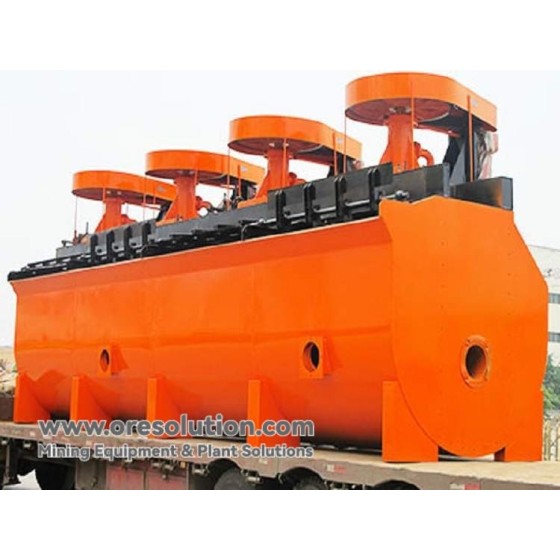
Gold Production Equipment and Technical Solutions
High tailings grades and persistently low recovery rates are the most common and most challenging problems faced by gold processing plants. Despite replacing equipment and repeatedly adjusting reagent formulations, performance metrics remain stagnant.Solutions for gold production equipment and technology do not lie in simply replacing a single piece of equipment or changing reagents; rather, they begin with mineral processing tests and integrate grinding, flotation, or leaching with the corresponding equipment into a cohesive system.Gold deposits vary greatly—including quartz vein deposits, altered rock deposits, sulfide deposits, difficult-to-process arsenic- and carbon-bearing ores, and placer gold deposits—and their processing routes are entirely different. Simply copying designs from peers is often the root cause of stagnant performance metrics.This article is organized into five sections—“Problem—Cause—Solution—Implementation—Results”—to serve as a reference for processing plants to assess their own operating conditions.
I. What Is the Problem: More Metal Is Lost Than the Numbers Show
First, let\'s examine the most common on-site manifestations and see how many apply to your plant.
Tailings with abnormally high grades, appearing black or murky. Tailings grades hovering at abnormally high levels, coupled with recovery rates that remain stubbornly low over the long term, are a common issue at many gold processing plants. Normal tailings should be relatively clear; a black appearance indicates that fine-grained metal or sulfides have not been captured and are being lost.On the surface, things may seem “acceptable,” but the metal in the tailings is actually flowing away through the tailings pipes—and over time, this adds up to a significant amount. The first problem that gold production equipment and technical solutions must address is stopping this loss.
The flotation foam is abnormal. The foam appears dark and brittle, with low yield and a thin layer that crumbles easily when scraped. This is the most obvious sign and an early warning of operational abnormalities in gold processing equipment. For gold enclosed in sulfide ores, the condition of the foam directly reflects whether the gold minerals have been effectively enriched.
Leaching rates remain low. For plants using the CIL/CIP process, persistently low leaching rates and high grades in carbon-adsorption tailings are another typical manifestation.This is particularly evident in “troublesome” gold ores containing arsenic, carbon, and copper, where conventional cyanidation processes yield low leaching rates and may even result in “gold loss.”
Performance indicators fluctuate wildly. Even for the same shift and the same batch of ore, there can be a significant gap between day and night shifts; any fluctuation in the properties of ore from a mining area can cause recovery rates to plummet.
Unit chemical consumption is rising, but recovery rates are not keeping pace. Input costs have increased without corresponding improvements in performance metrics—this is the waste factor that must be prioritized for investigation in gold production equipment and technical solutions.
Avoid these pitfalls: If two or more of these points apply, it\'s safe to conclude that the problem isn\'t simply “substandard equipment,” but rather a mismatch between the process route and the ore characteristics. This is especially true for gold mines; for quartz vein-type and arsenic-bearing sulfide-type ores, the process routes may differ by an entire pre-treatment system.
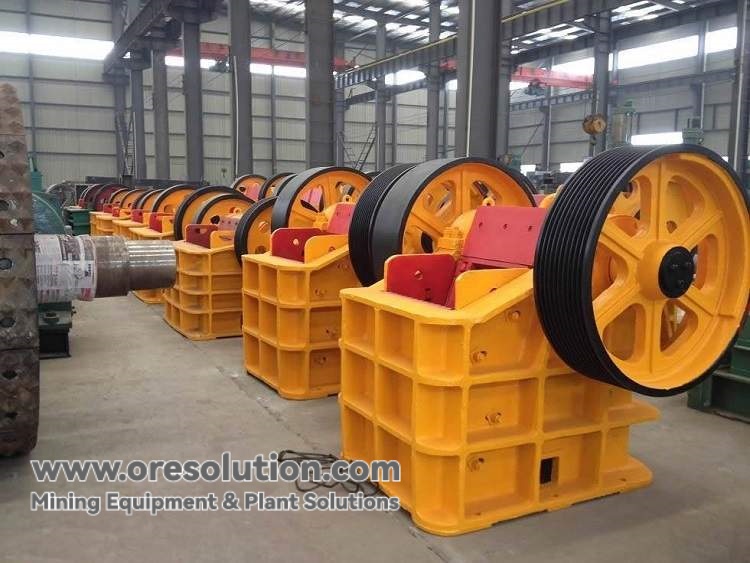
II. Why This Problem Occurs: Three Root Causes, but Most People Focus on Only One
When faced with low recovery rates, many people\'s first instinct is to increase chemical dosing or switch collectors. However, the root cause of the problem often lies elsewhere.
Root Cause 1: Mismatch Between the Process Flow and Ore Properties, and Lack of Test Data.
This is the most fundamental—and most easily overlooked—issue in gold processing plants. Easily processable ores are becoming increasingly rare, while difficult-to-process gold ores—characterized by polymetallic associations, fine-grained disseminations, high clay content, high oxidation rates, and arsenic- and carbon-bearing minerals—have become the norm. Simply copying conventional gravity separation or flotation processes used by peers will not yield the desired results.In primary gold ores, coarse-grained free gold is suitable for early recovery via gravity separation; gold encapsulated in sulfide ores is concentrated via flotation; fine-grained oxidized ores are processed via CIL/CIP leaching; and difficult-to-treat ores containing arsenic and carbon must undergo pretreatment before leaching. If the process route is chosen incorrectly, even the best equipment will be useless.The top priority for gold production equipment and technical solutions is always to conduct mineral processing tests first to determine the ore\'s “genetic makeup.”
Root Cause 2: Inadequate grinding and classification, resulting in damage from both under-liberation and over-grinding.
Gold minerals are finely disseminated; if the grinding fineness is insufficient, the metal remains trapped in the gangue, and even the best reagents cannot reach it. Conversely, brittle minerals such as cassiterite and wolframite are susceptible to over-grinding; excessive grinding produces large amounts of fine slurry, which cannot be captured by gravity separation and causes reagent consumption in flotation to skyrocket.Alluvial gold deposits present the opposite situation: the gold is already liberated as individual particles and does not require crushing or grinding; forcing it through a grinding mill is a waste of money. The core of gold beneficiation technology in the grinding stage is to “grind to the required fineness and stop grinding early when appropriate.”
Root Cause 3: Haphazard equipment selection and process mismatches prevent optimal parameter settings.
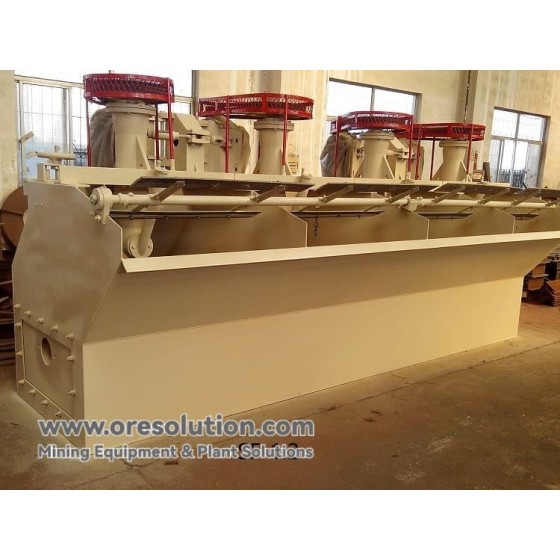
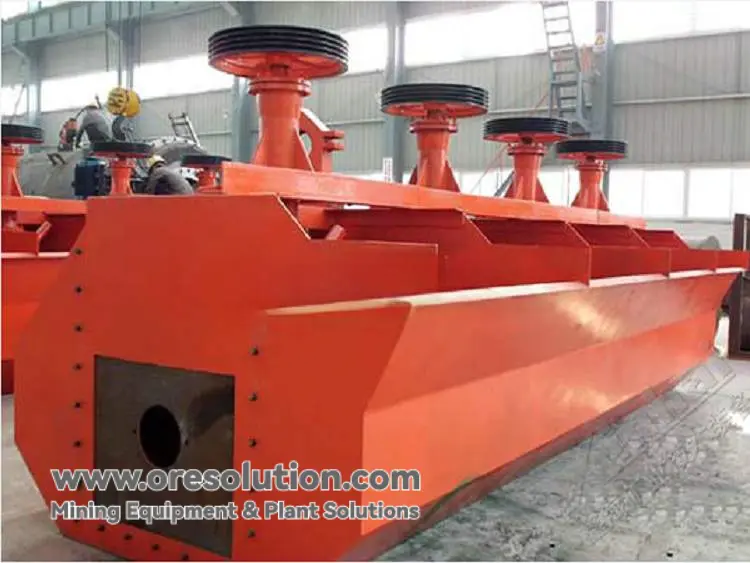
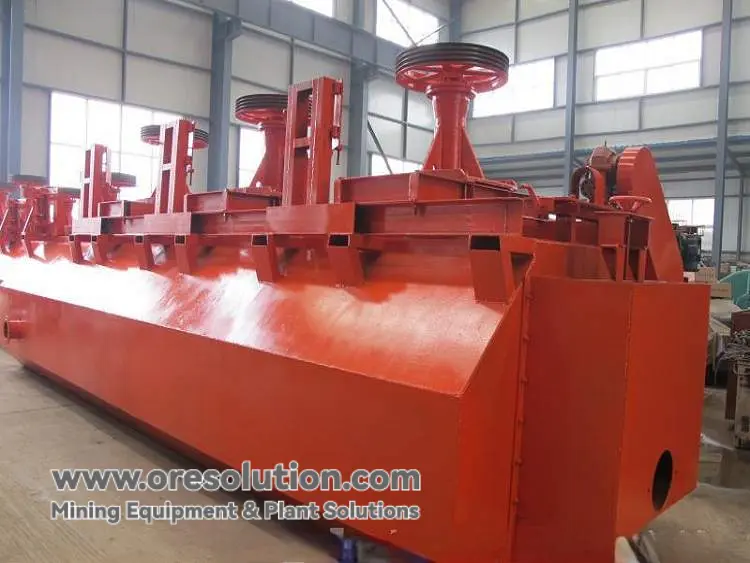
Insufficient aeration in flotation cells, worn impellers, and poor slurry circulation within the cells prevent foam from being effectively scraped off; low-efficiency classifiers result in fine particles in the return sand, compromising grinding efficiency; thickener overflow is turbid, and return water contains high levels of silt, adversely affecting the flotation environment;in leaching tanks, uneven agitation and poor carbon adsorption prevent leaching rates from reaching target levels. More commonly, equipment from different manufacturers is pieced together; while individual units may meet standards, when combined, they result in conflicting piping, mismatched production capacities, and persistently high energy consumption. The selection of gold beneficiation equipment and the state of system integration directly determine whether process parameters can be effectively optimized.
Avoid these pitfalls: Among these three factors, the process route is the “root,” grinding and classification are the “surface,” and equipment selection is the “foundation.”Most problems in processing plants stem from choosing the wrong “root,” failing to fine-tune the “surface,” or lacking a solid “foundation.” Directly attributing “low recovery rates” to “reagent issues” is the most common misjudgment of the underlying cause.
III. What Is the Solution: How to Match Gold Production Equipment with Technical Solutions
The core logic can be summed up in one sentence: Changing your mindset is better than changing equipment. First, conduct mineral processing tests to determine the route; then, fine-tune the grinding and classification; finally, ensure the equipment setup supports the process parameters.
Part One: Mineral Processing Tests and Process Routes—Determine the Route First, Then Discuss Equipment.
Collect representative ore samples for beneficiation testing to determine the gold\'s occurrence state, grain size distribution, associated minerals, and whether it contains arsenic, carbon, or copper. Determine the processing route based on the results: coarse-grained free gold should undergo early recovery via gravity separation; gold encapsulated in sulfide ores should undergo flotation enrichment;fine-grained oxidized ore should undergo CIL/CIP leaching; mixed ore should undergo a combined process of gravity separation and flotation or flotation and leaching; arsenic- and carbon-bearing ore that is difficult to process must undergo pretreatment first; conventional cyanidation processes cannot be blindly applied.For placer gold deposits specifically, since the gold is already liberated as free particles, gravity separation is the only method, and fine-grained gold is recovered using centrifuges.
Section Two: Grinding and Classification Stage—Increase and stabilize the fineness, and prevent overgrinding where necessary.
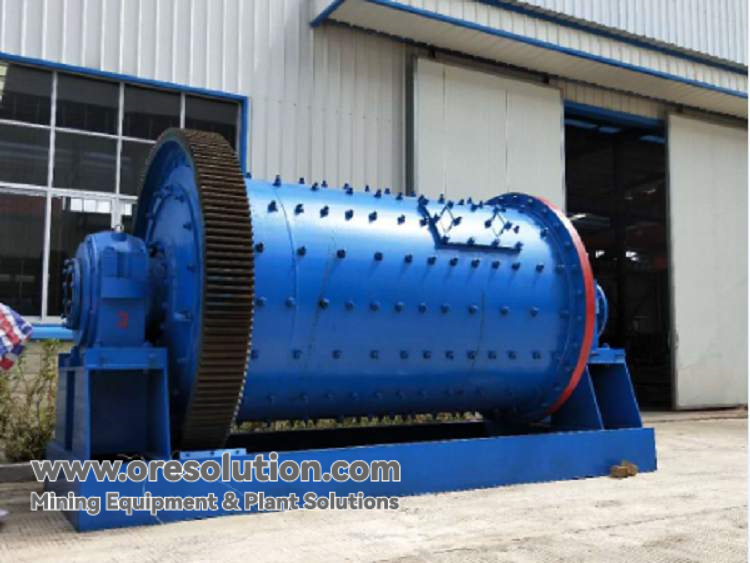
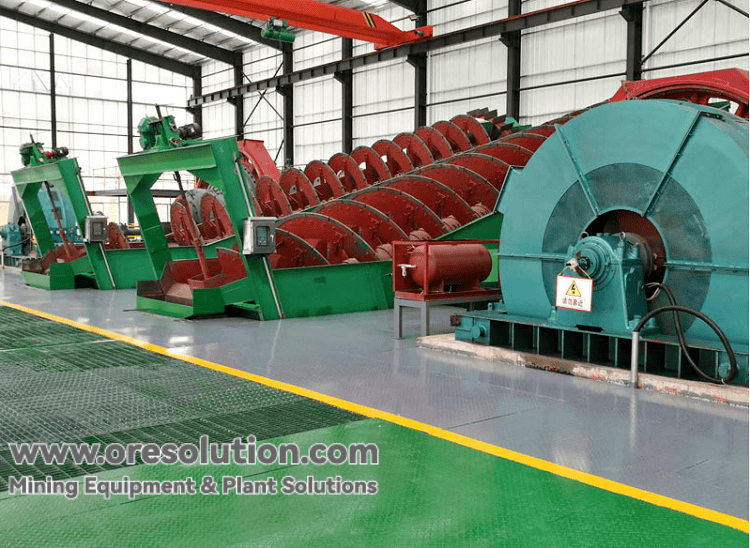
Check the classifier\'s tailings ratio and the fineness of the overflow; if fineness does not meet standards, prioritize adjusting the grinding concentration and ball charging regimen. For low classification efficiency, replace the classifier with a hydrocyclone bank or a high-frequency vibrating screen to promptly separate the qualified particle size fractions.For brittle minerals prone to overgrinding, follow the principle of “more crushing, less grinding; early liberation, early recovery.” Replace some ball mills with rod mills to reduce fine slime. By stabilizing the grinding concentration and controlling fluctuations in feed rate, variations in fineness can be significantly reduced.
Section 3: Flotation and Leaching Stages—Tailor the reagent regimen to the ore and adjust equipment parameters to match the process.
For flotation, first re-examine the ore properties: use xanthate-based collectors for sulfide-dominated ores, and black oil or chelating collectors for highly oxidized ores; adjust the frother based on foam conditions; move the dosing point forward to ensure adequate agitation and slurry conditioning time before roughing;Adjust the aeration rate segment by segment for each cell: set it higher for roughing to ensure recovery, and lower for cleaning to maintain grade.For leaching, in CIL/CIP processes, focus on leaching time, cyanide concentration, carbon density, pH, and agitation efficiency. The agitation intensity in dual-impeller carbon leaching tanks must be sufficient, carbon-separating screens must not become clogged, and desorption electrolysis capacity must be scaled to match throughput.For the pretreatment of difficult-to-process ores: use roasting or bio-oxidation to break down the encapsulation in arsenic-bearing ores; use specialized reagents or roasting to inhibit “gold hijacking” in carbon-bearing ores; and pay attention to cyanide consumption and copper interference in copper-bearing ores.Regarding equipment selection: choose flotation machines based on throughput and flotation time; install automatic flocculant dosing systems on thickeners to control suspended solids in the return water; and equip critical monitoring points with online grade analyzers or, at a minimum, conduct sampling and laboratory analysis every shift.
There is no single “miracle solution”; success depends on the seamless integration of these three elements. The value of gold production equipment and technical solutions lies in treating testing, process design, and equipment as an integrated whole.
Avoid common pitfalls: [Quick Reference Table: Gold Ore Types – Process Flows – Core Equipment]
| Ore Type | Typical Process Flow | Core Equipment Configuration |
|---|---|---|
| Rock Gold · Coarse-Grained Free Gold | Single-stage gravity separation or gravity separation with early recovery | Jaw crusher, rod mill, jig, shaking table, centrifugal concentrator, gold smelter |
| Native Gold · Gold Enclosed in Sulfide Ore | Single-stage flotation or gravity separation combined with flotation | Jaw crusher, cone crusher, ball mill, classifier, flotation cell, thickener, filter press |
| Native gold · Fine-grained oxidized ore | CIL/CIP Leaching | Crusher, ball mill, twin-impeller carbon-in-leach tank, carbon-separating screen, desorption and electrolysis equipment, gold smelter |
| Native Gold · Arsenic- and Carbon-Bearing Refractory Ore | Pre-treatment and Leaching | Roasting kiln or bio-oxidation tank, carbon-in-leach tank, desorption electrolysis, gold smelter |
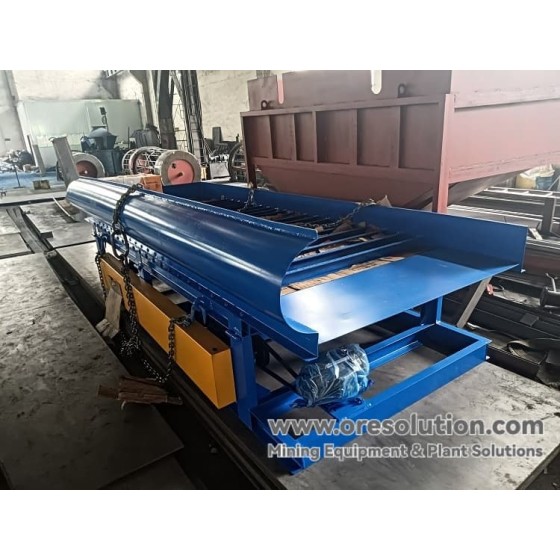
| Placer gold deposits | Chutes, jigging, centrifuges, and shaking tables | Trommel screens, vibrating chutes, jigging machines, centrifugal concentrators, shaking tables, mobile processing units |
| Silver-bearing ores | Flotation or flotation followed by leaching | Crushing and grinding equipment, flotation cells, regrinding mills, carbon-in-leach tanks, desorption and electrolysis, pyrometallurgical smelting |
IV. How to Implement the Plan: The Path from Testing to Finalization
Step 1: Conduct pilot tests to determine the process route. Take representative ore samples for beneficiation testing to identify the gold occurrence, grain size distribution, associated minerals, and harmful elements. Once the test report is available, finalize the process route and equipment list.
Step 2: Set parameters during the first week. Based on the test results, determine the target grinding fineness, reagent types and initial dosages, aeration rates for each flotation stage, or leaching parameters. Record these as parameter cards and post them on the control console.
Step 3: Weeks 2–4: Make small adjustments and keep detailed records. Adjust one or two parameters each week, and observe operations for at least three shifts before drawing conclusions. Record the foam condition, skimming volume, tailings color, and reagent dosage for each shift; in the leaching plant, record the leaching recovery, carbon grade, and tailings grade.
Step 4: Consolidation and course correction in the second month. Finalize the effective parameter combinations and create a reference chart for the work crew. Simultaneously inspect equipment—including impeller wear, clogged aeration holes, the amount of return sand in the classifier, agitation in the leaching tanks, and the condition of the carbon-separating screens—replacing or cleaning whatever is necessary.
Step 5: Third Month—Validation and Fine-Tuning. After indicators have stabilized for several weeks, perform a full-process calibration. Compare grinding fineness, grades at each stage, tailings grade, reagent consumption per unit, power consumption, and leaching rate against target values, and address any discrepancies.
Avoid these pitfalls: [Step-by-Step Implementation Schedule]
| Phase | Time | Key Actions | Output |
|---|---|---|---|
| Trial | Prior to plant construction or renovation | Collect ore samples to conduct beneficiation tests and determine the ore\'s occurrence conditions | Test Report and Process Flow |
| Determine Parameters | Week 1 | Determine fineness targets, reagent ratios, aeration rates, or leaching parameters | Parameter cards finalized |
| Iterative Adjustments | Weeks 2–4 | Adjust 1–2 parameters per week; record data per shift | Corresponding parameter records |
| Stabilization | Month 2 | Finalize effective parameters and troubleshoot equipment status | Shift Operation Checklist |
| Validation | Month 3 | Full-process calibration and fine-tuning based on benchmarks | Calibration report with stability metrics |
V. Results: Expected Improvements and Applicability Limits
When implementing this gold production equipment and technical solution, results vary by mine, but the direction is clear.For processing plants with a well-matched process flow, recovery rates typically have room for improvement, tailings grade decreases accordingly, and concentrate grade improves as the fine selection stage is optimized; chemical consumption per metric ton of ore can be reduced by moving dosing points upstream and minimizing ineffective additions, creating potential for lower costs per metric ton of ore.For difficult-to-process gold ores, the combined pretreatment and leaching process effectively releases encapsulated gold that was previously difficult to leach, resulting in even more significant improvement potential. Indicators stabilize around the third week after adjustments, and the full effects become apparent during the third month of full-process calibration; the investment in retrofitting and commissioning is typically recouped within a few months.
However, it should be noted that this solution is not suitable for all operating conditions. For ores with particularly complex properties or extremely fine grain sizes, the improvement potential is limited; for facilities with severely aged equipment or inherent flaws in the grinding system, equipment issues must be resolved before parameter optimization can be considered.To address this issue, only three parameters need to be adjusted: grinding fineness, reagent ratio, and aeration rate or leaching parameters; however, the specific values must be determined based on the plant\'s ore properties and test reports.
Avoid these pitfalls: The following conditions are provided for processing plants to assess their own situations.
-
Suitable for Implementation: Ore properties are relatively stable but performance indicators have been consistently low; reagent consumption per unit has increased; equipment is in acceptable condition but parameters are inconsistent; and there are significant variations in operational practices among work crews.
-
Requires preliminary testing: Ore properties fluctuate significantly by mining area; polymetallic ores or ores with very fine grain size; difficult-to-process gold ores containing arsenic, carbon, or copper; or new plant construction or expansion projects lacking test data.
-
Not Recommended for Direct Application: Complex ores with extremely fine grain sizes and incompatible process routes; applying the rock-gold grinding and flotation process to placer gold deposits; or bypassing pre-treatment and proceeding directly to conventional cyanidation for difficult-to-process ores.
VI. How to Troubleshoot Common Issues
If the tailings grade is abnormally high, what should be checked first? First, verify whether the test data and process flow are appropriate for the ore type; next, examine the grinding fineness and classification efficiency; finally, review the reagent and flotation or leaching parameters.
Is it necessary to completely replace all gold beneficiation equipment? Not necessarily. In most cases, partial upgrades or maintenance of flotation cell impellers, stators, and aeration systems are sufficient; in leaching plants, focus on inspecting agitation systems, carbon-separating screens, and desorption/electrolysis systems.Gold processing equipment and technical solutions follow the principle of “replace what needs to be replaced, and adjust what needs to be adjusted”; we also do not advocate blindly mixing and matching equipment from different manufacturers.
What should be done if the specific chemical consumption is high but the recovery rate isn\'t increasing? First, inspect the dosing points and agitation time; then, determine whether chemicals are being wasted on ineffective particle sizes. The root cause usually lies in insufficient liberation or an incorrect process route.
What should be done if arsenic- and carbon-bearing gold ore cannot be leached? Conventional cyanidation processes cannot be applied; pilot tests must first be conducted to determine the pretreatment process. Leaching should only proceed after breaking up the agglomerates and suppressing “gold hijacking.”
Does placer gold ore require crushing and grinding? No. Placer gold is already liberated as free particles; gravity separation is the only method, and fine-grain gold is recovered using a centrifuge.
VII. How to Determine Applicability Limits
The implementation of gold production equipment and technical solutions always begins with mineral processing tests and the specific operating conditions of the plant; the key to assessment lies in evaluating the gap between ore property data and current performance indicators.The value of gold beneficiation technology lies not in providing generic answers, but in clarifying the relationships between testing, grinding, flotation or leaching, and equipment configuration—ensuring that every adjustment is supported by data and validated on-site.
About Us and Consulting Services
We have long been engaged in the diagnosis of gold beneficiation processes and the selection of gold beneficiation equipment, covering ore property analysis and beneficiation testing,process route design for bedrock and placer gold, grinding and classification optimization, flotation and CIL/CIP leaching reagent regime design, pretreatment of difficult-to-process gold ores, equipment selection, and full-process integration and commissioning. We adhere to the principle of “testing first, parameters implemented,” and prioritize diagnosis before discussing modifications.If you have specific questions, please send us your ore property data, beneficiation test reports, and current production metrics. We will first conduct a preliminary assessment to identify problem areas and prioritize improvements before proceeding to discuss solutions. We provide comprehensive support covering everything from beneficiation testing and process design to equipment manufacturing, installation, and commissioning.