


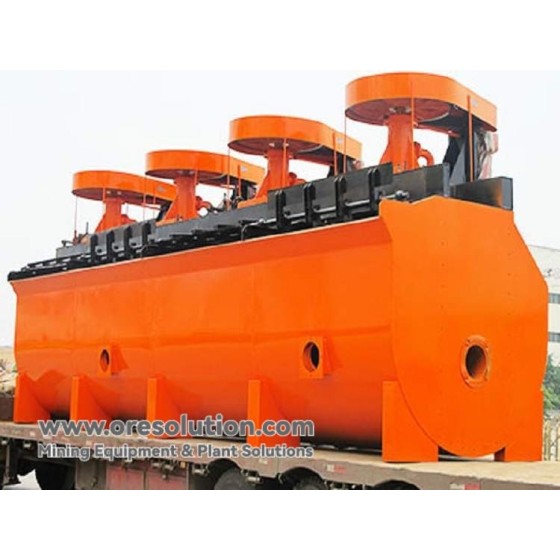
Gold Recovery Beneficiation Process and Complete Equipment Solution for Red Soil Nickel Ore
Recovering gold from laterite nickel ore is often treated as a “side project” at many processing plants. Nickel and cobalt are the main products, while gold has long been regarded as a minor component in pricing. However, as nickel price volatility has intensified, an increasing number of mining companies have begun to reevaluate the value of gold recovery units.Gold occurs in a unique form within laterite nickel ore, making its recovery quite challenging; however, once the correct process route is selected, the revenue generated from this source can tangibly improve the overall economic performance of the processing plant. This article focuses on the mineral processing techniques and turnkey equipment solutions for gold recovery from laterite nickel ore, clearly explaining the technical rationale and engineering configuration.
I. Industry Background: Why Gold Recovery Is Back in the Spotlight
Although laterite nickel ore has a long history of development, gold recovery has long been relegated to a marginal role.In the past, with stable gold prices and low weighting of associated gold in pricing systems, processing plants lacked the incentive to establish dedicated recovery units. Technically, the occurrence of gold in laterite nickel ores is complex, with low individual particle liberation, and applying conventional gold mining approaches often yielded poor results.
In recent years, the situation has shifted. As the central level of gold prices has risen, the economic viability of gold recovery from low-grade resources has been reassessed; at the same time, the processing technology for laterite nickel ore has become more refined, with improved control over ore washing, classification, and grinding, creating better feed conditions for gold recovery.
The recovery of associated gold is no longer merely a “nice-to-have”; in some projects, it has become a formal component of feasibility studies. However, not all laterite nickel deposits are suitable for incorporating a gold recovery unit, as the form of gold occurrence, clay content, and the degree of iron oxide encapsulation all influence the selection of the appropriate process.This is precisely why the mineral processing technology and turnkey equipment solutions for gold recovery from laterite nickel ores must be tailored on a “one mine, one strategy” basis.
II. Technical Principles: Where the Gold Is Found Determines the Processing Method
Lateritic nickel ore is the product of long-term weathering and leaching of ultrabasic rocks. During the weathering process, nickel and cobalt migrate downward and become concentrated, while gold, being relatively stable, mostly remains in situ or becomes fixed with iron oxides.
Gold in laterite nickel ore primarily exists in three forms. Free gold particles typically range in size from the micrometer scale to tens of micrometers and are distributed in the fissures or intergranular spaces of goethite and clay minerals;Gold encapsulated in iron oxides is coated by secondary crusts of goethite and hematite, making it difficult for leaching agents to reach; silicate-hosted gold is embedded in crystal lattice defects of serpentine and chlorite, representing a challenging portion of the ore.
The proportions of these three forms directly determine the process route. Where free gold accounts for a high proportion, gravity separation for pre-enrichment can be effective; where encapsulated gold accounts for a high proportion, the leaching stage requires enhanced pretreatment; and where silicate-hosted gold accounts for an excessively high proportion, the economic viability becomes questionable.Process mineralogical analysis is the first step in designing a gold recovery process for laterite nickel ores; if the assessment is off, even the most comprehensive set of equipment will be unable to remedy the situation.
Mineral slurry is another factor that is easily overlooked.Lateritic nickel ores have high clay content, and the crushing, grinding, and washing processes generate large amounts of secondary slime. With its large specific surface area, this slime adsorbs dissolved gold complexes. A separate design must be developed for the slime treatment stream; it cannot simply be incorporated into the leaching stage, otherwise a situation will arise where “the gold is leached out but cannot be recovered.”
III. Process Flow: Early Recovery via Gravity Separation, Leaching as a Safety Net
The author prefers to organize the process flow into three stages: the preparation stage, the gravity separation and pre-concentration stage, and the leaching and recovery stage. These three stages operate in series, but control indicators are evaluated separately; mixing them together can easily obscure loss points in individual stages.
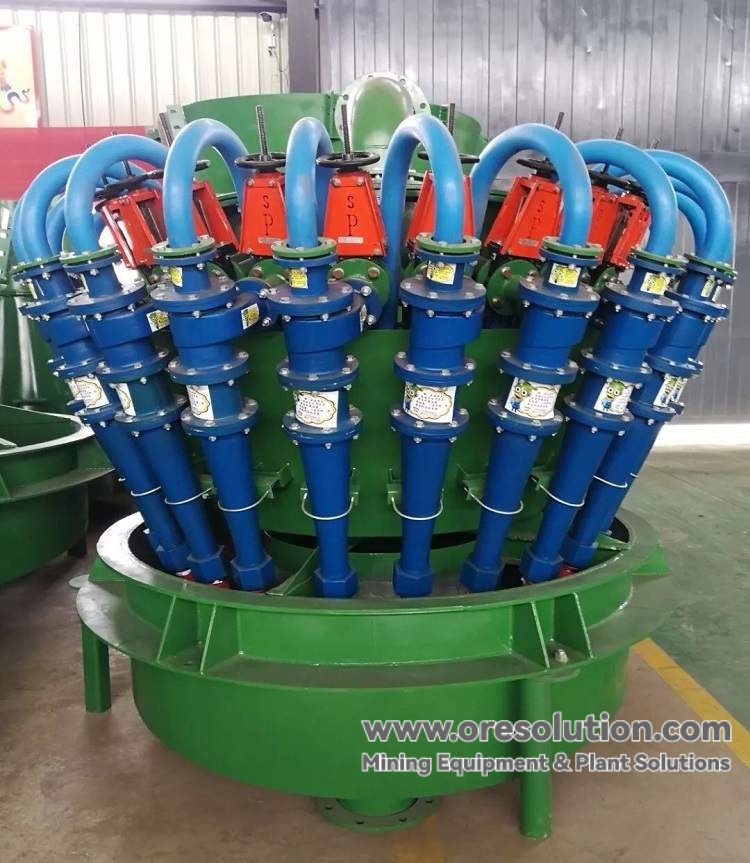
The preparation stage focuses on ore washing and classification. The raw ore first passes through a cylindrical ore washer to separate clay-rich slurry from gravel.The undersize enters a hydrocyclone (a hydraulic classification device that uses centrifugal force to classify fine particles) for classification; the coarse fraction proceeds to the grinding circuit, while the fine fraction\'s path is determined based on its gold content. Classification efficiency is critical in this stage; if performance is suboptimal, the feed size to the gravity separation stage will fluctuate.
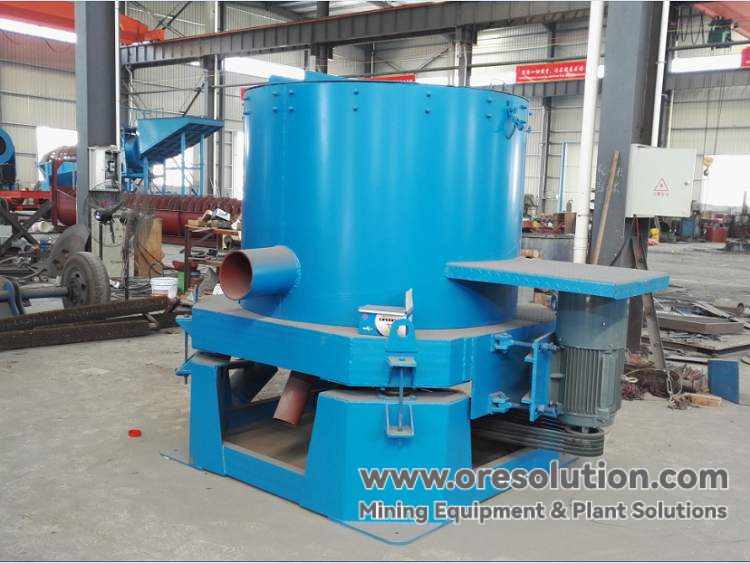
The gravity pre-concentration section serves the function of “recovering as much as possible as early as possible.” The grinding fineness is typically controlled so that particles smaller than -0.074 mm account for 65–75% of the total; at this stage, most free gold has been liberated, and over-grinding—which leads to gold sludging—is minimized.A centrifugal separator (equipment that utilizes centrifugal force to enhance the separation of fine-grained heavy minerals) is used for roughing, featuring high throughput and a relatively fine lower limit of recoverable particle size; a shaking table is used for scavenging to purify the centrifugal concentrate into a heavy sand product. The heavy sand can be shipped off-site for smelting or processed on-site via small-scale leaching.The backwash pressure and feed concentration of the centrifuge are two critical parameters; improper adjustment can result in significant differences in recovery efficiency.
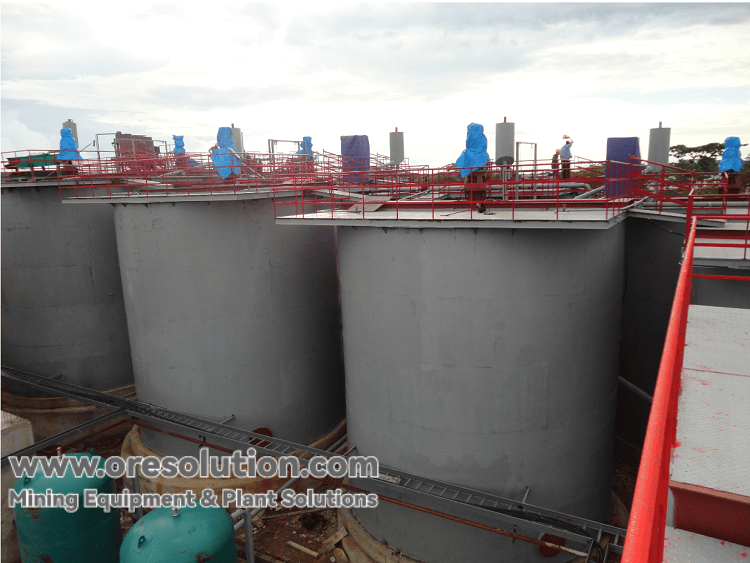
The leaching recovery stage targets bound gold and residual free gold. Concentrated gravity tailings enter the leaching circuit. Conventional cyanidation has limited effectiveness on gold bound to iron oxides; therefore, fine grinding combined with oxidative leaching aids is typically required: the tailings are re-ground to a finer particle size to increase the likelihood of exposing the bound gold;adding an appropriate amount of oxidizing agent to break down the surface film of iron oxides. Leaching time, cyanide concentration, and pH must be determined through testing based on the ore\'s properties; parameters from other projects should not be applied directly.
The core logic of this gold recovery process for laterite nickel ore is straightforward: gold that can be recovered early through gravity separation should not be carried over to the leaching stage; the leaching stage uses pretreatment to reduce the proportion of hard-to-treat gold. Only when each stage fulfills its specific role can recovery performance remain stable.
Two key aspects of the complete equipment configuration warrant special attention. The first is the number of centrifugal separators. Since the slurry viscosity of laterite nickel ore tends to be high, separation efficiency may be compromised; simply calculating the number based on processing capacity may result in an insufficient number of units.The second is the number of leaching tanks connected in series. If the distribution of residence times is not properly controlled, effective leaching time is reduced; therefore, dead-zone volume must be factored into the design. The value of a turnkey gold recovery solution for laterite nickel ore lies not only in a comprehensive list of equipment but also in the engineering expertise applied to these critical aspects.
| Process Step | Equipment Name | Key Function | Configuration Key Points |
|---|---|---|---|
| Ore Washing | Cylindrical Ore Washer | Separation of clay and gravel | The Intensity of Ore Washing Affects Subsequent Classification |
| Classification | Hydrocyclone Bank | Controls grinding feed and diverts fine slurry | Classification efficiency is a prerequisite for stable gravity separation |
| Grinding | Grid-type ball mill | Primary grinding to the appropriate fineness | Avoid overgrinding, which leads to gold sludge formation |
| Gravity Concentration—Roughing | Centrifugal concentrator | Recovery of fine-grained free gold | Number of units to be determined based on slurry viscosity |
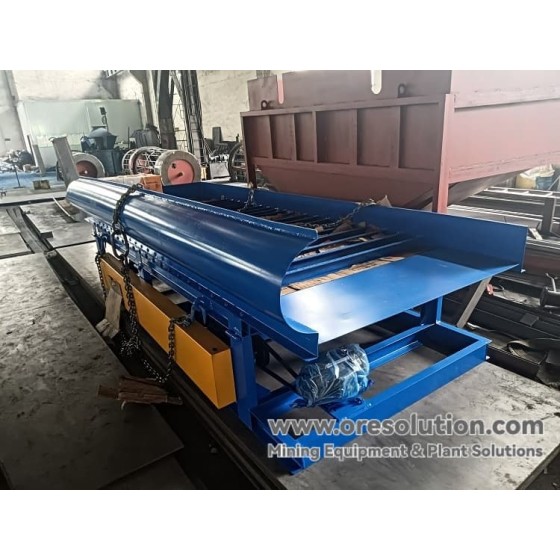
| Gravity Concentration (Fine Selection) | Shaking Table | Centrifugal Concentrate Purification | Produces heavy sand, suitable for off-site transport or on-site processing |
| Regrinding | Overflow-Type Ball Mill | Fine grinding of tailings to expose entrapped gold | Fineness determined based on testing |
| Leaching | Twin-impeller leaching tank | Cyanide Leaching | Number of series-connected stages and residence time must be calculated |
| Washing | High-Efficiency Thickener | Countercurrent washing to reduce loss of precious solution | Wash efficiency affects gold recovery |
| Stripping | Zinc Powder Leaching Unit | Gold Slime Recovery | Processing Capacity Matched to the Leaching Section |
| Tailings Treatment | Filter Press | Tailings dewatering and water recirculation | Reclaimed Water Diversion Affects Cyanide Removal Costs |
IV. Comparison of Approaches: How to Choose Between Single-Stage Leaching and Combined Processes
| Comparison Criteria | Single Leaching Scheme | Combined Scheme: Gravity Pre-concentration + Tailings Leaching |
|---|---|---|
| Applicable Gold Deposits | High proportion of free gold, low proportion of bound gold | A mixture of free and bound gold |
| Gold Recovery Performance | Significantly constrained by the proportion of bound gold | Staged recovery results in greater overall stability |
| Requirements for grinding fineness | Overall fine grinding | Moderate fineness in the gravity separation stage; regrinding in the leaching stage |
| Reagent Consumption | High leaching load, relatively high specific consumption | Gravity separation first removes some gold, reducing the leaching load |
| Equipment Investment | Relatively concentrated | Adding a gravity separation unit increases investment costs |
| Adaptability to tailings | Significant impact from tailings slurry | The gravity separation section can divert a portion of the tailings |
| Complexity of on-site operations | Low | Moderate; parameters require segmented control |
There is no absolute “best” or “worst” option. For ores with a high proportion of free gold and low slime content, single-stage leaching may be simpler; for ores with a high proportion of bound gold and high slime content, a combined process offers more significant advantages.The configuration of turnkey equipment solutions for gold recovery from laterite nickel ores should be based on process mineralogy tests and an assessment of ore properties, rather than applying a fixed template.
V. Economic Assessment, Common Issues, and Case Studies
Should a dedicated gold recovery unit be installed? The key determining factor is the combination of the gold price and the ore\'s gold grade. When gold prices are low, it is not economically viable to establish a separate gold recovery unit for resources with low gold grades; it is more practical to price the gold as part of the main product. As the gold price rises, resources near the economic threshold become viable again.
Whether the processing plant already has a leaching circuit determines the scale of incremental investment; the proportion of free gold in the ore determines whether the gravity separation section can effectively share the load; and the content of mineral mud and the properties of clay affect reagent consumption and tailings treatment costs. Given the combination of these factors, the economic conclusions for each project differ, and it is not appropriate to generalize them with a single figure.
A pilot study at a laterite nickel mine project in Yunnan provides a useful reference. At this mine, gold is primarily encapsulated within iron oxides, and the proportion of free gold is low. In a single whole-ore cyanidation test, leaching efficiency was significantly constrained by the encapsulated gold;after switching to a process involving pre-concentration via gravity separation followed by fine grinding and leaching of the tailings, the gravity separation stage first recovered a portion of the dissociable gold, reducing the load on the leaching stage and resulting in a significant improvement in overall recovery compared to the single leaching scheme. The data from this project represent only the characteristics of that specific deposit and cannot be directly applied to other mining areas.
A pragmatic approach is to first conduct a process mineralogy analysis, followed by combined gravity separation and leaching process tests to obtain recovery curves specific to this deposit. These should then be integrated with local gold prices, reagent costs, and investment estimates to build a model for calculation. Since the test data is specific to this deposit, the resulting financial analysis will accurately reflect its specific circumstances.
Should the gravity concentration be shipped off-site or processed on-site? This depends on the heavy sand output and nearby smelting conditions. For projects with low output, centralized off-site processing results in lower overall costs; when output reaches a certain scale, on-site leaching can reduce transportation steps. Both approaches have their pros and cons; it is recommended to make a decision after conducting a cost comparison based on pilot test data.
How should leaching tailings water be treated? Cyanide-containing tailings water requires cyanide removal, typically achieved through alkaline chlorination. In combined processes, the specific reagent consumption in the leaching stage is lower, resulting in correspondingly lower cyanide concentrations in the tailings liquid, which allows for reduced use of cyanide-removal reagents.The return water from tailings filter presses should be designed with a diversion system: high-concentration liquid should be returned to the leaching process, while low-concentration water should be directed to the cyanide removal process. Failure to properly implement this diversion will drive up treatment costs.
How can the impact of slime on recovery rates be controlled? Slime adsorbs gold complexes in the leaching system and is a major source of recovery losses. The slime flow path must be considered separately during the design phase; by diverting a portion of the slime through the classification and gravity separation stages, the load on the leaching stage can be reduced. This is often more critical than equipment selection.
How should retrofits of existing processing plants be coordinated? For plants with existing leaching circuits, capacity expansion should focus on the ore washing, classification, and re-selection units, while the leaching section can be expanded or made more efficient by utilizing existing facilities.Before retrofitting, the effective volume and residence time of existing leaching tanks must be calculated to prevent the leaching section from becoming a bottleneck after the addition of new gravity concentrate.
Ultimately, the challenge in the mineral processing technology for gold recovery from laterite nickel ore lies not in any single piece of equipment, but in the coordination between the various stages. Feed particle size, slurry flow path, and reagent regimens—any disconnect in these areas will compromise the overall recovery efficiency.
VI. About Us
OreSolution is a solutions provider offering turnkey EPC services for mineral processing. We have long been engaged in research on mineral processing technologies and the configuration of complete equipment sets for laterite nickel ore and other complex ores. Our services cover metal ores, non-metal ores, precious metal ores, alluvial deposits, and the comprehensive utilization of tailings and solid waste.For the recovery of gold associated with laterite nickel ore, our services include ore testwork, process flow design, recommendations for complete equipment lists and selection, as well as on-site installation and commissioning guidance.
Our approach is to first examine the ore before discussing a solution. Only through thorough process mineralogy analysis and combined process testing to generate data specific to the ore can a well-founded solution be developed.
Regarding equipment, we have our own manufacturing systems to support core equipment such as flotation, gravity separation, magnetic separation, electrostatic separation, crushing and screening, and thickening and dewatering, ensuring that process flows align with hardware configurations. For projects that are not economically viable at this time, we will state this clearly and do not recommend forcing them to proceed.
If you are currently developing a laterite nickel ore project, please send us your ore data for a preliminary assessment. If you would like to learn more about the ore processing technology and turnkey equipment solutions for gold recovery from laterite nickel ore, please submit your request, and we will provide tailored recommendations based on the properties of your ore.