


Granite-Based Manufactured Sand Containing Feldspar and Mica: A Detailed Explanation of the Flotation Process for Iron Removal and Purification
-
This is a mechanical processing line solution designed for low-iron quartz sand, utilizing a combined “scrubbing + magnetic separation + flotation” process to reduce iron content and enhance purity, thereby removing feldspar and mica impurities from granite-based manufactured sand.
-
The core logic centers on a flotation section comprising “slurry adjustment—rough flotation—enrichment,” preceded by scrubbing for de-silting and magnetic separation for iron removal, and followed by dewatering and water recycling. The separation of feldspar and mica from quartz is achieved through a pH window and a combination of collectors.
-
This solution is suitable for the purification of manufactured sand with a daily processing capacity of 200 metric tons or more, moderate feldspar and mica content, and where the target product is intended for the glass sand or ceramic raw material markets.
-
The key to a low-iron quartz sand processing line lies not in the sheer number of equipment units, but in the chemical regimen, the appropriate liberation size, and the proper sequencing of magnetic separation and flotation.
-
For ores where mica is too finely disseminated or the iron content in the raw sand is already relatively high, it is recommended to conduct pilot tests or implement magnetic separation first before proceeding with flotation for iron reduction and purification.
I. What Is the Mechanical Processing Line Solution for Low-Iron Quartz Sand?
Key Points of the Solution: The low-iron quartz sand mechanical processing line is a complete process line centered on a combination of washing, magnetic separation, and flotation, designed for iron reduction and purification of granite-based manufactured sand.
Flotation for purifying quartz sand essentially exploits the differences in surface properties between feldspar, mica, and quartz. By adding a combination of reagents to an acidic pulp, feldspar and mica are caused to float with the foam, while quartz remains at the bottom of the cell. Although this method has been used in mineral processing plants for decades, its application to the manufactured sand context requires fine-tuning of the details.
Having worked in this industry for over a decade, I\'ve seen far too many manufactured sand plants get stuck at the stage where “quartz content is high enough, but impurity levels exceed standards.” This solution integrates scrubbing and desliming, magnetic separation for iron removal, flotation for impurity reduction, and dewatering and water recycling into a single process line, with the flotation stage at its core.Ordinary glass sand only requires “scrubbing + magnetic separation,” while high-purity sand requires the addition of flotation; for photovoltaic and electronic-grade sand, acid washing is also necessary.
II. What Problem Does It Solve: The Challenges of Iron Reduction and Purification
Key Points of the Solution: It addresses the dilemma of granite-based manufactured sand—where “quartz content is sufficient, but iron, feldspar, and mica exceed limits.” While the SiO₂ content appears adequate, the presence of impurities causes a significant drop in whiteness, refractoriness, and electrical insulation.
Granite-based manufactured sand typically has a high quartz content, but feldspar and mica are closely associated with quartz. After crushing, the particle surfaces retain impurities, and mechanical iron is also mixed in. If you try to use it as glass sand or ceramic raw material, buyers will shake their heads the moment they see the Fe₂O₃ and mica content.
Specific challenges: Excessive mica flakes prevent whiteness from reaching target levels; feldspar often contains iron, and mechanical iron is introduced during crushing, making iron reduction and purification a bottleneck; chemical indicators are stuck at 97%–98% SiO₂ and cannot be improved; residual flotation reagents cause foaming in the return water, resulting in low recycling rates.
Who needs this most? Processing plants with a daily capacity of over 200 metric tons, where feldspar contains moderate levels of mica, and the target product is intended for the glass sand or ceramic raw material markets. For plants producing only ordinary construction sand, water washing combined with magnetic separation is sufficient—there is no need for flotation.
III. Core Components and Principles: How to Achieve Iron Reduction and Purification
Key Points of the Solution: This solution consists of four modules—scrubbing and desliming, magnetic separation for iron removal, flotation for impurity reduction, and dewatering and water recycling. The core mechanism involves using “pH control + a combination of collectors” to selectively float feldspar and mica while removing iron-containing impurities.
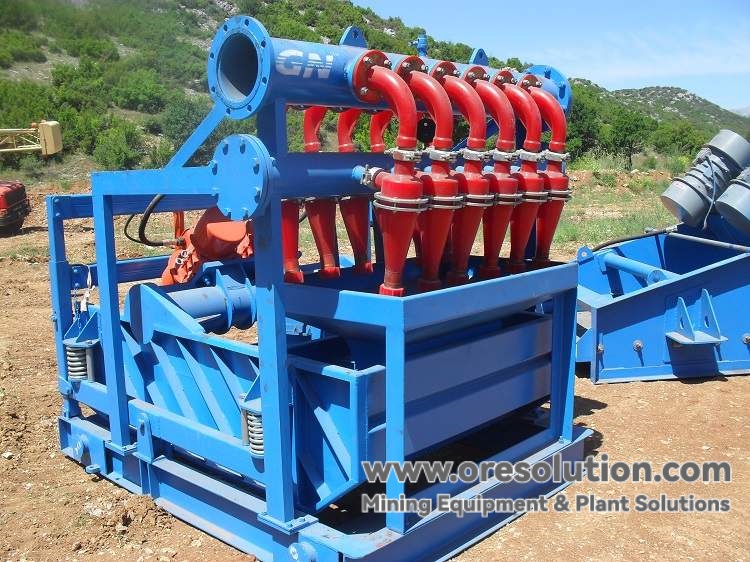
Material Flow: Raw sand enters the scrubber for desliming and is classified by a hydrocyclone; it then proceeds to a wet high-intensity magnetic separator or a high-gradient magnetic separator to remove mechanical iron; it is then fed into a slurry adjustment tank where acid is added to adjust the pH to 2.5–3.5, and an inhibitor is added;the material proceeds to rough flotation, where a combination of cationic and anionic collectors is added to float feldspar and mica; the concentrate undergoes 1–2 rounds of beneficiation; the concentrate is dewatered on a screen and then processed in a filter press; the recirculated water is settled and filtered before being reused.
Scrubbing and desliming: The surface of manufactured sand is coated with mud and fine particles; if these are not removed first, both magnetic separation and flotation will be affected. The scrubber vigorously agitates the material to strip away the mud, while the hydrocyclone classifies and removes fine mud. If this step is not performed properly, a large amount of flotation reagent will be consumed by the fine mud.
Magnetic Separation for Iron Removal: This step is performed before flotation to first remove mechanical iron and strongly magnetic minerals. For ordinary glass sand, a wet permanent magnet or flat-bed magnetic separator is sufficient; for high-purity sand, a high-gradient magnetic separator or even an electromagnetic slurry magnetic separator is required.Iron present in feldspar and mica cannot be completely removed by magnetic separation and must be addressed through flotation.
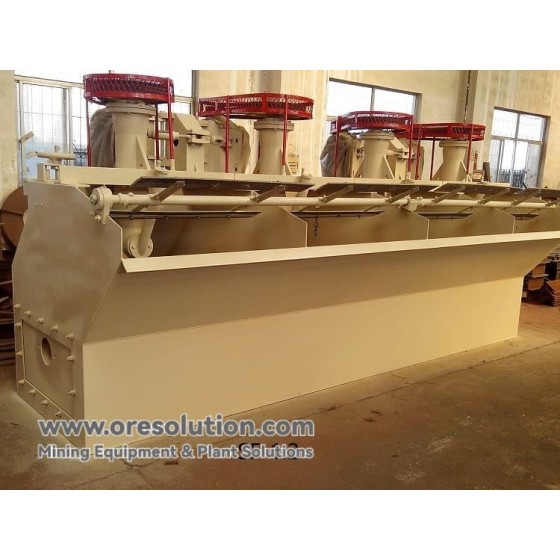
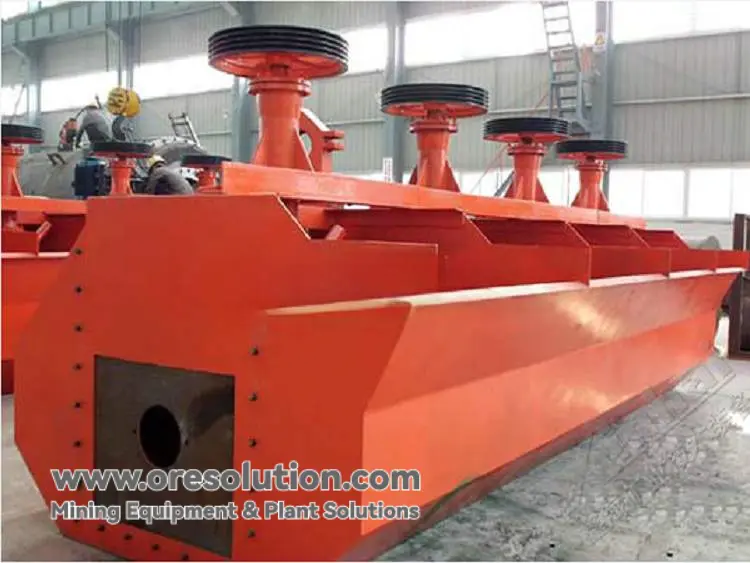
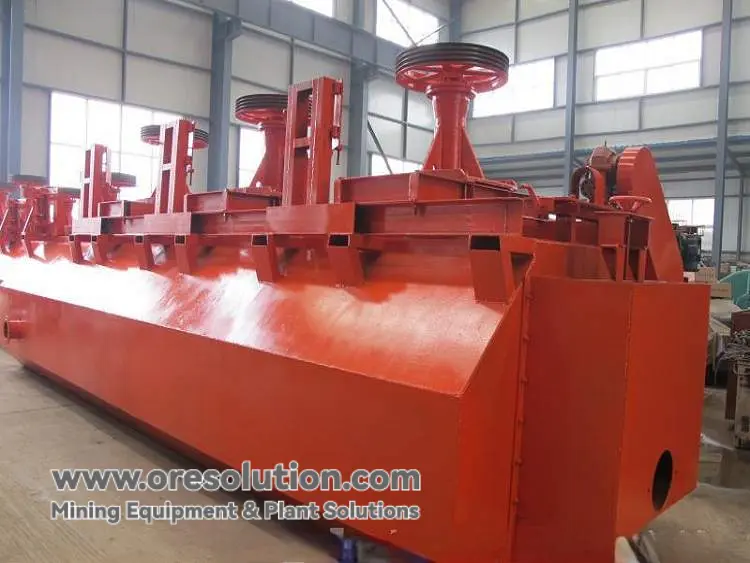
Slurry Preparation and Flotation: This is the main stage of the process. Acid is added to lower the pH to an acidic range, which inhibits the flotation of quartz and activates the surfaces of feldspar and mica. Inhibitors (reagents that selectively adsorb onto the quartz surface and prevent it from rising with the foam) are key to controlling selectivity.Collectors (chemicals that selectively attach to the surfaces of target minerals, causing them to float with the foam) use a combination of anions and cations, with anions binding to feldspar and cations binding to mica.
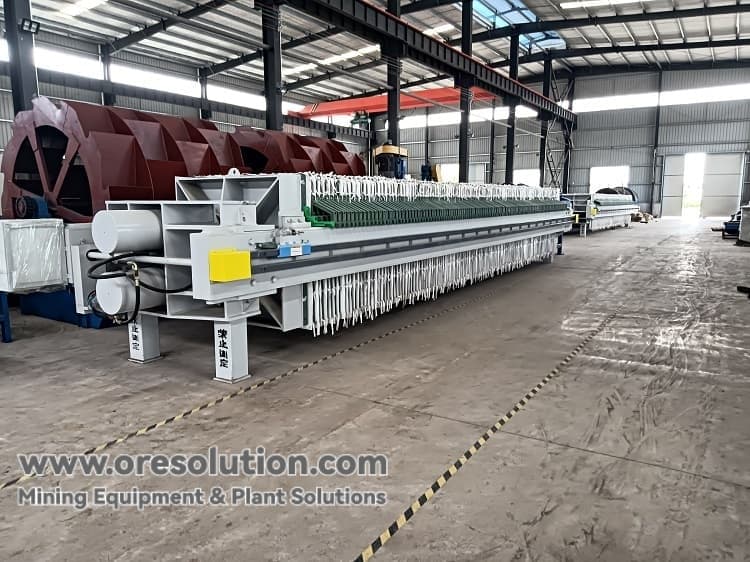
Enrichment and Dewatering with Recirculation: The rough concentrate is re-processed 1–2 times to “wash” the carried-over quartz back into the process.The concentrate tailings are returned to the rough flotation stage, forming a closed-circuit process (a循环流程 in which intermediate products are returned to the preceding stage for reprocessing rather than being directly discharged). The concentrate sand is processed via a dewatering screen and a filter press, while the return water is treated with a flocculant and then returned to the slurry tank.
The key to this solution lies not in the sophistication of the equipment, but in the precise adjustment of the reagent regimen and pH window—even a slight deviation from the window will compromise selectivity, thereby reducing the effectiveness of iron removal and purification.
IV. Why Choose It: What Are the Advantages of Iron Reduction and Purification?
Key Points of the Solution: Compared to single-step magnetic separation or acid leaching, the combined route of scrubbing + magnetic separation + flotation is more targeted for the removal of feldspar and mica, and reagent costs are more controllable.
I wouldn\'t go so far as to call this the best solution in the world, but when it comes to silicate impurities like feldspar and mica, flotation certainly has its place.
Good Selectivity: Magnetic separation can only remove iron; feldspar and mica are weakly magnetic or even non-magnetic, so magnetic separators are ineffective against them. Acid leaching can dissolve some feldspar, but mica flakes remain undissolved, and it also generates large amounts of waste acid. Flotation relies on differences in surface properties for separation, resulting in more thorough iron removal and purification.
Relatively stable performance indicators: I\'ve seen a granite-based manufactured sand project near the Zijinshan Gold-Copper Mine in Fujian. The SiO₂ and Fe₂O₃ content in the raw sand were not ideal, but after implementing this solution, the SiO₂ content in the refined sand was raised to around 99%,while Fe₂O₃ was reduced to the 0.05%–0.08% range, with a recovery rate of roughly 80%–90%.
Controllable chemical costs: Using a combination of collectors and pH adjusters, the chemical cost per metric ton of sand ranges from about ten to twenty yuan. Compared to the acid consumption and waste acid treatment costs of acid leaching, flotation is significantly more cost-effective.
Recirculating water is feasible: Most flotation reagents are carried away with the foam, leaving minimal residues in the recirculating water, which can be safely reused after sedimentation and filtration. Try handling the wastewater from acid washing—the treatment costs alone could wipe out your profits.
Configurable by Target Product: For standard glass sand, scrubbing plus magnetic separation is sufficient; for high-purity sand, flotation is added as an intermediate step; for photovoltaic and electronic-grade sand, acid washing follows flotation. This modular approach allows for phased implementation, so you don\'t have to invest all your capital at once.
The costs associated with traditional acid washing—including reagents and waste acid treatment—are relatively high. In contrast, this flotation-based iron reduction and purification solution keeps costs within the range of ten to twenty-odd yuan per metric ton, while delivering more consistent removal of feldspar and mica—the math is straightforward.
V. Applicable Scenarios and Limitations: What Types of Ore Are Suitable for Iron Reduction and Purification
Key Points: This solution is best suited for mechanically produced granite sand with moderate feldspar and mica content and good liberation after grinding; if the mica is too finely disseminated or the raw sand has a high iron content, conduct trials first before implementation.
[Table of Applicable Ore Types]
| Conditions | Suitable | Marginally Acceptable | Not Recommended |
|---|---|---|---|
| Feldspar-Mica Content | 3%–15% | 15%–20% | >20% or <2% |
| Grinding and liberation particle size | -0.6 mm accounts for more than 85% | -0.4 mm accounts for 80% | Mica flakes < 0.02 mm |
| Fe₂O₃ in raw ore | <0.3% | 0.3%–0.5% | >0.5% (magnetic separation first) |
| Target Product | Glass sand, ceramic raw materials | Refractory materials | Photovoltaic crucible sand (requires acid washing) |
| Daily Processing Capacity | 200–1,000 metric tons | 100–200 metric tons | <50 metric tons (not economically viable) |
Best-performing scenarios: Manufactured sand plants located near granite-type ore deposits, such as the Dexing Copper Mine in Jiangxi and the Zijinshan Gold-Copper Mine in Fujian, where the raw sand contains moderate amounts of feldspar and mica and exhibits good single-particle liberation (separation of target mineral particles from intergrown aggregates) after grinding,thorough washing, and magnetic separation to first remove mechanical iron, resulting in very stable performance indicators once the flotation stage is up and running.
I\'ll highlight two situations where this method is not recommended. First, when mica is too finely embedded—with fine, flaky mica embedded within quartz grains—it remains unseparated even after very fine grinding, making it impossible to capture via flotation. Forcing the process will only result in doubled reagent consumption and a drop in recovery rates.Second, if the raw ore already has a high iron content, flotation alone has limited iron removal capacity; the magnetic separation stage must be fully optimized before feeding the ore into flotation. If the sequence is reversed, a significant portion of the reagents will be consumed by iron ions.
There is also one candid limitation: this approach places demands on the operators. The pH window is narrow, and reagent ratios must be adjusted according to the ore. For teams without a laboratory or a basic understanding of flotation principles, it is recommended to seek guidance from experienced personnel for an initial period.
VI. Implementation: How to Get the Iron Reduction and Purification Plan Up and Running
Key Points of the Plan: Implementation consists of five steps—sampling and testing, process design, equipment selection, installation and commissioning, and performance evaluation. Follow these steps methodically; there is no room for haste.
Step 1: Collect representative ore samples for beneficiation testing. Collect representative raw ore samples and send them to a laboratory equipped for beneficiation testing. Conduct chemical composition analysis and physical property measurements, followed by open-circuit and closed-circuit tests. Focus on the SiO₂ grade of the concentrate, changes in iron content, and reagent dosage.The final process flow and equipment selection must be based on the mineral processing test report for the specific ore.
Step 2: Determine the process flow and reagent regimen. Based on the test results, establish the grinding fineness, pH value, collector ratio, and flotation time; determine whether magnetic separation should be placed before or after flotation, and whether a scrubbing stage is necessary. Involve personnel with experience in similar ores, as even a slight deviation in the reagent regimen can result in significantly poorer performance metrics.
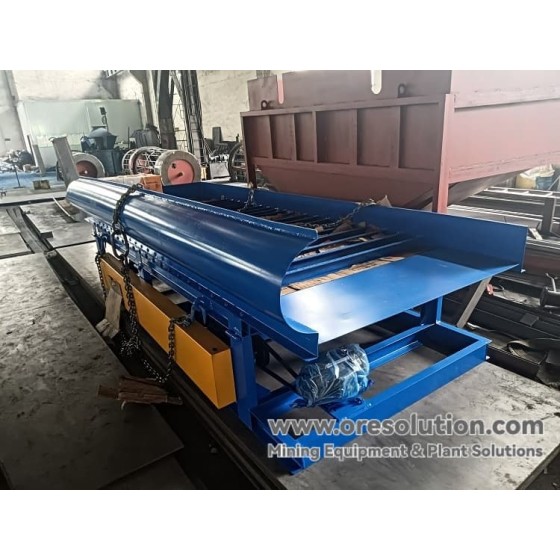
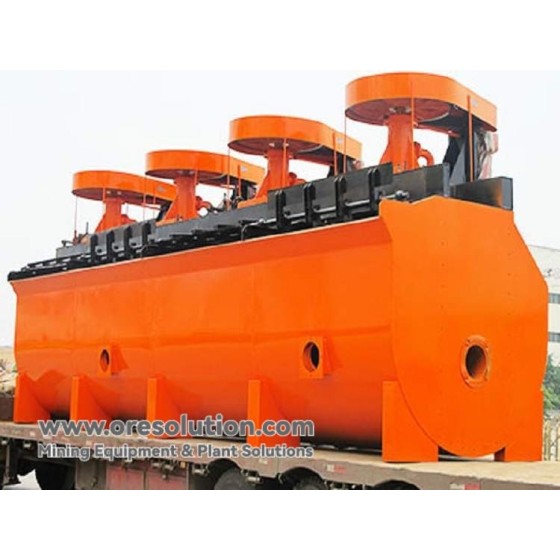
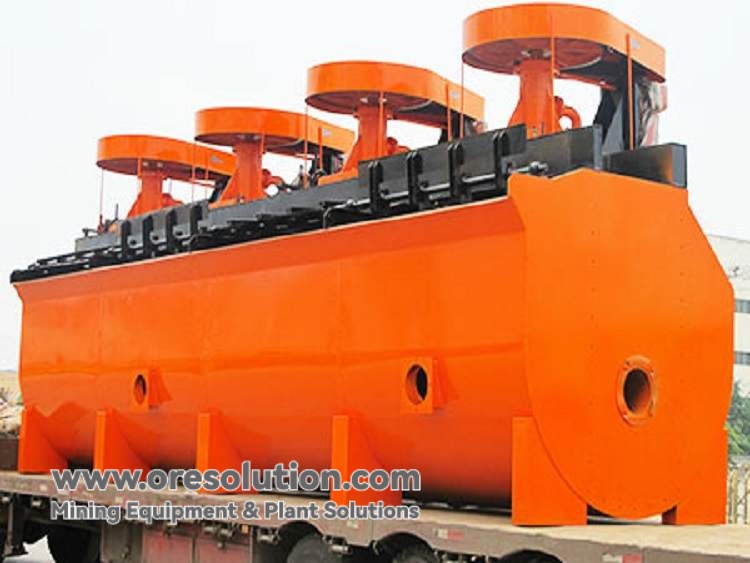
Step 3: Equipment Selection and Plant Layout. Scrubbers, hydrocyclones, wet high-intensity magnetic separators or high-gradient magnetic separators, slurry tanks, aerated mechanical agitated flotation cells, dewatering screens, and chamber filter presses should be sized according to daily processing capacity.The slurry mixing tank must be equipped with online pH monitoring and an acid dosing pump.
Step 4: Installation and Commissioning. Begin with a clean-water test run, followed by commissioning with actual ore. Closely monitor three key parameters: pH stability, foam layer thickness, and concentrate grade. Fluctuations in performance metrics during the first two weeks are normal; gradually fine-tune the reagent ratios to achieve optimal results.
Step 5: Continuous Evaluation and Optimization. Conduct continuous evaluation at full load, taking samples of the concentrate and tailings for laboratory analysis. Set compliance standards based on three criteria: SiO₂ grade, Fe₂O₃ content, and recovery rate. If standards are not met, review the grinding fineness, magnetic separation intensity, and reagent regimen.
If you need it, I can help you outline the sampling requirements and equipment configuration list for the mineral processing test—provided you have the ore samples ready first. Without ore samples, any plan is just theoretical.
Several Questions Frequently Asked by Clients
Is flotation a mandatory step? Not necessarily. For ordinary glass sand, washing followed by magnetic separation is usually sufficient; flotation is only required when high-purity sand is needed or when there is an excess of feldspar and mica. First, define the target product, then determine the process depth.
Can iron removal and purification be achieved solely through magnetic separation? Magnetic separation is effective for removing mechanical iron and strongly magnetic minerals, but feldspar and mica are weakly magnetic or even non-magnetic, so magnetic separation cannot handle them. Since iron is primarily present in feldspar and mica, magnetic separation alone cannot reduce iron content sufficiently; flotation must be used in conjunction with it.
What is the approximate investment scale? This depends heavily on production capacity, the degree of automation, the target product, and on-site conditions. Processing 200 metric tons per day is not on the same scale as processing 1,000 metric tons per day; the equipment configuration required for glass-grade sand is also not on the same scale as that for photovoltaic-grade sand. First, determine the production capacity and target specifications, then have the design firm provide a preliminary cost estimate.
[About This Article]
The mechanical processing line for low-iron quartz sand described in this article introduces a standard industry technical approach that combines scrubbing, magnetic separation, and flotation to reduce iron content and purify granite-derived manufactured sand. The data provided in this article are typical reference ranges and do not represent guaranteed specifications for any specific project.Specific process flows, reagent regimens, and equipment selection must be determined through mineral processing tests based on the actual properties of the ore.