


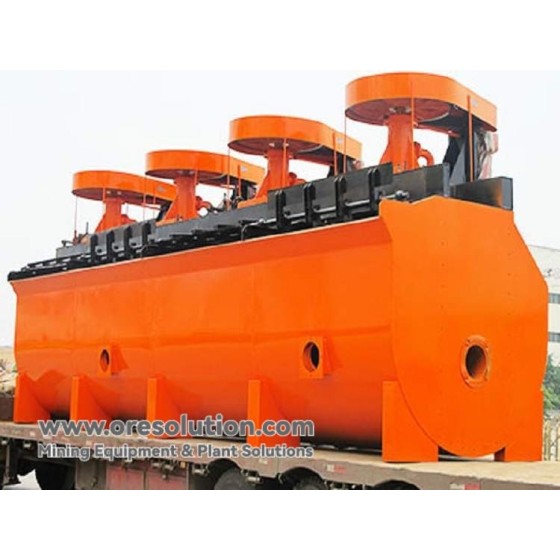
High-Efficiency Gold Extraction Solutions for Difficult-to-Process Gold Ore Carbon-in-Pulp Plants | Professional Processes to Help Reduce Costs and Improve Efficiency
When developing high-efficiency gold extraction solutions for carbon-in-pulp (CIP) plants processing difficult-to-treat gold ores, the core challenges typically revolve around three key issues: excessively high tailings grade, unstable recovery rates, and uncontrollable reagent consumption.These three issues tend to surface simultaneously after many CIL plants have been in operation for some time. A systematic review of the gold extraction process for difficult-to-process gold ore CIL plants is often more effective than making piecemeal adjustments to individual parameters.OreSolution provides customized design and equipment manufacturing for gravity separation, flotation, cyanidation (CIL/CIP), and combined processes in the rock gold ore sector. For “triple-challenge” ores containing arsenic, carbon, and copper, we emphasize conducting mineral processing tests first before determining the pre-treatment route.This article follows the sequence of “Symptoms—Causes—Solutions—Implementation—Results” to clearly explain the full context behind efficient gold recovery solutions for difficult-to-process gold ore carbon-in-leach plants, helping you avoid detours in the gold recovery process for such ores.
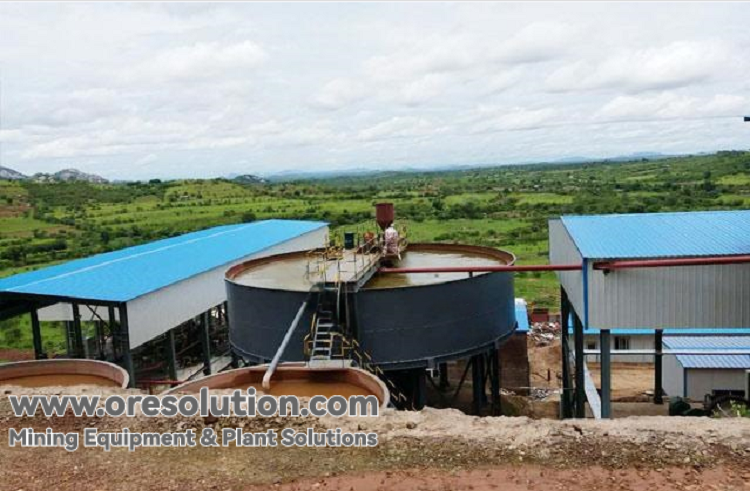
I. What Are the Common Issues in Gold Recovery at CIP Plants for Refractory Gold Ores?
Let\'s start with the symptoms. Problems at CPC plants processing difficult-to-treat gold ores typically do not stem from a single indicator failing on its own, but rather from several indicators collectively underperforming.
An excessively high tailings grade is the most obvious issue. Laboratory reports show that the gold grade in tailings has long hovered in a high range, with significant fluctuations between shifts. When calculated based on daily processing volume and the gold price, every slight increase in tailings grade represents a tangible loss of metal—a loss that adds up to a substantial amount over time.
The second issue is the inability to improve recovery rates. On-site attempts to add activated carbon, increase sodium cyanide concentration, or extend leaching time have only resulted in minor increases in recovery rates; further improvements have proven impossible. A change in shift or even a slight variation in ore properties causes the recovery rate to drop again, indicating poor stability.
Excessive chemical consumption is the third issue. The specific consumption of sodium cyanide exceeds design expectations, while the adsorption efficiency of activated carbon declines rapidly, requiring frequent replenishment with fresh carbon. As a result, the chemical cost per metric ton of ore cannot be reduced. Seeing the purchase orders is painful, but since the chemical reduction targets are even worse, we have no choice but to maintain the current levels.
There is another phenomenon that is easily overlooked: process parameters “appear normal when viewed individually, but fail to deliver results when combined.”When examined individually—grinding fineness, leaching concentration, carbon density, and pH—each parameter falls within the so-called “reasonable range,” yet when combined in the processing of difficult-to-treat ores, gold recovery efficiency remains low. This is precisely where the gold extraction process at a carbon-in-pulp plant for difficult-to-treat gold ores differs from that of conventional oxidized ores—it doesn\'t give you obvious fault signals, yet it continuously erodes recovery rates within the system.
What you need to recognize is that this phenomenon indicates the problem most likely lies not in any single parameter, but in the overall compatibility of the gold recovery process for difficult-to-process gold ores.OreSolution\'s process routes for rock gold ores cover single-stage gravity separation, single-stage flotation, single-stage CIL/CIP leaching, gravity separation + flotation, flotation + leaching, as well as pretreatment + leaching for arsenic- or carbon-bearing ores. Decisions are based primarily on mineral processing test reports, rather than on field experience alone.If two or more of the above phenomena apply to your plant, your CIL plant needs a systematic review at the level of efficient gold recovery solutions for difficult-to-process gold ore CIL plants.
II. Fundamental Causes of Low Gold Recovery Efficiency in CIL Plants Processing Difficult-to-Treat Gold Ore
When conducting troubleshooting, many plants first suspect a decline in ore grade or reagent quality; however, investigations into these two areas often yield limited results. The root of the problem lies elsewhere—the low gold recovery efficiency in CIP plants processing difficult-to-process gold ores is typically rooted in the following three aspects.
First, gold is encapsulated by minerals, resulting in insufficient grinding and liberation. The key difference between difficult-to-process ores and oxidized ores lies in the fact that gold particles are often embedded in pyrite, arsenopyrite, or gangue minerals and have a fine particle size.When the grinding fineness is insufficient, the encapsulated gold is concentrated precisely in the coarse particle size fraction. The cyanide solution struggles to come into contact with the gold particles, resulting in inadequate leaching and persistently high tailings grade. This is the most common—and most easily underestimated—reason for low gold recovery efficiency in carbon-in-pulp plants processing difficult-to-treat gold ores.
Second, there is a mismatch in the timing of leaching and adsorption, with the carbon “snatching” the gold too early. The core of the carbon-in-pulp process is simultaneous leaching and adsorption. The leaching rate of difficult-to-process ores is relatively slow, and it takes time for gold to dissolve from the minerals.If the carbon density is too high and the carbon remains in the initial leaching tanks for too long, the small amount of gold that has just been dissolved is rapidly adsorbed. This lowers the gold concentration in the tank, reduces the driving force for leaching, and actually decreases the overall leaching recovery rate. A “one-size-fits-all” approach to carbon density is a hidden weakness in the gold extraction processes of many CPC plants processing difficult-to-treat gold ores.
Third, interference from ore slime and harmful ions leads to “poisoning” of activated carbon and wasteful consumption of reagents. Difficult-to-process ores often contain associated components such as clay, graphite, arsenic, and antimony.Mineral sludge coats the surface of the activated carbon, causing its adsorption capacity to decline rapidly; arsenic and antimony dissolve into the solution and form complexes with cyanide, resulting in the wasteful consumption of reagents; organic carbon also competes with activated carbon for the adsorption of gold-cyanide complexes. Under such interference, simply adding more reagents is ineffective; the system must first be “detoxified.”OreSolution\'s data on rock gold ores clearly indicates that for difficult-to-process gold ores containing arsenic, carbon, and copper, pretreatment processes must be determined through testing; conventional cyanidation processes cannot be blindly applied. This is also why efficient gold recovery solutions for carbon-in-pulp plants processing difficult-to-process gold ores must incorporate impurity removal and pretreatment into the overall design.
What you need to focus on is this: these three root causes correspond to three distinct factors—dissociation, rhythm, and impurities—respectively. When troubleshooting, address each factor separately; do not mix them when making adjustments.
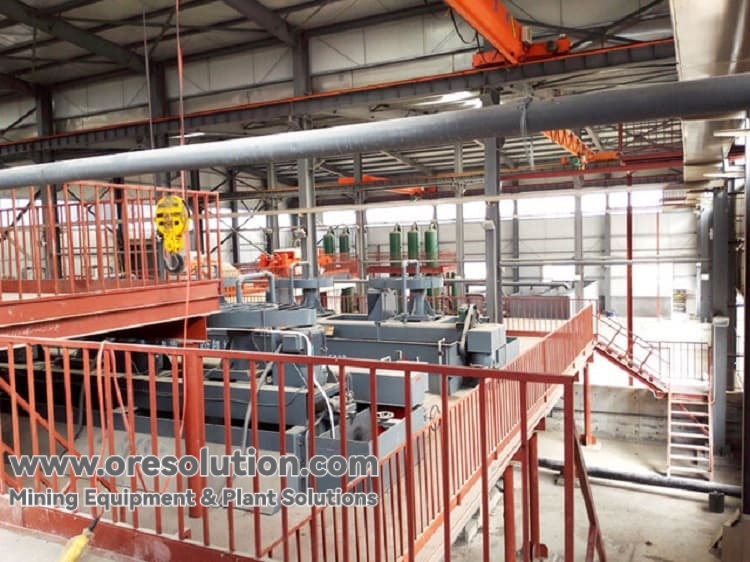
III. Solutions for Efficient Gold Extraction in Carbon-in-Pulp Plants Processing Difficult-to-Treat Gold Ore
Changing your mindset is more important than changing equipment—the core of the solution can be summarized as: grind what needs to be ground, stagger what needs to be staggered, and remove what needs to be removed. This is the overall approach for high-efficiency gold recovery solutions in CBM plants for difficult-to-process gold ores, which is specifically divided into four stages.
Stage 1: Increase Grinding Fineness to Enhance Liberation. For difficult-to-process ores, the grinding fineness should be moderately increased beyond conventional levels, with the target range defined by a significant shift upward in the proportion of particles finer than -200 mesh.While increasing fineness leads to higher power consumption, the cost is typically within a reasonable cost-benefit range when compared to the metal recovery gains resulting from the reduced tailings grade.Operators should ensure that classification equipment is adjusted simultaneously and conduct rapid screening and analysis during each shift to prevent delays in fineness measurements. OreSolution\'s crushing and grinding equipment configuration—including jaw crushers, cone crushers, ball mills, spiral classifiers, and hydrocyclones—can be tailored to meet the fineness targets specified in test reports.
Step 2: Segmented control of carbon density, with lower density in the front section and higher density in the rear section. Appropriately reduce the carbon density in the front leaching tank to ensure sufficient driving force for leaching; increase the carbon density in the rear adsorption tank to enhance the recovery of dissolved gold.At the same time, carefully manage the particle size and strength of the activated carbon. For difficult-to-process ores, select carbon types with fast adsorption rates and high strength. Screen out broken and fine carbon particles during each shift to prevent them from clogging the screens or contaminating the spent carbon. This stage is one of the most effective aspects of optimizing gold extraction process parameters in carbon-in-pulp plants for difficult-to-process gold ores.
Stage Three: System Impurity Removal and Pretreatment—Controlling Slime and Harmful Ions.For ore slurry with high slime content, strengthen flocculation and dewatering during the thickening stage to reduce the amount of fine slime entering the leaching process; for ore with elevated arsenic and antimony levels, a pre-leaching or slurry adjustment process can be implemented prior to leaching to immobilize a portion of the soluble arsenic and antimony in advance;For “troublesome” ores containing arsenic and carbon, pre-treatment routes such as roasting, bio-oxidation, or pressurized oxidation should be selected based on test results before proceeding to carbon-in-leach.OreSolution\'s pre-treatment and leaching process for rock gold ores includes a roasting kiln, a bio-oxidation tank, or a pressurized oxidation reactor, followed by a twin-impeller carbon-in-leach tank and desorption electrolysis equipment.
Step 4: Refined reagent regimens with segmented control. Sodium cyanide concentration is set separately for the front and back segments, ensuring leaching driving force while reducing waste from excess cyanide; pH is stabilized within an appropriate range using lime, balancing flocculation with the precipitation of harmful ions.The chemical dosing regimen is no longer a “one-size-fits-all” approach but is tailored to match the rhythms of leaching and adsorption.
To facilitate on-site implementation and verification, a [Parameter Adjustment Reference Table] is provided (specific values must be determined through calibration based on ore properties and process conditions; the table below serves as a general reference):
| Parameter | Conventional Practice | Adjustment Guidelines for Difficult-to-Treat Ores | Purpose of Adjustment |
|---|---|---|---|
| Grinding Fineness | Standard Fineness | Moderately Increase | Increase liberation |
| Carbon Density in the Front Section | Uniform Density | Appropriately reduced | Ensure leaching driving force |
| Rear-stage carbon density | Uniform density | Increase appropriately | Enhance adsorption recovery |
| Sodium Cyanide Concentration | Consistent throughout the process | High at the beginning, low at the end—segmented | Reduce wasteful consumption |
| pH | Routine control | Stabilized within the appropriate range | Suppress the leaching of impurities |
| Activated Carbon Particle Size | Standard Carbon Types | Select carbon types with fast adsorption and high adsorption capacity | Improve adsorption efficiency |
What you need to understand is this: these four stages are not on equal footing. Dissociation is the foundation, timing is the key, impurity removal and pretreatment are the safeguards, and chemical dosing is the finishing touch—do not reverse this order. For “three-difficulty” ores, if the pretreatment route is chosen incorrectly, even the best adjustments to the subsequent three stages will yield only half the expected results.
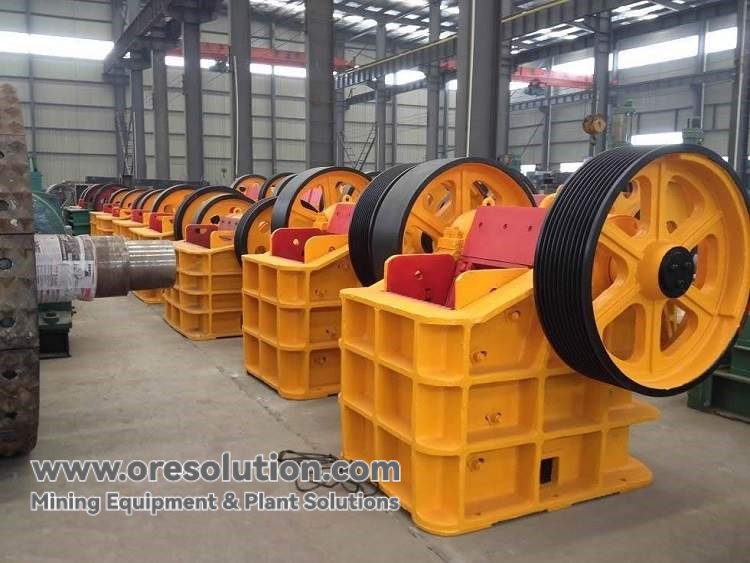
IV. How to Implement a High-Efficiency Gold Extraction Plan for Carbon-in-Pulp Plants at Difficult-to-Process Gold Deposits
The plan provides direction; implementation requires proper pacing. We recommend proceeding according to the “Testing—Design—Manufacturing—Commissioning—Stabilization” sequence, with the timeline determined by on-site conditions and the scope of testing.OreSolution\'s service model is an EPC turnkey solution: from mineral processing tests, process design, equipment manufacturing, installation, and commissioning to personnel training—all tailored to the specific properties of the ore (such as grain size distribution and associated elements).
The first step involves sampling and beneficiation testing. Collect a full set of data—including grinding fineness, carbon density in each tank, sodium cyanide concentration, pH, tailings grade, gold-on-carbon content, and copper, iron, arsenic, and antimony concentrations in the solution—while simultaneously taking samples for beneficiation testing to establish a baseline.Without test reports, it is impossible to determine the pre-treatment route and reagent regimen. This is the most significant difference in implementation pace between “three-difficulty” ores and conventional ores.
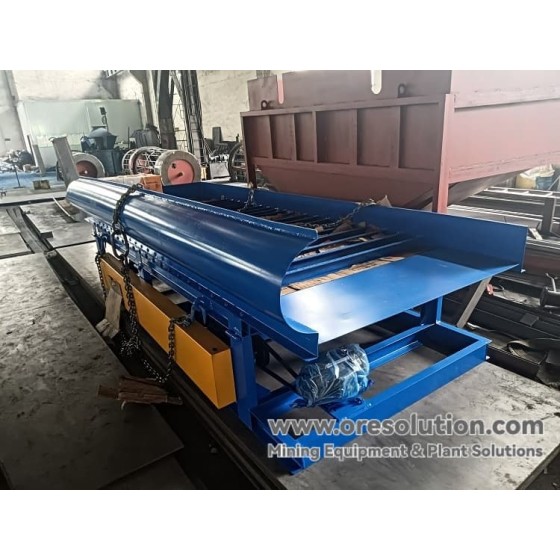
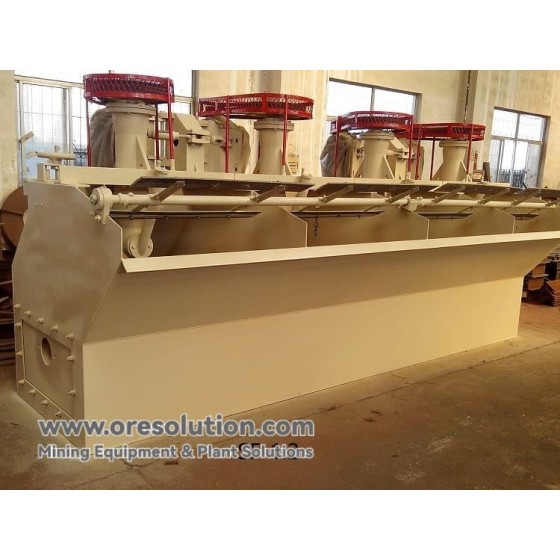
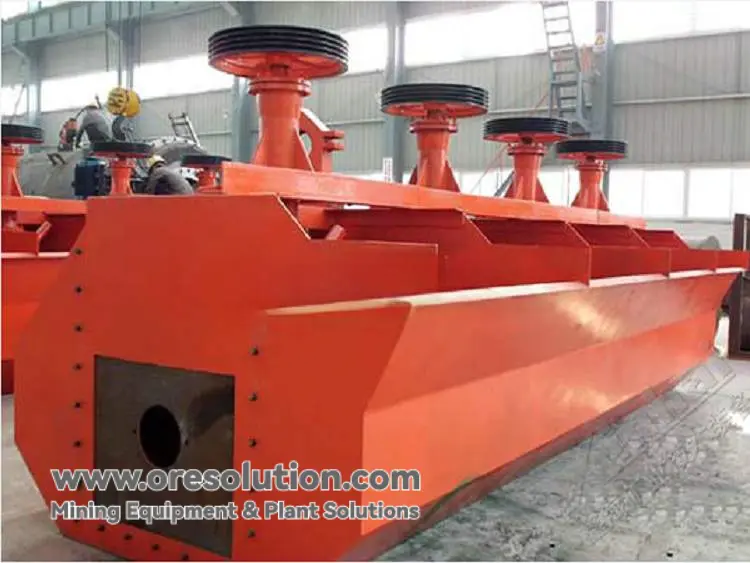
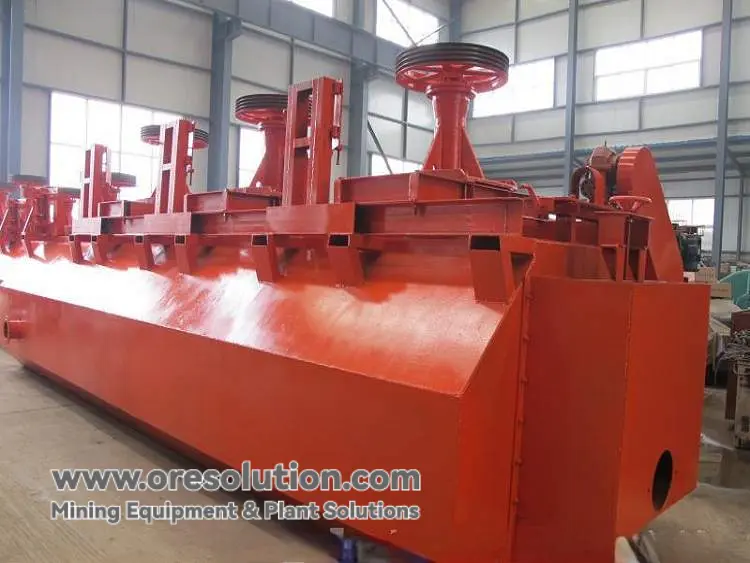
Step 2: Process Design and Equipment Configuration. Based on the test reports, determine the gravity separation, flotation, CIL/CIP, or combined process, and select the appropriate crushing, grinding, flotation, carbon-in-leach, desorption-electrolysis, and pretreatment equipment.OreSolution\'s in-house equipment manufacturing system covers flotation (SF/BF/JJF/BS-K/XCF-KYF), gravity separation (jigging machines, 6-S shaking tables, centrifugal separators, spiral chutes),magnetic separation/electrostatic separation, as well as crushing, screening, and thickening/dewatering equipment, with configurations adjusted according to processing capacity and ore characteristics.
Step 3: Installation, Commissioning, and Integrated Trial Runs. After the equipment arrives on site, conduct integrated commissioning according to the process flow, focusing on whether the grinding fineness meets standards, whether the carbon density distribution is reasonable, and whether reagent segmentation is carried out as designed. Fluctuations in initial indicators during the adjustment phase are normal; there is no need to rush to revert to previous settings.
Step 4: Personnel Training and Parameter Standardization. Document the optimized parameters in shift operation cards, and verify them during shift handoffs to reduce reliance on individual experience.The stability of the gold extraction process at a carbon-in-pulp plant for difficult-to-process gold ores ultimately depends on established procedures, not on the “instincts” of a single experienced operator. OreSolution provides full lifecycle support, including ongoing post-sales operations and technical optimization.
Attached [Step-by-Step Implementation Schedule]:
| Phase | Key Actions | Verification Focus |
|---|---|---|
| Testing | Sampling and analysis, mineral processing tests | Determination of Process Flow and Pre-treatment Plan |
| Design | Process design, equipment selection | Matching Equipment to Ore Properties |
| Manufacturing | Equipment Manufacturing and On-Site Acceptance | Equipment Quality and Delivery Schedule |
| Commissioning | Installation Guidance and Integrated Commissioning | Fineness and Carbon Density Compliance |
| Curing | Parameters within Specifications, Shift Team Training | Stable performance indicators; reduced variation between shifts |
What you need to watch for: Among these five steps, “testing” and “curing” are where corners are most easily cut—if you cut corners at the beginning and end, no amount of fine-tuning in the middle will ensure stability. This is especially true for “three-difficulty” ores; without proper testing, everything that follows is just guesswork.
V. Expected Results of the High-Efficiency Gold Extraction Plan for Carbon-in-Pulp Plants at Difficult-to-Process Gold Deposits
Results vary by mine; here we provide general directions and ranges, not absolute figures.
Regarding recovery rates, provided the ore properties are suitable and parameters are strictly adhered to, there is typically room for improvement of several percentage points. For ores with low encapsulation, the improvement is relatively significant, while for those with severe encapsulation, the focus is primarily on achieving stable recovery.Regarding tailings grade, it generally shows a downward trend as liberation and adsorption efficiency improve; the specific reduction depends on the properties of the raw ore and how well the process is matched to it. In terms of reagent costs, once staged control and impurity removal are properly implemented, there is typically room to reduce both the specific consumption of sodium cyanide and the amount of activated carbon added.In terms of stability, key indicators gradually converge within a few weeks after adjustments, and fluctuations between shifts narrow—this is precisely one of the core values pursued by high-efficiency gold recovery solutions for CPC plants processing difficult-to-treat gold ores: not only achieving high performance metrics, but also ensuring their stability.
Please note: The effects described above are based on ore property analysis, beneficiation tests, and process calibration, and may vary significantly among different mines.OreSolution\'s documentation for each ore type explicitly states that “the final determination of the specific process route and equipment selection must be based on the mineral processing test report for the corresponding ore.” We recommend using your plant\'s test reports and baseline data as a reference to set targets in percentage points, rather than simply copying figures from other plants.
VI. Preventing Relapse and Continuously Optimizing Gold Extraction Processes in CCPPs for Difficult-to-Process Gold Ores
Once performance indicators have improved, preventing recurrence is more important than the initial push for improvement. Grinding fineness must be tested every shift, as fineness is the foundation of liberation; carbon density must be verified regularly, as carbon wears out and leaks—failure to verify leads to loss of control;conduct comprehensive periodic analyses of solution impurities—copper, iron, arsenic, and antimony are chronic sources of interference, and investigating them only after performance indicators have dropped is often too late. Only by incorporating these three items into the daily inspection routine can the stability of the gold extraction process for difficult-to-process gold ores at CPC plants be guaranteed.
Based on field experience, stabilizing parameters is more important than getting them right the first time—getting them right involves an element of chance, but maintaining stability is where true expertise lies.Difficult-to-process ores are not “ores that cannot be optimized”; they simply do not respond to conventional parameter systems. By ensuring sufficient fineness, staggering the leaching and adsorption cycles, and effectively managing impurities and pretreatment, there is room for improvement in gold recovery efficiency.If your carbon-in-leach plant is currently struggling with tailings grade and recovery rates, we recommend starting with three steps: measure the grinding fineness, verify the carbon density in each tank, and check the copper and iron content in the solution. Then, take samples to conduct mineral processing tests to determine which stage to focus on for an efficient gold recovery solution for your difficult-to-process gold ore carbon-in-leach plant.
About Us: OreSolution specializes in mineral processing solutions and production lines, covering precious metal ores such as placer gold, gold ore flotation, gold ore CIL, gold ore CIP, gold ore heap leaching, heavy-medium separation of rock gold, and silver ores. For rock gold ores, we provide testing, design, and equipment manufacturing for integrated processes combining heavy-medium separation, flotation, leaching, and pre-treatment.For tailings and solid waste, we also provide tailings re-processing and synergistic recovery solutions for polymetallic tailings, helping CIL plants stabilize recovery rates and control costs during the gold extraction process from difficult-to-process gold ores.We do not rely on generic templates; instead, we develop tailored solutions based on the specific properties of the ore and on-site conditions. For further discussion, please contact us with your laboratory test reports, process data, and ore samples so we can jointly evaluate the most efficient gold recovery solution for your difficult-to-process gold ore CIL plant.