


How to choose a tin placer production line? Breakdown of a high-recovery gravity separation solution.
How to Choose a Tin Placer Ore Production Line? A Complete Breakdown of a High-Recovery Gravity Separation Solution
Tin placer ore is one of the important sources of tin resources. Unlike hard rock tin ore, which requires crushing and grinding, the core of tin placer ore beneficiation lies inwashing and desliming + gravity separation—utilizing the density difference between cassiterite and gangue, through jigs, spiral chutes, shaking tables and other equipment for stage-by-stage enrichment, ultimately obtaining high-grade tin concentrate. This process features low investment and high recovery, and is especially suitable for riverbed, beach, and paleochannel tin placer deposits.
This article uses OreSolution\'s tin placer ore production line solution as a blueprint, systematically breaking down the process flow, key equipment selection, and actual project data, helping mining investors quickly understand the technical essentials and investment logic of tin placer ore beneficiation.
I. The Essence of Tin Placer Ore Beneficiation: No Grinding, Rely on Gravity
Tin in tin placer ore exists in the form ofcassiterite (SnO₂), hosted in sand layers of riverbeds or beaches. Unlike hard rock tin ore, the cassiterite in tin placer ore has already undergone natural weathering and liberation,requiring no crushing or grinding. The core tasks of beneficiation are only two things:
-
Washing and desliming: Tin placer ore often contains large amounts of clay, which wraps and traps tin particles, seriously affecting recovery. Strong washing must be used to break up clay lumps, then screening separates large waste gravel from tin-bearing fine sand.
-
Gravity separation: Cassiterite has high density (about 6.8-7.1 g/cm³), with a significant density difference from gangue minerals such as quartz sand (about 2.65 g/cm³). Using gravity separation equipment such as jigs, spiral chutes, and shaking tables, cassiterite can be efficiently separated from light sand particles and enriched stage by stage.
II. Process Flow in Three Steps: Washing—Roughing—Cleaning
Step 1: Washing and Screening
Objective: Remove large rocks, wash off sticky clay, and create qualified feed conditions for subsequent gravity separation.
Core Equipment:
-
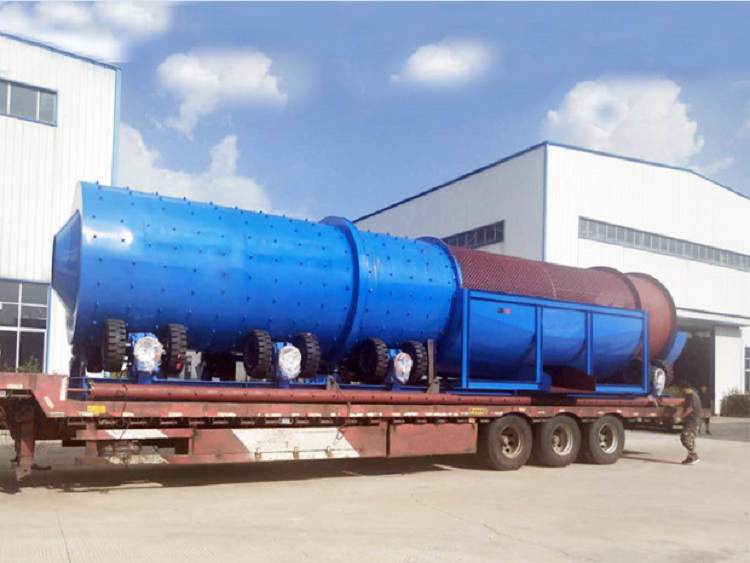
Rotary scrubber: Utilizes drum rotation and high-pressure water flow to thoroughly disintegrate clay lumps. For high-slime tin placer ore with mud content as high as 15%, the rotary scrubber is the preferred equipment.
-
Trommel screen: Completes particle size classification while washing, separating large waste gravel larger than 6mm from tin-bearing fine sand. Good clay handling performance and strong processing capacity.
Key Point: Incomplete washing is the primary cause of low recovery in tin placer ore. If tin particles in clay are not liberated, subsequent gravity separation equipment cannot recover them, and they directly enter tailings causing losses.
Step 2: Roughing (Gravity Separation)
Objective: Enrich heavy minerals, discard large amounts of light sand particles, and greatly reduce the processing volume for subsequent cleaning.
Core Equipment:
-
Jig: The core equipment for tin placer ore roughing. The jig uses pulsating water flow to stratify ore particles by density, with heavy minerals such as cassiterite sinking to the bottom layer and light sand particles being carried away by the water flow. Jigs featurehigh capacity and continuous operation, suitable for processing larger particle size tin placer ore.
-
Spiral chute: Used for roughing and scavenging of fine sand-sized materials. Spiral chutesrequire no power; the slurry naturally stratifies in the spiral trough relying on gravity and centrifugal force, with extremely low operating costs, making it an economical choice for the roughing stage of tin placer ore.
Key Point: The purpose of the roughing stage is to "discard tailings"—discarding as much light gangue as possible while ensuring cassiterite is not lost. The combination of jigs and spiral chutes can cover the complete particle size range from coarse to fine.
Step 3: Concentration and Dewatering
Objective: Upgrade rough concentrate to high-grade tin concentrate, and handle tailings in compliance with regulations.
Core Equipment:
-
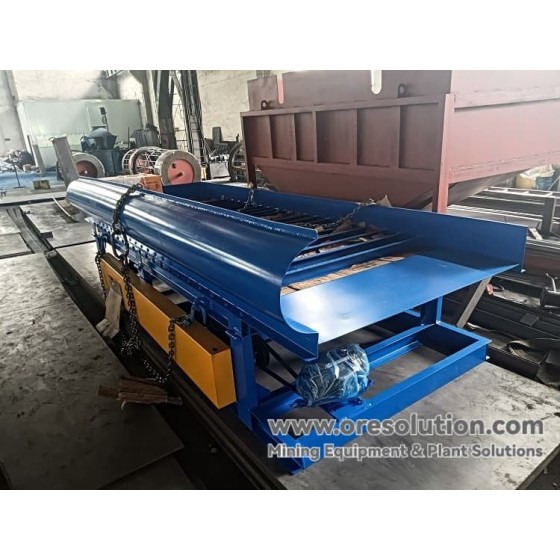
Shaking table: The core equipment for tin placer ore cleaning, with thehighest enrichment ratio. The shaking table uses asymmetric reciprocating motion and cross-flow water to precisely separate cassiterite from residual gangue in the rough concentrate by density, ultimately obtaining high-grade tin concentrate with tin content of 60%-70%.
-
Filter press: After concentration and dewatering, tailings can be dry stacked or backfilled, meeting environmental requirements.
Key Point: The operating parameters of the shaking table (stroke, stroke frequency, cross slope, wash water volume) greatly affect the final concentrate grade and recovery, and need to be finely adjusted according to ore properties.
III. Key Equipment Selection Overview
| Equipment | Application Stage | Core Advantage |
|---|---|---|
| Rotary scrubber | Washing | Good clay disintegration effect, adapts to high mud content |
| Trommel screen | Screening | Good clay handling performance, strong processing capacity |
| Jig | Roughing | High tin nugget recovery, high-capacity continuous operation |
| Spiral chute |