


How to Select High-Carbon Gold Ore? Supplier of Complete CIP Process Equipment
High-carbon gold ore is another type of ore widely recognized as “difficult to process” in the field of gold ore beneficiation and smelting. Unlike the “physical encapsulation” seen in high-arsenic gold ore, the challenge with high-carbon gold ore lies in “preg-robbing.”—active carbonaceous materials in the ore (such as organic carbon, graphite, and humic acid) adsorb dissolved gold cyanide complexes, effectively “stealing” the gold back into the tailings that would otherwise enter the leach solution. This results in a significant drop in leaching recovery and a sharp increase in reagent consumption.Many mine owners are puzzled: Why is the leaching rate only 50–60 percent when the laboratory-tested grade is clearly not low? The answer often lies in “carbon.” This article will systematically analyze the challenges in processing high-carbon gold ore, the rationale behind the CIP process, and the key considerations for configuring and selecting the complete equipment set, helping you identify a practical and efficient gold extraction route.
I. Why Is High-Carbon Gold Ore “Difficult to Process”? — First, Understand the Mechanism of “Gold Hijacking”
The “carbon” in high-carbon gold ore refers to the active carbonaceous substances within the ore, which primarily include:
-
Organic carbon: humic acid, casein, etc., which exhibit strong adsorption activity;
-
Graphitized carbon: Highly crystalline carbonaceous material; adsorption capacity depends on its structure;
-
Carbonate carbon: such as carbon in calcite and dolomite; while it does not itself interfere with gold recovery, it is easily confused with “total carbon” during laboratory analysis.
Key distinction: Total carbon ≠ gold-interfering carbon. A high “Total Carbon (TOC)” reading on a lab report does not necessarily indicate gold interference; what truly determines the extent of gold interference is the content of active organic carbon and the results of gold-interference rate tests. Therefore, the first step is always to test the ore sample, rather than making a guess based solely on the lab report.
The Three Major Hazards of Gold-Binding Carbon:
-
A precipitous drop in recovery rates: Dissolved gold is adsorbed back into the tailings by carbonaceous materials, potentially causing leaching rates to plummet from 90% to below 50%;
-
Soaring chemical consumption: Carbonaceous materials continuously consume cyanide and oxygen, causing costs to spiral out of control;
-
Abnormal Grade of Gold-Bearing Carbon: Low gold concentration in the precious liquid leads to reduced efficiency in subsequent adsorption and desorption, creating a vicious cycle in the system.
Conclusion: The key to processing high-carbon gold ore does not lie in “adding more sodium cyanide,” but in treating the carbon first and then leaching the gold—either by “inactivating” the carbon, “burning it off or flotating it away” first, or adopting a process route resistant to gold entrapment.
II. Four Mainstream Processing Routes for High-Carbon Gold Ore
For high-carbon gold ore, there are four proven routes within the industry; the choice of which route to follow must be based on ore sample test data.
Route 1: Flotation + Concentrate Roasting/Oxidation + Leaching (Classic Combination)
Process Logic: First, flotation is used to concentrate gold-bearing sulfides and carbonaceous material together into a concentrate (or to flotate them separately). The concentrate undergoes roasting and oxidation (to burn off the carbon and oxidize the sulfides), and the roasted concentrate is then subjected to cyanide leaching.
Applicable Conditions: Gold is primarily hosted in sulfides, and the carbonaceous material has good floatability or roastability.
Advantages: Roasting simultaneously addresses the issues of “carbon-bound gold” and “sulfide encapsulation”; the technology is well-established.
Disadvantages: High capital investment for flue gas treatment; fluctuations in the calorific value of carbonaceous material affect roasting stability.
Core Equipment: Crusher, ball mill, flotation machine, regrinding mill, roasting kiln, cooler, dust collection/exhaust gas treatment system, leaching tank, carbon-in-leach (CIL) tank, desorption and electrolysis equipment.
Route 2: Flotation + Pressurized Oxidation/Biological Oxidation of Concentrate + Leaching
Process Logic: After flotation enrichment, pressurized oxidation or biological oxidation is used to break down the sulfide coatings and carbonaceous structures, followed by leaching of the oxidized residue.
Applicable Conditions: Complex gold concentrates containing carbon and sulfur; projects with stringent environmental requirements.
Advantages: Pressurized oxidation is highly effective for carbon-bearing “gold-trapping” ores, yielding high recovery rates; biological oxidation is environmentally friendly and has relatively low operating costs.
Disadvantages: Pressurized oxidation requires significant capital investment and high-grade materials; biological oxidation has a long cycle time and demands rigorous management.
Core Equipment: Flotation unit, regrinding mill, autoclave or bio-oxidation tank, thickener-washer, neutralization system, leaching tank, carbon-in-leach (CIL) tank, desorption and electrolysis equipment.
Route 3: Addition of “carbon-blocking agents” + CIP/CIL leaching (simple and direct)
Process Logic: During the leaching process, gold-sequestering inhibitors (blinding agents) such as kerosene, diesel, and nonylphenol ethoxylate are added to preferentially occupy the active sites on the surface of carbon-based materials,"masking" their ability to adsorb gold, allowing gold-cyanide complexes to enter the solution smoothly, where they are then recovered by activated carbon (CIP/CIL).
Applicable Conditions: Ore with moderate gold blinding and low carbon content; often used in combination with flotation or pretreatment.
Advantages: Low investment, simple process, and rapid results; serves as the “first line of defense” for high-carbon gold ores.
Disadvantages: Limited effectiveness for ores with severe gold entrapment; the dosage and type of masking agent require experimental optimization, as excessive amounts can impair subsequent activated carbon adsorption.
Core Equipment: Agitation tank, dosing system, leaching tank, high-efficiency twin-impeller carbon-in-leach (CIL/CIP) tank, carbon-separating screen, carbon-recovery pump, desorption electrolysis equipment, gold smelting furnace.
Route 4: Flotation Decarbonization + Tailings CIP Leaching (Divide and Conquer)
Process Logic: First, carbonaceous materials (and some sulfides) are removed via flotation to produce low-carbon tailings, which are then subjected to CIP leaching to recover gold; the flotation concentrate (rich in carbon and gold) is processed separately or treated as a byproduct.
Applicable Conditions: Ore where carbon-bearing materials have good floatability and gold constitutes a high proportion of the tailings.
Advantages: Reduces the amount of carbon entering the leaching system at the source, lowering the risk of gold loss.
Disadvantages: Carbon removal via flotation can strip away some gold, requiring a comprehensive assessment of recovery rates; the process is relatively complex.
Key Equipment: Flotation units, thickeners, filter presses, leaching tanks, carbon-in-pulp (CIP) tanks, and desorption/electrolysis equipment.
Summary of Process Route Selection
| Process Routes | Applicable Scenarios | Investment | Gold Recovery Control Effectiveness | Recovery Rate |
|---|---|---|---|---|
| Flotation + Roasting + Leaching | Co-occurrence of sulfur and carbon; concentrate processing | Medium to high | Good | High |
| Flotation + Pressurized/Biological Oxidation + Leaching | Complex carbon- and sulfur-bearing concentrates | High/Medium | Very good | Extremely high/High |
| Carbon shielding agent + CIP/CIL | Moderate gold carryover, low carbon content | Low | Medium | Relatively high |
| Flotation Decarbonization + Tailings CIP | Good floatability of carbonaceous material | Moderate | Fairly good | High |
OreSolution\'s stance: There is no “one-size-fits-all” approach—only “tailored solutions.” The four methods can be combined (e.g., flotation decarbonization + masking agent + CIP), but the final solution must be based on your ore sample\'s gold recovery rate tests and leaching comparison tests.
III. Why is the CIP process the “standard configuration” for high-carbon gold ores? How should the complete equipment setup be configured?
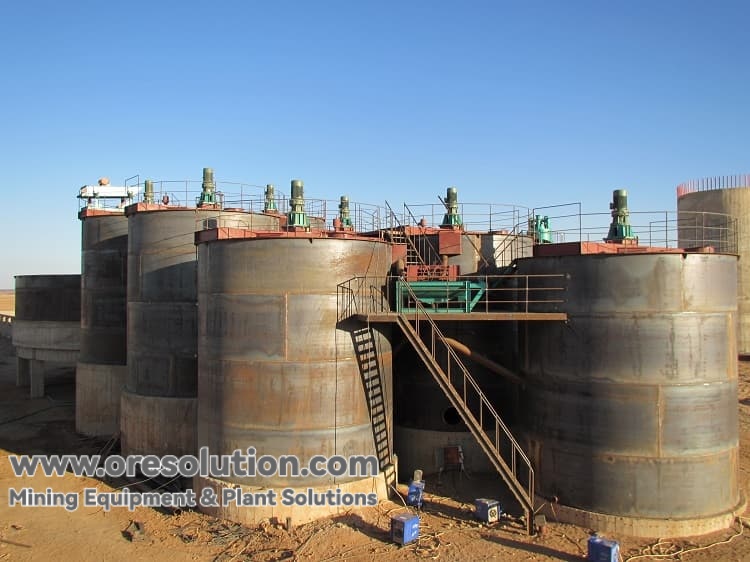
CIP (Carbon-in-Pulp) and CIL (Carbon-in-Leach) are currently the mainstream processes for gold leaching and recovery.For high-carbon gold ores, the value of CIP/CIL lies in the fact that leaching and adsorption occur simultaneously; once gold is dissolved, it is quickly captured by activated carbon, reducing the time window during which it can be “reclaimed” by carbonaceous materials.
Differences Between CIP and CIL:
-
CIP: The leaching tank and adsorption tank are separate; the pulp first completes leaching before entering the adsorption tank to come into contact with activated carbon;
-
CIL: Leaching and adsorption occur simultaneously in the same tank; this method is suitable for ores with a strong tendency for gold scavenging, as the gold is adsorbed by the carbon immediately after dissolution, providing greater resistance to gold scavenging.
For high-carbon gold ores, CIL is typically the preferred method, or the addition of masking agents may be increased in the early stages of CIP. The specific method to be selected requires experimental comparison.
Complete CIP/CIL Equipment Configuration (using “flotation decarbonization + tailings CIP” or “inhibitor + CIP” as examples)
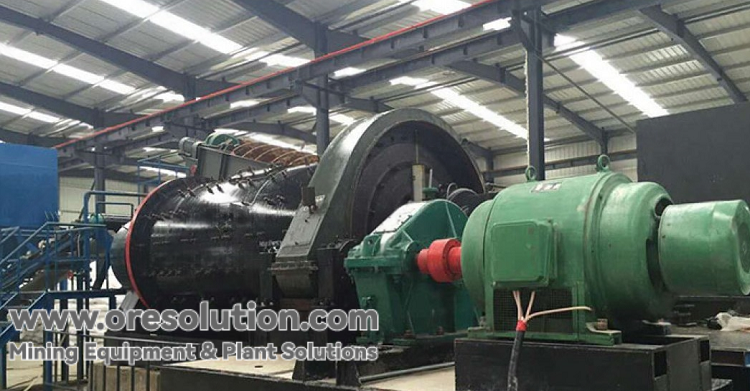
1. Crushing and grinding section: jaw crusher, cone crusher, vibrating screen, ball mill, hydrocyclone, spiral classifier. The grinding fineness is determined by the degree of gold liberation, avoiding over-grinding and slime formation.
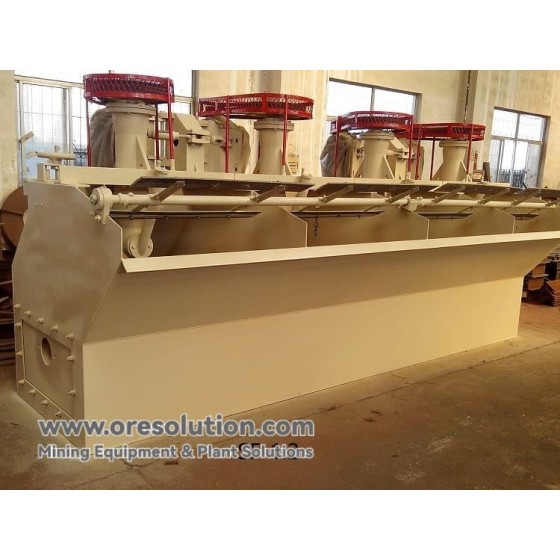
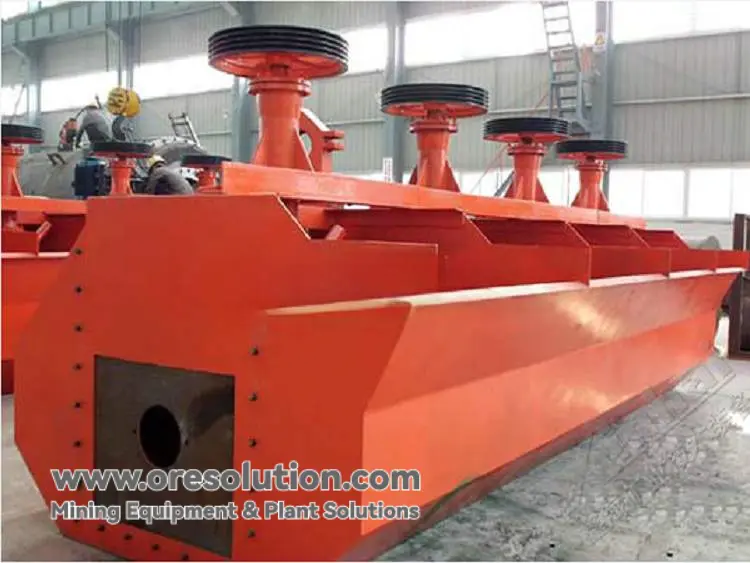
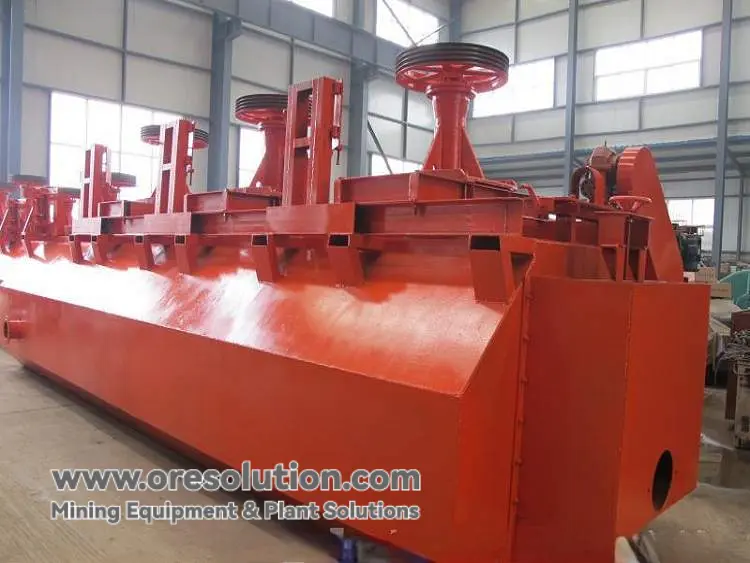
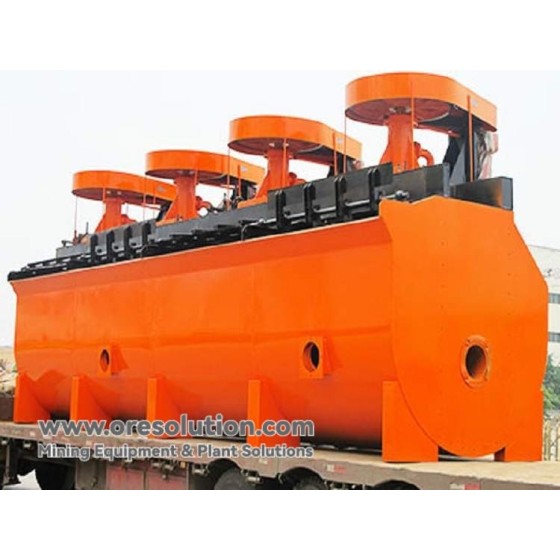
2. Flotation Decarbonization Section (if used): Agitation tanks, dosing systems, SF/BF-type flotation cells, thickeners, filter presses. This process floats carbon-bearing materials to the surface, reducing the carbon load on the leaching system.
3. Leaching Stage: Leaching tanks (with aeration and agitation), dosing systems (sodium cyanide, alkali, and masking agents), and online monitoring of pH and reagent concentration. Leaching time, reagent concentration, and pulp concentration must be determined through testing.
4. Adsorption Stage (CIP Core): High-efficiency dual-impeller carbon leaching tank (CIP adsorption tank), carbon separation screen, carbon transfer pump, and activated carbon regeneration system. Activated carbon grade, carbon concentration, and the number of adsorption stages (typically 4–6) affect the recovery rate.
5. Desorption, Electrolysis, and Smelting Section: Desorption and electrolysis equipment (desorption rate up to 96% or higher, electrolysis rate exceeding 99%), gold smelting furnace. Gold-bearing carbon is subjected to desorption and electrolysis to produce gold slime, which is then smelted into refined gold.
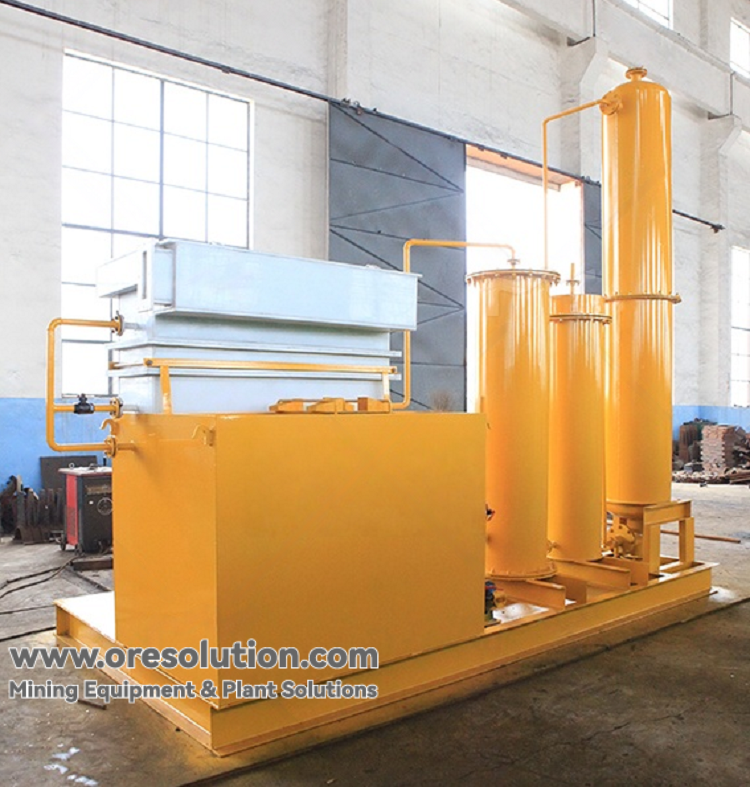
6. Tailings and Environmental Protection Section: High-efficiency tailings thickener, filter press (dry discharge), cyanide removal/neutralization treatment system, and emergency pond. Cyanide-containing tailings must be treated to meet regulatory standards; environmental compliance is critical to operations.
7. Auxiliary and Automation: Slurry pumps, carbon recovery pumps, water pumps, agitation tanks, electrical controls, and online monitoring systems.
Key Selection Criteria:
-
The volume and number of stages for leaching and adsorption tanks are calculated based on processing capacity and leaching time;
-
The mesh size of the carbon retention screen must match the activated carbon particle size to prevent carbon loss;
-
The processing capacity of the desorption electrolysis equipment must match the output of gold-loaded carbon;
-
The masking agent dosing system must be precise and controllable; excessive dosing will impair activated carbon adsorption.
Note: The above constitutes a general configuration framework. Actual equipment models, quantities, and specifications must be customized based on ore characteristics, processing capacity, gold recovery rate, and site conditions; never simply copy the drawings.
IV. Five Common Misconceptions in the Processing of High-Carbon Gold Ore
Misconception 1: Assuming severe gold entrapment simply because “total carbon” is high, and blindly proceeding with roasting
. Total carbon includes non-gold-entrapping carbon, such as carbonate carbon; a gold entrapment rate test must be conducted first. Correct Approach: Laboratory analysis + gold entrapment rate test + leaching comparison test; make judgments based on data.
Misconception 2: Skipping trials and directly adding a masking agent
. The type and dosage of the masking agent must be optimized through testing; too little is ineffective, while too much impairs activated carbon adsorption and increases costs. Correct approach: Conduct trials to determine the type, dosage, and addition point of the masking agent.
Misconception 3: Failing to distinguish between CIP and CIL and arbitrarily selecting one
. For ores with a strong tendency for gold leaching, CIL (simultaneous leaching and adsorption) offers greater resistance to gold leaching; for ores with weak gold leaching tendencies, CIP (stage-wise leaching and adsorption) may be more economical. Correct approach: Conduct tests to compare the recovery rates and costs of CIP and CIL.
Misconception 4: Ignoring the feasibility of carbon removal via flotation. In
many high-carbon gold ores, carbon-bearing materials have good flotability; pre-removing carbon via flotation can significantly reduce the burden on the leaching system. Correct approach: Conduct tests to evaluate the feasibility of carbon removal via flotation and assess gold losses.
Misconception 5: Piecing Together Equipment, Resulting in Incompatibility of the Leaching-Adsorption System. When
leaching tanks, adsorption tanks, carbon-separating screens, and desorption electrolysis units are sourced from different manufacturers, issues such as carbon carryover, blockages, and mismatched production capacity frequently occur. Correct Approach: Select an EPC supplier with in-house manufacturing capabilities for core equipment and experience in system integration.
V. Why Choose the EPC Turnkey Model?
High-carbon gold ore projects involve multiple stages, including gold recovery tests, process route comparisons, equipment manufacturing, installation, and commissioning. They present high technical barriers and complex boundaries of responsibility. Under the traditional fragmented model, design institutes, equipment manufacturers, and construction teams often shift blame onto one another; once performance targets are not met, the mine owner is forced to act as the “referee.”
Advantages of the EPC Turnkey Model:
-
Closed-Loop Accountability: A single team takes full responsibility for the final outcome, coordinating the entire process from testing to production;
-
Customized Integration: Processes are tailored based on ore sample test data, and in-house equipment manufacturing capabilities ensure seamless integration between hardware and process;
-
Upfront Gold Recovery Control: Comprehensive planning during the design phase for suppressant formulations, CIP/CIL selection, and the feasibility of flotation decarbonization;
-
Cost Reduction and Efficiency Improvement: Eliminates hidden costs associated with coordinating multiple parties and shortens the plant construction timeline;
-
Reduced Design Costs: Core design phases are completed by our in-house team, saving hundreds of thousands of dollars in design fees for medium- to large-scale projects.
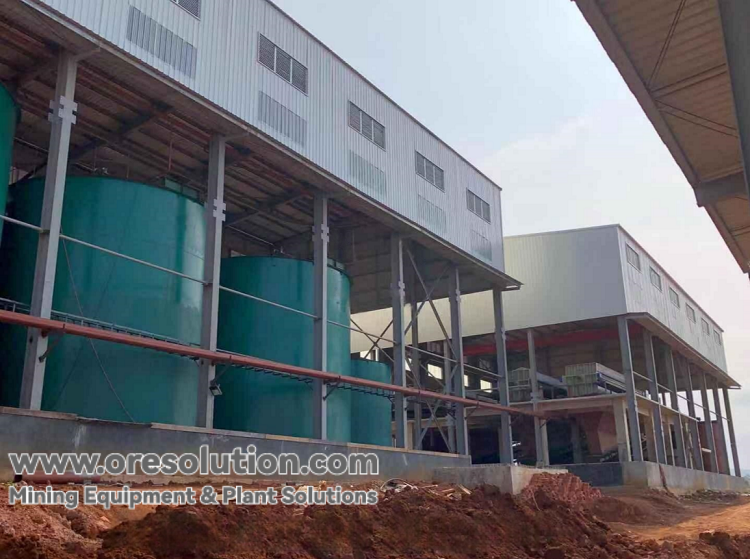
VI. OreSolution\'s EPC Turnkey Services for High-Carbon Gold Mines
OreSolution specializes in mining equipment and mineral processing solutions, with operations spanning five major sectors: metal ores, non-metal ores, precious metal ores, alluvial deposits, and tailings/solid waste. The company operates three modern manufacturing bases(Shahe Industrial Park, Zhanggong District, Ganzhou, Jiangxi; Guzhang Industrial Park, Shicheng County, Ganzhou, Jiangxi; and Weifang Heavy Industry Park, Shandong). With 20 years of experience in mining equipment manufacturing and solution integration, our products are exported to more than 80 countries and regions worldwide.As a full-range equipment supplier for the CIP process, we provide complete EPC turnkey services from ore sample testing to production commissioning and compliance:
Step 1: Requirements Discussion and Preliminary Assessment
—We assess the ore type, gold grade, total carbon/organic carbon content, sulfur content, processing capacity, and site conditions to propose a preliminary process direction and feasibility assessment.
Step 2: Ore Sample Analysis and Mineral Processing Tests
: Conduct chemical composition analysis, phase analysis, gold recovery rate tests, and leaching comparison tests (CIP vs. CIL; with vs. without masking agents; flotation decarbonization vs. without decarbonization) on representative ore samples. Issue an authoritative “Mineral Processing Test Report,”recommend a process route, parameters, equipment selection, and expected performance indicators. This serves as the scientific foundation for the entire project.
Step 3: Customized Solution Design and Quotation
Based on the test report, we complete the Process Flow Diagram (PFD), equipment configuration list, plant layout plan, 3D layout proposal, and civil engineering requirements drawings, and provide a transparent EPC (Engineering, Procurement, and Construction) budget.
Step 4:Equipment Manufacturing and Quality Inspection
Core equipment (crushers, ball mills, flotation cells, leaching tanks, high-efficiency twin-impeller carbon-in-leach tanks, carbon separation screens, carbon recovery pumps, desorption and electrolysis equipment, gold smelting furnaces, thickeners, filter presses, etc.) is manufactured strictly in accordance with drawings and standards, and undergoes rigorous quality inspection prior to shipment.
Step 5: On-site Installation Guidance and Commissioning
We dispatch senior engineers to the site to guide equipment installation, piping connections, and electrical layout; complete individual unit commissioning and full-process integrated testing; and conduct commissioning with water and feed material until the production line operates stably and meets the contractually agreed-upon performance metrics.Civil engineering work is organized and carried out by the client according to the drawings; we provide technical briefings. Installation workers are sourced locally by the client, with our engineers providing on-site guidance—resulting in lower labor costs and greater flexibility.
Step 6: Personnel Training and After-Sales Support We provide systematic theoretical and hands-on training
for operators and maintenance teams (including equipment start-up and shutdown, parameter adjustment, daily inspections, and troubleshooting). We offer a 12-month warranty period, during which replacement parts are provided free of charge for quality-related issues. After the warranty period, we provide lifetime technical support at cost.
Estimated Timeline: From ore sample testing to final commissioning,the overall timeline is typically 8–12 months (ore processing trials: 30–45 days; engineering design: approximately 30 days; equipment manufacturing: approximately 60 days; logistics and transportation: approximately 60 days; installation and commissioning: 60–150 days). For high-carbon, difficult-to-process projects, the timeline may be extended slightly due to the complexity of gold recovery trials and process comparison studies.
VII. Frequently Asked Questions (FAQ)
Q: My gold ore has high total carbon content. Does this necessarily mean gold leaching will occur?
A: Not necessarily. Total carbon includes non-leaching carbon, such as carbonate carbon; a gold leaching rate test must be conducted to determine this. For ores with a low gold leaching rate, conventional CIP/CIL is sufficient; only ores with a high gold leaching rate require a leaching inhibitor, flotation decarbonization, or pretreatment.
Q: How do I choose between CIP and CIL?
A: For ores with a strong tendency for gold leaching, CIL (simultaneous leaching and adsorption) offers better resistance to gold leaching; for ores with a weak tendency, CIP (stage-wise leaching and adsorption) may be more economical. The specific choice must be determined through comparative leaching tests.
Q: Do masking agents affect activated carbon adsorption?
A: Yes. Excessive amounts of masking agents can occupy surface sites on the activated carbon, reducing the gold loading capacity. Therefore, the type, dosage, and addition point of the masking agent must be optimized through testing, and activated carbon with stable adsorption performance must be selected.
Q: What recovery rate can you guarantee?
A: The recovery rate depends on the characteristics of the ore itself (gold occurrence, degree of gold leaching, grain size, etc.).We do not make unfounded promises; what we do promise is this: through rigorous mineral processing tests, we will design a process that achieves the highest possible recovery rate under the conditions of your ore, and we will strive for excellence in equipment selection and process control to ensure that actual production results closely match the test expectations.
Q: My mine is overseas. Can you provide on-site support?
A: Yes. We export equipment to over 80 countries and offer technical coordination in English or bilingual formats. Our expert engineers can travel to the site to guide installation, conduct commissioning with actual feed material, and provide staff training. We are familiar with logistics routes in Africa, Southeast Asia, South America, Central Asia, and the Middle East.
Q: Are there fees for testing and design?
A: We charge a basic service fee, which is reasonable. Upon signing an equipment or EPC contract, the initial testing and design fees can be fully offset against the equipment cost. Testing services can also be purchased separately without any obligation to enter into subsequent cooperation.
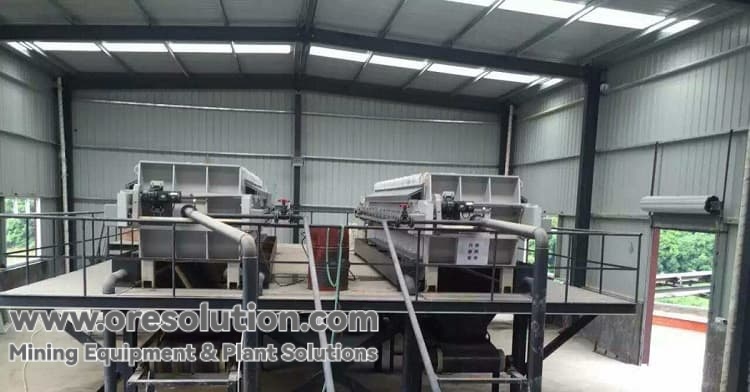
VIII. Carbon Is Not a Terminal Illness; Overcoming “Gold Hijacking” Is the Key
The challenges of high-carbon gold ore lie in carbon-based materials “stealing gold,” high chemical consumption, and low recovery rates.However, there are proven solutions within the industry—such as flotation decarbonization, masking agents, roasting/pressurization/bio-oxidation pretreatment, and combined CIP/CIL processes. The key is to select the right approach based on your ore sample\'s gold leaching rate test data and to implement the process through a closed-loop EPC accountability system.
As a full-service supplier of CIP process equipment, OreSolution has a clear approach: test first, design later. A single team takes full responsibility for the final results, providing end-to-end EPC turnkey delivery—from ore sample testing, process design, equipment manufacturing, installation, and commissioning to personnel training.Conventional processes ensure the minimum yield, while our proprietary technology maximizes it—whether your high-carbon gold ore suffers from moderate or severe gold loss, we have a tailored solution.
Contact OreSolution to transform your high-carbon gold ore from a “gold recovery challenge” into “gold extraction profits.”