


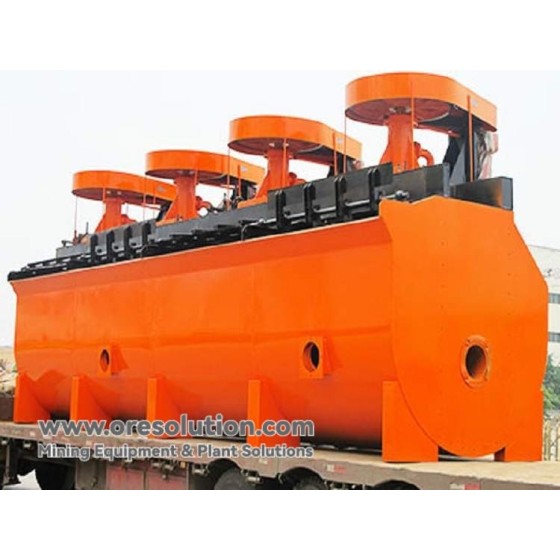
How to Solve the Challenges of Processing High-Sulfur Gold Ore? Professional Processes Enable Efficient Gold Extraction
How to Solve
the Challenges of Processing High-Sulfur Gold Ore: Process Routes and Equipment Configuration
Key Conclusions
- The challenge with high-sulfur gold ore lies not in the gold grade itself, but in the fact that the gold is encapsulated by pyrite and arsenopyrite, resulting in poor direct cyanide leaching performance while cyanide consumption increases exponentially.
- The solution lies in “breaking up the inclusions first, then extracting the gold”: pretreatment is used to break open the sulfide inclusions, followed by enhanced leaching.
- Roasting oxidation, bio-oxidation, pressurized oxidation, and ultra-fine grinding for enhanced leaching each have their own applicable limits; equipment selection must be based on mineralogical analysis.
- High-sulfur gold ores are often associated with complex factors such as arsenic, carbon, and copper; beyond the process itself, considerations must also include equipment integration, plant construction models, and environmental protection measures.
Solving the challenges of processing high-sulfur gold ores is an unavoidable hurdle for many mining companies in resource development. The gold is right there in the ore, and the assay grades aren\'t bad, yet as soon as it enters the leaching process, recovery rates simply won\'t improve.The problem usually lies neither with the equipment nor with the operation, but rather with the fact that the gold is “locked” by sulfides—pyrite and arsenopyrite tightly encapsulate the fine-grained gold, preventing the leaching agent from reaching it and naturally limiting leaching efficiency.At the same time, sulfides consume large amounts of cyanide and oxygen during leaching, leading to increased cyanide consumption and rising costs—thus creating a major challenge.
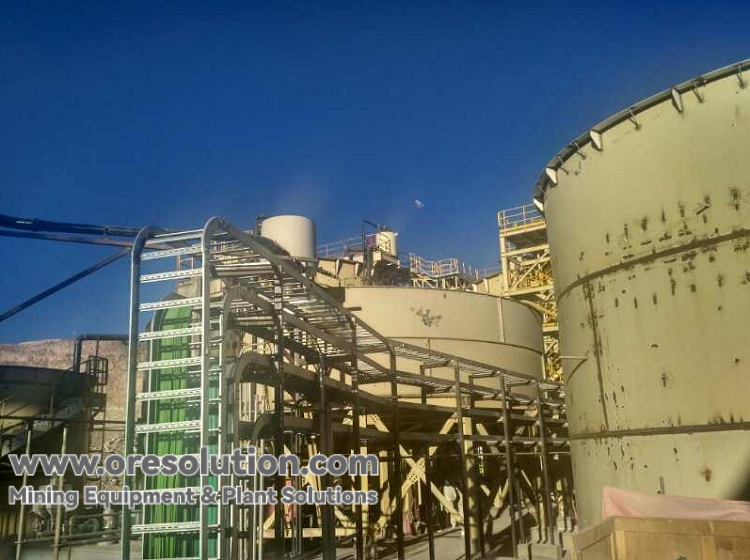
Industry Background: Why Are High-Sulfur Gold Deposits Difficult to Process?
Easily processable ores are becoming increasingly scarce, while difficult-to-process ores—characterized by polymetallic association, fine-grained embedding, high clay content, and high oxidation rates—are becoming the norm.High-sulfur gold ores are a typical example: gold is embedded in the form of fine particles within the crystal lattices or fissures of pyrite, arsenopyrite, and magnetite—a phenomenon known in the industry as “encapsulated gold.”The degree of encapsulation varies significantly, leading to substantial differences in processing difficulty—some gold is located at the edges of sulfides and can be liberated with moderate grinding; other gold is trapped within the crystal lattice and may not be released even with very fine grinding. This results in increased energy consumption during grinding, higher slime content, and potentially poorer leaching efficiency.
Another challenge stems from sulfur itself. During leaching, pyrite consumes cyanide and oxygen, generating substances such as thiocyanates that disrupt the leaching environment; arsenopyrite not only consumes cyanide but may also form a passivation layer on the surface of the gold.Some high-sulfur gold ores also contain carbon and copper, leading to “gold hijacking,” which further reduces leaching efficiency. Simply adopting conventional gravity separation or flotation processes used by peers often fails to effectively separate or purify the ore, resulting in significant losses of high-value metals to the tailings.
Technical Principle: Break Down the Envelope First, Then Extract the Gold
The core logic for overcoming the processing challenges of this type of ore can be summarized as “break the encapsulation first, then extract the gold.”“Breaking the encapsulation” refers to using oxidative pretreatment to destroy the sulfide matrix and expose the encapsulated gold; “extracting the gold” refers to performing cyanide leaching or other gold extraction methods after the encapsulation has been broken, allowing the leaching agent to effectively contact the gold particles.
The essence of pretreatment is an oxidation reaction: pyrite is oxidized to iron sulfate and sulfuric acid, while arsenopyrite is oxidized to iron arsenate. The sulfide matrix is gradually broken down, and the gold is subsequently released.The more thorough the oxidation, the smoother the subsequent leaching process; however, a higher degree of oxidation also results in higher energy consumption and chemical costs. Therefore, the key to process design is finding the right balance—the degree of oxidation should be sufficient to meet leaching requirements, without necessarily striving for 100% oxidation.Pre-treatment is complemented by enhanced leaching, which further improves leaching efficiency by controlling cyanide concentration, pH, aeration rate, and leaching time, supplemented by leaching aids when necessary.For difficult-to-process gold ores containing arsenic or carbon, specialized reagents or methods such as bio-oxidation, roasting, or pressurized oxidation must be incorporated during the pretreatment stage; conventional cyanidation processes cannot be blindly applied.
Process Flow: Flotation Pre-concentration—Oxidation Pretreatment—Cyanide Leaching
In engineering practice, the process is typically organized along the main sequence of “pre-enrichment—pretreatment—leaching.” Taking a medium-scale, high-sulfur gold ore with low arsenic content as an example, the process is roughly divided into four steps.
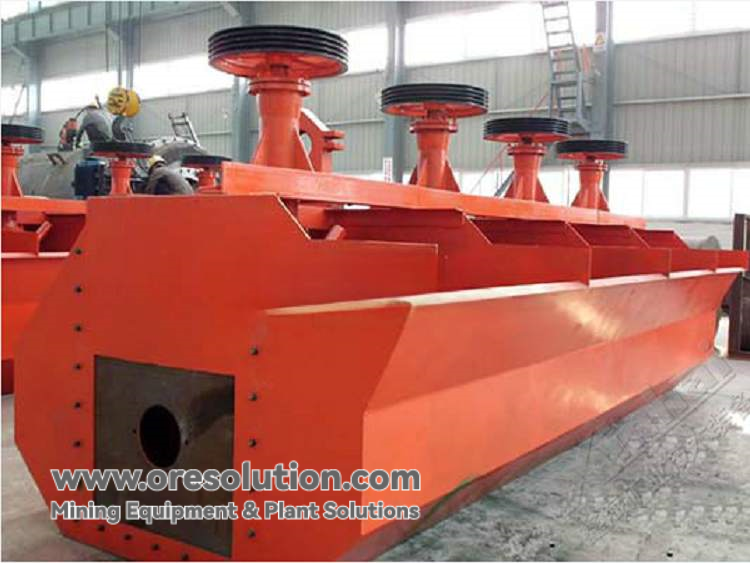
After grinding the raw ore, pyrite is floated using xanthate-type collectors to concentrate gold and sulfur together into the concentrate, while discarding most of the gangue.The effectiveness of the flotation process directly determines the throughput and economic viability of the subsequent oxidation stage—only when the concentrate grade and recovery rate are properly controlled can the subsequent oxidation stage operate efficiently with minimal input and maximum output.
After regrinding, the concentrate enters the oxidation stage. If bio-oxidation is used, temperature, pH, aeration rate, and microbial activity must be controlled; the oxidation cycle is relatively long. If pressurized oxidation is used, the reaction rate is faster under high-temperature and high-pressure conditions, but it places higher demands on equipment materials and operations and maintenance.Regardless of the method chosen, the goal remains the same: to break down the sulfide matrix and expose the gold.
After washing, the oxidized tailings enter the leaching tank, where pH, cyanide concentration, and leaching time are controlled. Since the mineral particles have been partially broken open, the leaching process no longer “competes” with the sulfur, resulting in significantly improved leaching efficiency and reduced cyanide consumption.For fine-grained oxidized ore, whole-ore cyanidation (CIL/CIP) can be used; for coarse-grained gold, it can first be recovered via gravity separation, followed by flotation or leaching of the fine-grained fraction.
Arsenic- and cyanide-containing tailings must undergo neutralization and precipitation treatment to stabilize and solidify the arsenic and ensure cyanide concentrations meet regulatory standards; only then can the treated tailings be discharged or reused. This step is an essential environmental requirement for high-sulfur, arsenic-bearing gold ores, and investment in it cannot be spared.
Comparison of Approaches: Each of the Four Technical Routes Has Its Limitations
The selection of a process route is the first critical step. Roasting and oxidation, bio-oxidation, pressurized oxidation, and ultra-fine grinding with enhanced leaching each have their own applicable conditions and limitations; they cannot be applied indiscriminately.
| Process Routes | Applicable Conditions | Key Advantages | Major Drawbacks |
|---|---|---|---|
| Roasting and Oxidation | High sulfur and arsenic content; large-scale operations | Mature technology, wide adaptability, and the ability to produce sulfuric acid as a byproduct | High investment in flue gas treatment; strict environmental regulations |
| Biological Oxidation | Low arsenic content, moderate sulfur content, and sufficient site space | Relatively low investment, mild operating conditions, and environmentally friendly | Long reaction cycle; sensitive to arsenic |
| Pressurized Oxidation | High arsenic and sulfur content; highly difficult to treat | Fast reaction, thorough decapsulation, and high recovery efficiency | High investment costs, demanding equipment requirements, and complex maintenance |
| Ultrafine grinding-enhanced leaching | Fine gold disseminations but shallow encapsulation | Short process flow, low capital investment, and rapid results | High energy consumption during grinding; limited effectiveness for deeply embedded gold |
Although all referred to as high-sulfur gold ores, the sulfur-to-gold ratio (the ratio of sulfur to gold grades), arsenic content, and grain size of the gold particles vary significantly across different mining areas, naturally leading to different process selections. For ores with a high sulfur-to-gold ratio and low arsenic content, biooxidation is often more cost-effective;for ores with high arsenic content and deeply encapsulated gold, although pressurized oxidation requires significant investment, the overall benefits may still be favorable; for finely disseminated ores with shallow encapsulation, ultra-fine grinding combined with enhanced leaching may be a more practical choice. There is only one basis for judgment: mineralogical analysis.Rock and ore identification, multi-element analysis, and statistics on grain size distribution—only by thoroughly conducting these foundational tasks can the process route remain on track.
Equipment Configuration: System Compatibility Is More Important Than Cost Savings
Process flows for high-sulfur gold ores often span multiple stages—including crushing, grinding, flotation, oxidation, leaching, and tailings treatment—and “pieced-together” equipment is a common hidden risk—purchasing crushers, flotation cells, and thickeners from different manufacturers, where each manufacturer focuses only on meeting the specifications for their own individual units. When combined, however, this leads to pipeline conflicts, mismatched production capacities, and high energy consumption, resulting in frequent production line downtime and extremely high hidden costs.
| Equipment | Functional Description |
|---|---|
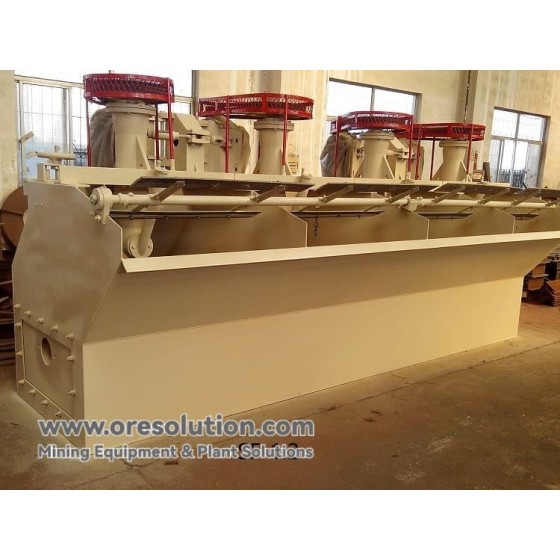
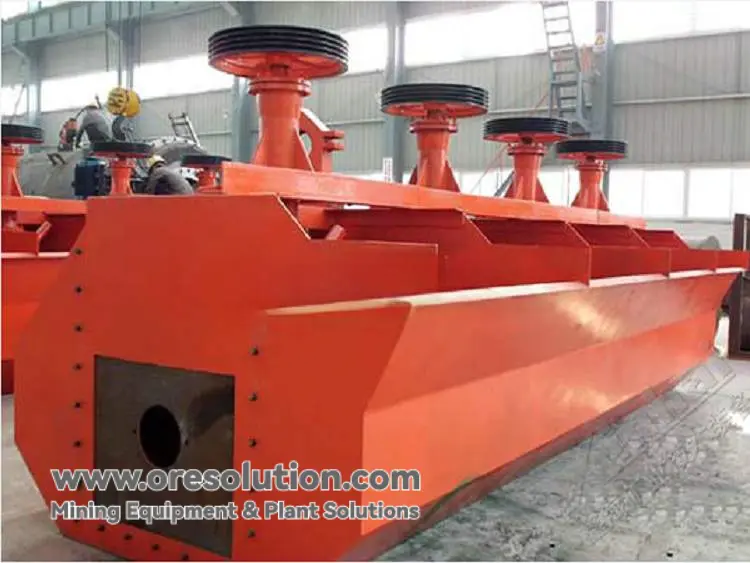
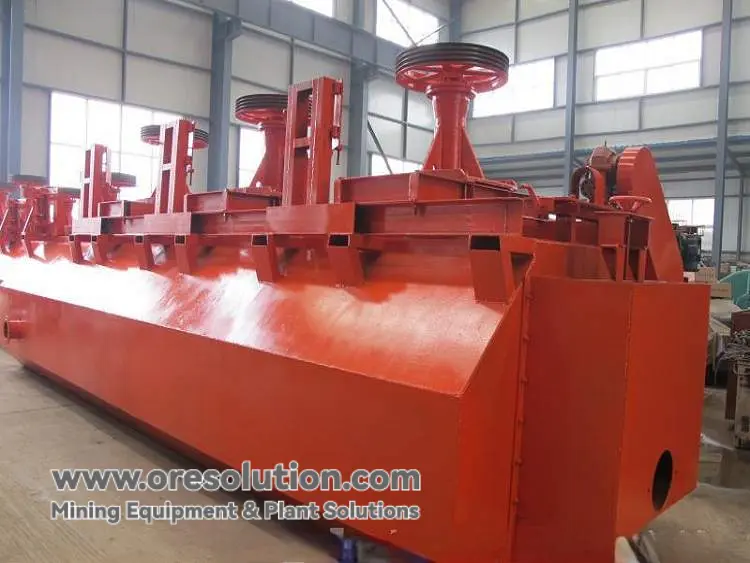
| Flotation Unit | Pre-concentration of sulfur-gold ore to control concentrate grade and recovery rate |
| Regrinding Mill | Fine grinding prior to oxidation to increase reaction contact area |
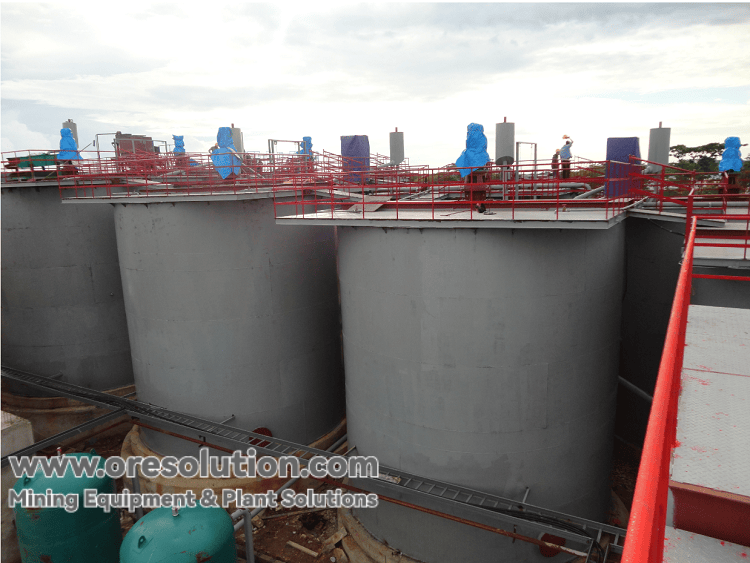
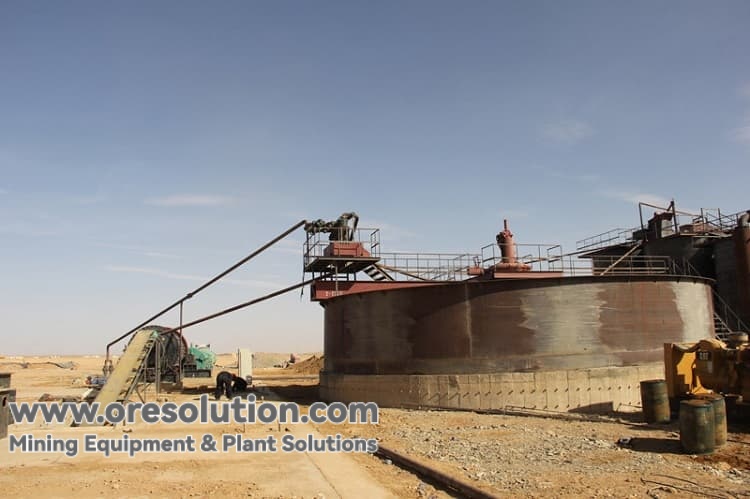
| Biological Oxidation Tank | Core of the bacterial oxidation reaction; controls temperature, pH, and aeration |
| Wash Thickener | Countercurrent washing of oxidation residue to minimize interference with the leaching stage |
| Leaching Tank (CIL/CIP) | Cyanide leaching with controllable parameters |
| Tailings Treatment System | Neutralization, precipitation, and filter press processing; arsenic stabilization and cyanide compliance |
It should be noted that equipment specifications and parameter ranges vary significantly depending on ore properties and project scale. Metrics such as recovery rates, capital costs, and cyanide consumption cannot be summarized by a single figure; feasibility and economic viability must be determined through pilot testing and comparative analysis of different solutions.Only by manufacturing core equipment in-house and integrating the entire process can we ensure that the process design and equipment hardware are highly aligned, thereby avoiding bottlenecks between upstream and downstream stages.
Plant Construction Models and Economic/Environmental Considerations: Look at the Big Picture, Not Just the Initial Investment
High-sulfur gold ore projects also face a hidden pain point: design institutes draw up plans, equipment manufacturers sell machinery, and construction teams build the plant. Once performance targets are not met, multiple parties begin passing the buck. Mine owners are forced to act as “referees,” leading to indefinite delays in the construction schedule and missing the optimal market conditions for production start-up.Under a full-cycle EPC turnkey model, a single team coordinates testing, design, equipment, installation, and commissioning, taking full responsibility for the final outcome. There are no breaks in the chain of accountability, and someone is always there to take responsibility if problems arise.
Economic feasibility assessments cannot focus solely on gold grade and recovery rates. The sulfur-to-gold ratio and arsenic content determine the difficulty of pre-treatment and reagent consumption; environmental protection measures determine the investment required for tailings treatment and arsenic solidification; and project scale determines how much unit costs can be spread out.For smaller-scale projects, the economic viability of bio-oxidation is questionable; a short-process approach using ultra-fine grinding to enhance leaching may be more suitable. For larger-scale projects with high sulfur and arsenic content, the investment in oxidative pretreatment can be spread out over a larger scale.If you focus solely on initial investment during procurement and purchase cheap equipment, you may end up with machinery that breaks down frequently, consumes excessive energy, and wastes large amounts of chemicals. Over the course of a few years, the extra operating costs incurred could be enough to buy several new sets of equipment. Careful equipment selection to avoid “over-specification,” combined with process optimization to reduce water, electricity, and chemical consumption, is the formula for maximizing return on investment over the entire life cycle.
Environmental protection is also an indispensable consideration. After oxidation, arsenic enters the solution and must undergo stabilization treatment—solidifying the arsenic through neutralization and iron salt precipitation—before being stockpiled or disposed of only after passing toxicity testing for leaching.Solutions for dry tailings disposal, tailings re-processing, and solid waste resource recovery not only address environmental impact assessment requirements but can also transform environmental burdens into a second profit center through the synergistic recovery of multiple metals. Only by balancing the technical, economic, and environmental considerations can a process solution be truly implemented.
Common Technical Questions
Conclusion
The key to developing high-sulfur gold deposits lies in thorough planning before implementation. Begin with mineralogical analysis; match the processing route to the ore\'s properties; ensure equipment integration and plant design align with the project\'s scale; and thoroughly evaluate the technical, economic, and environmental aspects—if these steps are executed solidly, a clear solution to the challenges of processing high-sulfur gold deposits will emerge.Conversely, if a generic process is forced onto the project, or if focus is placed solely on recovery rates without considering the total cost, the project\'s profitability may still fall short of expectations—even if the equipment operates and gold is produced.
The solution to the challenge of processing high-sulfur gold ore often lies in the details of the ore itself, as well as in the systematic alignment of processes, equipment, and plant construction models.If you have a batch of high-sulfur gold ore and are unsure about the process route, please submit your ore test data and multi-element analysis results to us. We will assist you in mapping out a technical route, comparing and selecting process solutions, and evaluating equipment and plant construction models—translating the solution to the high-sulfur gold ore processing challenge into an actionable engineering plan.
OreSolution · Process Routes and Equipment Configuration for High-Sulfur Gold Ore Processing