


Purification of High-Purity Silicon Sea Sand: Key Points of the Photovoltaic-Grade Purification Process
-
The core of the low-iron quartz sand processing line solution is “physical iron removal while preserving particle size, and chemical deep removal of iron and aluminum,” with the goal of consistently reducing Fe₂O₃ to below 100 ppm.
-
The five modules—scrubbing and desliming → magnetic separation for iron removal → flotation for feldspar removal → acid leaching for deep purification → dewatering and drying—each handle the removal of iron and purification of a specific type of impurity.
-
The most commonly overlooked steps in the iron reduction and purification of sea sand are scrubbing and magnetic separation; if these two steps are not performed thoroughly, the subsequent acid washing process will incur higher costs and may still fail to meet standards.
-
This process is suitable for seabed sand ores with Fe₂O₃ content generally ranging from 0.1% to 0.5%. For ores outside this range, it is recommended to first conduct small-scale trials to verify economic viability.
I. What Is This Solution?
First, the core: The low-iron quartz sand mechanical processing line is a combined iron-reduction and purification process that prioritizes “physical purification supplemented by chemical purification.” The goal is to raise the SiO₂ grade in sea sand to over 99.5% and reduce Fe₂O₃ to below 100 ppm.
This is not a solution that can be achieved with a single piece of equipment, but rather a complete mechanical processing line that transforms raw ore into low-iron quartz sand.The raw ore undergoes several processing steps—scrubbing, magnetic separation, flotation, acid washing, and dewatering—resulting in high-purity silica sand that meets the requirements of downstream applications such as photovoltaic glass, the outer layers of quartz crucibles, and silica fume.Photovoltaic-grade is the most demanding category among low-iron quartz sands, with much stricter limits for Fe₂O₃ and Al₂O₃ than those for ordinary glass sand.
A common misconception is that reducing iron content and purifying sea sand is a simple process—that purchasing a single magnetic separator will solve the problem. In reality, the challenge lies not in any single piece of equipment, but in the compatibility of the entire production line and the depth of impurity removal at each stage.
II. What Problems Does It Solve?
First, the core issue: This iron-reduction and purification solution addresses the problem of excessive iron, aluminum, and feldspar impurities in seabed sand deposits, which result in insufficient SiO₂ content, inadequate whiteness, and reluctance among downstream users to utilize the material.
Seasand, having been subjected to prolonged erosion by seawater, has large amounts of silt and salt adhering to its surface, and iron exists in complex forms: as individual iron minerals, as iron films adhering to particle surfaces, and as iron stains encapsulated within the particles. A single iron-removal method cannot effectively address all these forms, which is why a comprehensive, end-to-end design is essential for iron reduction and purification.
The first challenge is the inability to reduce Fe₂O₃ levels sufficiently. Magnetic separation alone typically reduces Fe₂O₃ to around 0.08%, which is an order of magnitude higher than the 0.01% required for photovoltaic-grade sand. Magnetic separation is effective only against free iron and intergrown iron; it is ineffective against surface iron films and lattice-bound iron.
The second challenge is maintaining particle size. Some purification schemes grind the ore too finely to remove impurities; while the impurities are eliminated, the particle size is compromised. The principle of this approach is “grind only when necessary,” relying on washing and classification to preserve the original particle size.
The third challenge is uncontrolled acid leaching costs. When the costs of acid consumption, wastewater treatment, and equipment corrosion are added together, many projects become financially unfeasible. The root cause lies in the fact that the preceding physical purification steps were not thorough enough, shifting the entire burden onto the acid leaching stage.
Who needs this solution the most? Users who have seabed ore and want to move toward photovoltaic-grade quality but cannot meet the specifications using magnetic separation or flotation alone.The economic benefits are particularly evident for marine sand deposits where the Fe₂O₃ content in the raw ore ranges from 0.1% to 0.4% and the SiO₂ content ranges from 98% to 99%.
III. Core Components and Principles
First, the core: five modules are linked together to form a mechanical production line—scrubbing and desliming as the foundation, magnetic separation for coarse iron removal, flotation to remove feldspar, acid washing for deep purification, and dewatering and drying to preserve the final product. Each module is a link in the iron-reduction and purification chain.
Overall Process: Raw seawater sand → Scrubbing and de-silting → Grading and screening → Magnetic separation for iron removal → Flotation to remove feldspar → Acid washing for purification → Dehydration and drying → Low-iron quartz sand product
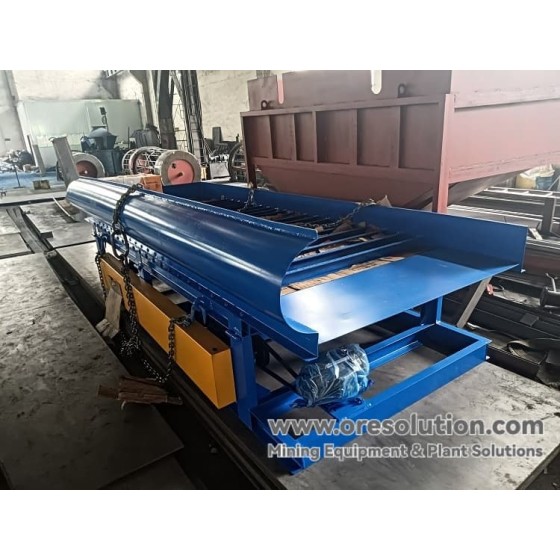
Module 1: Scrubbing and Desliming. This forms the foundation of the entire iron-reduction and purification process. The clay coating and salt deposits on the surface of sea sand cannot be removed by ordinary water washing; a powerful scrubbing machine is required.The scrubbing concentration (mass fraction of solids in the slurry) is generally controlled at 60%–70% to mechanically strip the clay and iron films from the particle surfaces. If this step is not performed thoroughly, the effectiveness of subsequent magnetic separation and acid washing is reduced by half.
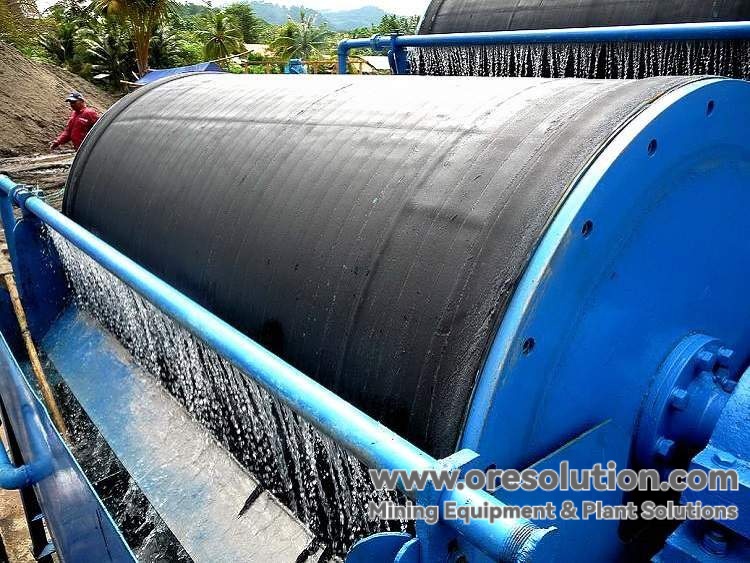
Module 2: Magnetic Separation for Iron Removal. This consists of two stages: roughing and scavenging. Roughing uses a high-gradient magnetic separator (a device that generates a high magnetic field gradient using steel wool or mesh media within a strong background magnetic field) to remove free iron and agglomerated iron; scavenging uses a strong magnetic separator to process the remaining weakly magnetic iron.After these two stages, the Fe₂O₃ content is typically reduced from around 0.2% to 0.05%–0.08%.
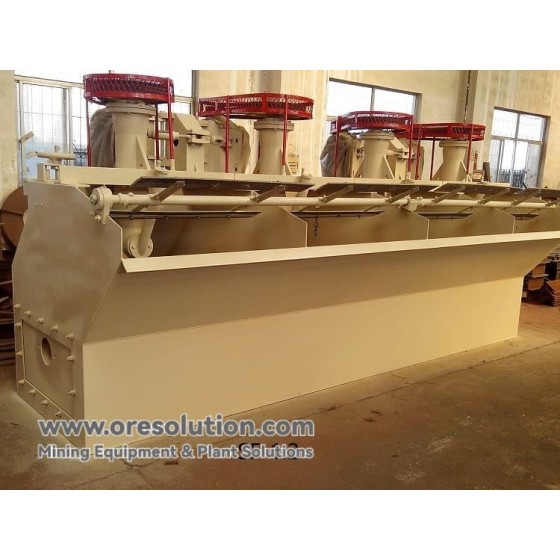
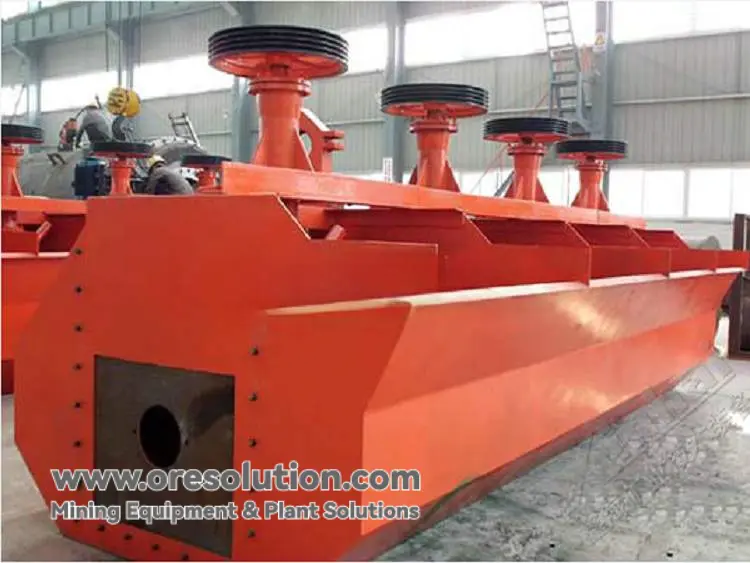
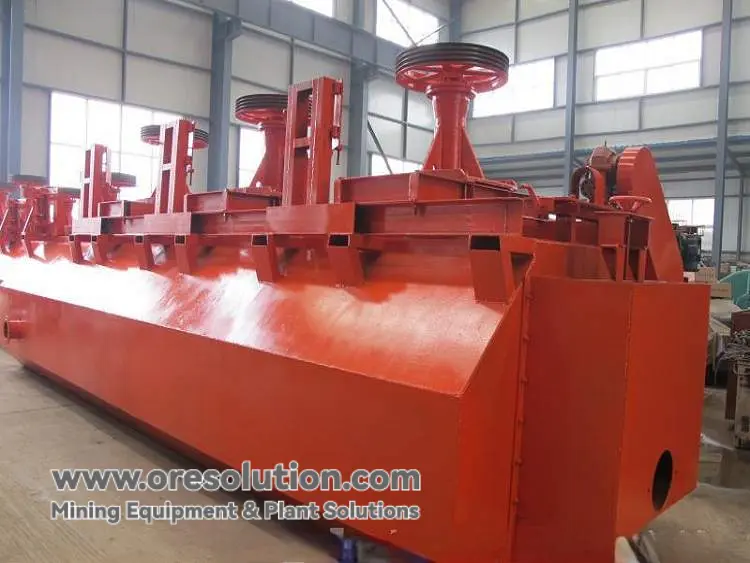
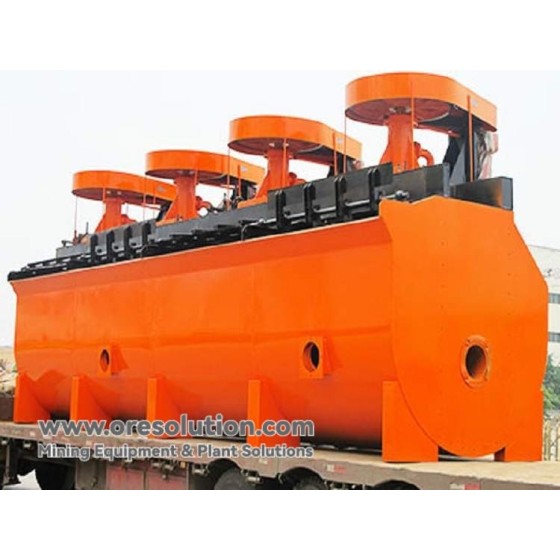
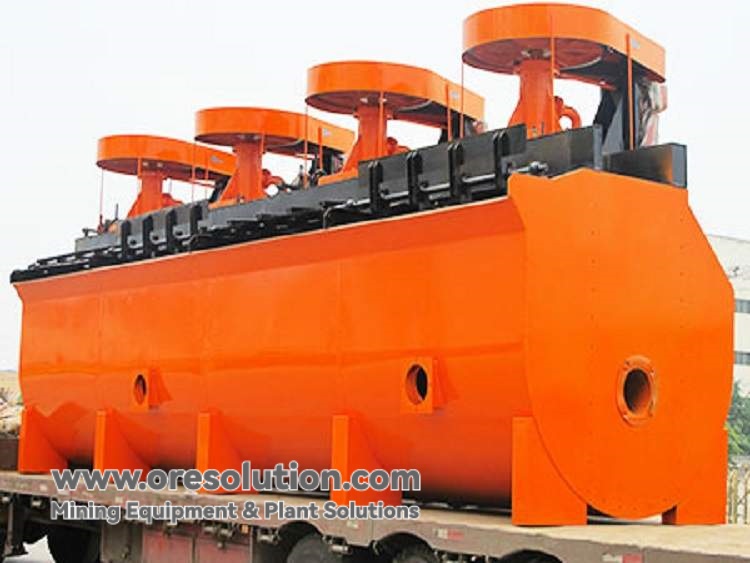
Module 3: Flotation for feldspar removal. Magnetic separation cannot handle feldspar-type aluminosilicate impurities, so flotation is required.Under acidic or neutral conditions, amine collectors (reagents primarily composed of amine compounds used for flotation of silicate minerals such as feldspar) are used to float the feldspar, while quartz remains in the cell. This step primarily removes Al₂O₃, while simultaneously removing a portion of the iron-bearing minerals.
Module 4: Acid Leaching and Purification. A critical step in deep iron removal. Hydrochloric acid or sulfuric acid is used in conjunction with a reducing agent (such as sodium sulfite, which reduces trivalent iron to divalent iron to facilitate leaching) to leach surface iron oxide and lattice iron under heated conditions.After acid washing, Fe₂O₃ levels can be reduced to below 50 ppm.
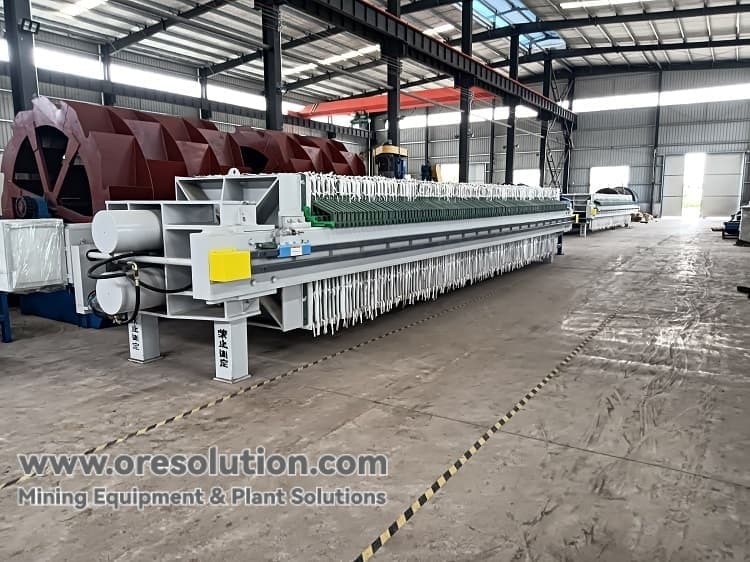
Module 5: Dehydration and Drying. The acid-washed sand must be thoroughly rinsed to remove residual acid, dehydrated using a filter press, and then fed into a dryer. The moisture content of the finished product is controlled below 0.5%, and it passes through a magnetic separator as a final safeguard before packaging.
The core of this low-iron quartz sand processing line lies not in the sophistication of individual equipment, but in the seamless integration of the five modules—the tailings from the preceding stage serve as feed for the subsequent stage, with each stage reducing impurities to a level that the next stage can handle. If any single stage fails, the entire line\'s iron-reduction and purification targets will be held back at that stage.
IV. Why Choose This Solution
First, let\'s address the core: Compared to single magnetic separation or the “grinding + flotation” route, this iron-reduction and purification solution offers clear advantages in three key areas: particle size retention, depth of iron removal, and acid consumption control.
Advantage 1: Excellent particle size retention and high yield. The traditional “grinding + magnetic separation” process requires grinding the ore to a relatively fine particle size to liberate impurities, which generates a large amount of fine slime and often results in a low yield. This solution replaces grinding with scrubbing, leaving the raw ore particle size essentially unchanged and significantly increasing the yield.For sand used in photovoltaic glass, particle size equals money.
Advantage 2: Sufficient iron removal depth to meet photovoltaic-grade standards. With magnetic separation alone, the lower limit for Fe₂O₃ is generally around 0.05%, while flotation alone is ineffective against surface iron films.This solution employs a dual-pronged approach of “magnetic separation to remove free iron + acid leaching to remove surface iron,” achieving Fe₂O₃ levels below 50 ppm—one order of magnitude lower than single-magnetic-separation schemes.
Advantage 3: Controllable acid consumption and high process flexibility. The preliminary washing and magnetic separation steps remove most impurities, resulting in a small feed size and low impurity load entering the acid leaching stage. The acid solution can be recycled, and the amount of fresh acid required is significantly lower than in a “full acid leaching” process.Additionally, the five modules can be scaled up or down as needed; ore with low Fe₂O₃ content can skip acid washing, while ore with low feldspar content can skip flotation.
This iron-reduction and purification solution is not a one-size-fits-all approach; it specifically addresses the challenge of “deep removal of iron and aluminum impurities from sea sand ore while maintaining particle size.” If your ore consists of vein quartz or quartzite, grinding and liberation are unavoidable, and the scrubbing module of this solution alone will not suffice.
V. Applicable Scenarios and Limitations
First, the key point: The mechanical processing line solution for low-iron quartz sand is best suited for marine sand ores with Fe₂O₃ levels roughly between 0.1% and 0.5% and SiO₂ levels between 98% and 99.5%. For ores outside this range, an economic feasibility study must be conducted first.
The most effective scenarios involve marine sand ores with Fe₂O₃ content between 0.1% and 0.3%, Al₂O₃ between 0.2% and 0.5%, and SiO₂ between 98.5% and 99.5%.Within this range, the five modules are optimally matched in terms of load; scrubbing and magnetic separation can remove most impurities, while acid washing is required only for deep polishing. In terms of particle size, ores with a high proportion of the 0.1–0.6 mm size fraction in the raw ore are most suitable, as this falls precisely within the target range for sand used in photovoltaic glass and crucibles.Taking a marine sand deposit in Sulawesi, Indonesia, as an example, the Fe₂O₃ content in the raw ore is around 0.2%, and this process reduces it to several tens of ppm.
There are several situations that require caution. For ore with Fe₂O₃ content significantly exceeding 0.5%, the acid leaching load is too heavy, and the costs of acid consumption and wastewater treatment will eat into profits; for ore with SiO₂ below 97%, the total impurity content is too high, leaving little room for optimization across the five processing modules, which will prolong the payback period.For ore with an excessively fine particle size (excessively high proportion of particles smaller than 0.1 mm), the effectiveness of scrubbing and classification is compromised, and fine silt carries away a significant amount of useful components.Special attention must also be given to seawater sand rich in mica-type minerals. The flaky structure of mica is difficult to dislodge during scrubbing and challenging to handle in flotation, often leading to excessive acid consumption during the acid washing stage. For such ores, a process mineralogy analysis must be conducted before finalizing the design.
In summary, this mechanical processing line for low-iron quartz sand is designed for seabed sand deposits with “moderate impurity levels and moderate grain size.” If the ore characteristics are suitable, both performance metrics and costs will be favorable; if they are not, forcing the project to proceed will only create problems.
VI. How to Implement the Project
First, the core: a six-step process—ore sample analysis, small-scale testing, process optimization, equipment selection, installation and commissioning, and performance acceptance. Each step has specific evaluation criteria, forming the complete path for an iron-reduction and purification solution to move from concept to production line.
Step 1: Ore Sample Analysis. Take representative ore samples for comprehensive analysis, focusing on the grades of Fe₂O₃, Al₂O₃, and SiO₂, as well as the phase analysis of iron (to determine the proportions of free iron, intergrown iron, surface iron film, and lattice iron).The iron phase composition determines the load distribution for subsequent magnetic separation and acid leaching and serves as the starting point for process design.
Step 2: Small-scale testing. Conduct laboratory tests on scrubbing time, magnetic separation field strength, flotation conditions, and acid leaching concentration, temperature, and duration. Determine the optimal parameters for each stage, then integrate them into a full-process closed-circuit test (using a continuous循环 test method where tailings are returned as feed).Evaluation criteria: overall concentrate recovery rate, Fe₂O₃ content, SiO₂ content, and acid consumption.
Step 3: Process Finalization. Based on the test results, determine which of the five modules to include or exclude and their sequence. For example, ore with low Fe₂O₃ content may omit flotation, while ore with high feldspar content requires flotation to be moved earlier in the process. After finalization, draw a mass and flow diagram indicating the feed rate, yield, grade, and water consumption for each operation, which serves as the basis for equipment selection.
Step 4: Equipment Selection. For scrubbers, consider processing capacity and scrubbing intensity; for magnetic separators, consider background field strength and gradient; for flotation cells, consider cell volume and aeration rate; for acid leaching systems, consider material composition and heating method. The selection principle is to “match the process and allow for a margin of safety”; core equipment should preferably be procured as a complete set from a single supplier.
Step 5: Installation and Commissioning. Install equipment in process sequence, conducting individual unit trials before proceeding to integrated system trials.Integrated commissioning proceeds from the end to the beginning: first adjust the dewatering and drying stages, then the acid leaching, followed by flotation and magnetic separation, and finally the scrubbing. Each stage must be stabilized before proceeding to the next. This step relies heavily on on-site experience; if commissioning is not carried out properly, the target specifications will not be met.
Step 6: Performance Acceptance. After continuous operation for a period, take samples to test the concentrate for Fe₂O₃, SiO₂, particle size distribution, and moisture content. Recommended acceptance criteria are: Fe₂O₃ ≤ 100 ppm, SiO₂ ≥ 99.5%, target particle size fraction meets specifications, and moisture content ≤ 0.5%.If the standards are not met, go back and check which section is not receiving sufficient feed.
The most common pitfall in implementation is skipping small-scale trials and commissioning the equipment based solely on experience. Seabed ore deposits involve greater variability than onshore deposits; iron content can vary significantly even within the same mining area. Trials cost very little, but skipping them and running into problems will cost a lot.
Appendix: Why Choose Us for Consulting Partnerships
First, the core point: Whether an iron-reduction and purification solution can be successfully implemented ultimately depends on whether the following four elements are in place: “testing capabilities + manufacturing capabilities + commissioning capabilities + service responsiveness.”
The support we provide for the quartz sand production line aligns perfectly with the implementation path for low-iron quartz sand mechanical processing solutions. During the testing phase, we conduct ore selectivity tests and process validation, and issue a mineral processing test report that includes recommended process flows, process parameters, equipment selection recommendations, and expected performance indicators. During the design phase, we produce process flow diagrams and equipment configuration lists based on the test report.
Regarding equipment, in accordance with the quartz sand PV/electronics-grade production route, we can supply complete sets of equipment, including scrubbers, strong magnetic separators, high-gradient magnetic separators, flotation cells, acid washing reactors, acid washing tanks, wash filters, filter presses, and dryers.For on-site implementation, we will dispatch engineers to provide on-site installation guidance and oversee individual unit commissioning, integrated trial runs, and integrated commissioning with feed material.
For after-sales service, the warranty period is 12 months; during this period, spare parts will be replaced free of charge for damage caused by equipment quality issues. Lifetime technical consultation is provided after the warranty period expires.
If you have a seashore sand deposit and wish to determine whether this iron-reduction and purification solution is suitable, what performance levels can be achieved, and what the approximate investment range would be, we recommend proceeding as follows: Step 1: Send representative ore samples for comprehensive analysis and iron phase analysis; Step 2: Based on the analysis results, establish a small-scale pilot test plan and conduct a full-process closed-circuit test;Step 3: Once the test data is available, evaluate the process, equipment, and performance metrics together.
The low-iron quartz sand processing line solution primarily addresses issues involving “the deep removal of iron and aluminum impurities from marine sand ore while maintaining particle size.” We recommend completing process mineralogy analysis and full-process closed-circuit trials before finalizing the solution, using the test data as the basis for process design and equipment selection. This is the most prudent approach to advancing the project.