


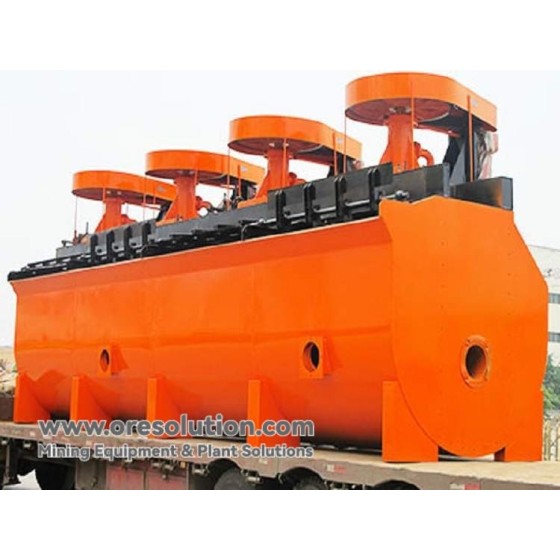
How to Choose a Sand-Tin Ore Production Line? A Breakdown of Gravity Separation Solutions for High Recovery Rates
How to Choose a Sand Tin Ore Production Line? A Complete Breakdown of a High-Recovery Gravity Concentration Solution
Sand tin ore is one of the primary sources of tin resources.Unlike rock-based tin ore, which requires crushing and grinding, the core of tin sand beneficiation lies in washing and desliming followed by gravity separation—utilizing the density difference between cassiterite and gangue to achieve step-by-step enrichment through equipment such as jigs, spiral chutes, and shaking tables, ultimately yielding high-grade tin concentrate.This process requires low investment and achieves high recovery rates, making it particularly suitable for sand-based tin deposits found in riverbeds, beaches, and ancient river channels.
Based on OreSolution\'s sand tin ore production line solution, this article systematically breaks down the process flow, key equipment selection, and actual project data to help mining investors quickly understand the technical key points and investment logic of sand tin ore beneficiation.
I. The Essence of Sand Tin Ore Beneficiation: No Grinding, Relying on Gravity
The tin in sand tin ore exists in the form of cassiterite (SnO₂) and is found in sand layers in riverbeds or on beaches. Unlike rock-type tin ore, the cassiterite in sand tin ore has already undergone natural weathering and disintegration, eliminating the need for crushing and grinding. The core tasks of ore beneficiation consist of only two steps:
-
Ore washing and desliming: Sand-type tin ore often contains large amounts of clay, which coats and traps tin particles, severely affecting recovery rates. It is essential to break up the clay agglomerates through vigorous ore washing and then separate large pieces of waste gravel from tin-bearing fine sand via screening.
-
Gravity separation: Cassiterite has a high density (approximately 6.8–7.1 g/cm³), creating a significant density difference compared to gangue minerals such as quartz sand (approximately 2.65 g/cm³).Using gravity separation equipment such as jigs, spiral chutes, and shaking tables, cassiterite can be efficiently separated from lightweight sand grains and progressively concentrated.
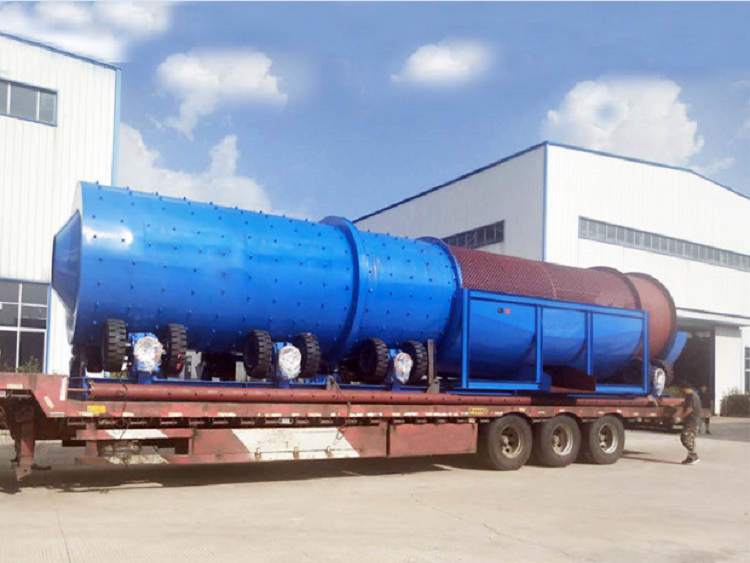
II. Three-Step Process Flow: Washing and Screening—Roughing—Concentration
Step 1: Washing and Screening
Objective: Remove large rock fragments and wash away sticky clay to prepare suitable feed material for subsequent gravity separation.
Key Equipment:
-
Cylindrical Washer: Utilizes drum rotation and high-pressure water jets to thoroughly break up clay agglomerates. For tin ore with high-silt sand containing up to 15% clay, the cylindrical washer is the equipment of choice.
-
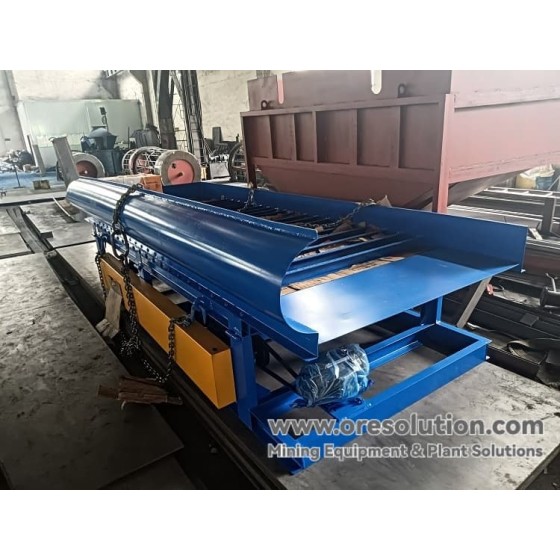
Trommel Screen: Performs particle size classification simultaneously with washing, separating large waste gravel larger than 6 mm from tin-bearing fine sand. It is highly effective at processing clay and has a high processing capacity.
Key Point: Inadequate ore washing is the primary cause of low recovery rates in tin-bearing sand ores. If tin particles remain trapped within the clay, subsequent gravity separation equipment cannot recover them, and they are directly discharged into the tailings, resulting in losses.
Step 2: Rough Concentration (Gravity Separation)
Objective: To concentrate heavy minerals, discard a large amount of light sand particles, and significantly reduce the processing load for subsequent fine selection.
Core Equipment:
-
Jig: The core equipment for the roughing of tin-bearing sand. The jig uses pulsating water flow to stratify mineral particles by density; heavy minerals such as cassiterite sink to the bottom, while light sand particles are carried away by the water flow.Jigging machines feature high throughput and continuous operation, making them suitable for processing sand-type tin ore with larger particle sizes.
-
Spiral Chute: Used for rough and scavenging selection of fine-grained material. The spiral chute requires no power; the slurry naturally separates into layers within the spiral trough due to gravity and centrifugal force. With extremely low operating costs, it is an economical choice for the rough selection stage of tin-bearing sand.
Key Point: The objective of the roughing stage is to “discard the tailings”—removing as much lightweight gangue as possible while ensuring that cassiterite is not lost. The combination of a jig and a spiral chute can cover the entire particle size range, from coarse to fine grains.
Step 3: Concentration and Dewatering
Objective: To upgrade the rough concentrate into high-grade tin concentrate and to dispose of the tailings in compliance with regulations.
Core Equipment:
-
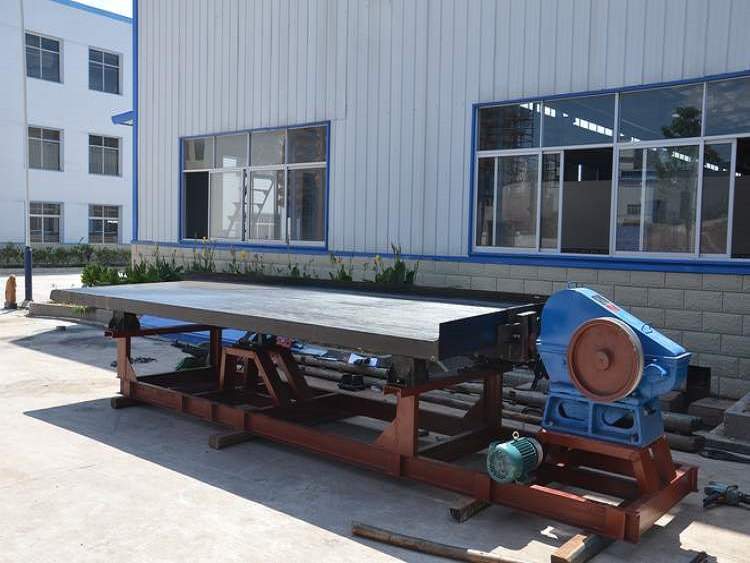
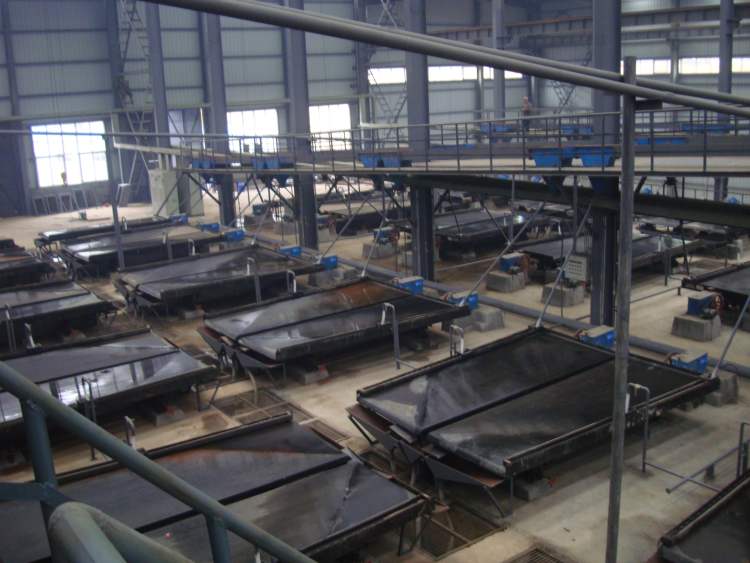
Shaking Table: The core equipment for the fine selection of tin-bearing sand ore, offering the highest enrichment rate. Through asymmetrical reciprocating motion and lateral water flow, the shaking table precisely separates cassiterite from residual gangue in the rough concentrate based on density, ultimately yielding a high-grade tin concentrate with a tin content of 60%–70%.
-
Filter Press: After the tailings are concentrated and dewatered, they can be dry-stacked or used for backfilling, meeting environmental requirements.
Key Points: The operating parameters of the shaking table (stroke, stroke rate, transverse slope, and rinse water volume) have a significant impact on the final concentrate grade and recovery rate and must be finely adjusted based on the properties of the ore.
III. Overview of Key Equipment Selection
| Equipment | Application Stage | Key Advantages |
|---|---|---|
| Cylindrical Ore Washer | Washing and Sorting | Effective clay disintegration; suitable for high clay content |
| Drum Screen | Screening | Effective at processing clay; high processing capacity |
| Jig | Roughing | High tin ingot recovery rate and high-capacity continuous operation |
| Spiral Chute | Roughing/Sweeping | No power required; low operating costs |
| Shaking Table | Concentration | Highest enrichment rate; concentrate grade up to 60–70% |
| Filter Press | Dewatering | Tailings are either dry-stacked or used for backfilling, ensuring environmental compliance |
IV. Actual Project Data: How Was an 88% Recovery Rate Achieved?
Project 1: Yunnan Sand Tin Ore Concentrator
Ore Conditions: High-slurry alluvial tin ore, 15% clay content, raw ore tin grade of 0.8%.
Process Configuration: Cylindrical ore washer + trommel screen + jig + spiral chute + shaking table.
Project Results:
-
Concentrate tin grade: 65%
-
Tin recovery rate: 88%
The key to this case lies in the intensified ore washing process. A clay content of 15% is relatively high for a sandy tin deposit; if the washing process is not thorough, a significant amount of tin particles trapped in the clay will be lost.This project utilized a cylindrical ore washer equipped with a lifting mechanism and high-pressure water to thoroughly clean and break down the clay prior to screening, thereby creating suitable feed conditions for subsequent gravity separation and ultimately achieving an 88% recovery rate.
Project 2: Southeast Asian Seabed Tin Mining Vessel
Project Features: Ship-based processing plant with limited space, requiring compact equipment.
Process Configuration: Trommel screen + circular jig.
Processing Capacity: 10,000 metric tons per day.
Project Highlights: To address space constraints on the vessel, a compact modular design was adopted, integrating the ore washing, screening, and rough concentration stages within the limited space. This enabled on-site processing of seabed tin ore, eliminating the costs associated with transporting large quantities of low-grade ore to land.
V. Common Issues in the Beneficiation of Sandy Tin Ore
Q1: How should sandy tin ore with high clay content be processed?
Clay traps tin particles and is the biggest obstacle to recovery rates in sandy tin ore. The solution is to use a cylindrical ore washer equipped with a lifting mechanism and high-pressure water to thoroughly clean and break up clay clumps before screening. Investment in the ore washing stage must not be skimped on; otherwise, recovery rates for subsequent gravity separation equipment cannot be guaranteed.
Q2: How is processing capacity determined?
The equipment features a modular design, with a single production line capable of handling 50–500 metric tons per hour. For large-scale projects, multiple production lines can operate in parallel. The appropriate configuration should be determined based on a comprehensive assessment of ore reserves, mining capacity, and investment budget.
Q3: What minerals are commonly associated with tin sand ore? Can they be recovered together?
Sand tin ore is commonly associated with heavy minerals such as zircon, ilmenite, gold, and monazite.Gravity separation concentrates these heavy minerals into the coarse concentrate, after which further separation can be achieved through magnetic separation (to separate ilmenite and monazite) or electrostatic separation (to separate zircon).If the associated minerals are of high value, magnetic separation or electrostatic separation stages can be added after gravity separation to enhance the project\'s overall economic benefits.
VI. Why Choose OreSolution\'s Sand Tin Ore Solution
OreSolution\'s tin sand processing plant solution offers three key advantages:
Mature and reliable process. Based on the classic “ore washing + gravity separation” process route, which has been validated through multiple actual projects, tin recovery rates are consistently maintained at over 88%, with concentrate grades reaching up to 65%.
Precise Equipment Configuration. From cylindrical ore washers and trommel screens to jigs, spiral chutes, and shaking tables, equipment selection for each stage is based on precise calculations of ore properties and processing capacity, avoiding situations where equipment is either over-specified or under-capacity.
Full-cycle service. Whether for onshore or offshore deposits, OreSolution provides complete solutions ranging from process design and equipment supply to installation and commissioning. Get a free customized proposal and transparent quote, with 24/7 expert consultation available at any time.
In a nutshell: The core of tin sand beneficiation is “thorough washing and graded gravity separation.”By ensuring a solid ore washing process and using a combination of jigs, spiral chutes, and shaking tables to cover the entire particle size range, recovery rates are naturally guaranteed. OreSolution is committed to helping your tin sand project achieve high-efficiency recovery and rapid returns through project-proven process solutions and precise equipment configurations.