


Project Case Study: Delivering a 3,000 TPD Copper-Cobalt Flotation & Leaching Plant in the DRC
The Democratic Republic of Congo (DRC) is the undisputed beating heart of the global electric vehicle (EV) supply chain, sitting atop the legendary Katanga Copperbelt. Producing over 70% of the world's cobalt and a massive share of its copper, the region is a magnet for international mining capital. However, developing a processing plant in the DRC is one of the most formidable engineering, logistical, and metallurgical challenges on the planet.
In mid-2023, a multinational joint venture approached OreSolution with a critical bottleneck. They had acquired a massive "transition zone" ore body—a highly complex mixture of sulfide and oxide copper-cobalt ores. Their preliminary processing attempts resulted in horrific cobalt losses (under 55% recovery) because standard flotation chemicals failed to capture the oxidized cobalt minerals (Heterogenite).
They needed a robust, turnkey EPC (Engineering, Procurement, and Construction) partner to design and build a 3,000 Tons Per Day (TPD) Hybrid Flotation and Leaching Plant. This comprehensive case study explores how OreSolution delivered a world-class, integrated hydrometallurgical facility deep in the African copperbelt, overcoming power shortages, complex mineralogy, and punishing supply chain constraints.
By abandoning a "flotation-only" design and engineering a Sulfide Flotation followed by Oxide Agitated Leaching (with CCD Wash) circuit, OreSolution successfully boosted global Cobalt recovery from a projected 54% to a sustained 86.5%, and Copper recovery to 92.1%. At 3,000 TPD, this massive technological leap unlocked millions of dollars in previously "lost" battery metals every single month, delivering full CAPEX payback in under 14 months.
 Phase 1: The Metallurgical Nightmare (Lab Testing)
Transition zone ores are a metallurgist's greatest headache. In the OreSolution Metallurgical Laboratory, our analysis of the 10-ton bulk sample revealed why the previous design had failed so spectacularly.
| Ore Characteristic | Lab Parameter | Engineering Impact & Challenge |
|---|---|---|
| Mixed Mineralogy | Copper: Chalcopyrite (Sulfide) + Malachite (Oxide). Cobalt: Carrollite (Sulfide) + Heterogenite (Oxide). |
The Core Paradox: Sulfides respond beautifully to flotation; Oxides do not. A single flotation circuit would automatically lose half the valuable metals to the tailings. |
| Acid Consuming Gangue (ACG) | Dolomite & Calcite present (12%) | If we just used acid leaching for the whole ore, the dolomite would consume exorbitant amounts of sulfuric acid, destroying OPEX profitability. |
| Slime Generation | High clay content in the upper weathered zone. | Required advanced Hydrocyclone desliming to prevent high reagent consumption in flotation and poor settling in thickeners. |
Phase 2: Flowsheet Engineering - The Hybrid Solution
To solve the Sulfide vs. Oxide paradox, OreSolution engineered a sophisticated two-stage recovery flowsheet: "Float the Sulfides first, then Leach the Oxide tailings."
1. Comminution: The SAG & Ball Mill Circuit
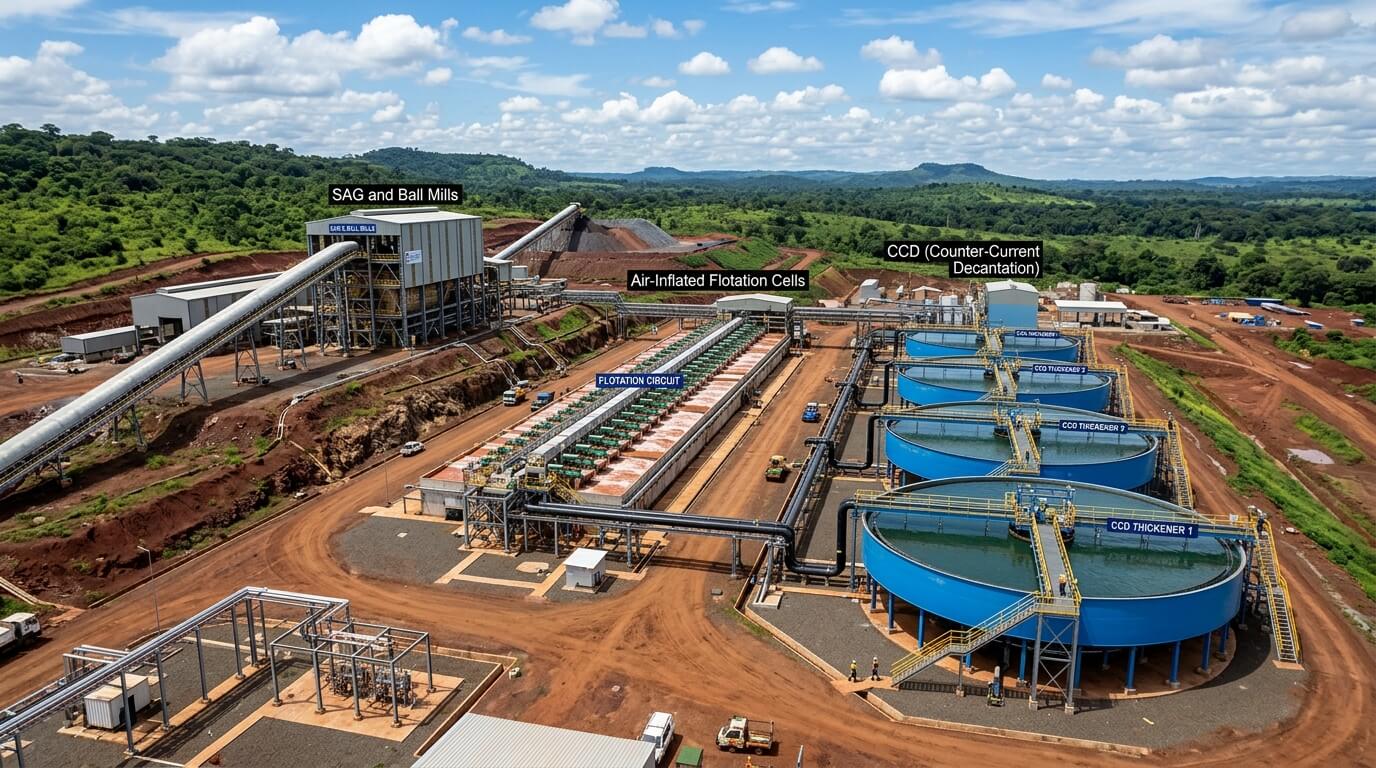
Processing 3,000 TPD requires immense grinding power. Instead of a traditional multi-stage crushing plant (which struggles with sticky, clay-rich African ores), we installed a SAG Mill (Semi-Autogenous Grinding) followed by a massive Ball Mill. This streamlined the comminution process, reducing the ore directly from -200mm down to a flotation-ready P80 of 75 microns.
2. The Sulfide Flotation Circuit
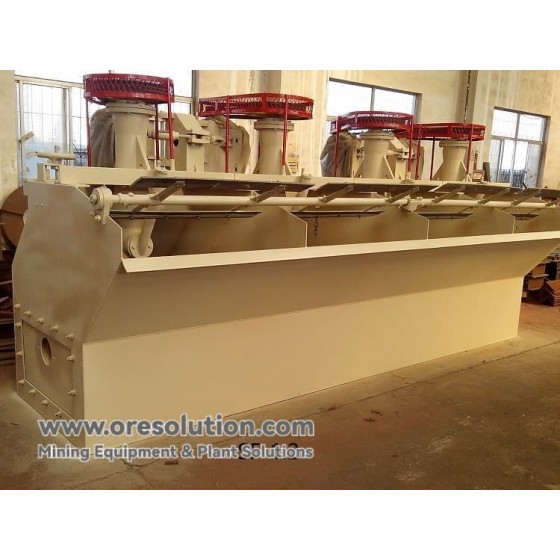
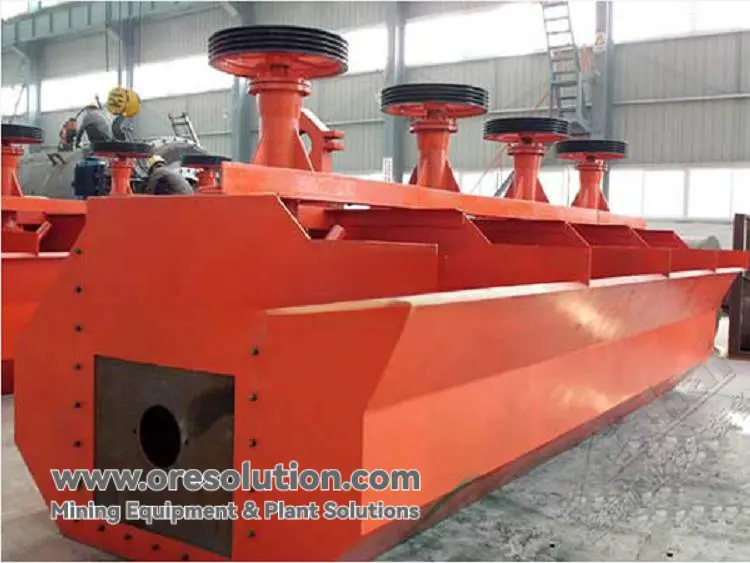
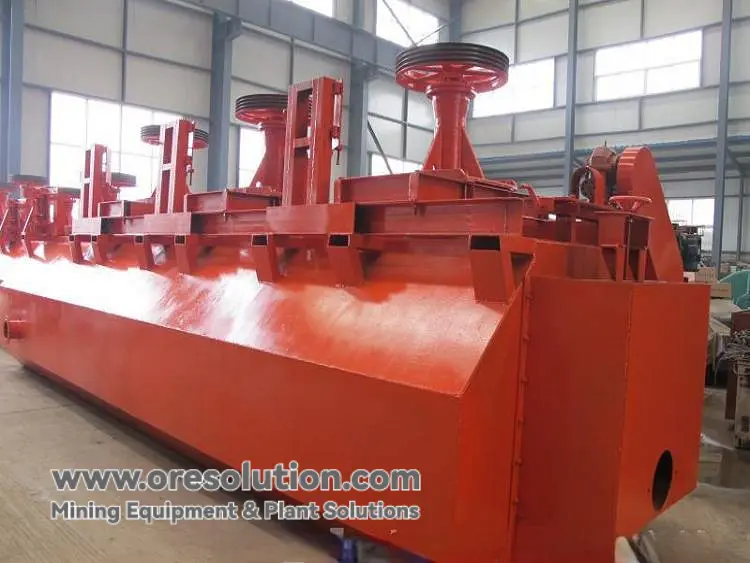
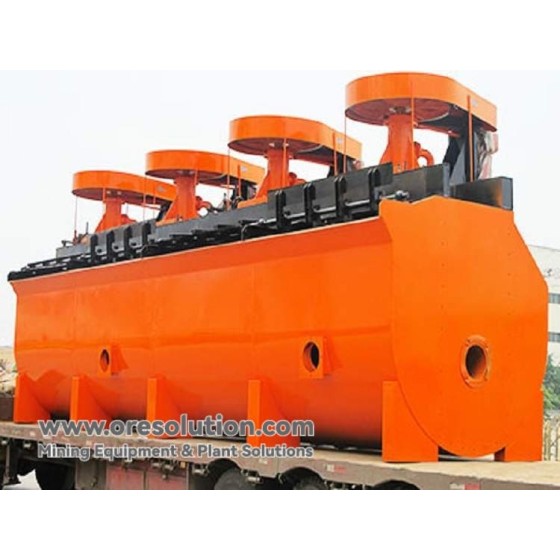
The ground slurry was pumped to a bank of high-volume Air-Inflated Flotation Machines (KYF/XCF series). Using Sodium Amyl Xanthate (SAX) collectors, we aggressively floated the Chalcopyrite (Cu) and Carrollite (Co). Because we targeted only the sulfides here, we didn't waste money trying to force the oxides to float. The result was a high-grade Cu-Co Sulfide Concentrate sent directly to filtration.
3. The Oxide Agitated Leaching Circuit
The "tailings" from the flotation circuit contained all the un-floated Oxide Copper (Malachite) and Oxide Cobalt (Heterogenite). This slurry was pumped into a series of massive, acid-resistant Agitated Leaching Tanks.
Here, a controlled dose of Sulfuric Acid (H2SO4) and a reducing agent (Sodium Metabisulfite - SMBS, essential for dissolving trivalent cobalt) was injected. The acid dissolved the oxide minerals into a rich, pregnant leach solution (PLS) in under 6 hours.
4. Counter-Current Decantation (CCD)
To separate the valuable liquid (PLS) from the barren rock mud, we designed a 5-stage CCD (Counter-Current Decantation) circuit utilizing 30-meter High-Efficiency Thickeners. The solids were washed sequentially with clear water moving in the opposite direction, recovering 99% of the dissolved copper and cobalt into the clear overflow solution, ready for downstream Solvent Extraction and Electrowinning (SX/EW).
Phase 3: Logistics and Manufacturing for Central Africa
Designing a great flowsheet is only 30% of an EPC project. The remaining 70% is delivering it to a landlocked, infrastructure-poor region in Central Africa.
- Modular Manufacturing: To mitigate the lack of heavy cranes and skilled welders in the DRC, OreSolution pre-fabricated and modularized the steel structures, thickener bridges, and pump skids at our main factory.
- The Logistics Bridge: Over 350 shipping containers and oversized break-bulk items (like the SAG Mill shells) were shipped to the port of Dar es Salaam or Durban, and then transported via a grueling 2,500 km cross-border trucking operation. We stationed dedicated logistics teams at border crossings to ensure customs clearance without project-killing delays.
 Phase 4: Site Construction & Commissioning
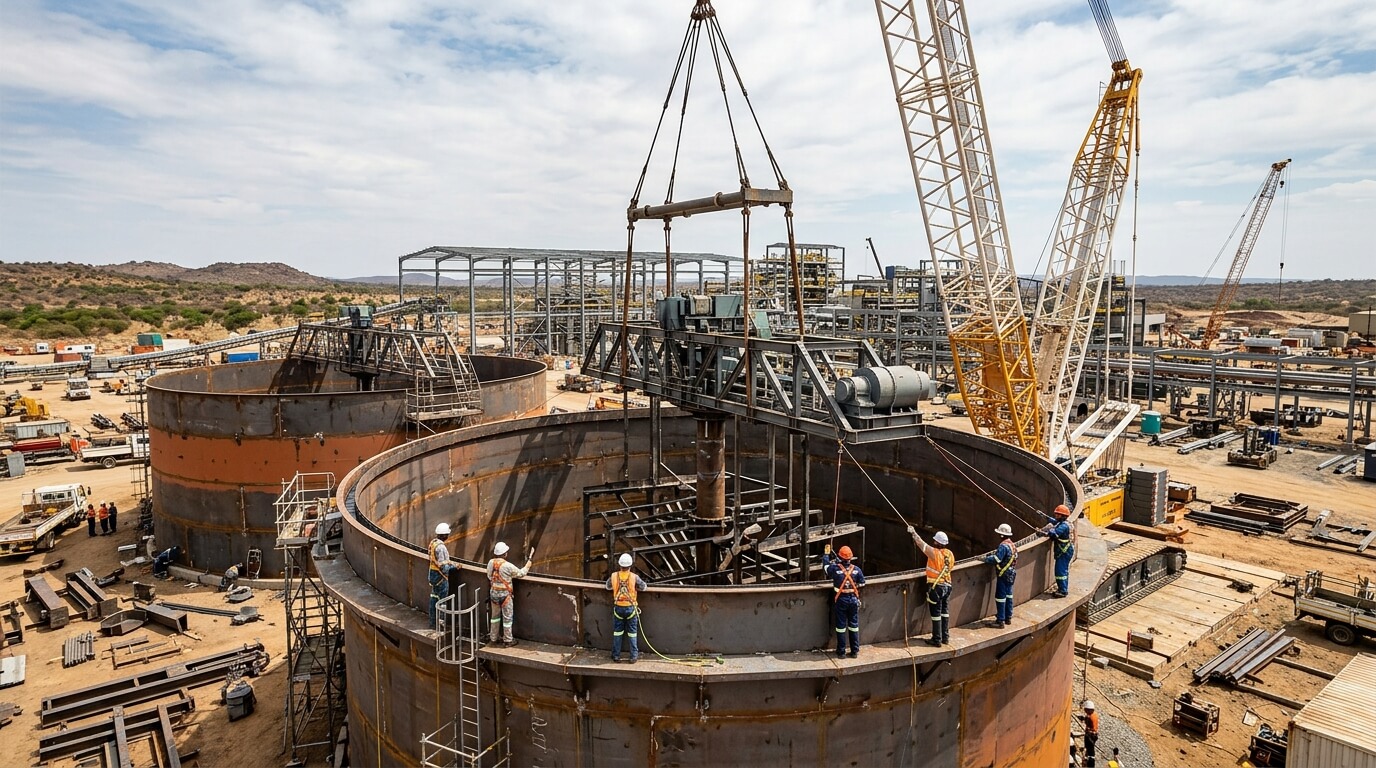
OreSolution deployed a task force of 65 expatriate engineers, metallurgists, and construction managers to the Katanga site, managing a local workforce of over 500 Congolese technicians.
| Project Phase | Duration | Milestone Achieved |
|---|---|---|
| Civil Works & Tank Erection | Months 1-5 | Over 15,000 cubic meters of concrete poured during the dry season. Giant leaching tanks welded and acid-lined on-site. |
| Mechanical & Electrical Installation | Months 6-11 | SAG and Ball Mills aligned. Flotation cells and Filter Presses installed. 15 km of specialized acid-resistant piping (HDPE/Rubber-lined) fitted. |
| Cold & Hot Commissioning | Months 12-14 | Water testing of the CCD circuit. Reagent calibration. First introduction of ore into the SAG mill. |
| Ramp-Up to Nameplate Capacity | Month 15 | Plant stabilized at 3,100 TPD, hitting all guaranteed recovery and grade targets. Official handover to the client. |
FAQ: Learnings for Future African Copper-Cobalt Investors
A: Oxide flotation (using sulfidization and xanthates) works reasonably well for oxide copper (Malachite), but it is notoriously terrible for oxide cobalt (Heterogenite). If your ore body's value relies heavily on Cobalt, oxide flotation will lose over 50% of it. Acid leaching is the only scientifically proven way to maximize cobalt extraction from transition/oxide ores.
A: Power rationing is a massive issue in the copperbelt. While the client connected to the SNEL national grid, OreSolution designed the plant's PLC/SCADA system with aggressive "Smart Load Shedding." In the event of a power dip, non-critical systems shut down instantly, prioritizing the agitators in the leaching tanks and thickeners. If an agitator stops and the slurry settles, digging out a 500-cubic-meter tank of solid mud can halt production for weeks.
A: The underflow from the final CCD thickener is highly acidic. Before it leaves the plant, it is pumped into a Neutralization Circuit where inexpensive limestone (which was locally sourced) is added. This raises the pH to a safe, neutral level (pH 7-8) before the tailings are pumped to the final lined tailings storage facility (TSF), ensuring strict ESG compliance.
Conclusion: Turnkey Mastery in the Copperbelt
The successful commissioning of this 3,000 TPD Copper-Cobalt plant in the DRC proves that complex metallurgy and harsh geography are not barriers to profitability—provided you have the right EPC partner. By engineering a hybrid flotation and leaching flowsheet tailored exactly to the ore's bimodal nature, we transformed a "difficult" transition zone deposit into a premier battery metals asset.
At OreSolution, we take the risk out of African mining development. From the initial crushing circuit to the complex acid-resistant CCD thickeners, our integrated design, manufacturing, and logistics teams ensure your multi-million-dollar project is delivered on time, on budget, and beyond expectations.
Are you developing a Copper, Cobalt, or Lithium asset in Africa? Contact OreSolution today to discuss your ore mineralogy and discover how our Turnkey EPC services can guarantee your operational success.