


How should a 100 metric tons per hour gold ore beneficiation production line be configured?
Rock Gold Ore Processing · Process and Equipment Configuration
How to Configure a 100 t/h Gold Ore Processing Line
100 t/h, calculated on the basis of about twenty effective operating hours per day, works out to roughly two thousand tonnes per day. This scale is a tricky one: a single series can just barely hold up, but if one key piece of equipment fails, the whole line has to stop; going to a dual series, on the other hand, easily creates redundant investment.
Put plainly, the difficulty in configuring this kind of project lies not in the equipment itself, but in "which section should keep a margin and which section can be economized on." The following discussion is developed around rock gold ore (primary ore in which gold occurs in quartz veins or altered rock). Different ore properties require different configurations, and this point should be made clear up front.
First, the Figure of 100 t/h Needs to Be Understood Differently
Tonnes per hour is instantaneous processing capacity, which is not the same thing as daily processing volume. The 100 t/h on an equipment nameplate refers to the steady-state value under uniform feeding, qualified particle size, and continuous operation. In actual production, the crushing section is affected by fluctuations in feed lump size, and the grinding section is affected by the amount of return sand; the hourly throughput that can truly be held steady often falls at eighty to ninety percent of the nominal value.
When laying out the line, I generally suggest selecting key equipment according to a "nominal 120 t/h," keeping the margin in the grinding and thickening sections. Once these two sections become bottlenecks, the entire line drops load, and no matter how adequately the other equipment is sized, it will not help.
A 100 t/h gold ore processing line has an annual processing volume on the order of six hundred thousand tonnes. Whether the configuration is reasonable makes the difference of these tens of thousands of tonnes of capacity and several yuan per tonne in operating cost.
If the Process Route Is Not Settled, the Equipment List Is Meaningless
For the same 100 t/h, going with gravity separation, flotation, or cyanide leaching involves three completely different sets of equipment. How the route is determined depends on the occurrence state of the gold.
For ore dominated by coarse-grained free gold, the focus is on gravity separation. After crushing and grinding, the ore goes directly to gravity separation equipment. The flowsheet is short, commissioning is fast, no reagents are needed, and it is not sensitive to grade fluctuations. This type of ore is suitable for configuring a line according to the approach for rock gold ore processing, and the overall cost is usually lighter.
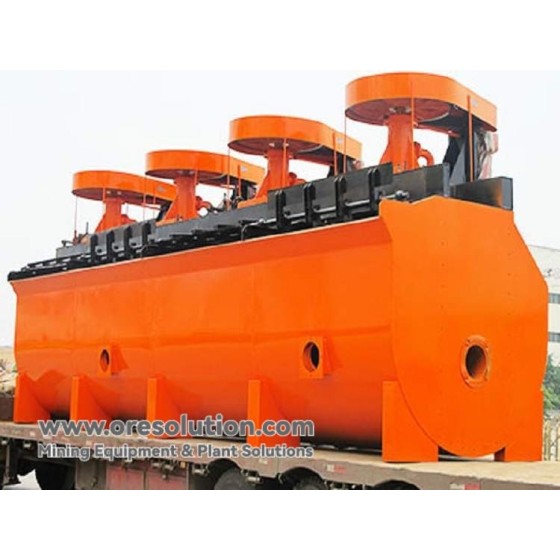
For ore in which gold is associated with sulfides and has good floatability, flotation is the main line. Flotation can concentrate gold into a concentrate; the concentrate volume is small, making subsequent handling and transport convenient. Most sulfur-bearing gold ores in areas such as Zhaoyuan in Shandong and Dexing in Jiangxi follow the route of gold ore flotation process.
For ore with micro-fine disseminated gold, high mud content, and monomer liberation requiring fine grinding, physical separation cannot capture it, so a cyanide leaching system must be considered. This route has higher requirements for both investment and environmental protection supporting facilities, and should not be forced when the ore properties do not match. For projects with matching scale and suitable ore, one can refer to the overall configuration approach of a gold ore CIP production line.
There is also a mixed case: part coarse-grained gold and part fine-grained gold. In this situation, a common practice is to first recover the coarse fraction by gravity separation, and then send the tailings to flotation or leaching, with each line handling one part. The configuration will be somewhat more complex, but the recovery result is more stable than with a single route.
Looking at It Section by Section: How to Configure Equipment for 100 t/h
Crushing and Screening Section
Feed particle size is the sole basis for this section. When the maximum lump size is around 300 mm, the conventional approach is two-stage crushing with one closed circuit: a jaw crusher for primary crushing, a cone crusher for secondary and fine crushing, and a vibrating screen in between to form a closed circuit. If the lump size of the incoming material from the mine is already relatively fine, one stage of crushing plus screening can also work, saving a portion of the investment.
The key in this section is not "how large to make it," but "how to make it stable." The feeder must be able to feed uniformly, the iron remover cannot be omitted, and the screen area must be sufficient. If the crushing section has insufficient capacity, the mill will never be fed to full capacity.
Grinding and Classification Section
This is the heart of the entire line and also the section with the largest share of investment. At a scale of 100 t/h, a common configuration is a ball mill operating in closed circuit with classification equipment, with hydrocyclones mostly used for classification. The grinding fineness is determined by the dissemination size of the gold, and for most gold ores it falls between seventy and ninety percent passing -200 mesh.
Here there is an unavoidable judgment: the finer the grinding, the more complete the liberation, but power consumption and steel consumption rise at the same time, and subsequent thickening and filtration become more difficult. Fineness should be determined by testing, not by rule of thumb.
Separation Section
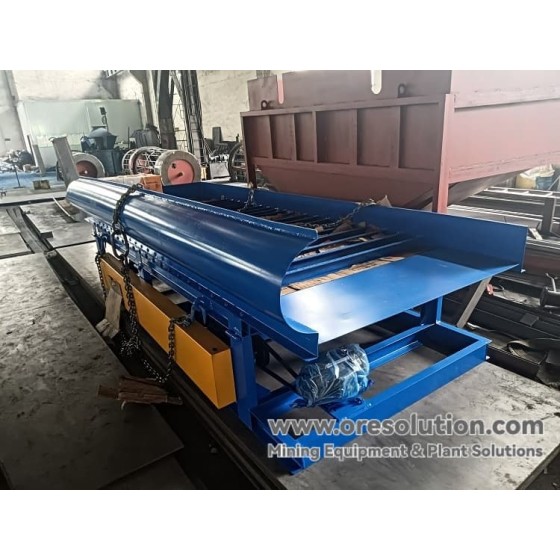
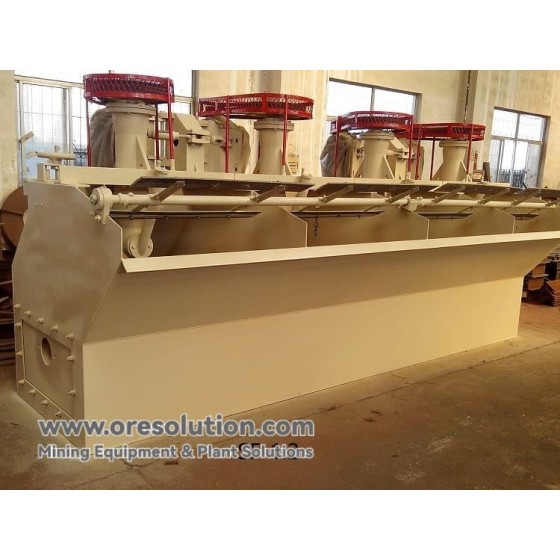
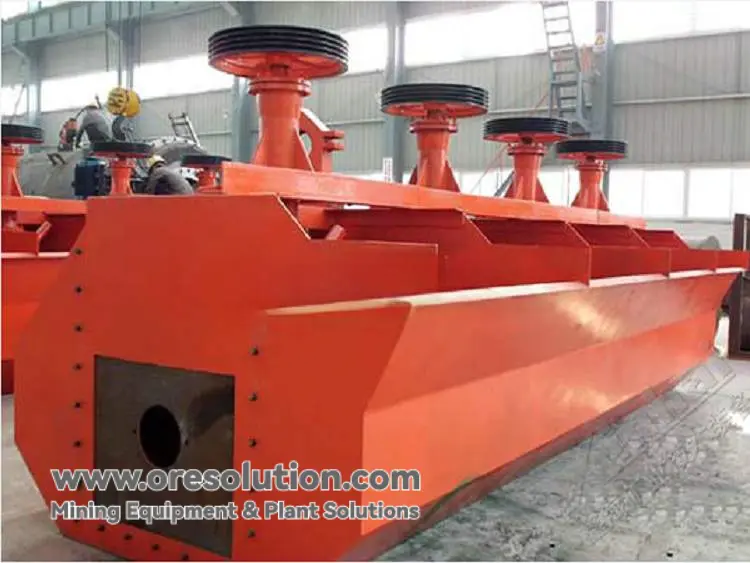
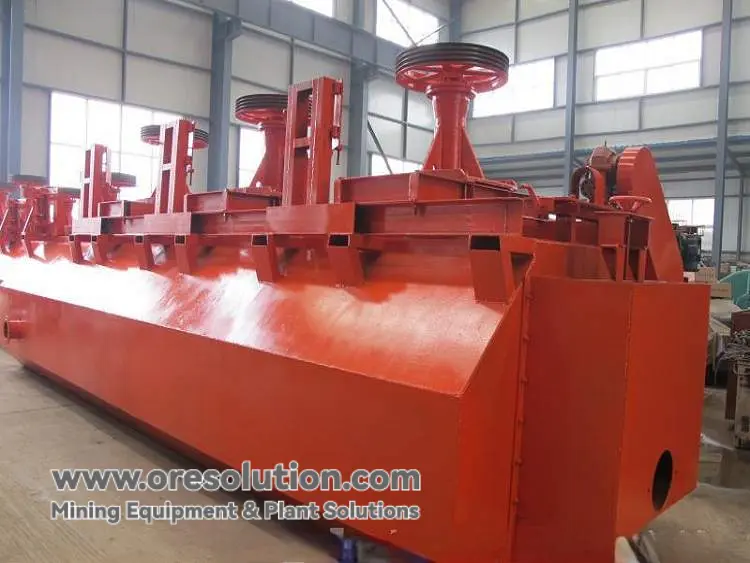
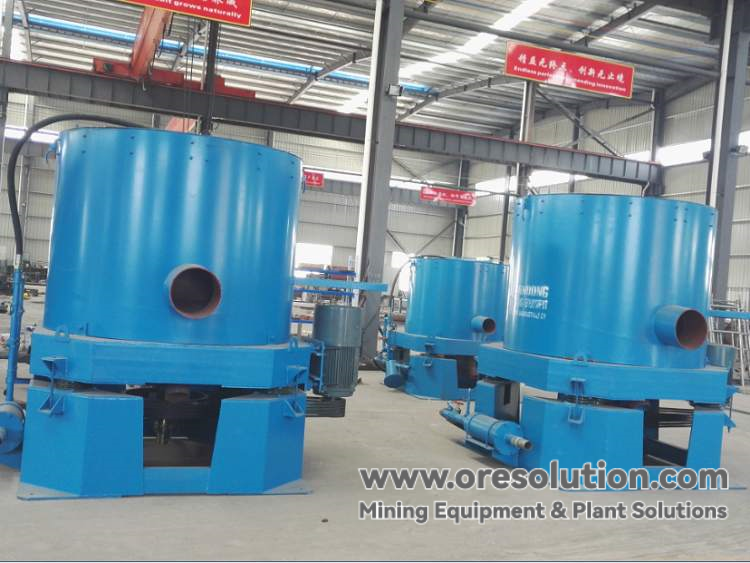
Configure according to the route selected earlier. The gravity separation route is mainly based on a combination of centrifugal concentrators, shaking tables, and sluices, with a clear division of labor between roughing and scavenging; the flotation route is mainly based on pneumatic flotation machines, with the number of cells for roughing, scavenging, and cleaning determined by flowsheet tests; the leaching route involves leaching tanks, adsorption tanks, and a desorption and electrowinning system, and belongs to a complete process installation.
Dewatering Section
Concentrate dewatering generally follows a two-stage process of thickening plus filtration, and a common combination is a high-efficiency thickener with a filter press. Whether the tailings are dry-stacked or wet-disposed directly determines whether this section needs a large filter press system, and also directly affects the scale of investment. This point is best settled at the scheme stage.
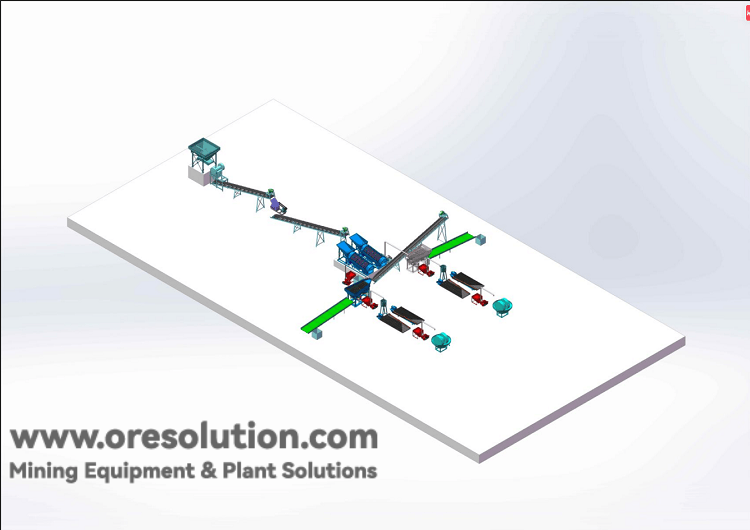
The following is a section-by-section comparison table for this configuration, which can serve as a starting point for scheme discussions.
| Section | Main Equipment | Configuration Points |
|---|---|---|
| Feeding and crushing | Vibrating feeder, jaw crusher, cone crusher, vibrating screen, iron remover | Number of stages determined by maximum feed lump size; leave margin in screening area |
| Grinding and classification | Ball mill, hydrocyclone, slurry pump | Model determined by test fineness; leave more than 10% margin in grinding section |
| Gravity separation (if adopted) | Centrifugal concentrator, shaking table, spiral chute | Separate roughing and scavenging; process coarse and fine fractions on separate paths |
| Flotation (if adopted) | Pneumatic flotation machine, agitation tank, reagent system | Number of cells determined by flowsheet tests; configure roughing and scavenging separately |
| Leaching and adsorption (if adopted) | Leaching tank, adsorption tank, desorption and electrowinning unit | Calculate volume backward from residence time; leave room for adjusting the number of stages |
| Concentrate and tailings dewatering | High-efficiency thickener, filter press, dewatering screen | Two approaches, dry stacking and wet disposal, with an obvious difference in investment |
| Auxiliary and electrical | Conveying equipment, slurry pump, control cabinet, centralized control system | Centralized control can significantly reduce operating personnel requirements |
Several of the Most Common Configuration Mistakes
- No margin left in the grinding section. Selecting equipment for exactly the nominal 100 t/h means that after half a year of operation, when the ore becomes harder or the fineness requirement increases, one immediately falls into the predicament of being "unable to increase throughput."
- Trying to save money in the crushing section. Omitting one crushing stage or having insufficient screening area keeps the mill underloaded for a long time, and power consumption ends up higher instead.
- Selecting the thickener by theoretical settling area. For ore with high mud content and poor flocculation performance, the settling area actually required is considerably larger than the theoretical value.
- Considering tailings treatment only at the very end. The requirements of a dry stacking scheme for site space and filter press capacity will in turn affect the layout of all preceding sections.
- Simply adding up installed power for electrical capacity. The simultaneity factor is not taken into account, and later, as soon as equipment is added, capacity expansion is required.
Site and Supporting Facilities Often Bottleneck a Project Earlier Than Equipment
For a 100 t/h production line, the footprint is greatly affected by terrain. On sloping ground, gravity flow can be used; on flat ground, more slurry pumps and conveying equipment are needed, increasing both energy consumption and the number of failure points.
There are also several supporting items that are easily overlooked: the water source and return water system, the reagent storage room, maintenance space and lifting access, and transformer capacity. These are inconspicuous at the drawing stage, but troublesome to add during construction.
If it is a cyanide system, additional consideration must be given to reagent storage and management, tailings detoxification facilities, and local environmental protection requirements. If these conditions are not available, the process route itself must be re-evaluated.
Investment and Operating Cost: A Usable Reference
A single figure for the entire line investment at this scale is difficult to give. The range of equipment configuration, site conditions, degree of automation, and tailings treatment method—any one of these changes will create an obvious gap in total investment. For two projects of the same ore type and similar scale, differences of several tens of percent in investment are a common occurrence.
What can be said is the structural proportion: equipment procurement usually accounts for about half of total investment, with the rest spread across civil works, installation, electrical, environmental protection, and spare parts. The equipment share is higher for the gravity separation route, while the civil works and environmental protection share is higher for the leaching route.
The same applies to operating cost. Power consumption per tonne of ore, steel consumption, and reagent unit consumption are all strongly related to ore hardness, grinding fineness, and flowsheet length; discussing unit consumption apart from conditions has no reference value. When making investment estimates, a more prudent approach is to cross-check along two lines—"ore test data + similar projects in the same region"—rather than applying an industry average.
Whether the configuration is calculated accurately depends not on how complete the equipment list is, but on whether these three things have been settled in advance: grinding fineness, processing margin, and tailings destination.
Our Advantages
For medium-scale gold ore processing lines such as those at 100 t/h, our work usually starts with ore sample testing: first confirming the occurrence state and processability of the gold, then determining the process route, and only then moving on to equipment selection and configuration drawings.
On the equipment side, we can provide complete sets from crushing, grinding, and separation to thickening and dewatering, reducing interface problems between different suppliers. The manufacturing process implements the ISO9001 quality management system, and the products have actual operating records in multiple mining markets.
We are not very much in favor of one practice: applying a ready-made standard configuration table to different mines. 100 t/h is only a capacity label; the ore properties, site conditions, and product requirements behind the label are what determine the configuration.
Conclusion
Returning to the question of how to configure a 100 t/h gold ore processing line, the suggested order of judgment is as follows: first look at the dissemination size and occurrence state of the gold to determine the process route; then look at the feed lump size and fineness requirements to determine crushing and grinding; then determine dewatering according to the ore's settling performance and the tailings destination; and only finally check electrical, site, and automation configurations.
Doing it in reverse order—choosing equipment first and then piecing together a flowsheet—will almost certainly lead to rework. Before ore testing is complete, any configuration scheme is only an assumption, and this point is far more important than which supplier's equipment is chosen.